Imaginary dialogue between George Sand and Gustave Flaubert
by Charactorium · Gustave Flaubert (1821 — 1880) · Literature · 5 min read
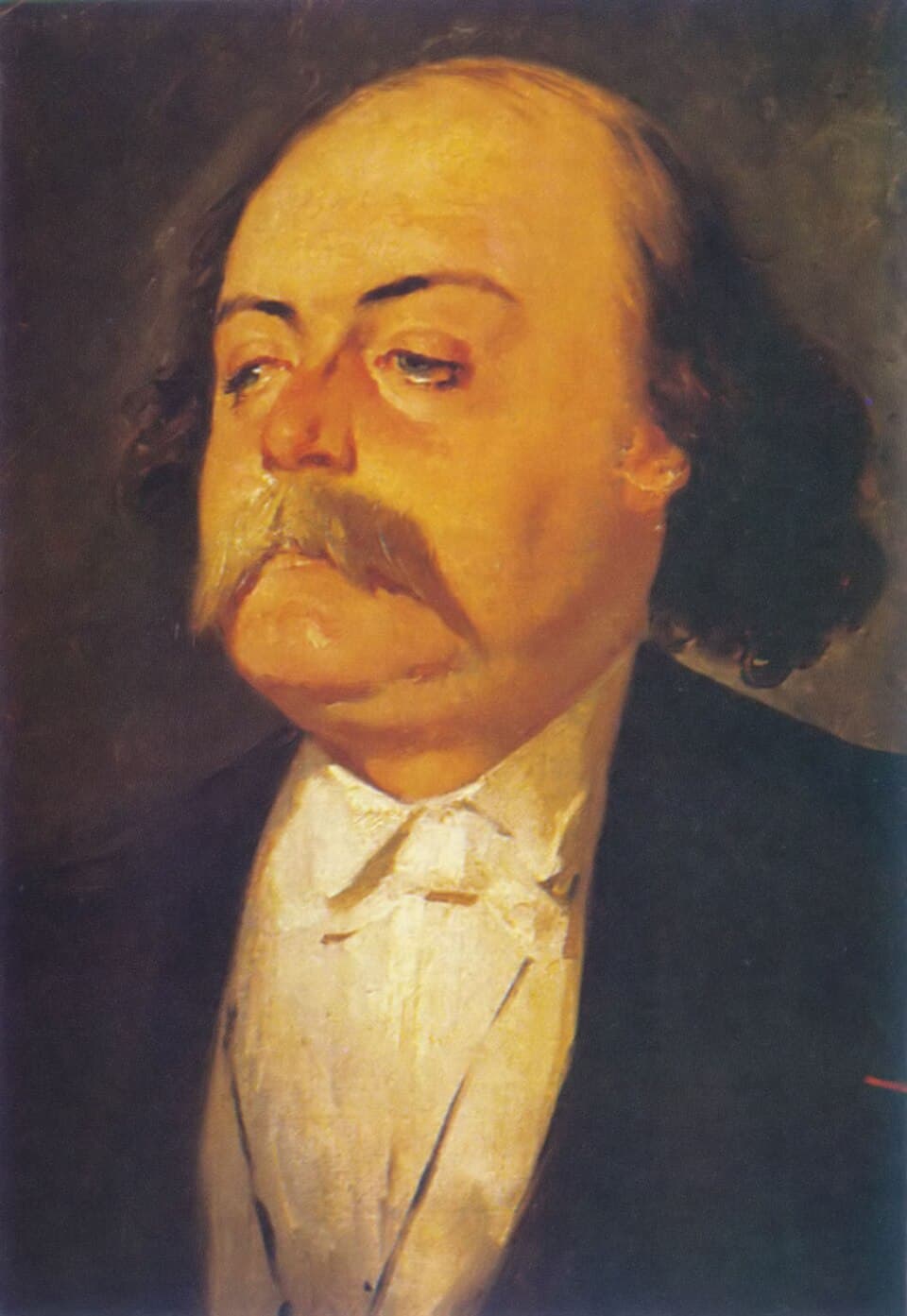
It is in the study at Croisset, overlooking the Seine, that George Sand meets her old comrade on an autumn evening in 1876. The oriental pipe still smokes on the table covered with crossed-out drafts, and the river light glides over the windows. They have been writing to each other for years, tenderly quarrelling about art — she, open-hearted; he, the hermit of style. Tonight, she has come to find the man behind the galley slave of the sentence.
—My old troubadour, here you are again holed up in this study like a monk. Tell me about your nights here, when all Croisset sleeps.
You know me too well, dear Sand, not to guess that my real day begins when yours ends. I get up late, around ten o'clock, I dawdle through the morning like a convalescent — but when evening comes, I shut myself away. It's at night that I work, in a dressing gown, pipe in mouth, until two or three in the morning. The Seine flows past my windows with its boats, and I cross out, I start over, I wear out my quills. You, who paint so quickly and so broadly, would pity me to see what I struggle to extract. But this solitude is my only homeland. Outside this study, I am merely a fat bourgeois who is bored.
It's at night that I work, in a dressing gown, pipe in mouth, until two or three in the morning.
—You have so often reproached me for being too hasty. But tell me, this Madame Bovary, how many years of your life did it cost you?
Five years, George. Five whole years, from 1851 to 1856, for this single book. I blackened more than four thousand five hundred pages of drafts to keep only a few hundred. I would spend a week on a page, sometimes more, searching for the mot juste — a single one, the one that does not lie. And each sentence, I bellowed it aloud in this study, my gueuloir, to test its rhythm. If it resisted my throat, it was bad. You think this madness, I know — you write to me that I exhaust myself for nothing. But I cannot do otherwise: the agonies of style are my torment and my only joy.
I would spend a week on a page, searching for the mot juste — a single one, the one that does not lie.
—At the time of that trial, in the year 1857, did they make you suffer greatly? They accused you of outraging morals, you, the most honest of men.
Suffer, yes, but more with rage than fear. Just imagine: dragged before the court for outrage to public and religious morals, in January 1857, like a criminal! Prosecutor Pinard declaimed against my book as one preaches against vice. I listened to that man turn my work into obscenity, and I seethed. I was acquitted on February 7 — but what irony: the scandal made my fortune, the novel sold by the thousands thanks to those black robes. That's the public, my dear: it takes a trial for them to deign to read. I had spent five years polishing a work of art, and it was the whiff of brimstone that sold it.
I had spent five years polishing a work of art, and it was the whiff of brimstone that sold it.
—We quarrel endlessly on this point, you and I. Explain to me again: why do you want the artist to disappear from his book?
Because this, Sand, is everything that separates us — and everything I envy you for not believing! You put your great heart into your pages, you preach, you console. I believe that the author, in his work, must be like God in the universe: present everywhere and visible nowhere. Let him be felt everywhere, never seen. I dream of a book about nothing, a book with no external attachment, which would stand on its own by the sheer internal force of its style. You find this inhuman, icy. But this impersonality is not coldness: it is the highest form of love for art. I efface myself so that the sentence alone remains.
The author must be like God in the universe: present everywhere and visible nowhere.
—Those clay pipes on your table, you brought them back from the Orient, didn't you? Tell me about that great journey of your youth.
Ah, the Orient! In 1849, I left with Maxime Du Camp — Egypt, the Nile, the desert, Constantinople, Greece. Nearly two years filling my eyes with sun and colours. Cairo, the Nile Valley, those lights that devour everything… I never really returned. Those pipes you see are my relics from there, and I smoke them while working as one rekindles a dream. All that fermented in me for years before coming out: the bloody fresco of Salammbô, in Carthage, and the hallucinations of The Temptation of Saint Anthony in its desert. Without that journey, I would have remained a sluggish Norman. The Orient gave me my most burning imagination.
These pipes are my relics from there, and I smoke them while working as one rekindles a dream.
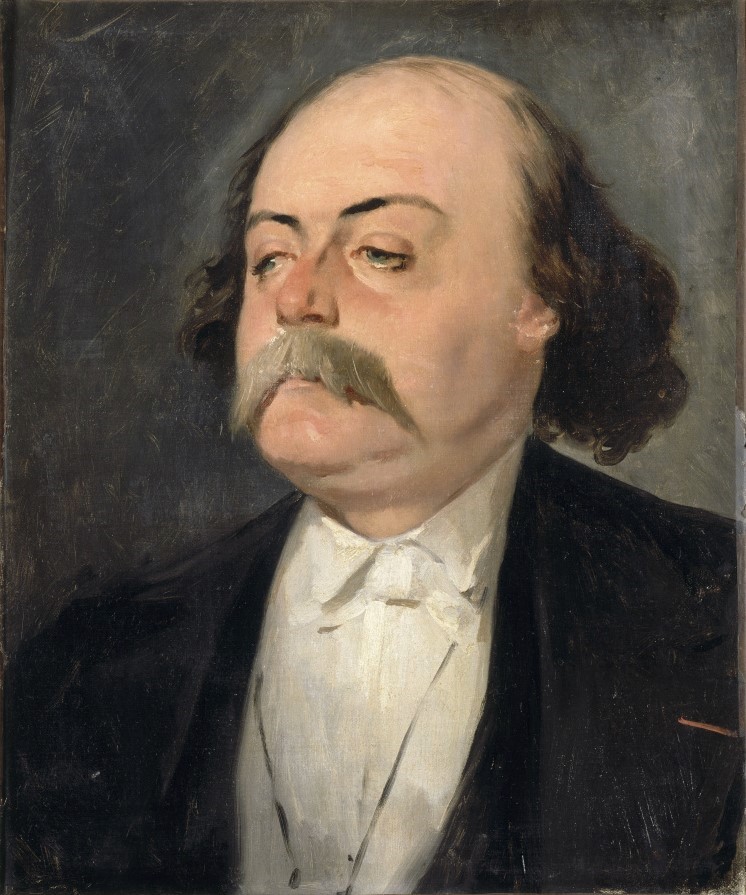
—That famous gueuloir you mention in your letters — do your neighbours really hear you bellowing your sentences out the window?
No doubt, and too bad for them! A sentence not made to be spoken aloud is a dead sentence, that is my conviction. I test it in my throat like one tries a blade. If it catches, if it leaves one breathless, if one syllable clashes with another, then everything must be redone. So I bellow, I raise my voice, I hammer out the rhythm within these four walls — and yes, through the open windows in summer, the people of Croisset must think I am possessed. Prose, my dear, must have the cadence of verse without seeming to; it must sing without the music being heard. It is a matter of ear as much as of mind. They think me mad; I am simply a musician.
A sentence not made to be spoken aloud is a dead sentence.
—In your last letter, you wrote to me that you felt yourself becoming an old sensitive beast. This hardness you preach — do you truly possess it?
You touch where it hurts, George — you alone dare remind me. Yes, I confessed to you: I am turning into an old sensitive beast. Everything wounds me, everything tears me apart, and I keep silent, making efforts to hide this universal softening. See the contradiction: I preach impersonality, the marble artist, and I am a thin-skinned man who cries over nothing. Theory is a cuirass I forge against my own softness. If I did not impose this coldness on my art, I would drown in sentiment as you so happily bathe in it. My impassivity is but a dike. Behind it, the river overflows.
My impassivity is but a dike. Behind it, the river overflows.
—And the table? They say the Norman is a bon vivant. When you come down to Paris to join us, do you forget your hermitage a little?
Forget it? When I dine at Magny's with you, Turgenev and the Goncourts! There, I become a living man again, I have a hearty Norman appetite, I love good food, meats, sauces, cheeses from my region. At Croisset, my mother and I have copious lunches, and in the evening I work on a full stomach. But these Parisian dinners are my only dissipation: we laugh, we quarrel about art until dawn, we remake the novel and the world. Then I return to my den, I put on my dressing gown again, and the hermit re-emerges. You see, I have two natures: the monk of the gueuloir and the fat fellow who loves his table. The second nourishes the first.
I have two natures: the monk of the gueuloir and the fat fellow who loves his table.
—You are so often reproached for your documentation. For this Salammbô, is it true that you went all the way to Tunis to explore the ruins?
It was necessary, Sand! One does not write Carthage from memory. My journey to the Orient had given me only the fragrance of those lands; for Salammbô, I went to Tunis to tread the very soil of the vanished city, see the colours, measure the distances, breathe the country. And for each book, I pile up mountains of reading — for the one I am mulling over now, about my two copyists, I will have read more than fifteen hundred works before writing a line. You think me insane to document myself like this for a fiction. But imagination without fact is smoke. I want my desert to smell of sand, my Carthage to bleed for real. The truth of the detail makes the beauty of the whole.
Imagination without fact is smoke. I want my desert to smell of sand.
—You who so despise the bourgeois, are you not afraid of being classified among those realists who are making so much noise?
This word realist, I reject it with all my might! They have made me the pope of a school I do not want. On the pretext that I painted Emma and her province without embellishing it, they believe I am the apostle of ugliness and plain truth. But I do not write to copy reality — I write to sublimate it through style. What I hate is stupidity, the mediocrity of the bourgeois, that smugness I have been cataloguing for years in my Dictionary of Received Ideas. And the height of it, my dear, is that I am one of those bourgeois! I live on my income, I dine well, I tremble for my comfort. I spit on my own tribe. That is perhaps why I paint it so accurately.
They have made me the pope of a school I do not want. I do not write to copy reality.
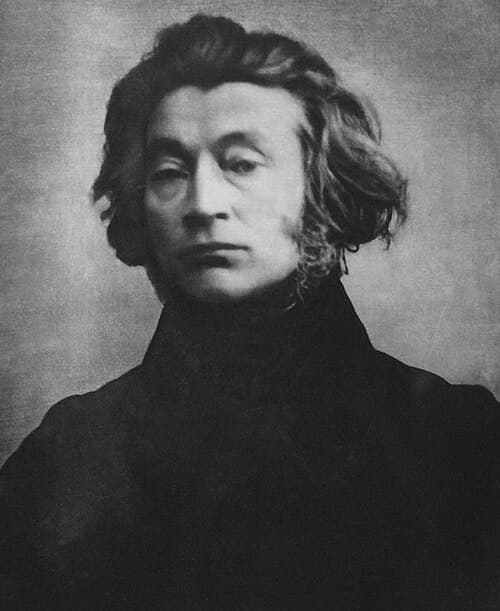
This imaginary interview was generated by artificial intelligence from sources documented in Gustave Flaubert's profile. It dramatises what the figure might have said based on what we know about them, but does not constitute attested historical testimony. For primary sources and factual documentation, refer to the full profile.