Imaginary interview with Gustave Flaubert
by Charactorium · Gustave Flaubert (1821 — 1880) · Literature · 6 min read
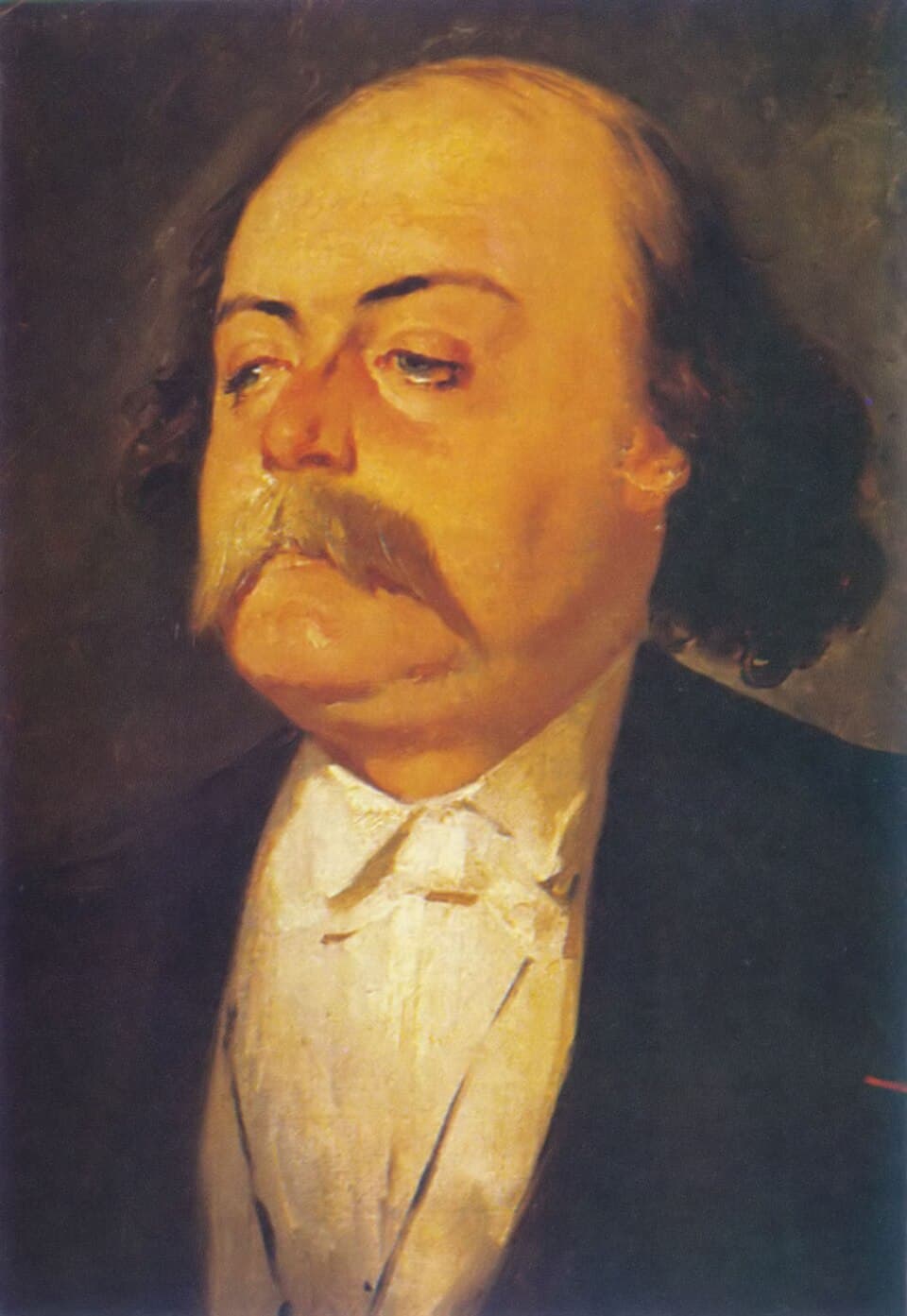
Croisset, an autumn evening. The Seine carries its barges under the windows of the pavilion, and in the upstairs study, wrapped in a vast dressing gown, the Norman hermit pokes at his pipe. He agrees to put down his pen for a moment — not without grumbling that one is stealing hours from the only thing that matters: the work on the sentence.
—Your neighbors claim to have heard you declaiming through the windows. What really goes on in that study come evening?
Ah, my gueuloir! The real labor only begins at night, when my mother is asleep and the boats are nothing but lanterns on the river. I write a sentence, then I hurl it at full voice against the walls of Croisset. If it resists the throat, if a syllable catches or hisses, then it's bad, and I cross it out. A sentence must be able to be shouted; prose has its rhythm like verse, and the ear is judge before the mind. They think me mad, up there, bellowing alone in my dressing gown, my pipe gone cold at the corner of my lips. So be it. I hunt for the mot juste, that unique word which says the thing and nothing else, and that hunt is not done in whispers.
A sentence must be able to be shouted; the ear is judge before the mind.
—How do you explain that a single page can cost you an entire week?
Because mediocrity is easy and perfection is a torment. For Madame Bovary, I spent nearly five years — from 1851 to 1856 — piling up thousands of crossed-out sheets to give birth to a slim volume. I delete, I start over, I sometimes stay two days on a phrase, without advancing a line. They call this the affres du style (agonies of style), and the word is not too strong: it is a physical pain, a migraine of the soul. My quill pen screeches, the inkwell empties in corrections more than in text. But I have no choice: a book stands only by the precision of each word, like a wall by each stone. Talent, you see, is a long patience that greatly resembles torture.
Mediocrity is easy and perfection is a torment.
—At the beginning of 1857, you found yourself in the dock. Do you remember that ordeal?
The height of the grotesque! January 1857: I am dragged to court for 'outrage to public and religious morality and to good morals,' as if I had committed a common crime. Prosecutor Ernest Pinard rose to defend the decency of families, and he dared to utter this phrase I will never forget: 'Art without rules is no longer art; it is like a woman who would shed all her clothing.' So that is what they reduced Emma Bovary to: a matter of modesty! I was acquitted on February 7, but this comedy left me with a deep disgust for the bourgeois in robe and cap. To paint the provinces and their pettiness was, it seemed, an attack on good morals. I had wanted only one thing: to show reality without varnish.
—That sensational trial nonetheless served your novel. What effect did it have on its reception?
An irony I still laugh about. The scandal did what no prospectus could have done: it thrust Madame Bovary into everyone's hands. The novel had first appeared as a serial in the Revue de Paris, in installments that had been carefully censored; and when Michel Lévy published it in volume, the whiff of brimstone from the court brought it thousands of readers. The stupidity of the judges made my publicity. Think of it: I am prosecuted for immorality, acquitted, and the public rushes to see with their own eyes the venom of this Emma. I derived no pride from that glory — only the confirmation that the crowd never reads so well as what has been forbidden to them.
The stupidity of the judges made my publicity.
—In your letters, you defend the idea of an artist who effaces himself behind his work. What do you mean?
Everything, and it is my only religion. I wrote it to Louise Colet, to whom I confided my theories between two storms of our correspondence: 'The author, in his work, must be like God in the universe, present everywhere and visible nowhere.' The writer must neither weep, nor judge, nor preach in his book. Let him feel, yes, everywhere, in every detail, but let him never be seen pointing a finger to say: this is good, this is evil. When I describe Emma's agony, I must not mix in my tears; I must be that cold God who makes rain fall on the just and the unjust. Personal emotion sullies the sentence. Art begins where the artist disappears.
Art begins where the artist disappears.
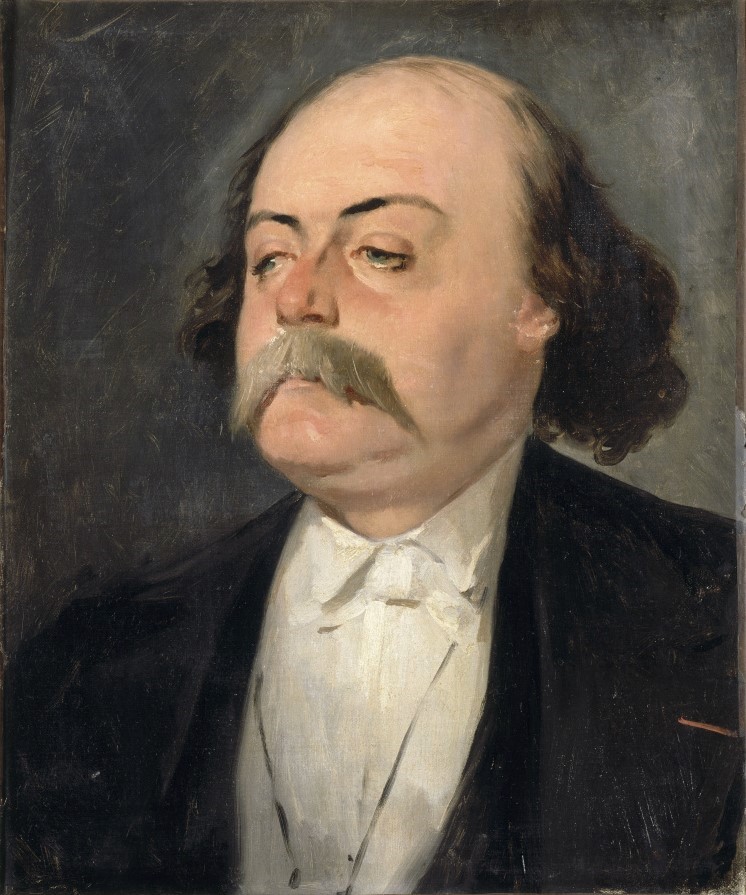
—You have confessed to dreaming of a 'book about nothing.' Isn't that a paradox for a novelist?
The opposite of a paradox: my highest ideal. I confessed it to Louise Colet as early as 1852: 'What seems beautiful to me, what I would like to do, is a book about nothing, a book without external attachment, which would stand on its own by the internal force of its style.' Understand me well: a book whose subject would be almost invisible, where the plot would serve only as a pretext, and which would stand only by the beauty of the language, like the earth in space without being held up. Style is not a varnish applied at the end; it is the very flesh of the work, its absolute way of seeing things. A vulgar subject well written is worth a thousand times more than a great subject botched.
A vulgar subject well written is worth a thousand times more than a great subject botched.
—In 1849, you left for a long journey to the Orient. What were you seeking there?
Sun, color, and forgetfulness of Norman grayness! In 1849, I set out with my friend Maxime Du Camp for nearly two years of travel: Egypt first, then Palestine, Lebanon, Constantinople, Greece. I sail up the Nile, I cross dusty and swarming Cairo, I revel in bazaars, mosques, harsh lights that no book had ever made me suspect. That is where I brought back those clay pipes I still smoke while working — a bit of the Orient in the cold of Croisset. This voyage filled my eyes for life. Everything I later wrote of splendor, deserts, and barbarism drew its sap from it. One invents well only what one has first breathed.
One invents well only what one has first breathed.
—That Orient resurfaces in works like Salammbô. How did this journey nourish your books?
Without the Orient, neither Salammbô nor The Temptation of Saint Anthony would exist. To resurrect Carthage in the 3rd century BCE, at the time of the Mercenary Revolt, books were not enough: I returned to Africa, I trod the soil of Tunis, I wanted to smell the odor of that red earth before making it into a fresco. Documentation, for me, becomes a frenzy — I accumulate hundreds of works, I want to know everything about a fabric, a weapon, a god. And The Temptation of Saint Anthony, that parade of hallucinations in the desert, haunted me for a quarter of a century. My hermits and my barbarians, I first saw them in the flesh, on the scorched roads of Egypt. The rest is only patience and dictionaries.
—Your final years were darkened by financial difficulties. What happened?
I ruined myself, and with my own hands. The husband of my niece Caroline, whom I love like a daughter, was about to sink into bankruptcy; I could not let him drag my family down with him. So I sacrificed a large part of what I had left to save him. I, who had lived quietly off my annuities until then, without ever having to earn a sou from my pen, now in my old age am gnawed by pecuniary worries, forced to count. That humiliated me more than the trial. An artist should have no other care than his sentence; and here I am, at Croisset, calculating like a shopkeeper. The freedom that money had given me — that of serving only art — I lost it at the moment I most needed it.
An artist should have no other care than his sentence.
—At this stage of your life, how would you describe your state of mind?
Worn out, tender in spite of myself, and furious at being so. I wrote it to my dear George Sand, in 1876: 'I'm turning into a sentimental old beast. Everything wounds me, everything tears me apart, and I keep silent, making efforts to hide this universal softening.' That is what I have become: a bear whose shell is cracking. Friends die, money flees, and I have left this enormous project, Bouvard and Pécuchet, where I want to enclose all human stupidity — those two fellows who want to know everything and succeed at nothing. I work on it like a convict, without knowing if I will finish it. The world disgusts me more and more, yet I continue to blacken my pages, out of stubbornness, out of fidelity to the only thing that has never betrayed me: work.
This imaginary interview was generated by artificial intelligence from sources documented in Gustave Flaubert's profile. It dramatises what the figure might have said based on what we know about them, but does not constitute attested historical testimony. For primary sources and factual documentation, refer to the full profile.