Kids interview Gustave Flaubert
by Charactorium · Gustave Flaubert (1821 — 1880) · Literature · 4 min read
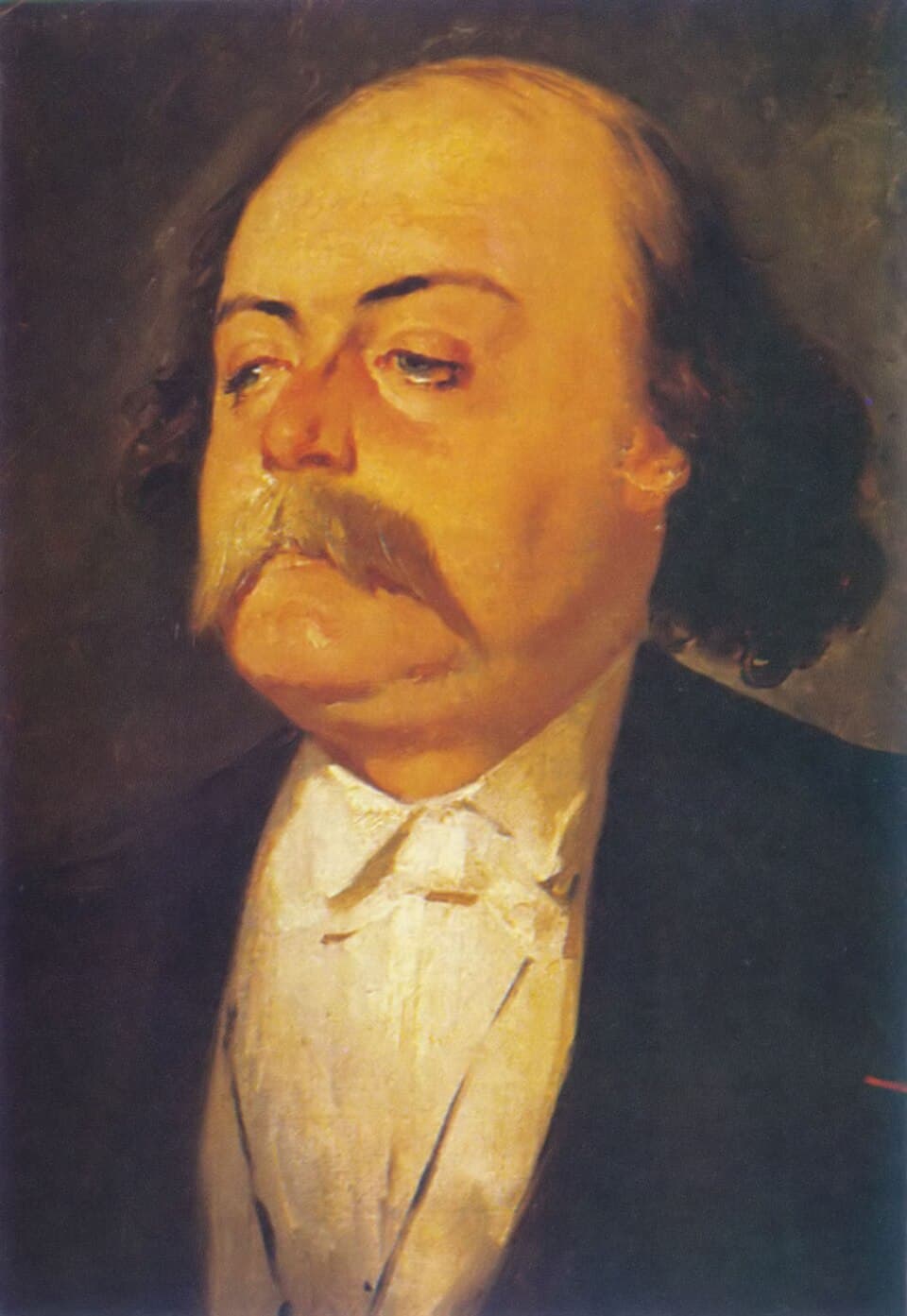
That morning, two young visitors on a school trip pushed open the gate of a large house on the banks of the Seine, near Rouen. A stout man in a dressing gown was waiting for them in his study. It was Gustave Flaubert. He had agreed to answer all their questions, even the most curious ones.
—What was your house like? And what time of day did you work?
You know, my house at Croisset sits right on the banks of the Seine. From my study, I can watch boats go by all day. But the real work begins when you children are already asleep. I write at night, sometimes until two or three in the morning. Picture a single lamp lit, the Norman cold creeping under the door, and me shut in there, crossing out my sentences. Mornings? I get up late, around ten, kiss my mother, take a good bath. My real world, you see, is the night.
My real world, you see, is the night.
—What did you wear to write all night? Weren't you cold?
Ah, the cold! At night in Croisset, it nips at your fingers. So I wrap myself in a big dressing gown, as wide as a tent. It's become my favorite garment, almost my armor. Next to me, a copper hot water bottle full of hot water to warm my hands. And I smoke a lot, an old clay pipe I brought back from the East. When I go to Paris, I become a well-dressed bourgeois again: frock coat, top hat. But at home, in my study, I'm just a fat man in a dressing gown talking to his sentences.
At home, I'm just a fat man talking to his sentences.
—Your neighbors said you used to shout to yourself at night. Is that true?
Yes indeed, it's quite true, and it surprised them! I call it my gueuloir. Once I've written a sentence, I get up and shout it out loud. Why? Because a sentence, my child, must sound right to the ear, like a little melody. If I stumble over it, if it grates, then it's bad. So I start over. Imagine someone declaiming alone at his window in the evening for hours. The neighbors could hear me through the open windows. They must have thought I was mad. Perhaps they weren't wrong.
A sentence must sound right to the ear, like a little melody.
—How long did it take you to write a book? A week?
A week? Oh, my child... a week was sometimes what I spent on a single page! For Madame Bovary, I worked for almost five years, from 1851 to 1856. In the end, I had covered more than four thousand pages of drafts for a book that is only a few hundred pages long. I was searching for what I call the "mot juste": the one perfect word, no other. It made me suffer, truly. I called it the affres of style, that is, the torments of writing. Writing, for me, was not an easy pleasure. It was a battle.
I was searching for the one perfect word, no other.
—Did you ever travel far away? What was it like elsewhere?
Oh yes! When I was twenty-seven, I left with my friend Maxime Du Camp for almost two years, heading to the Orient. Imagine: Egypt, sand as far as the eye can see, the immense Nile, camels, smells of spices I had never smelled in Normandy. I sailed up the Nile valley, saw temples older than anything you can imagine. I brought back pipes, souvenirs, and above all, my head full of images. For a boy raised in the grayness of Rouen, it was like entering another universe. That journey never left me.
I brought back pipes, souvenirs, and my head full of images.
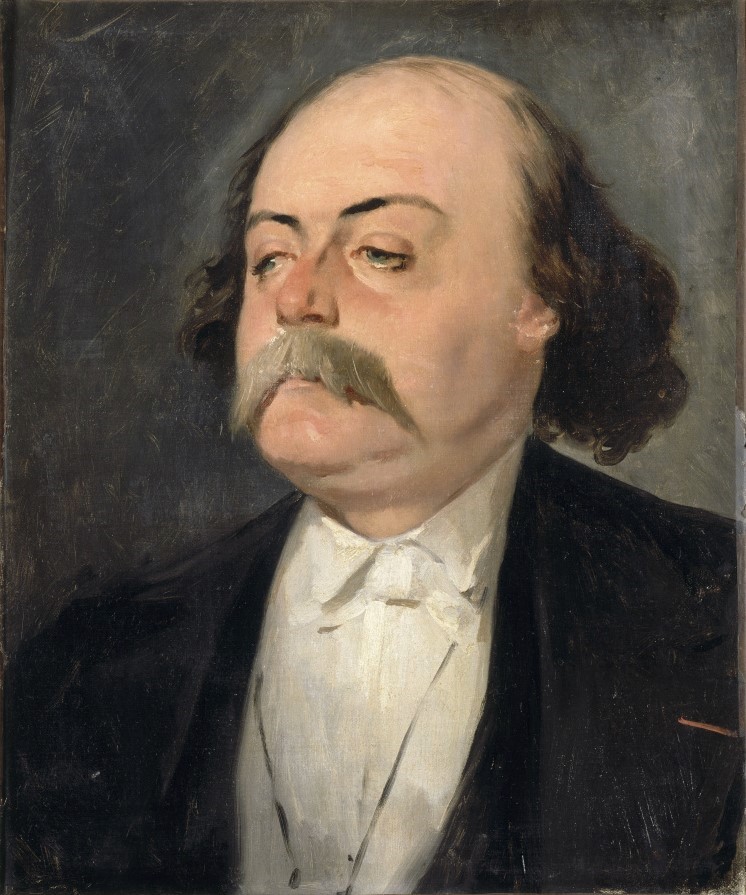
—Did that journey help you write your later books?
Enormously! You know, a writer keeps everything in his memory, like an attic. Everything I had seen in Egypt — the heat, the ruins, the violent colors — came back out years later. For Salammbô, my novel set in ancient Carthage, I needed that sun, that dust. I even went back to Tunis to check the locations! And for The Temptation of Saint Anthony, which tells of a hermit alone in the desert, it was again the Eastern desert that haunted me. Traveling, my child, is filling your reserve of images for a lifetime.
Traveling is filling your reserve of images for a lifetime.
—Is it true you were taken to court because of a book?
Alas, yes! Imagine: a writer dragged before judges because he wrote a novel. It was January 1857. My book, Madame Bovary, told of an unhappy woman married to a country doctor, who dreams of another life. I was accused of "outrage to public morals" — in other words, they reproached me for shocking decent people. The prosecutor, a certain Ernest Pinard, spoke against me for hours. I was afraid, I won't hide it. A man can be destroyed by words spoken in a courtroom.
A writer dragged before judges because he wrote a novel.

—And how did it end? Were you punished?
You'll laugh, because it's almost funny. I was acquitted on February 7, 1857 — that is, declared innocent. But here's the most astonishing part: that trial made me famous! People said to themselves: "What's this scandalous book that gets its author dragged to court?" And everyone wanted to read it. Madame Bovary sold thousands of copies. My enemies wanted to bury me, and without meaning to, they gave me glory. It's a lesson, you see: sometimes those who attack you do you a favor.
My enemies wanted to bury me, and they gave me glory.
—What did you dream of writing, deep down? A book about what?
You ask a great question, my child. One day, I wrote to my friend the poetess Louise Colet something a bit crazy. I told her I wanted to make "a book about nothing, a book without external attachment, which would stand on its own by the internal strength of its style." Do you understand? For me, what matters in a book is not so much the story. It's the beauty of the sentence, the way of saying. Like a beautiful vase can be magnificent without containing anything. That was my secret dream as an artist.
A beautiful vase can be magnificent without containing anything.
—In your books, do we see you? Do we know what you think?
Precisely not, and that's intentional! I had an idea I cared about deeply. I wrote it to Louise Colet: the author, in his work, must be "like God in the universe, present everywhere and visible nowhere." What does that mean? That I am hidden in every sentence, every comma — but I never come to tell you: "this is what you should think." I show you Emma Bovary, her dreams, her follies, and I let you judge alone. A writer, my child, is not a schoolmaster. He holds up a mirror, and he steps aside.
The writer holds up a mirror, and he steps aside.
This imaginary interview was generated by artificial intelligence from sources documented in Gustave Flaubert's profile. It dramatises what the figure might have said based on what we know about them, but does not constitute attested historical testimony. For primary sources and factual documentation, refer to the full profile.