Kids interview Harriet Taylor Mill
by Charactorium · Harriet Taylor Mill (1807 — 1858) · Philosophy · 4 min read
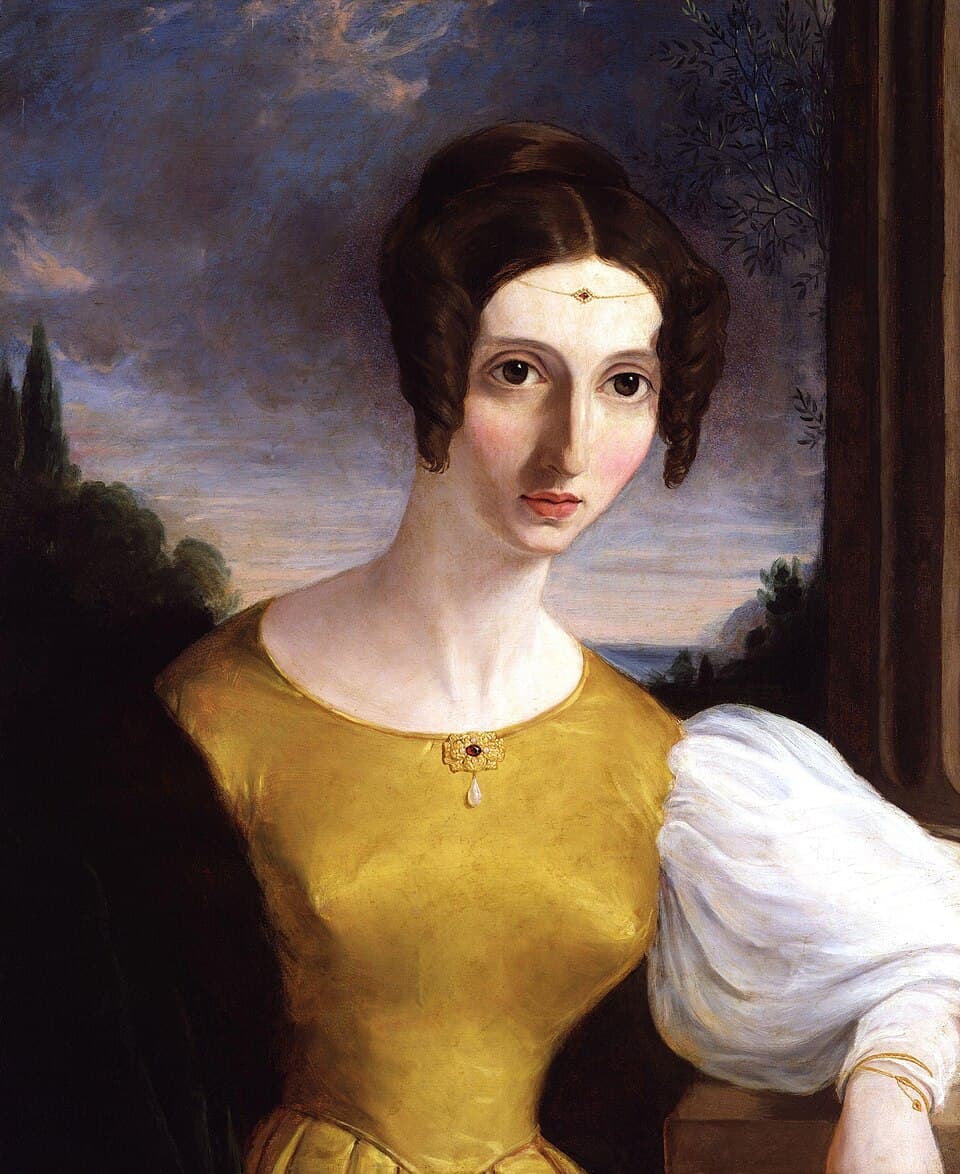
Two twelve-year-old visitors push open the door of a book-filled London drawing room. A lady in a dark dress waits for them, a pen resting near an inkwell. She smiles: she loves being asked questions.
—What was it like, the day you met Mr. Mill?
You know, it was in 1830, at a dinner in London. I already had a husband, John Taylor, a very kind merchant. And then at the table, a young man started talking about ideas, justice, liberty. We understood each other in a few sentences, like two people reading the same book at the same time. Imagine two children discovering they love exactly the same game: that was it, but with philosophy. We began writing to each other, lending texts. All of high society whispered behind our backs. I didn't care much.
We understood each other like two people reading the same book at the same time.
—Why were people shocked that you were friends with him?
In my time, my child, a married woman was not supposed to have a male friend. It was frowned upon, almost scandalous. Yet for twenty years, John and I worked together, exchanged manuscripts covered in corrections. We corrected each other, page after page. London's drawing rooms murmured that it was improper. But we talked about liberty and equality — how could we have given that up for fear of gossip? When my first husband died, I finally married John, in 1851. A very discreet wedding. And he, on that day, solemnly renounced all the rights a husband then had over his wife.
How could we give up liberty for fear of gossip?
—What did you write that was so important in that journal?
In 1851, I published a text in the Westminster Review, a great journal of ideas. It was called The Enfranchisement of Women. That word, 'enfranchisement', means granting the right to vote. I was demanding that women be allowed to vote and have the same rights as men. At the time, that was enormous! Imagine a street where only men have the right to decide everything: law, money, the future. I wrote that this door should be opened to women too. Many thought it crazy, dangerous. But a few began to think. A written idea can never be erased.
A written idea can never be erased.
—Why couldn't women vote in your time?
You ask the right question, truly. In my time, people said that voting was men's business. Suffrage is the right to choose those who govern. In England, it was reserved for men who owned property. In 1832, a great reform law even wrote in black and white that women were excluded. Imagine being told, 'You live here, you pay, you work, but you have no right to give your opinion.' That's what women experienced. I found it deeply unjust. So I wrote it, calmly but firmly.
You pay, you work, but you have no right to give your opinion.
—Is it true you helped write Mr. Mill's books?
Yes, my child, and he himself said so loudly. For his Principles of Political Economy, in 1848, I worked a lot on the chapters about workers and the poor. And for On Liberty, that great book on freedom, he wrote that I was 'in part the author' of it. We thought together, aloud, in the evenings, while reading. Imagine two people building the same house: it's hard to say which brick belongs to whom. That's our work. Many have forgotten it, because my name wasn't on the cover.
When two people build the same house, who will say which brick is whose?
—Did it make you sad that your name was forgotten?
Sometimes, I admit. But you know, I wasn't seeking glory. As early as 1833, John wrote to a friend, Mr. Carlyle, that I was 'a woman of remarkable gifts, of heart and mind.' That was enough for me: to be understood by the one I worked with. My name remained in the shadows because in my time, a woman who thought was disturbing. People preferred to believe that ideas came from the man. But I knew what I had written. And he knew too. A truth known to two hearts is better than a lie applauded by a thousand.
A truth known to two hearts is better than a lie applauded by a thousand.
—What was the hardest thing for married women in your time?
The hardest was a rule called coverture. Listen carefully: when a woman married, the law said she disappeared. Her money, her belongings, even her decisions, all passed to her husband. As if she no longer existed, legally. Imagine signing a paper and becoming invisible in the eyes of the law. That's what I denounced. As early as 1832, I had written a secret essay on marriage and divorce, demanding equality between spouses. I wanted a woman to remain a whole person, even married. That seemed simply fair to me.
Upon marrying, a woman disappeared in the eyes of the law.
—What was said to stop girls from doing what they wanted?
An idea I called separate spheres was repeated. According to it, the world was split in two. For men: the outside, work, politics. For women: the home, children, silence. This was presented as natural, as if written in the sky. Imagine being told that your entire life is already decided based on whether you are a boy or a girl. I found that false. A girl can think, write, govern as well as a boy. The word I loved was emancipation: freeing oneself from a chain thought to be normal.
We were told that women's place was written in the sky. That was false.
—What were your days like when you were ill?
Ah, my health, my child... My lungs were fragile, a cough that never left me. It was called being convalescent: recovering slowly, without ever fully healing. In the morning, I got up early, tired, but I had my tea and toast, then I wrote. Those were my best hours. In the afternoon, carriage rides, visits I endured with a bit of impatience. In the evening, I read aloud with John, near a coal fire. Imagine a house all in dark wood, full of books, where silence is broken only by the turning of pages.
In the morning, tired but with pen in hand: those were my best hours.
—Why did you travel so often far from home?
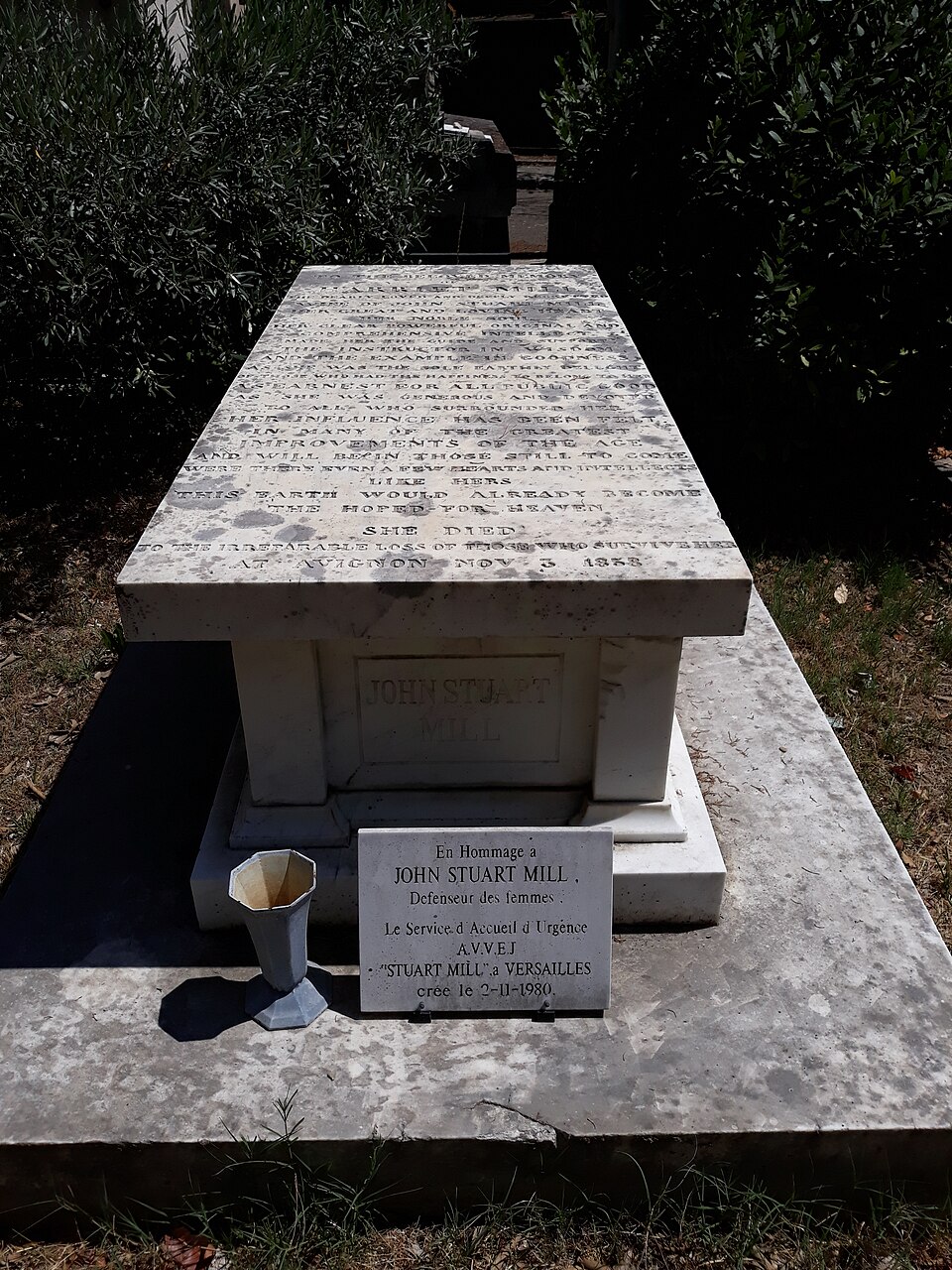
Because London's cold and fog made me cough, my child. Doctors said the mild air of the South would do me good. So I left for France, Italy, writing long travel letters that I kept carefully. In 1858, I went as far as Avignon, in Provence. Alas, that's where I died, far from home. John was heartbroken. He bought a house right next to the cemetery, to stay close to me. You see, even death does not truly separate those who have thought together.
Even death does not truly separate those who have thought together.
This imaginary interview was generated by artificial intelligence from sources documented in Harriet Taylor Mill's profile. It dramatises what the figure might have said based on what we know about them, but does not constitute attested historical testimony. For primary sources and factual documentation, refer to the full profile.