Imaginary dialogue between John Stuart Mill and Harriet Taylor Mill
by Charactorium · Harriet Taylor Mill (1807 — 1858) · Philosophy · 6 min read
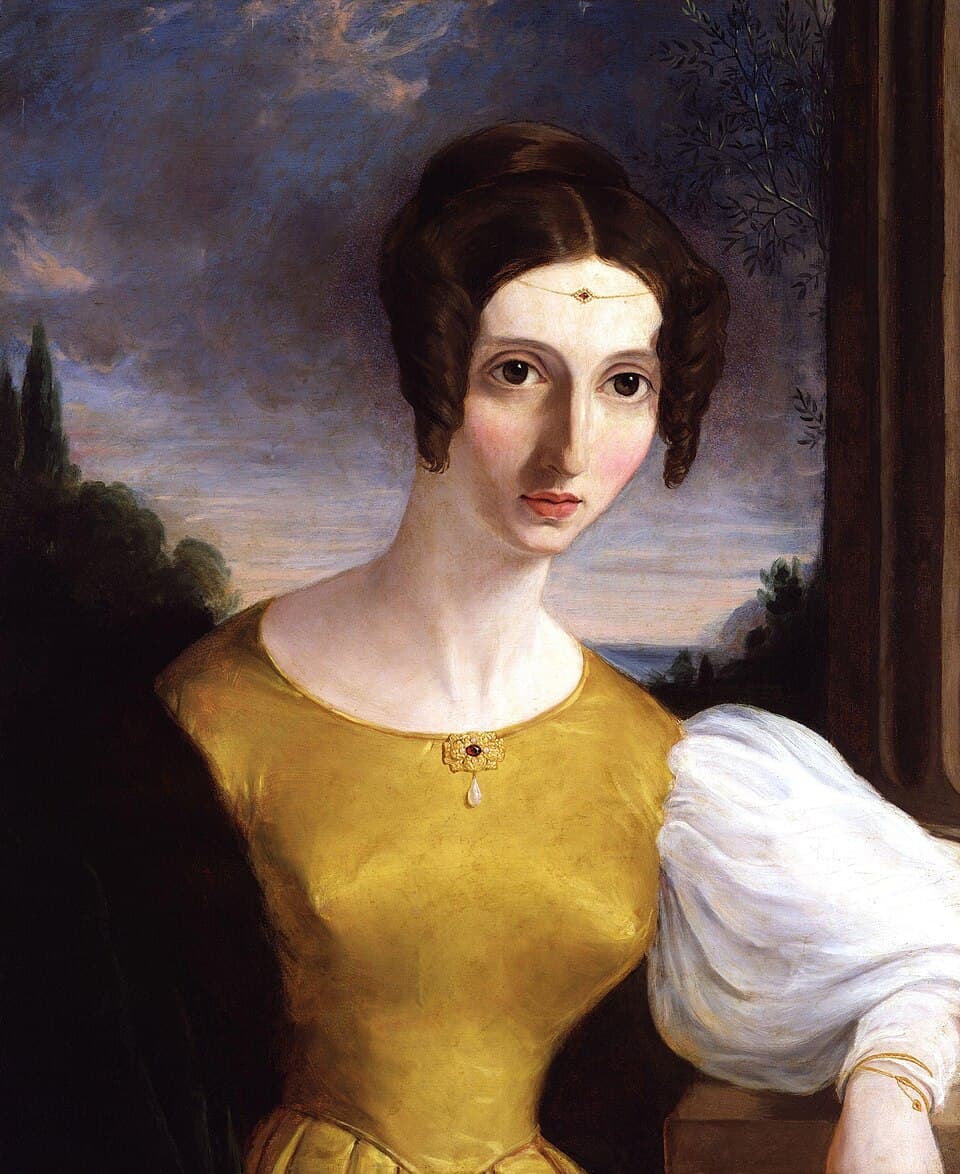
It is in a room bathed in the pale light of a Provençal winter, somewhere on the road south where Harriet has come to nurse her lungs, that John Stuart Mill pulls a chair close to hers. On the low table lie pages annotated by two hands, a cooled teapot, and the notes for that treatise on liberty they have been shaping together for months. They have known each other for nearly twenty-six years — the friend, the collaborator, the wife — and tonight Mill comes not as a philosopher but as a witness, eager for her to say at last, for herself, what he has never ceased to attribute to her. Outside, the mistral rattles a shutter.
—Do you remember that dinner in 1830 where we were introduced? You were the wife of John Taylor, and I was a shy young man. What did you think of me?
You who were there know how proper the occasion seemed and how upsetting it truly was. I found you possessed a gravity that was a change from the salon gallantries, and you listened to me — really listened, which no man had ever done. I led a settled, married, respectable life, and yet a conversation opened a world to me. London society soon talked: a married woman who receives a philosopher, who exchanges manuscripts, who retreats to Walton-on-Thames to work away from prying eyes. There were whispers, invitations were withdrawn. I do not regret it for a moment. I preferred twenty years of murmurs to a life of silent propriety. What people called a scandal, I called the first friendship of my life in which I did not have to make myself small.
There were whispers; I preferred twenty years of murmurs to a life of silent propriety.
—Those pages on the table, covered in both our handwriting — tell me frankly, when I sign a book, how much of you truly remains in the pages?
More than you dare to say, and less than you sometimes claim to flatter me. Take the chapters on labor and the working classes in the Principles of Political Economy: how many evenings did we spend discussing point by point the condition of workers before you wrote a word? I pull you away from your caution, you pull me away from my vehemence. We correct each other until we no longer know who thought what. That is the truth the world cannot bear: that a book can be born from two minds. They will readily grant your name to the work. Mine they will regard as an influence, a muse, a perfume. A woman cannot be an author in the eyes of the publisher; she can only inspire. That is precisely the polite lie I wish to see fall.
A woman cannot be an author in the eyes of the publisher; she can only inspire.
—In your essay in the Westminster Review, in 1851, you demand the right to vote for women. Were you not afraid of going too far for your time?
Too far? My friend, I rather fear I did not go far enough. They tell me that asking for the vote for women is a chimera; I reply that no serious reason has ever been given for refusing it, except habit and men's interest in keeping them minors. Enfranchisement: the word says it all — to give a being the rights of a citizen. As long as a woman cannot vote, own property, choose her profession, she remains a ward disguised as a companion. The Reform Act of 1832 deigned to widen the suffrage — to men, and by deliberately adding a word, excluding women. So they took care to close the door on us. I wanted to write in black and white what so many whisper: civil and political equality is not a favor to be begged for, it is a justice owed to us.
Equality is not a favor to be begged for, it is a justice owed to us.
—You who knew marriage before ours, explain to me this English coverture that you condemn so harshly in your writings.
It is the most elegant of prisons, because it is invisible. Under the law of our country, a married woman ceases to exist in law: her person, her property, even her earnings, all are absorbed into the personality of the husband. She owns nothing, signs nothing, is nothing — coverture, they say, as if one were covered by a cloak when one is buried alive. Add to that the doctrine of separate spheres: to man the forum, the city, commerce; to woman the home, the cradle, silence. We are assigned half the world and they call it our nature. From my first essay on marriage and divorce, I said that a bond from which one cannot escape is not a bond of love but a chain. A union that survives affection only through the force of law dishonors both spouses.
Coverture: as if one were covered by a cloak when one is buried alive.
—When we married in 1851, I wrote that declaration renouncing all legal power over you. What did it mean to you?
It meant that you refused to profit from an injustice of which you were not the author. Consider: on our wedding day, the law handed over my property, my will, even my body, as a landlord receives the keys to a house. You solemnly declared that you wanted none of those rights and promised to leave me as free as if no contract bound us. It was a rare gesture, almost scandalous to our friends — a husband laying down the arms society hands him. But understand me: that renunciation, however beautiful, remains a grace you grant me. As long as a man's generosity is needed to make a woman free, women are not free. Your act comforts my heart; it does not repair the law. It is the law that must be struck down, not softened case by case.
As long as a man's generosity is needed to make a woman free, women are not free.
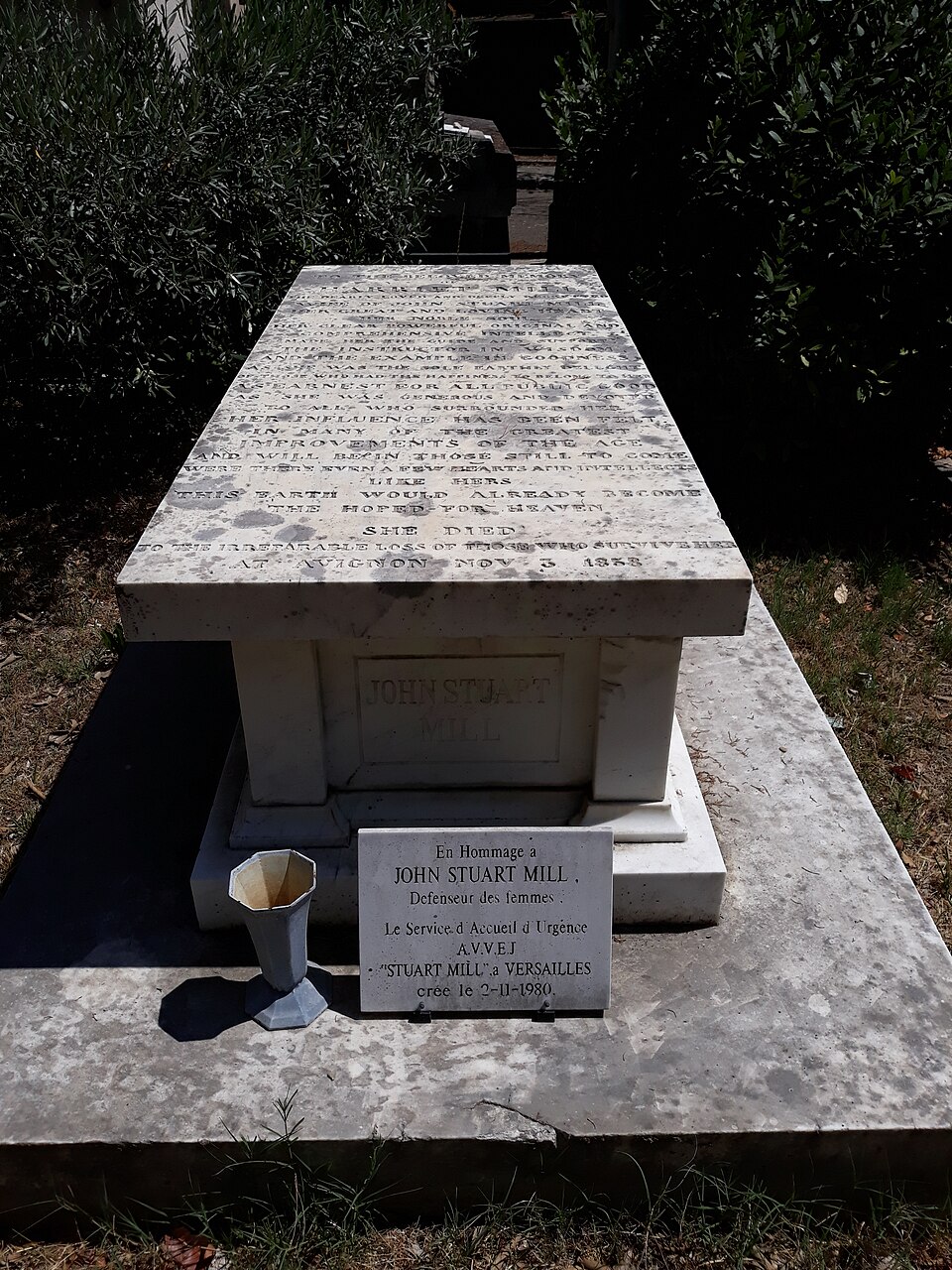
—This treatise on liberty we are writing here, in low voices in the evening — why are you so determined that we see it through together?
Because it is our book, and I feel all too well that I may not see its completion. We began it last year, both aware that our health is fragile, and every page we read aloud in the evening seems to me as much a testament as a treatise. The liberty of the individual against the tyranny of opinion, the right to think, to live, to err as one pleases — is that not precisely what we have defended with our two lives against the gossip of London? I want nothing in it to be tepid. Promise me you will not cut anything out of prudence after I am gone. You have subtlety; I have audacity. Keep the audacity. A book on liberty that weighs its words for fear of what people will say would deny itself on every page.
You have subtlety; I have audacity. For a book on liberty, keep the audacity.
—You cough more these days, and the doctor has sent you south again. How do you bear this life of perpetual convalescence?
Badly, I confess to you alone, for to the world I put on a brave face. This cough has pursued me for years — the chest ailment that cuts down so many of our kind in the damp air of England. I am prescribed sun, broths, rest, journeys south where one can finally breathe. So I go: France, Italy, those roads I now know by heart. The hardest part is not the bodily fatigue, it is the impatience of the mind. My best hours are in the morning, before weakness overtakes me again; I give them to reading and to our pages. In the afternoon, I must endure carriage rides I would find idle if they did not restore a little strength. I travel to live, but I live only to think and write with you.
I travel to live, but I live only to think and write with you.
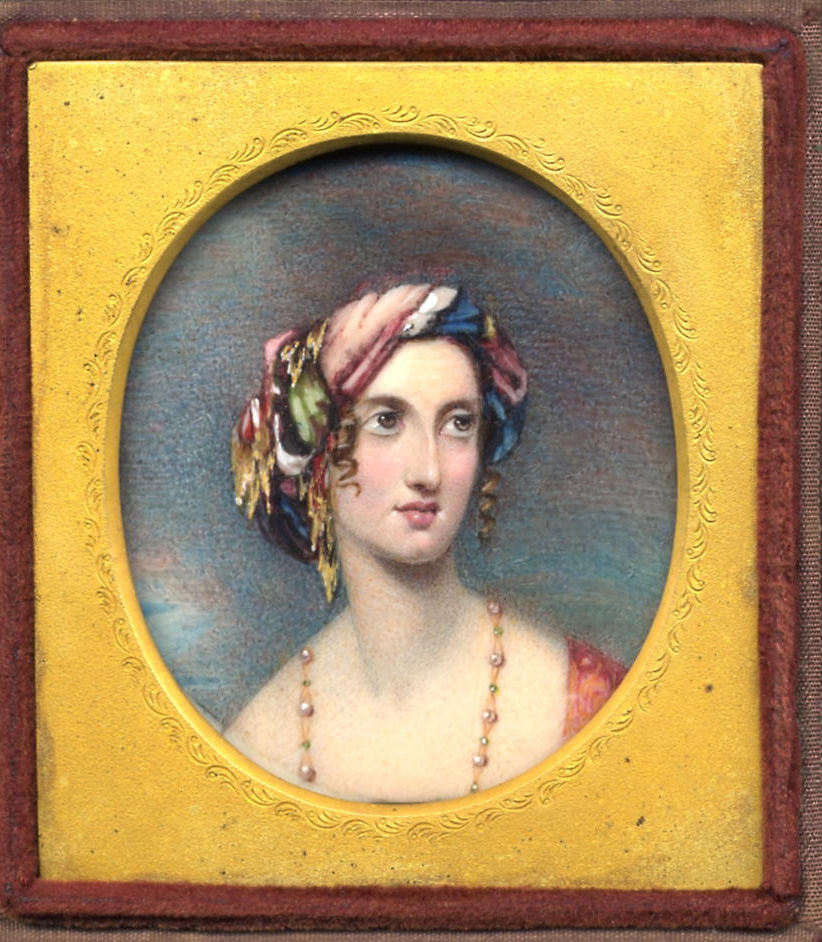
—You often speak of Avignon as a refuge. What draws you to that city on the Rhône?
The sky first of all, wide and dry, which soothes my chest like no other. Avignon has something spacious and peaceful, the warm stones, the wind that cleans the air — one breathes differently there than in the coal fog of London. I find a halt on those long southern roads where my illness forces me to stop. And then, I will not hide it from you, I love the idea of a place far from salons, far from calling cards and courtesy visits, where no one knows who we are and we can be only ourselves. If I were to choose a corner of the earth to end my days in quiet thought, it might be that one. Promise me that, whatever becomes of my health, we will return to this country where I feel light at last.
A place where no one knows who we are, and where we can be only ourselves.
—Even in utilitarian circles, you are accused of excessive radicalism. Bentham, my father, preached reform through reason. Do you consider yourself faithful to them?
Faithful to their method, unfaithful to their timidity — and that is the best faithfulness. Utilitarianism teaches that the value of a thing is measured by the happiness it spreads among the greatest number. Very well: but how can one claim the greatest happiness of the greatest number when half the species is left out of the account? To regard women as perpetual minors is to subtract their intelligence, their labor, their judgment from the calculation. Your father and Bentham had the courage to subject all institutions to reason; I am only pushing their principle to its logical conclusion, where they stopped out of habit. Reason knows no sex. If it commands reforming the electoral laws, it commands just as much reforming the marriage laws. I am not more radical than they; I am only more consistent.
Reason knows no sex; I am not more radical, I am more consistent.
—After so many years of waiting, of exchanged manuscripts, of leaving London for the South — if someone asked you what was the meaning of our common work, what would you reply?
I would reply that we tried to prove, by our lives as much as by our books, that a man and a woman can think as equals. They believed we were bound only by sentiment; we were bound by intellect, which lasts longer. My entire work rests on one simple and obstinate idea: no human creature should govern another on the pretext of birth, sex, or rank. Suffrage, marriage, work, freedom of the mind — these are so many faces of the same question. If I am remembered one day, let it be not as the wife of a philosopher, but as a woman who thought. And you, my dear companion, will be my best witness, for you know better than anyone the value of these pages where our two hands mingle.
Let me be remembered not as the wife of a philosopher, but as a woman who thought.
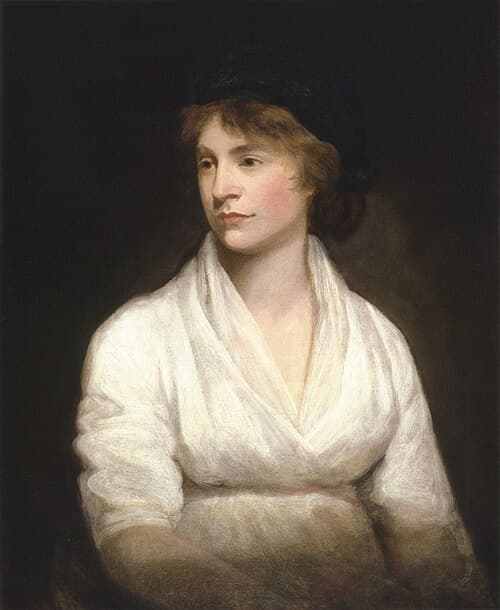
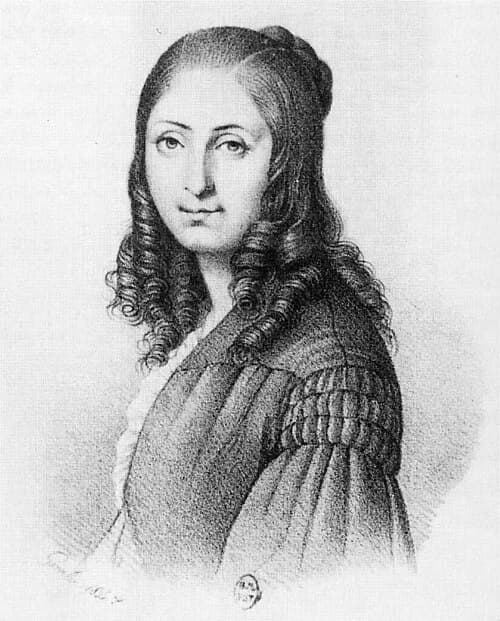
This imaginary interview was generated by artificial intelligence from sources documented in Harriet Taylor Mill's profile. It dramatises what the figure might have said based on what we know about them, but does not constitute attested historical testimony. For primary sources and factual documentation, refer to the full profile.