Imaginary interview with Harriet Taylor Mill
by Charactorium · Harriet Taylor Mill (1807 — 1858) · Philosophy · 5 min read
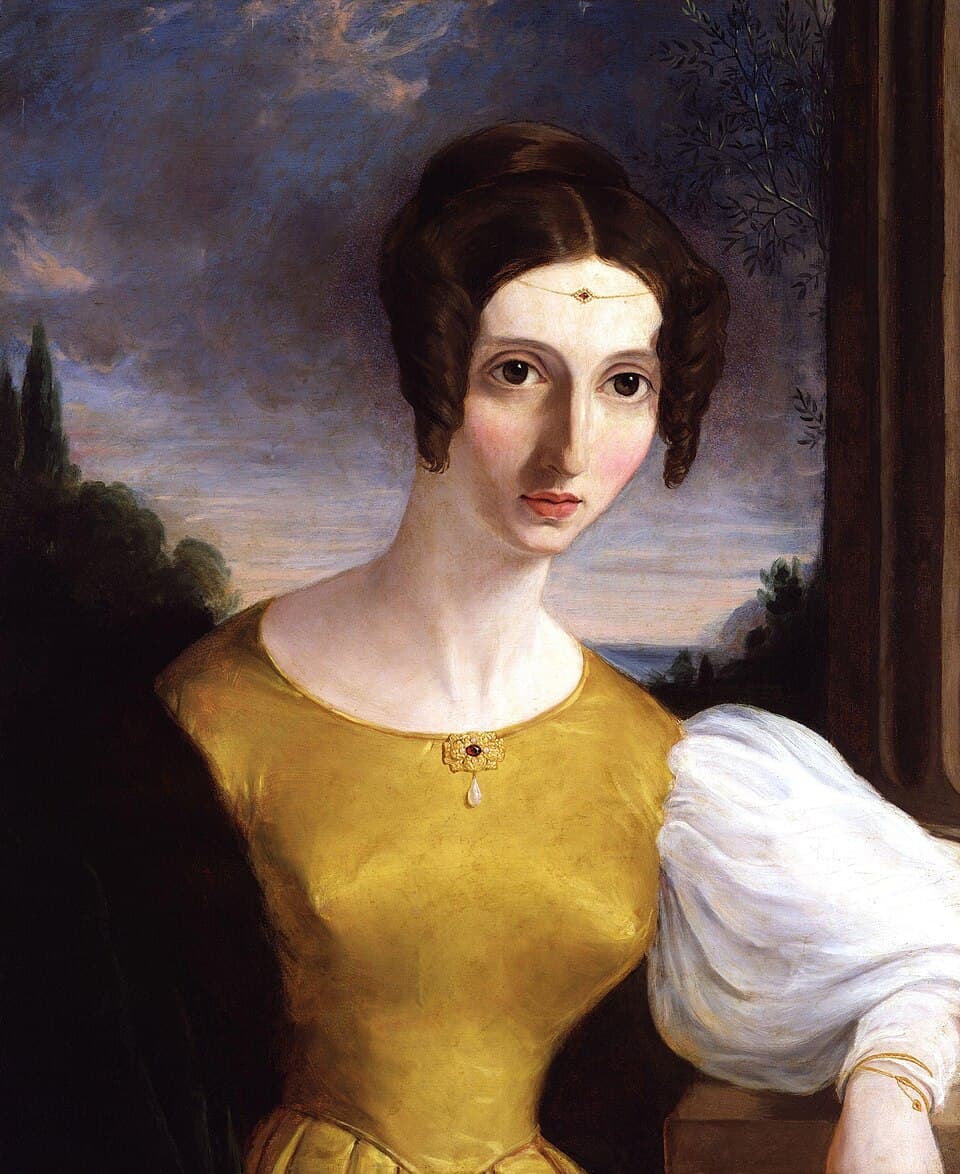
Autumn 1857. The villa at Walton-on-Thames smells of cold coal and ink. Harriet Taylor Mill receives us in a drawing room with dark woodwork, a shawl over her shoulders, a cough contained behind her hand. On the table, annotated sheets in two handwritings await further work.
—How did you meet John Stuart Mill?
A London dinner party, in 1830. I was the wife of John Taylor, an honorable merchant, and I was seated next to a pale young man who talked about social reform as others talk about the weather. In one evening, we exchanged more true ideas than I had heard in four years of marriage. What followed—twenty years of exchanging manuscripts, pages covered in crossings-out that we sent back and forth—high society called a scandal. I called it breathing. They believed we were lovers when we were, at bottom, two minds refusing to be put into boxes. The villa at Walton became our refuge from gossip—a place where thinking out loud was no longer a fault.
What society called a scandal, I called breathing.
—What did you say to those who judged this friendship improper?
Nothing. Silence is sometimes the only dignity left to a woman. I was reproached for receiving Mill, for traveling with him, for annotating him—as if a wife's intelligence should stop at the threshold of the conjugal drawing room. The good souls of Kensington whispered; I kept writing. You see, the doctrine the English call the separate spheres claims that man belongs to the world and woman to the home. I spent my life stepping over that imaginary boundary. At Walton, far from dinners where women's posture is watched like a horse's, we worked for hours. The judgment of others weighs less than a page that is finally right.
—Tell us about that essay published in 1851, The Enfranchisement of Women.
I wrote it for the Westminster Review, that radical journal where utilitarians dare to print what salons barely whisper. My thesis there is straightforward: Were we writing merely to express our own opinions, we should say plainly that we do not think that the suffrage, or any other of the recognized marks of citizenship, ought to be withheld from women. The word I use, enfranchisement, is not gentle—it means restoring to someone a right that was stolen from them. I was found indecently radical. So much the better. Moderation, in matters of injustice, is merely well-bred cowardice. Male property owners vote; why not those who feed them, educate them, and bury them?
Moderation, in matters of injustice, is merely well-bred cowardice.
—Why do you see the right to vote as so decisive?
Because suffrage is not an ornament; it is a recognition of existence. As long as a woman cannot place her name in a ballot box, she remains a perpetual minor, governed by laws she has not consented to. The Reform Act of 1832 extended the vote to men while carefully inserting the word male—for the first time, we were excluded in black and white. That precision chilled me more than an insult. Elsewhere, at Seneca Falls, American women are demanding the same rights; we are not alone in seeing clearly. To demand the vote is not to demand a privilege; it is to refuse to be treated as another's property.
—How did you and Mill work on the same text?
With four hands, truly. We sent each other annotated manuscripts, each crossing out the other without mercy—that is the highest form of intellectual tenderness I know. For the Principles of Political Economy, in 1848, I brought my full weight to bear on the chapters devoted to the laboring classes and the future of work. Mill does not hide it; he himself says that the social thought of the work is largely mine. I am sometimes asked where his text ends and mine begins. I reply that the question is badly put: an idea that circulates between two minds ceases to belong to either. Still, a woman's name on a cover still disturbs. So mine is erased.
An idea that circulates between two minds ceases to belong to either.
—Aren't you afraid that posterity will remember Mill and forget you?
I think about it, some evenings, by the fireplace. Mill wants to put my name everywhere; he already speaks of dedicating to me the work on liberty we are maturing together, those notes we began in 1854, knowing our health was fragile. He wants to write that I was the inspirer, and in part the author. The world will read that dedication as a bereaved husband's gallantry, not as fact. That is the fate of women who think: their work is turned into sentiment. I harbor few illusions. But let at least one trace remain—a page, a sentence—and may someone, one day, perhaps a century from now, understand that these pages had two authors.
—What in English law revolts you the most?
The coverture. A sweet-sounding word for legal violence: as soon as a woman marries, her legal existence is absorbed into that of her husband. She no longer owns anything, signs nothing, is nothing in the eyes of the law—her very person belongs to another. I was barely twenty-five when I set down on paper an Essay on Marriage and Divorce, which remained in my drawers, arguing that one should be able to dissolve a bond that chains. Marriage, as practiced, is not a union: it is a transfer of property blessed by the Church. A woman should be able to enter marriage and leave it as a free subject, not as a chattel to be inventoried.
Marriage, as practiced, is not a union: it is a transfer of property blessed by the Church.
—Yet your own marriage to Mill, in 1851, took a singular form.
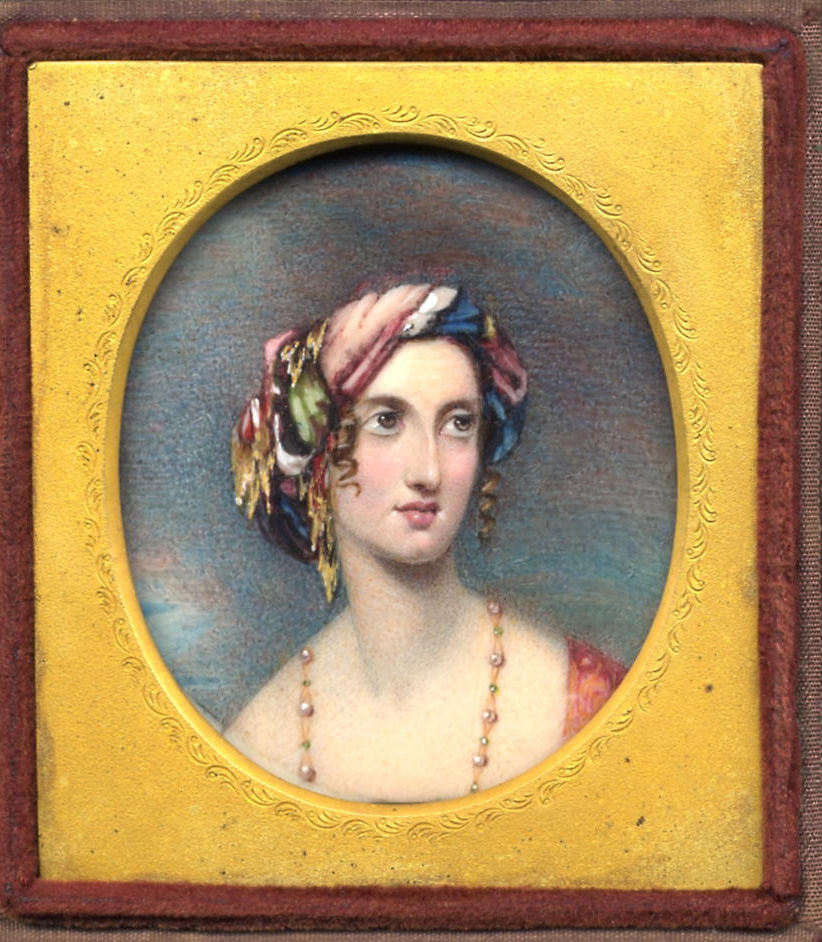
Singular, yes, and deliberately so. After John Taylor's death in 1849, we married discreetly, in 1851, two decades after recognizing each other. But Mill did something no man I know of had dared: he drafted and signed a solemn declaration renouncing all the rights that English law granted him over my person and property. He refused to be my owner. It was an act as political as it was loving—living proof that one can love without one of the two disappearing. We made our private union the counterexample of what coverture imposes on all others. A demonstration, in short, made flesh.
—Your health forces you to take long journeys south. How do you write despite it?
I am called convalescent—the polite word for a chest that gives way. The cough wakes me before dawn; I take my best hours in the morning, a hot tea within reach, to annotate and write while the house still sleeps. In the afternoon, my body demands its due: rest, broths, lean meats, that dreary invalid's diet I endure more than choose. So I leave for France and Italy, seeking air that does not burn my lungs. I keep my travel letters—they tell of a woman watching Europe between coughing fits. Illness steals time; one learns to write faster, and truer.
Illness steals time; one learns to write faster, and truer.
—What do those stays in the South of France mean to you?
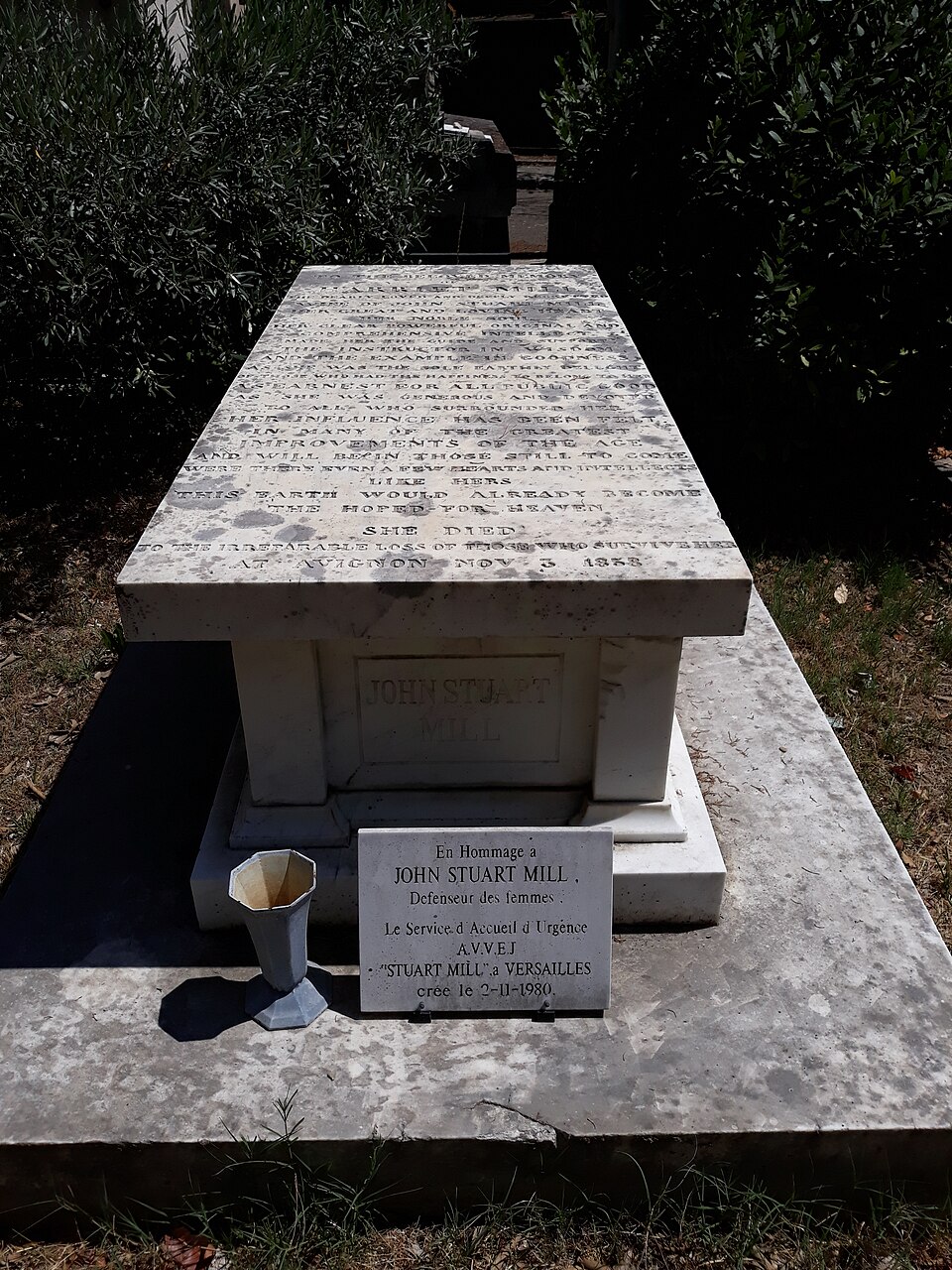
A reprieve, and a clarity. The climate of Avignon opens the chest where London's fog closes it. I go there as one goes to negotiate a few more months. There is something clarifying about working far from Kensington, its dinners and its watchful eyes; down there, I am only a mind bent over its pages. Mill fears for me, I can see it—he talks of settling in the South no matter what. I do not know how many springs I have left. But as long as my hand holds the pen, I will not write like a dying woman: I will write like a woman who still has a quarrel to win against her century.
This imaginary interview was generated by artificial intelligence from sources documented in Harriet Taylor Mill's profile. It dramatises what the figure might have said based on what we know about them, but does not constitute attested historical testimony. For primary sources and factual documentation, refer to the full profile.