Imaginary interview with Hattie McDaniel
by Charactorium · Hattie McDaniel (1893 — 1952) · Performing Arts · Society · 6 min read
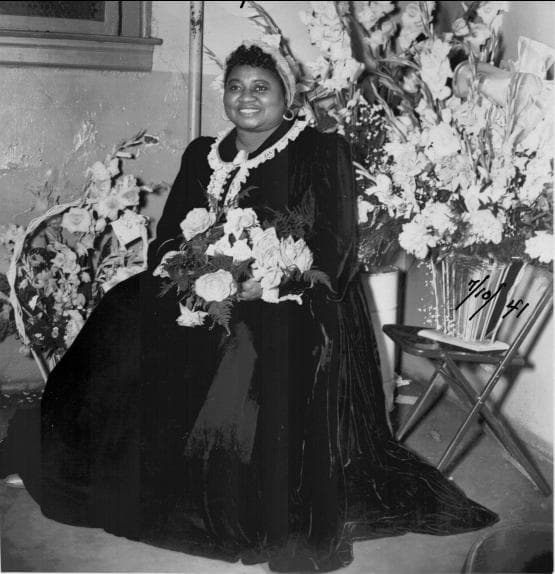
Los Angeles, an afternoon in 1949, in the living room of her house in Sugar Hill. Light falls on a piano where old blues sheet music lies scattered. Hattie McDaniel receives us with a cup in hand, her voice warm and her laugh ready, prepared to tell a life held between the spotlights and the back tables.
—What do you remember from the night of February 29, 1940, when your name was called?
They had seated me at the back of the Coconut Grove room, at the Ambassador Hotel, at a small table apart from Clark, Vivien, all those white faces from Gone with the Wind. I had put on my finest evening gown and pinned white gardenias in my hair, because they wouldn't see me bow my head that night. When they said my name, I walked across that whole room, my throat tight, and I heard myself say that it was one of the happiest moments of my life, that I hoped to remain a credit to my race and to the film industry. Twelve years these awards had existed, and I was the first of our people to hold one. The statuette felt heavy in my hand. The path to reach it weighed far more.
They put me at the back of the room, but I walked all the way to the stage.
—How did you respond to those who criticized you for only playing maids?
The NAACP wrote to me, lectured me, judged that my maid's apron betrayed our people. I gave them the answer that has been quoted back to me often enough: I'd rather play a maid in Hollywood than be one. It wasn't provocation; it was arithmetic. In this country, a black woman could scrub the floors of a real house for next to nothing, or scrub a fake one in front of a camera and go home in a quality dress. When I received the script for Gone with the Wind and the role of Mammy, I read every line looking for where to slip in a bit of pride, a commanding look, an authority the character wasn't supposed to have. They gave me an apron. I tried to sew a soul into it.
They gave me an apron. I tried to sew a soul into it.
—Did you ever modify those roles from within?
Always, when I could. The Hays Code of 1934 locked everything down—no romance between races, not an ounce of dignity that would disturb the South—and the studio system cast us, the rest of us, into the same servile mold film after film. But a script, that can be negotiated. In front of the biggest stars, Katharine Hepburn in Alice Adams for example, I got them to let me be funny rather than just invisible, and laughter, believe me, is a way to hold your own. In Show Boat, in 1936, my Queenie had a depth the stereotype didn't plan for. I worked on my lines like a seamstress redoing a hem: discreetly, so the garment fell better. No one in the credits acknowledged that work. But it was mine nonetheless.
A script can be negotiated; laughter is a way to hold your own.
—Tell us about the big premiere in Atlanta, in December 1939.
They didn't want me there. Georgia and its laws would not allow a black actress to walk the red carpet at the premiere of her own film—the biggest success ever made, and its Mammy asked to stay home. David O. Selznick sent me a telegram saying he deeply regretted that circumstances deprived us of my presence, that my performance was one of the film's most valuable contributions. Fine words for a closed door. Clark Gable, though, threatened to boycott the evening in solidarity—he was capable of it, that man had a righteous heart. I talked him out of it. What good would it do to compromise the film for a gesture? I swallowed the insult and kept my Oscar in mind, which would come a few weeks later to answer them better than any scandal.
Fine words for a closed door.
—By discouraging Gable from defending you, weren't you giving up a fight?
That's what people don't always understand: there is more than one front. Exploding in Atlanta would have given Southern newspapers an excuse to say that our people don't know how to behave, and it would have sunk the careers of all those who came after me. I chose my battleground elsewhere. A few years later, when my white neighbors in Sugar Hill sued to evict me, I didn't stay silent—I walked to the courthouse. Every battle has its time. In the movies, they taught me the patience of supporting roles; I turned it into a strategy. You move masked in a world that has the Hays Code for a Bible and Plessy for law. Taking a step back here to gain two steps there—that too is a form of courage.
Every battle has its time; taking a step back here to gain two steps there.
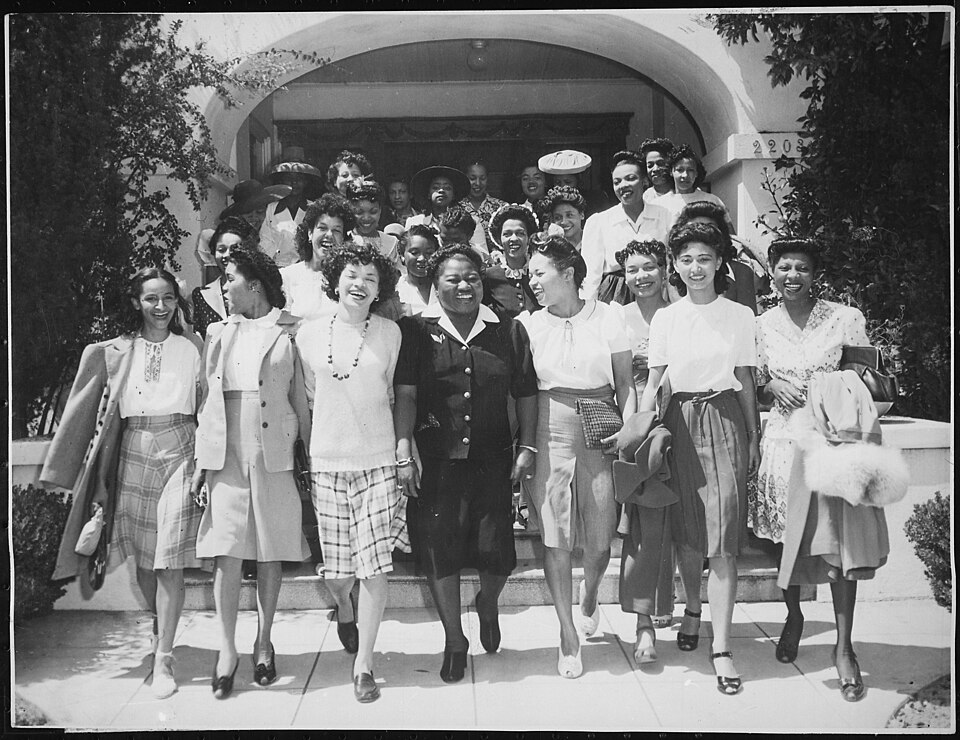
—Tell us about that Sugar Hill lawsuit.
In 1945, I bought a beautiful house in Sugar Hill, where a few of our successful people lived. The white neighbors pulled out their contracts and their racial restrictive covenants—those fine-print lines that forbade selling to a non-white—and they wanted to throw us out, like chasing intruders. This time, no apology telegram, no back table: the courthouse. We argued that these covenants violated the Fourteenth Amendment, and we won. It was bigger than my house, believe me. Three years later, the Supreme Court itself, in Shelley v. Kraemer, declared those covenants unconstitutional for the whole country. I like to think that our little fight in Sugar Hill pushed that door open, in its own measure.
It was bigger than my house; it was a door pushed open for the whole country.
—Beyond the lawsuit, what did you experience in that house?
Ah, that house was my real theater, where I finally played my own role. I hosted black artists and musicians from the city, I cooked for them—fried chicken, collard greens, cornbread, the real soul food from my Kansas roots. We laughed loud, we sang, far from the spotlights and the costume designers. In life, you see, I didn't wear an apron: quality dresses, wide-brimmed hats, an elegance that Mammy was never allowed to display. Sugar Hill was the place where I could be a successful woman rather than a celluloid servant. The neighbors wanted to drive me out precisely because they sensed that: within those walls, segregation lost its grip, and a black woman lived free.
In life, I didn't wear an apron: Sugar Hill was where I lived free.
—Before Hollywood, there was music. How did it begin?
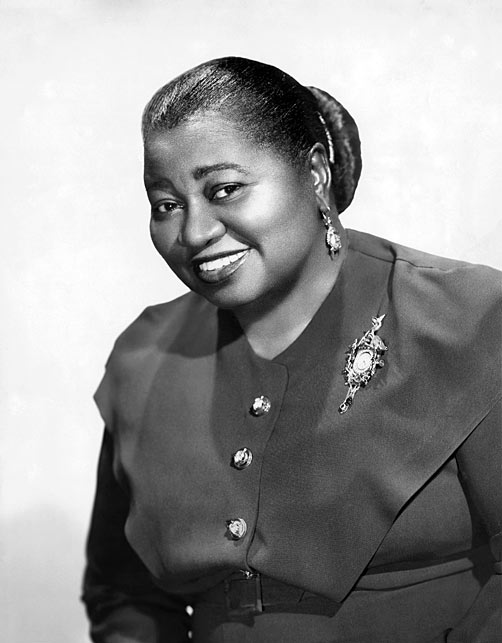
Before the cameras, there was my voice. My mother, Susan, sang gospel, and I grew up with a refrain on my lips. I was a blues singer, one of the first black women to record her voice on records in this country—imagine what that meant, at a time when the stage and the groove were about the only places where they let us exist. The sheet music still lying on my piano comes from those days. The blues taught me everything: the sense of timing, how to convey emotion without a word too many. Later, when I shaped Mammy or Queenie, that's the craft I applied. An actress, at bottom, is just a singer who traded the note for the line.
An actress is just a singer who traded the note for the line.
—What did the nights on Central Avenue mean to you?
Central Avenue was our Harlem of the West Coast, the beating heart of Los Angeles's black community. By day, I spent hours under the lights, in dressing rooms separate from my white colleagues, in a poorly tailored maid's costume. Come evening, I'd slip off to the jazz and blues clubs where no one needed to relegate me to the back: I was at home there. Sometimes I'd get back on stage and sing, like in the early days, among people who had nothing to forgive me for. In this country, segregation closed so many doors that music was one of the few stages they left us. We turned it into a kingdom. Those nights gave me back the breath that the studios had measured out all day.
Those nights on Central Avenue gave me back the breath that the studios had measured out.
—If you imagined people reading you a century from now, what would you want them to remember?
If they are to remember me in a hundred years—what a strange idea, for a girl from Wichita—let it not be only as the first black woman to hold an Oscar. I once told a reporter from Our World that an artist's dignity is not measured by the title of her character, but by the way she embodies it. That is what I would leave behind. I wore the apron they imposed and put my whole talent into it; I lost the Oscars table and won the courthouse in Sugar Hill. My father was born a slave and became a Union soldier; his daughter brought a golden statuette into the house. The road is not finished, it won't be in my lifetime. But they will have seen that it was climbing.
An artist's dignity is not measured by the title of her character, but by the way she embodies it.
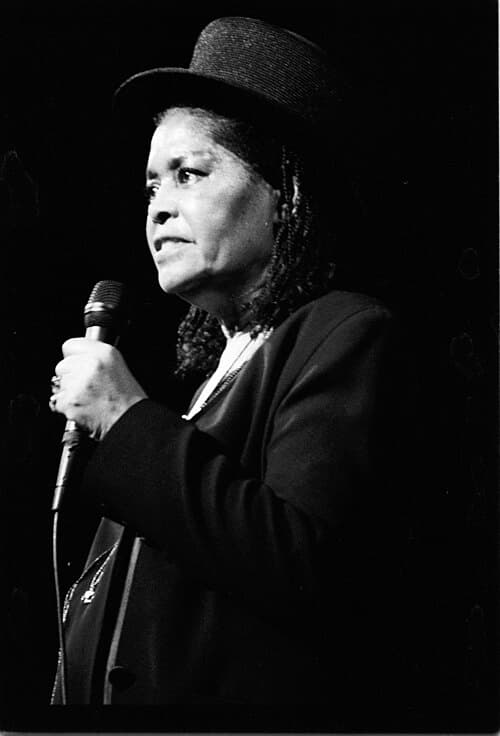
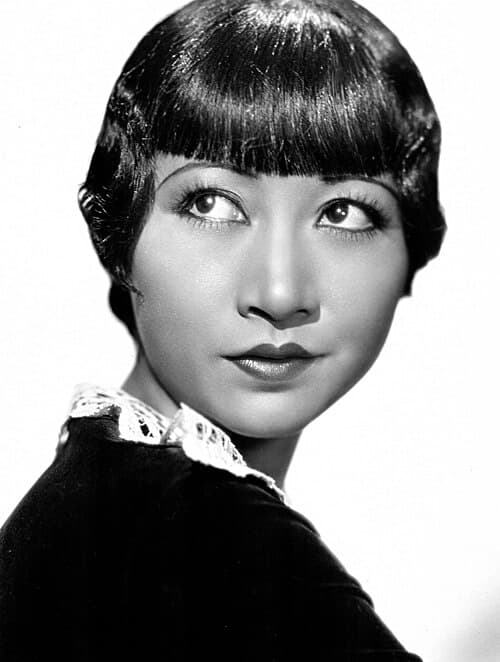

This imaginary interview was generated by artificial intelligence from sources documented in Hattie McDaniel's profile. It dramatises what the figure might have said based on what we know about them, but does not constitute attested historical testimony. For primary sources and factual documentation, refer to the full profile.