Imaginary interview with Hayao Miyazaki
by Charactorium · Hayao Miyazaki (1941 — ?) · Performing Arts · Visual Arts · 6 min read
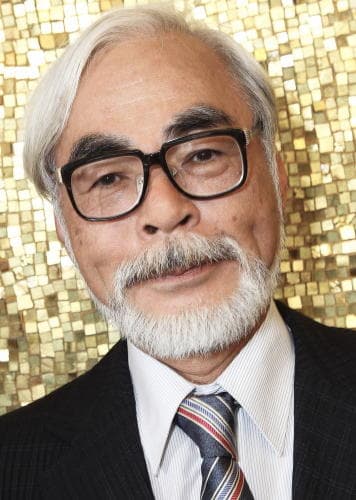
Late afternoon in Koganei, in the western suburbs of Tokyo. Behind the glass windows of Studio Ghibli, the sky turns gray-blue; on the drawing table, hundreds of sheets await, corrected in red pencil. Round glasses pushed up on his forehead, ink-stained apron, Hayao Miyazaki sets down his coffee cup and agrees to trace back the thread of his life.
—You were born in 1941, a few months before Pearl Harbor. What childhood memories still nourish your work today?
I am a child of flying machines. My father and uncle ran Miyazaki Airplane, a small factory that made parts — rudders, mostly — for Zero fighters. We grew up surrounded by technical drawings, wings, propellers, while outside the country burned. When the bombings got closer, the family took refuge near Utsunomiya, and I saw the rice paddies, the hills, the immense sky above a ruined Japan. That's why flight returns again and again in my films: it's not military nostalgia, it's the vertigo of a child who dreamed of tearing himself from the ground while adults made instruments of death. All my life, I've tried to give flight back its innocence.
Flight is not military nostalgia; it's the vertigo of a child who dreamed of tearing himself from the ground.
—In 2013, with The Wind Rises, you precisely film an engineer who designs war planes. Why return so late to this family wound?
Because past seventy, I could no longer avoid the question. The Wind Rises is not a celebration: it's the story of a man who desperately loves the beauty of a wing, and whose beauty is used to kill. That's exactly the contradiction of my childhood, of my father. You can draw the most graceful thing in the world and see it turn into a coffin. I wanted to face that, without absolving anyone, not even myself. After that film, I thought my career was over; it was necessary to close somewhere this long conversation with the airplanes of my childhood. Cinema allowed me to fly machines that, this time, drop nothing.
You can draw the most graceful thing in the world and see it turn into a coffin.
—How does a teenager who dreamed of drawing manga one day decide to devote his life to animation?
One evening in 1958, I went to see Hakujaden, The White Serpent, the very first Japanese animated feature in color. I entered the theater as an apprentice mangaka, convinced that my future lay in an inked page. I came out overwhelmed, almost ashamed of my little paper dream. There was an emotion there that a static line had never given me: figures that moved, breathed, loved. I understood that you could breathe life, literally, image after image. Manga remained a drawing you looked at; animation was a world you inhabited. Five years later, I joined Toei Animation as a simple inbetweener, at the very bottom of the ladder, and I was the happiest of beginners.
Manga remained a drawing you looked at; animation was a world you inhabited.
—You started at the very bottom, at Toei. What do you keep from those years of apprenticeship?
You learn the humility of the gesture. At Toei, from 1963, I spent my days drawing the intermediate frames between two key poses — the work of an inbetweener, the one whose name no one sees in the credits but without whom nothing moves. It was also there that I met Isao Takahata, on Horus, Prince of the Sun; a friendship and an exacting standard that lasted a lifetime. I understood that an animated film is not the work of a solitary genius but of an entire workshop breathing together. Even today, I believe you only deserve to direct if you have first suffered over the images that others do not notice. The fluid movement the audience admires is a thousand obscure little hands.
You only deserve to direct if you have first suffered over the images that others do not notice.
—You are described as personally checking thousands of drawings, one by one. Where does this obstinacy for manual work come from?
From the conviction that the hand knows things the machine ignores. Every morning, I open my e-konte, my storyboard, and I redraw, correct, scribble in the margin. In the afternoon, I take my animators' sheets on the light table, I trace, I check that a lock of hair falls just right, that a step carries the right weight. Many find me tyrannical. But a false movement, the eye feels it before understanding it, and the child in the theater does not forgive the lie. I prefer my pencil and my watercolor brush to any computer calculation. When fatigue falls on the workshop, I heat water and prepare ramen for everyone — we go back to work with full bellies.
A false movement, the eye feels it before understanding it, and the child in the theater does not forgive the lie.
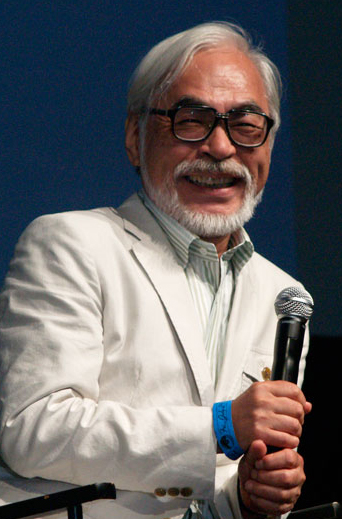
—What does one of your days concretely look like when a film nears its release?
It starts early and with the sky. Before sitting down, I watch the clouds above Koganei for a long time; it's my way of reminding myself what I'm trying to paint. Then comes the storyboard, the sketches, and the entire afternoon spent correcting, discussing each shot with the team. When the release approaches, the days stretch late into the night; we no longer count the hours, only the shots still missing. In the evening, we take a break, a coffee, and talk about progress like sailors talk about the crossing. I ended up imagining a place that shows all this to the public — the Ghibli Museum, in Mitaka, opened in 2001, so that children can see where the images that make them dream really come from.
—Your films often pit humans against nature spirits. Where does this obsession with the invisible world come from?
From the very soil of Japan. In Shintō, every nook can harbor a kami, a spirit; old trees, rivers, stones are not backdrops but presences. As a child, I was taught to greet the forest. In Princess Mononoke, I didn't invent a war between good and evil: I showed humans who need iron to live, and beast-gods who die from that hunger. No one is entirely wrong, and that is what makes the conflict heartbreaking. The yōkai, the whimsical spirits that populate the baths in Spirited Away, come from the tales told in the evening. I don't believe one must choose between progress and the kami; I believe one must live with the remorse of what one damages.
I don't believe one must choose between progress and spirits; one must live with the remorse of what one damages.
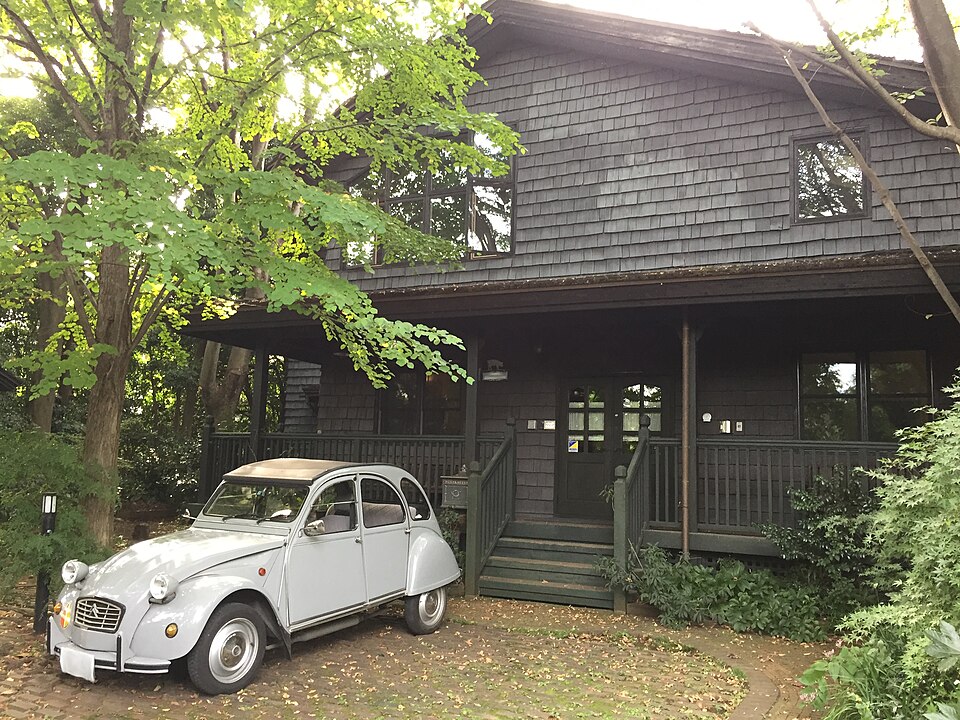
—Some of your landscapes seem taken from a real place. Does the nature around Tokyo directly inspire you?
Absolutely. The Sayama Hills, those forests and rice paddies a stone's throw from the city, gave its soul to My Neighbor Totoro. I found there the rural Japan of my childhood, the one that gets nibbled away a little more each year with concrete. Totoro is not a cute critter to sell plush toys — even if it became one, and I don't complain too much; it's the spirit of a place, the promise that a child can still encounter the sacred deep in a wood. When those hills were threatened, I got involved to protect them, because you cannot spend your life painting nature and let it die outside your window. Filming the beauty of a landscape is already taking its side.
You cannot spend your life painting nature and let it die outside your window.
—In 2003, Spirited Away won the Oscar, but you did not go to collect it. Why this absence?
Because at the same time, the United States was entering the war in Iraq. I could not, with a clear conscience, go smile under the spotlights of Hollywood in a country that had just dropped its bombs. It was not an artist's whim nor contempt for those who love my film — the statuette touched me. But there are times when silence says more than presence. I have spent my life showing what war does to children, to forests, to cities; it would have been indecent to feast while it started again. I was criticized for that gesture, called arrogant. But I believe only that a filmmaker must sometimes refuse his own reward to remain faithful to what his films tell.
There are times when silence says more than presence.
—After so many films about war, nature, and childhood, what would you like your works to convey to those who will watch them?
One thing, ultimately. I once wrote that I wanted to make a film that tells children: 'It's a chance to be alive.' Everything else — the airplanes, the spirits, the walking castles — is only a path toward that sentence. The world I leave them is damaged, frightening sometimes; I don't want to lie to them about that. But I want them to leave the theater with the stubborn desire to continue, to look at the sky, to greet a tree, to hold their sister's hand. People thought I retired after 2013, and yet The Boy and the Heron was born, past eighty, from the same old desire. As long as a child can still marvel, I believe I haven't finished drawing.
As long as a child can still marvel, I haven't finished drawing.
This imaginary interview was generated by artificial intelligence from sources documented in Hayao Miyazaki's profile. It dramatises what the figure might have said based on what we know about them, but does not constitute attested historical testimony. For primary sources and factual documentation, refer to the full profile.