Imaginary interview with Héloïse d'Argenteuil
by Charactorium · Héloïse d'Argenteuil (1101 — 1164) · Literature · Philosophy · 5 min read
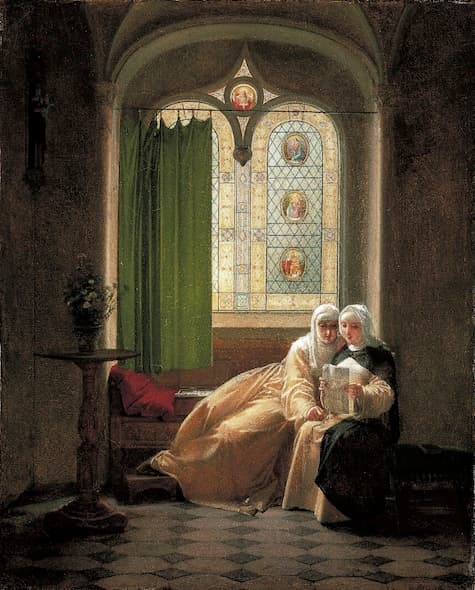
At the Paraclet, in this Champagne where winter bites the stone, the abbess receives us in a cell adjoining the scriptorium. Her pen barely set down, she sets aside an illuminated psalter and agrees to speak of what Paris still whispers: of Abelard, of the schools, and of a love that no veil could extinguish.
—What was the Paris of your youth like, where you received your education?
You would have had to see Paris in those days to believe it. On Mount Sainte-Geneviève and around Notre-Dame, masters held school in the open air, and people came from all Christendom to sit in the mud and hear them debate. I was only a woman—something the century did not expect on the benches of scholars—but my uncle Fulbert, a canon, had favored me with his blood, and I read Latin, some Greek, and even the Hebrew that the nuns of Argenteuil had taught me. They said my learning rivaled that of the best clerics—praise that, for a girl, was almost a wonder. I breathed this nascent scholasticism as others breathe the morning air.
People came from all Christendom to sit in the mud and hear the masters debate.
—Do you remember how Abelard insinuated himself into your uncle's house?
I remember it as a trap in which I was both prey and accomplice. Abelard then reigned over the schools; no master attracted more students. He persuaded Fulbert to board him under our roof in exchange for lessons he would give me—the canon, blind with vanity, thus delivered the lamb to the wolf and paid him besides. Under the pretext of study, our books remained open but unread. The words of dialectic gave way to other murmurs; the wax tablets received more notes than syllogisms. The whole world knows the rest, and what it cost my master in his flesh. I write this neither to excuse him nor to absolve myself.
The canon, blind with vanity, thus delivered the lamb to the wolf and paid him besides.
—Why did you refuse marriage when Abelard offered it, a gesture one would have thought salvific?
Because a husband chained to a wife and cradle is no longer wholly given to philosophy, and Abelard was worth more than being my husband. I told him that the name of friend, or even of concubine, would be sweeter to me than that of wife: I wanted nothing from him but by grace, not by contract. What would a philosopher do with the cries of a nursling and the cares of a household? I wrote to him without reserve: “God knows I never sought anything in you but yourself. I wanted you, not what was yours. I expected neither marriage nor dowry.” I was judged unreasonable; I considered myself the most faithful.
The name of friend would be sweeter to me than that of wife.
—And the child, that Astrolabe with such a strange name, what became of him in this turmoil?
I was carrying his fruit when he took me to Brittany, to his sister, where I gave birth to a boy I named Astrolabe, after that instrument that reads the stars—for I wanted a sign of heaven to remain upon him, lacking the peace we were denied. The marriage took place afterward, but in secret, so as not to ruin the reputation of a master destined by the Church for honors. A fatal secret: it kindled Fulbert's fury more than it appeased it. My child grew up far from me, entrusted to that sister in Brittany, while I was pushed toward the cloister. A mother who does not raise her son carries that like a hairshirt under her robe.
A mother who does not raise her son carries that like a hairshirt under her robe.
—It is said that you took the veil without truly consenting. What happened at Argenteuil that year?
In 1119, at Argenteuil, I pronounced my monastic vows—obedience, stability, conversion of manners—but let no one think I was called by God that day. It was Abelard, wounded in his flesh and jealous even in his misfortune, who demanded it, fearing that another might take me. I went to the altar not for love of Christ, I confess, but out of obedience to a man. This black veil I received, the badge of consecrated nuns, I wore for a long time as a garment endured rather than chosen. It took years of psalms and canonical hours for the external constraint to become, perhaps, an inner consent. Perhaps only.
I went to the altar not for love of Christ, but out of obedience to a man.
—Is it true that, as a respected abbess, you still confessed in writing to thinking of him with passion?
That is true, and I do not deny it, though it scandalizes. When my master's Historia Calamitatum fell into my hands—that account of his misfortunes addressed to a friend—the wound reopened entirely. I wrote to him then, and the whole world may read me: “You know, my beloved, how much I have lost in you.” Even in the choir, at the holiest offices, the images of our former days interposed themselves between God and me; my mouth spoke the psalms, my thoughts wandered to him. An abbess should not confess that. But I have always held that lying before God is worse than weakness, and I prefer to be guilty of truth.
My mouth spoke the psalms, my thoughts wandered to him.
—You addressed to Abelard a long series of theological questions. What did you expect from this exchange?
I expected that he would not treat me as a woman to console, but as a mind to instruct. I gathered for him forty-two questions on Scripture and doctrine—the Problemata still preserved—not to embarrass him, but because reading the Holy Books raises difficulties that an honest heart cannot silence. Why does one verse seem to contradict another? How to reconcile letter and spirit? That is what dialectic teaches us to untangle. My nuns at the Paraclet were not only to sing the psalter but to understand what they sang. Questioning the master was not defying him: it was honoring the reason God gave us to approach Him.
Questioning the master was not defying him: it was honoring the reason God gave us.
—How did a woman of your century acquire learning reserved for clerics?
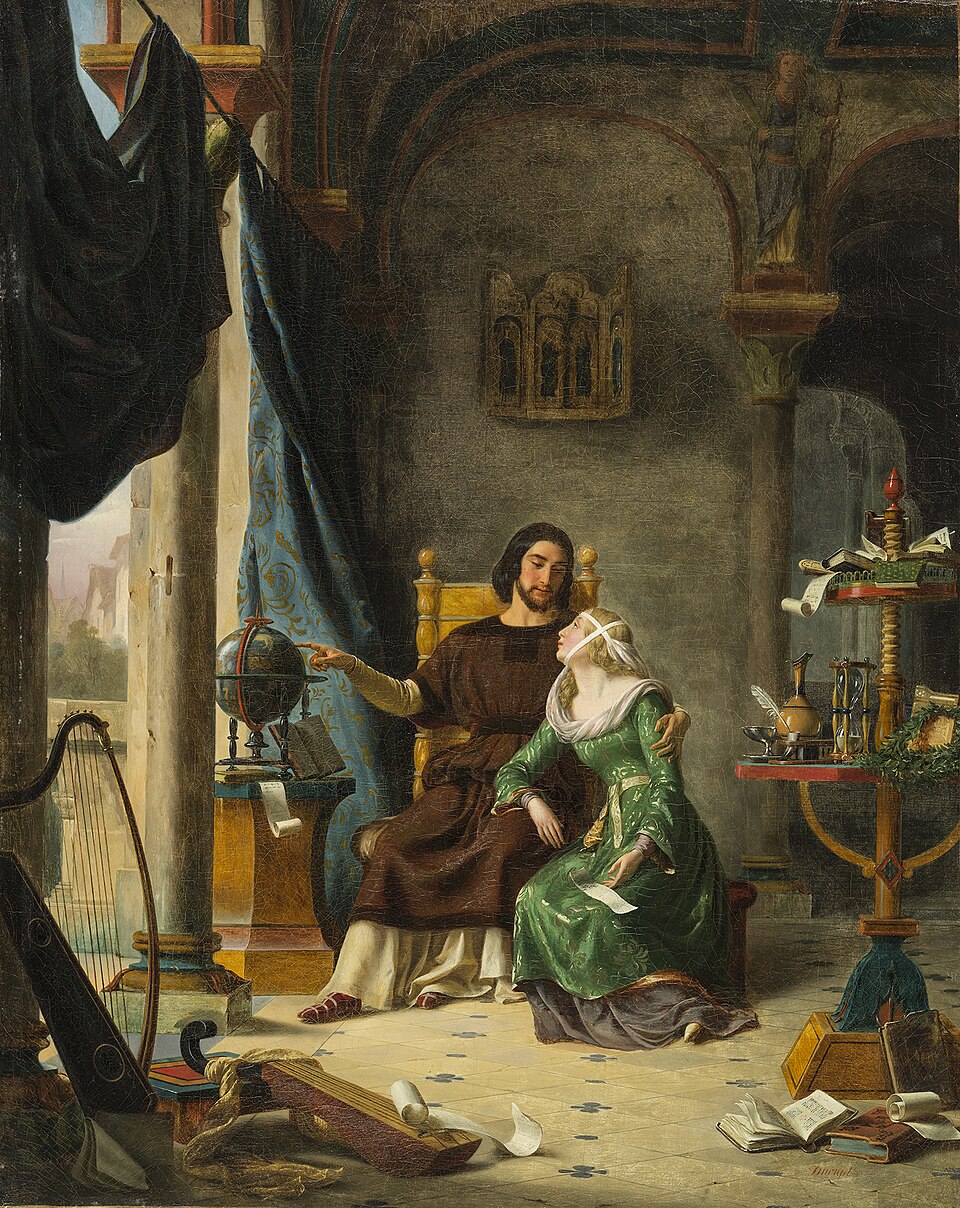
Through tenacity, and by the grace of being born where books were not forbidden. At Argenteuil, as a child, I learned to cut my own quill and to spare parchment, that sheepskin too precious to waste a word on. Then came the masters, and especially Abelard, the most subtle dialectician of his time. I asked him to compose hymns and sequences for us so that our office might be adorned with songs worthy of the Paraclet—for beauty too is a science. People marveled that a nun could quote Cicero as well as Saint Jerome. I replied that the mind has no sex before the truth, though the century judges otherwise.
The mind has no sex before the truth, though the century judges otherwise.
—Why did you challenge the Rule of Saint Benedict, which so many monasteries followed without demur?
Because it was written by a man for men, and it was laid upon our shoulders without regard for who bore them. The Rule of Saint Benedict imposes fasts, vigils, labors tailored for bodies that nature did not make like ours. I pleaded with Abelard for a rule proper to nuns, and I wrote to him clearly: “We cannot impose on women the same bodily burden as on men. Nature itself exempts them from it.” This was not softness, but reason: why break God's handmaidens with rigors that do not make them holier? Let moderation govern piety, not the pride of suffering.
This rule was written by a man for men, without regard for who bore it.
—What does this Paraclet that you lead today mean to you?
The Paraclet—the Comforter, as the Spirit that soothes is called—was first a poor oratory that Abelard raised in Champagne, then he offered it to us when my sisters were driven from Argenteuil, around 1129. I made it a place of learning as much as of prayer. Each day, I preside over chapter where the rule is read and common affairs are settled; I seal our charters with my abbatial seal, I watch over the scriptorium as over the lands. The consolation that this name promises, I believe I have sought less in forgetfulness than in work. When Abelard died, his body was brought here, as was fitting. I await the day I will be laid beside him: what the century denied us, the earth of the Paraclet will grant us.
What the century denied us, the earth of the Paraclet will grant us.

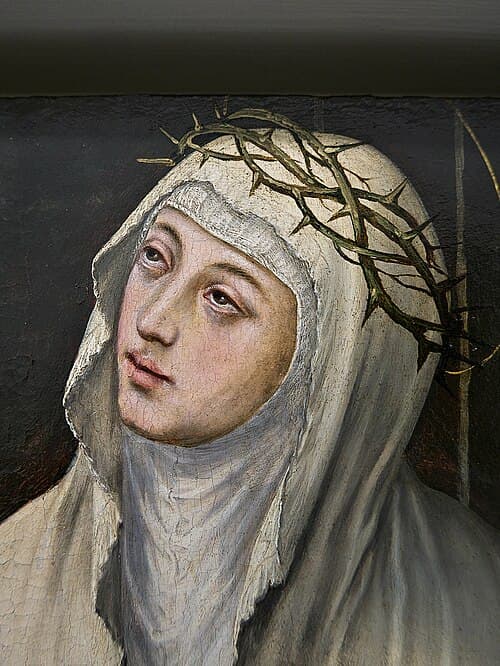
This imaginary interview was generated by artificial intelligence from sources documented in Héloïse d'Argenteuil's profile. It dramatises what the figure might have said based on what we know about them, but does not constitute attested historical testimony. For primary sources and factual documentation, refer to the full profile.