Imaginary interview with Ibn Taymiyya
by Charactorium · Ibn Taymiyya (1263 — 1328) · Spirituality · Philosophy · 5 min read
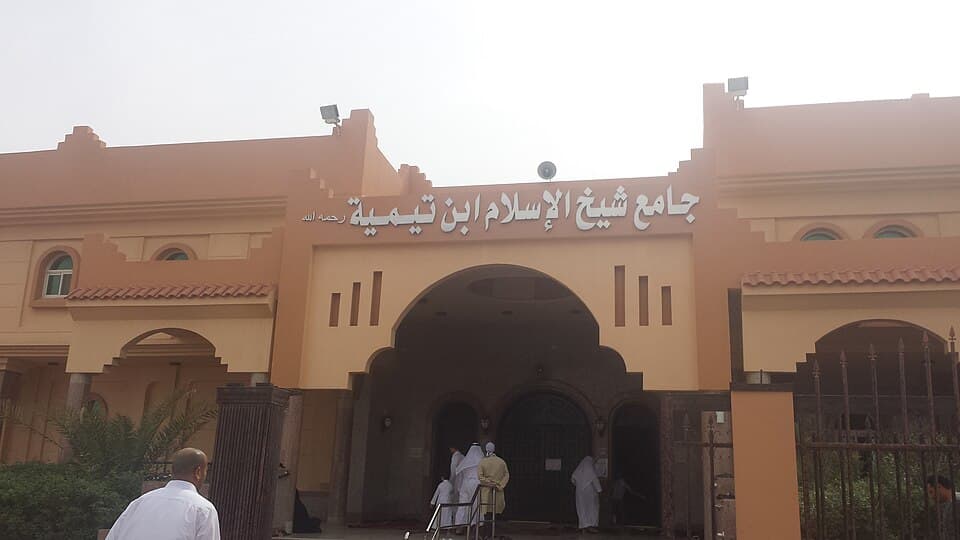
Damascus, the year 1326. In a cell of the citadel, a man in a worn turban lifts his eyes from a wall he is covering with verses traced in charcoal, for lack of ink. His voice is calm, almost joyful, as if the bars were a favor from heaven.
—They have taken your pen and inkwell here in the citadel. How do you experience this silence they wish to impose on you?
They think they have silenced me by taking the reed and ink from my hands, but they have only moved my workshop. The true prison, the one I fear, is not these walls of Damascus: it is the heart turned away from its Lord, the man made captive by his passions. The rest is but a retreat. I have spent so many years among these stones that I have learned what the freedom outside would have hidden from me: my garden, I carry it within. So I trace my commentaries on the wall with whatever comes to hand, I recite from memory pages of the Majmu' al-Fatawa, and I give thanks. What can my enemies take from me that is worth what they unknowingly offer me?
The true prison is not these walls: it is the heart turned away from its Lord.
—You speak of these stays in prison almost as a grace. What do you find in confinement that the free world did not give you?
Outside, one is assailed: a disciple questioning, a judge summoning, a crowd pressing in the mosque after the noon prayer. Here, within these four walls, the soul strips itself bare as the body is content with bread and dates. I have always lived frugally, in the manner of the salaf, those pious ancestors whose example I ceaselessly invoke; the cell only completes what fasting had begun. The captive of the body who keeps his heart free is richer than the prince whose soul is chained. I have never written better than when deprived of my inkwell, never prayed better than without a lamp. They punish me, and they purify me.
They punish me, and they purify me.
—In the year 1300, you left your chair to go negotiate with the Mongol khan yourself. What drives a scholar to become an ambassador?
When Ghazan Khan made Damascus tremble, the city's great men trembled more than the walls. A scholar who remains seated on his study carpet while the blood of his people is about to flow has understood nothing of his knowledge. Commanding good and forbidding evil is not a school exercise: it requires speaking to the powerful in their language and risking one's person. So I went to meet the Mongol, not to lecture him, but to wrest the lives of the inhabitants from his wrath. Then I helped rally our people for defense. Knowledge that does not descend into the street is merely a library ornament.
Knowledge that does not descend into the street is merely a library ornament.
—Three years later, at Marj al-Suffar, you called for jihad against these same Mongols. How did you justify fighting invaders who claimed to be Muslims?
At Chaqhab, in that plain south of the city, in the year 1303, I saw horsemen who bore the name of Islam on their lips and the devastation of divine law in their deeds. Jihad here was not a thirst for blood: it was the defense of the community against those who plundered mosques and governed by the yasa of their ancestors rather than by revelation. The profession of faith is not enough if it is belied by one's entire conduct. I exempted the fighters from fasting so they could keep their strength, and I promised them victory in God's name. It came. I have been criticized for this boldness; I claim it.
The profession of faith is not enough if it is belied by one's entire conduct.
—You devoted an immense work to denying any contradiction between reason and revelation. Why did this struggle seem so urgent to you?
Because in my time, the proponents of kalam claimed one had to choose: either reason or the sacred text. What a trap! In my Dar' Ta'arud al-'Aql wa-l-Naql, I showed that a certain rational proof can never contradict an authentic scriptural proof. If a contradiction appears, it is because one of the two is not truly established: either reason limps, or the text is misunderstood. God, who created intelligence and revealed the Book, does not contradict Himself. The rationalist theologians thought they were saving faith by subjecting it to their syllogisms; they were only setting up a Greek tribunal above the words of the Prophet. I wanted to restore to the upright man confidence in his two eyes: sound reason and revelation.
God, who created intelligence and revealed the Book, does not contradict Himself.

—So you rejected the tools of the philosophers. What exactly did you reproach in that learned theology that so many pious men admired?
I do not reject reason, let us be clear: I reject dressing it up as the mistress of faith. Kalam was born from the desire to defend Islam with the weapons of the Greeks, but the weapon turned against the one who wielded it. People ended up imposing on the believer abstract divine attributes, stripped of everything the Book affirms, under the pretext of avoiding anthropomorphism. My answer lies in a simple method, which I set forth in Al-'Aqida al-Wasitiyya: believe what God has attributed to Himself, without distortion or denial, without asking how. Returning to the salaf means abandoning these scaffolds and drinking from the source. Any innovation, any bid'a added to the original deposit, distances instead of drawing near.
The weapon turned against the one who wielded it.
—Some of your fatwas, particularly against the veneration of tombs, earned you trials and prison. Why did you insist on practices the people cherished?
Because the piety of the people, however sincere, can go astray. I saw men prostrating before tombs, imploring the dead, making a mausoleum into a second sanctuary: that cracks tawhid, the oneness of God, which is the beating heart of our faith. A fatwa is not an opinion one moderates according to popular favor; it is an opinion one must utter even when it displeases. I was dragged before the judges of Cairo as early as 1306, then again for my opinions on divorce and oaths. In 1326, I was imprisoned for good because of the visitation of tombs. Let them imprison me: I will not retract what the text commands.
A fatwa is an opinion one must utter even when it displeases.
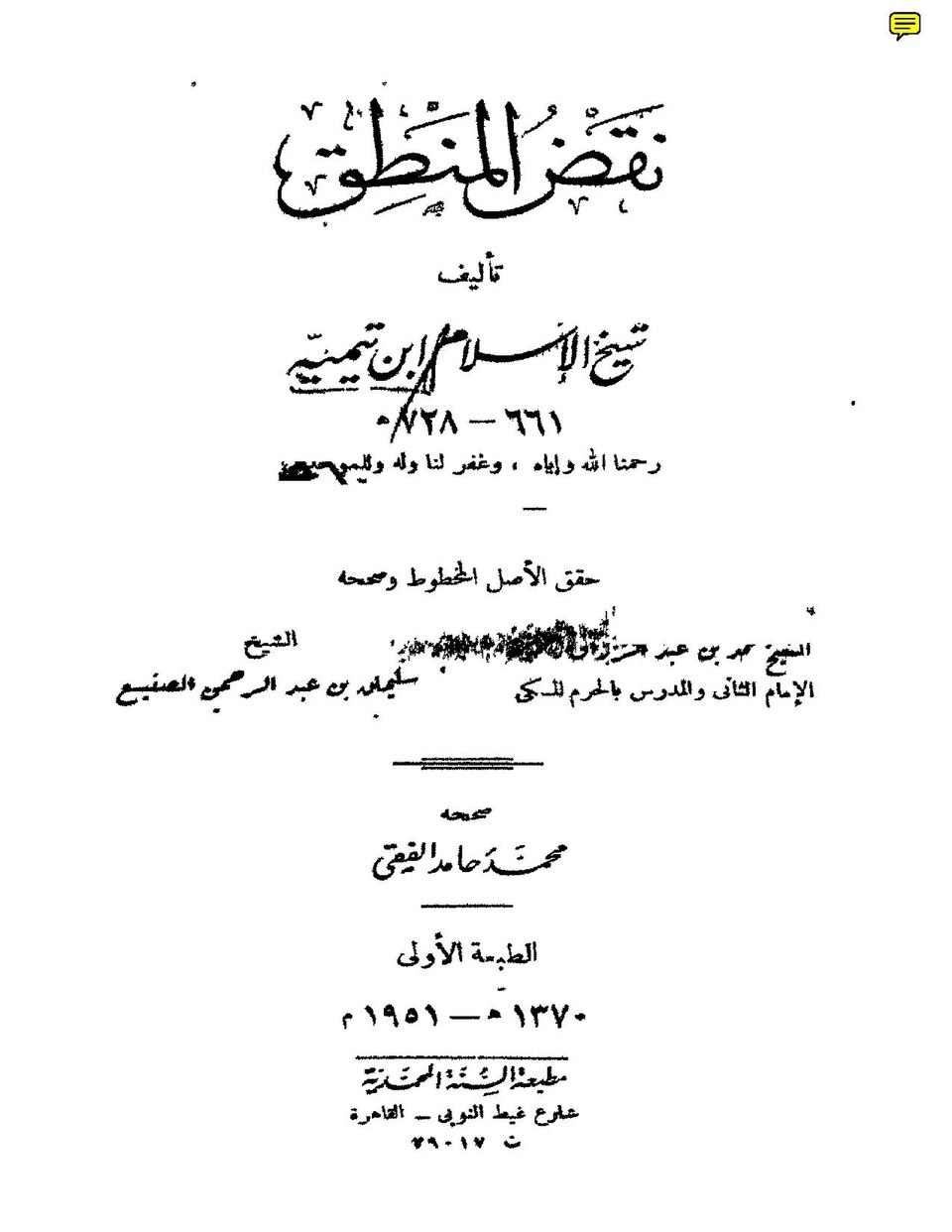
—Your rivals among the jurists did not spare you. How do you explain this persistent hostility from the authorities and scholars of your time?
A man who disturbs habits reaps enemies as the fig tree reaps wasps. Many judges held their positions through comfort and custom; I came to remind them of the source, and the source disturbs. My decisive opinions on tombs, oaths, divorce—each stirred up a faction. The Mamluk authorities prefer a docile scholar to a truthful one. So they multiplied trials, sometimes in Cairo, sometimes in Alexandria around 1309. I do not claim to be loved by all; I claim to be faithful. The Prophet himself was driven from his city. Who am I to hope for more regard than the truth ever received?
The authorities prefer a docile scholar to a truthful one.
—It is said that as a young man, you copied from memory a book a bookseller refused to lend you. How did you forge this prodigious memory?
The wonders of the dead are always exaggerated, but it is true that I have the grace to retain what I read. As a child in Damascus, a book that was refused me, I carried it away with my eyes and returned it with my mouth. This memory is not a parlor trick: it is the jurist's tool. How can one base a fatwa without carrying within oneself hundreds of hadiths and the opinions of the ancients? I spent my mornings at the rahla, that small wooden lectern where the Quran rested, reading and rereading the collections. Memory is a muscle that fasting sharpens and distraction rusts. I nourished it with sources, not chatter.
A book that was refused me, I carried it away with my eyes and returned it with my mouth.
—You lead a life of great simplicity—bread, dates, frequent fasts. What does a man seek in such voluntary austerity?
A loaded table weighs down the soul as it does the body. I am content with bread, dates, a few vegetables, and water, and I fast beyond what the law requires, not out of ascetic pride, but because a full stomach makes the mind lazy. My wool robe, the jubba, and my turban have no other luxury than being clean. The truly rich man is he who needs nothing. My days are divided between the mosque at dawn, study until noon, teaching in the afternoon, writing in the evening by lamplight. This frugal rhythm I have kept both free and imprisoned. He who possesses little—no one can take it from him, and he remains entirely for his Lord.
The truly rich man is he who needs nothing.
This imaginary interview was generated by artificial intelligence from sources documented in Ibn Taymiyya's profile. It dramatises what the figure might have said based on what we know about them, but does not constitute attested historical testimony. For primary sources and factual documentation, refer to the full profile.