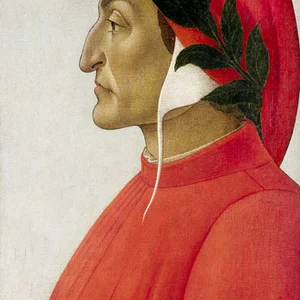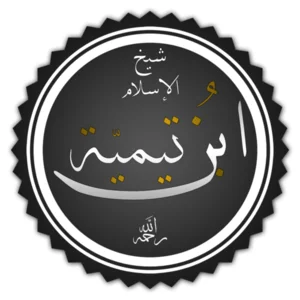

A Muslim theologian, jurist, and philosopher of the Hanbali school, born in Harran in 1263 and died imprisoned in Damascus in 1328. A rigorist and controversial thinker, he advocated a return to the scriptural sources of Islam and criticized many practices of his time.
Ibn Taymiyya(1263 — 1328)
Ibn Taymiyya
sultanat mamelouk d'Égypte
6 min read
Frequently asked questions
Key Facts
- Born in 1263 in Harran, fleeing with his family to Damascus as the Mongols advanced
- Issued a fatwa authorizing jihad against the Ilkhanid Mongols despite their conversion to Islam (around 1300)
- Imprisoned several times in Cairo and Damascus for his theological positions
- Died in prison in Damascus in 1328, deprived of his books and writing materials
- His work had a lasting influence on later reformist and Salafist movements (18th-20th centuries)
Works & Achievements
A vast collection of his legal and theological opinions, compiled into dozens of volumes, which remains a major reference for the Hanbali school.
A concise statement of faith setting out his understanding of the divine attributes, which became a foundational text of the doctrine he defended.
A major philosophical work denying any contradiction between sound reason and authentic revelation, aimed against the rationalist theologians.
A treatise on government according to religious law, setting out his ideas on power, justice, and the duties of rulers.
A lengthy refutation of Twelver Shia doctrines, in which he also develops his critique of philosophy and kalam.
An epistle on the names and attributes of God and on divine decree, synthesizing his method between scriptural affirmation and the rejection of anthropomorphism.
Anecdotes
Ibn Taymiyya spent a large part of his life in prison, but he regarded these stays as a blessing. He is said to have called prison a spiritual retreat, declaring: “What can my enemies do to me? My paradise is in my heart.” He continued to write and teach from his cell.
In 1300, when the Mongols threatened Damascus, Ibn Taymiyya went himself to negotiate with their leader Ghazan Khan in order to spare the population. He also helped rally the inhabitants to defend the city, combining the authority of a scholar with concrete action.
His memory was legendary: it is said that, as a young man, he copied out a book that a bookseller refused to lend him after reading it only once, then returned it by reciting it from memory. His contemporaries marveled at his ability to quote hundreds of hadiths and legal opinions by heart.
He died in 1328 in the citadel of Damascus, where he had been imprisoned after his ink and pens were taken away to stop him from writing. It is reported that tens of thousands of people attended his funeral, a sign of his popularity despite his official condemnations.
Ibn Taymiyya issued fatwas that became famous, notably against certain popular practices such as the excessive veneration of tombs. These uncompromising positions earned him the hostility of many rival jurists and several trials before the Mamluk authorities.
Primary Sources
The true prisoner is the one whose heart is imprisoned away from his Lord, and the real captive is the one whom his passions have taken captive.
We believe in what Allah has attributed to Himself in His Book and in what His Messenger has attributed to Him, without distortion or denial, without asking how nor drawing comparison.
Religious authority means commanding good and forbidding evil, and no one can carry it out without holding both power and justice.
It is impossible for a certain rational proof to contradict an authentic scriptural proof; if a contradiction appears, it is because one of the two is not truly established.
Key Places
City in Upper Mesopotamia where Ibn Taymiyya was born in 1263, before his family left it in the face of the Mongols.
Mamluk capital of Syria where Ibn Taymiyya grew up, taught, and died. The center of his intellectual activity and his struggles.
Fortress where Ibn Taymiyya was imprisoned several times and where he died in 1328 after being deprived of the means to write.
Capital of the Mamluk sultanate where Ibn Taymiyya was tried and jailed for his theological theses starting in 1306.
Mediterranean port in Egypt where Ibn Taymiyya was once again imprisoned around 1309 during his troubles with the authorities.
Plain south of Damascus where the Mamluks crushed the Mongols in 1303; there Ibn Taymiyya called the fighters to jihad.
Typical Objects
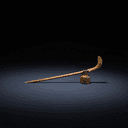
Cut reed and ink that Ibn Taymiyya used to write his countless treatises. The authorities took them away from him at the end of his life to silence him.

A hand-copied edition of Islam's sacred text, the foremost source of his thought. He called for a return to this text against innovations.
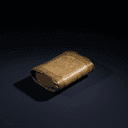
Compilations of the sayings and deeds attributed to the prophet Muhammad, which Ibn Taymiyya knew by heart. They formed the basis of his legal opinions.
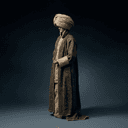
Long garment and wound headdress worn by the ulama of the Mamluk era. They marked the status of religious scholar and jurist.
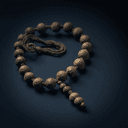
A string of beads used to count invocations and the mention of God's name. A common object of medieval Muslim devotion.
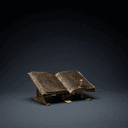
A small folding wooden lectern on which the Quran or study works were placed. Essential to the scholar's work of reading and copying.
School Curriculum
Vocabulary & Tags
Key Vocabulary
Daily Life
Morning
Ibn Taymiyya began his day with the dawn prayer at the mosque, followed by invocations and recitation of the Quran. He then devoted the morning to study and to reading manuscripts.
Afternoon
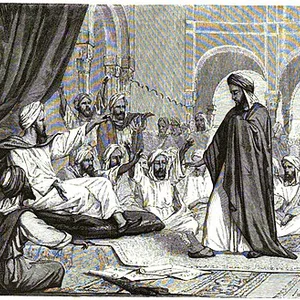
In the afternoon, he taught his students, gave legal rulings (fatwas), and debated with other scholars. A crowd often gathered to hear him in the mosques of Damascus.
Evening
In the evening, after the prayers, he would withdraw to write his treatises by lamplight. Even imprisoned, he spent his evenings composing and meditating on the sacred texts.
Food
Like the ascetic scholars of his time, he led a frugal life, content with bread, dates, vegetables, and water. He fasted frequently, beyond the religious obligations.
Clothing
He wore the plain garb of the ulama: a long woolen or cotton robe (jubba) and a wound turban, without any luxurious ornament, in keeping with his ideal of simplicity.
Housing
He lived modestly in Damascus, dividing his time between the religious schools (madrasas) and the mosques. A significant part of his life unfolded in prison cells, which he turned into places of study.
Historical Timeline
Period Vocabulary
Liens externes & ressources
Références
Œuvres
Majmu' al-Fatawa
fin XIIIe – début XIVe siècle
Al-'Aqida al-Wasitiyya
vers 1306
Dar' Ta'arud al-'Aql wa-l-Naql
vers 1313-1317
Al-Siyasa al-Shar'iyya
début du XIVe siècle
Minhaj al-Sunna al-Nabawiyya
vers 1317-1320
Al-Risala al-Tadmuriyya
début du XIVe siècle