Imaginary interview with Isabella I of Castile
by Charactorium · Isabella I of Castile (1451 — 1504) · Politics · 6 min read
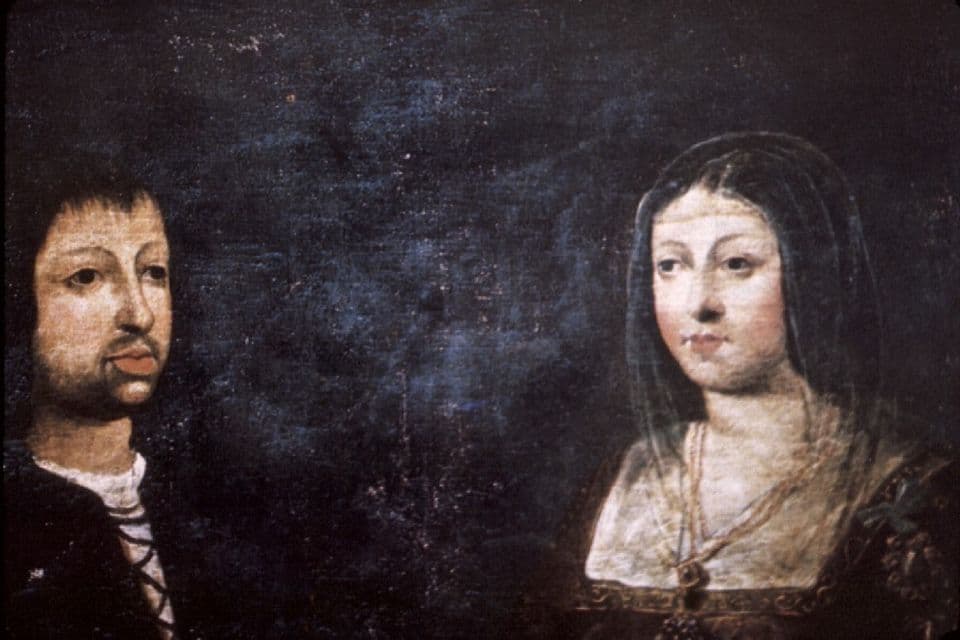
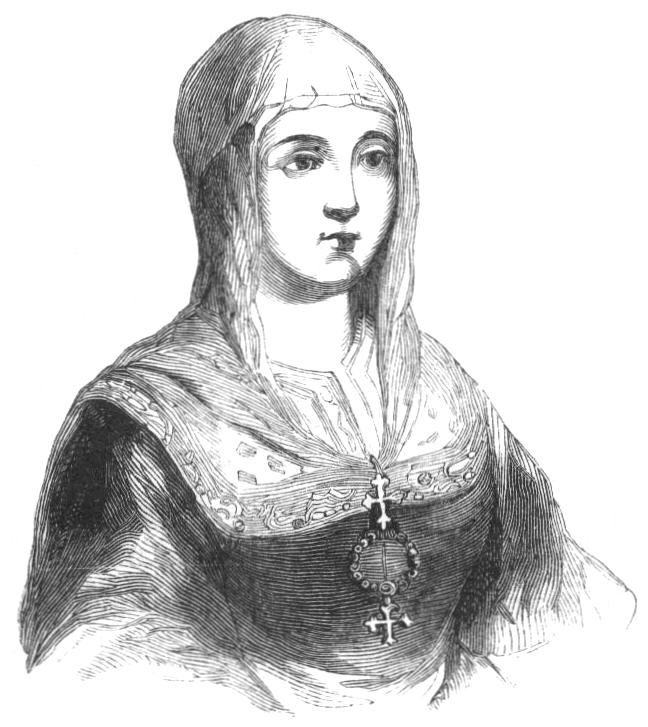
Medina del Campo, autumn 1504. In a chamber of the Castle of la Mota hung with dark tapestries, a queen with a pale complexion but a firm gaze receives us, a rosary between her fingers and, nearby, a rolled sea chart. She speaks in a low voice, as if confessing, and never lowers her eyes.
—Before being queen, you had to conquer your own throne. What is it like to have to wrest a crown from your own family?
People think I was born crowned; they are wrong. I came into the world at Madrigal de las Altas Torres, a village in Castile that no one showed on maps, and I grew up in the shadow of those more powerful than me. When my half-brother Henry IV died in 1474, I proclaimed myself queen in Segovia, but my niece Joanna disputed every village with me, supported by Portugal. Five years of civil war: trampled fields, nobles who changed sides as one turns a cloak. I learned then that legitimacy is not received, it is won with sword and seal in hand. When the kingdom finally recognized me in 1479, I knew I would hold this crown tighter than anyone.
Legitimacy is not received, it is won with sword and seal in hand.
—They say your marriage to Ferdinand is like a novel. What really happened in Valladolid?
A royal marriage is negotiated in broad daylight, with ambassadors and dispensations. Mine was not. In 1469, I was eighteen and my half-brother wanted to give me to someone who would serve his calculations. I chose Ferdinand of Aragon against his will. He had to cross Castile disguised as a merchant, his face under a hood, to meet me in Valladolid, for the roads were closed to him. We married almost in secret, two young people of little fortune uniting two kingdoms that did not know each other. Many saw it as recklessness. I saw the only possible Spain: no longer Castile alone, nor Aragon alone, but one seal for two crowns.
—You have a reputation as a queen who could not stay still. Why this constantly moving court?
A king who sits still rules only over his chair. My court was itinerant: we passed from the alcazars of Segovia to those of Toledo or Burgos, dragging our chests, our archives, and my books of hours along the roads of Castile. It was not whim. I wanted the king's justice to reach the plowman as much as the great lord, and for that I had to go to him. I received petitions on the road, even on war paths, royal documents always on me. With the Ordinances of Toledo, in 1480, I reformed the Royal Council and bridled the nobles; but a law is only as good as the arm that enforces it, and that arm, I wanted everyone to know was mine.
A king who sits still rules only over his chair.
—How do you hold together such a divided kingdom, where every city seemed to obey its own lord?
At my accession, Castile was a body with poorly joined limbs: jealous cities, nobles who dispensed their own justice, finances in tatters. I placed corregidores in the towns, my men, in charge of order and law in the name of the crown, where local factions had previously ruled. The Royal Council became the backbone of government, and the accounts were finally kept. They called me harsh; I reply that disorder is crueler than rigor. When Pope Alexander VI granted us in 1496 the title of Reyes Católicos, it was not only for our faith, but because he saw two sovereigns capable of bending a kingdom to a single will.
—Let us come to Christopher Columbus. Why did you bet on a man so many others had turned away?
Everyone had turned him down, and Portugal first. This man spoke of reaching the Indies by the west, crossing the Ocean Sea; my own scholars shrugged. But I had maps at court, portolans that drew the known coasts of the Atlantic, and I spent hours tracing with my finger those shores where human knowledge ended. They say I pawned my jewels to equip him; the truth is more prosaic, it was crown funds. In April 1492, at Santa Fe, I signed the Capitulations with him: I gave him gold and titles, he owed me a world. On August 3, his caravels weighed anchor.
I gave him gold and titles, he owed me a world.
—What exactly did that contract you signed with him at Santa Fe say?
A sovereign does not commit on a word, but on a sealed document. The Capitulaciones de Santa Fe were clear: we granted him, ' en alguna remuneración de lo que ha descubierto en las Mares Océanas… el oficio de Almirante en todas aquellas islas y tierras firmes '. Admiral, viceroy, governor of what he would find — and a share of the gold. It was a lot for a landless Genoese. But I knew that a man risks his life on the unknown only if he sees his fortune in it. When, two years later, at Tordesillas in 1494, I drew a line with Portugal dividing the ocean, it was no longer a sailor's dream: it was already the survey of a world I had never seen.
—1492 was also the year of the edict that expelled the Jews from your kingdoms. How do you bear that decision?
I do not disown it, and I know I will be judged for it. The same month Granada fell, in March 1492, we sealed the Alhambra Decree. The text ordered that ' todos los judíos y judías… salgan de todos los dichos nuestros reinos ' before the end of July. Many left, taking what they could; others became conversos. I had already, as early as 1478, asked the pope for that tribunal called the Inquisition, and entrusted its rigor to Torquemada. Some see cruelty; I saw the unity of a faith without which, I believed, no kingdom stands. My rosary never left me, and it was it, more than the scepter, that guided my hand when I signed those decrees.
It was my rosary, more than the scepter, that guided my hand.
—This faith that animated you, how did it inhabit your days, down to the most ordinary hours?
My day begins before daylight. At dawn, I withdraw to my chapel for Prime and Lauds, my ladies with me, then I hear mass often said by my confessor, the good Cisneros or Talavera. I fast on days marked by the Church, and even at the royal table, abundant with roast meats and fish on lean days, I take care not to betray the sacred calendar. In the evening, I read: chronicles, devotional texts. I even learned Latin in middle age, because I wanted to read the Scriptures without an interpreter. They paint me as an iron queen; I am first a woman who, every morning, puts on her crown after bending her knees.

—During the long Granada War, you were on the front. What did you do there, you, the queen?
People imagine war as a matter of men and lances. It is first a matter of bread and bandages. Ten years, from 1482 to 1492, I followed our armies under the walls of Granada. I organized supplies, for a hungry army scatters before any battle, and I had field hospitals set up for the wounded — tents where they were treated close to the front, which had hardly been seen before me. I sometimes put on armor to appear before the troops; not that I had to fight, but a soldier fights better under the gaze of his queen. And I had the entire city of Santa Fe built in stone, facing the besieged city, so that they would know we would not leave.
War is first a matter of bread and bandages.
—On the morning of January 2, 1492, when the keys of Granada were handed to you, what did you feel?
Eight centuries. That is what weighed in those keys handed to me that morning, under the walls of the Alhambra. Since childhood, I had been told the Reconquista as a debt that Christian kings bequeathed from father to son; and it was in my hands, and Ferdinand's, that it ended. The last Muslim kingdom of the peninsula fell. I see again the banners rising on the towers, the silence then the bells. This palace I entered was not a war ruin: carved stucco, water courtyards, Mudéjar art in all its fineness. I settled there as sovereign. That day, I thought I held the work of my life — I did not yet know that a Genoese was preparing another for me, vaster than the sea.
Eight centuries weighed in those keys handed to me that morning.
—At the hour of dictating your last will, what did you insist on writing for those distant lands you never set foot on?
I die without having seen this world I opened, and that troubles me more than one might think. In my will, this month of October 1504, I begged the king my husband to hold as commended ' las personas, ánimas y bienes de los dichos Indios ', and to suffer no harm to be done to them in their persons or their goods. For I financed caravels, not chains. I wanted souls won to the faith, not men plundered. Will I know if I was obeyed? No. But a queen answers before God for what she orders as much as for what she allows. It is there, more than in Granada or the gold of the Indies, that I want my conscience to be read.
I financed caravels, not chains.
This imaginary interview was generated by artificial intelligence from sources documented in Isabella I of Castile's profile. It dramatises what the figure might have said based on what we know about them, but does not constitute attested historical testimony. For primary sources and factual documentation, refer to the full profile.