Imaginary interview with James Cook
by Charactorium · James Cook (1728 — 1779) · Exploration · 5 min read
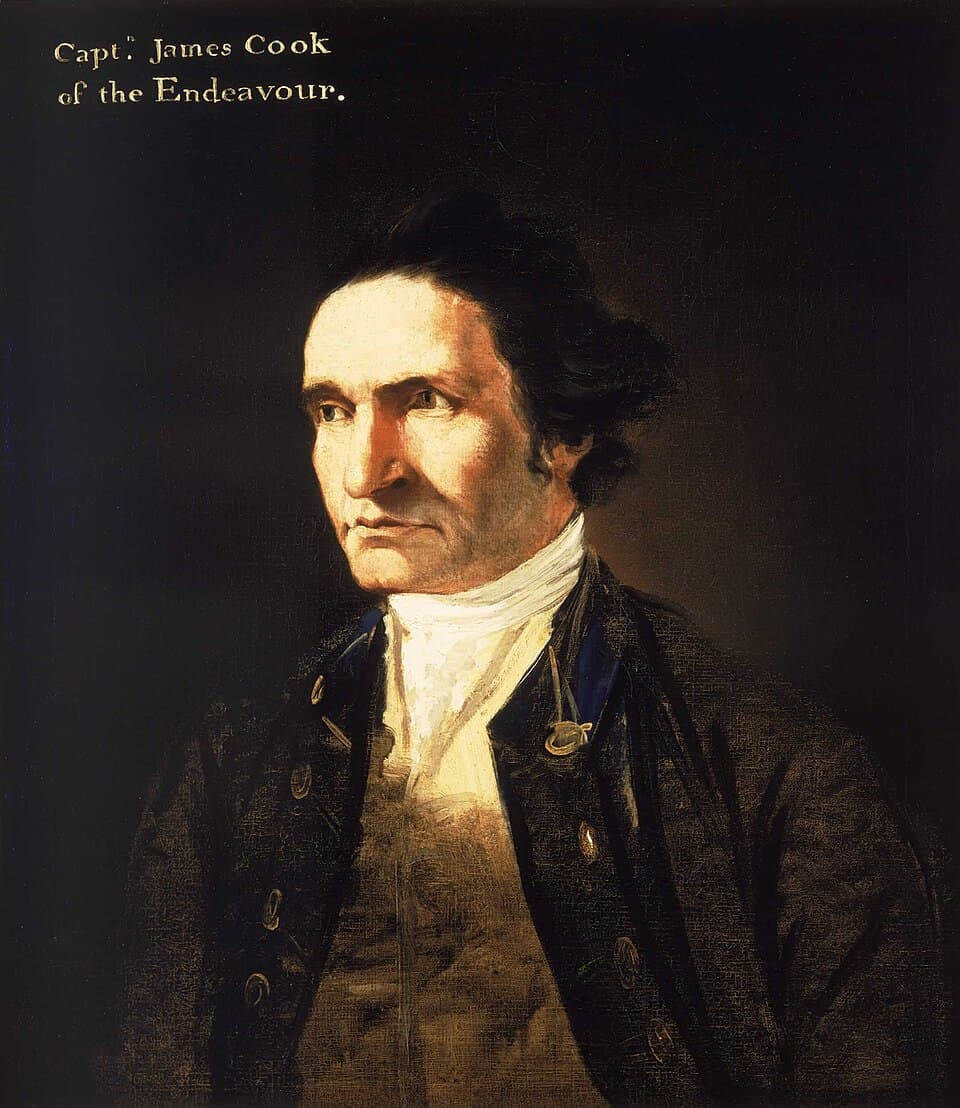
We imagined him in the aft cabin of the Resolution, by the light of a lamp swaying with the swell, a table covered with still-damp charts. The man is lean, methodical, sparing but precise in speech. He agrees to revisit three voyages that took him from Yorkshire to the southern ice and the beaches of the Pacific Ocean.
—How did the son of a Yorkshire farm laborer end up in charge of a Crown scientific mission?
I was born in Marton, into a family that knew the plough better than the longitude. Everything I know I first learned on the Whitby colliers, those heavy barks you have to know how to steer between the sandbanks. That's where the sea trained me, not in drawing rooms. When the Admiralty looked for a man to take the Endeavour to observe the transit of Venus in 1768, they chose me not for my birth but for my surveys of the St. Lawrence, done under fire, before Quebec. I have always believed that a man is worth what he measures and records, not his father's name.
A man is worth what he measures and records, not his father's name.
—It is said that your orders included a secret part. What can you tell us about that?
Officially, I was to take the astronomers to Tahiti to observe the transit of Venus — that passage of the planet across the sun's disk from which we hoped to determine the distance separating us from that star. I wrote to the Admiralty that the observation was made as accurately as the instrument allowed. But I had been given a sealed packet, to be opened only once that task was done. Inside, the order to sail south, in search of the famous southern land. That's how these expeditions worked: an astronomer on deck, and in my pocket, the ambition of an empire that wanted continents.
—Concretely, what did your daily work as a cartographer involve?
In the afternoon, when the coast came into view, I would often go down into a launch to hug the shore closely. With the sextant I took the height of angles, with the compass I took bearings from one headland to another, and we sounded ceaselessly, that lead weight you throw to know the bottom before it rips open your hull. At night, without observations, we sailed by dead reckoning, calculating the course from speed and heading held. In the evening, in this cabin, I corrected the day's plot. A chart is not an ornament: it is the lives of the sailors who will come after you.
A chart is not an ornament: it is the lives of the sailors who will come after you.
—Do you remember the coasts you were the first to fix on paper?
New Zealand, in 1769 and 1770, I circumnavigated entirely, proving that these two islands were not attached to any vast continent. Then came nearly four thousand kilometers of the east coast of New Holland, which I took in the king's name as New South Wales. At Botany Bay, my botanist Banks collected plants that no European had ever seen. Those charts I wanted so accurate that one could rely on them long after me — and indeed they served to found, near Sydney, the first colony of Australia.
—What were you really seeking when you pushed your ships toward the southern ice?
The armchair geographers dreamed of a Terra Australis Incognita, a southern land they supposed rich and populated, to counterbalance the northern lands. On my second voyage, with the Resolution and the Adventure, I crossed the Antarctic Circle in January 1773 — the first to do so, I believe, in the entire history of navigation. We worked our way between mountains of ice, the rigging stiff with frost. I never glimpsed the continent itself. But I understood that if it existed, it lay under ice, inaccessible and barren, not covered with kingdoms to conquer.
If it existed, it lay under ice, inaccessible and barren.
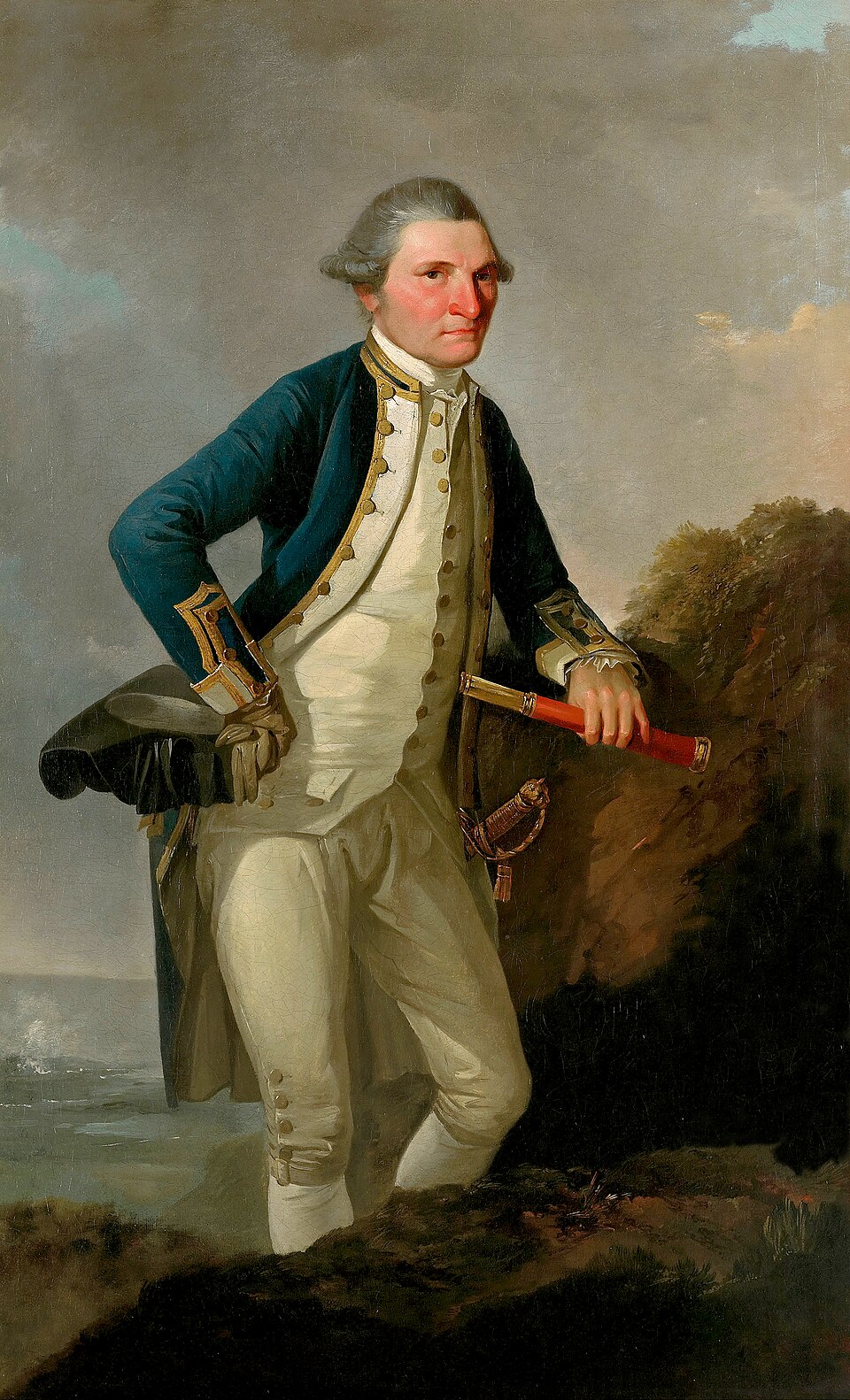
—How did you know you could close that old geographical debate?
By cutting my way across the entire Southern Ocean at high latitudes, I eventually completed a circuit such that there was no room left for a continent, except very close to the Pole. That is essentially what I recorded in the account of that voyage, A Voyage towards the South Pole and Round the World, published in 1777. I had rounded the globe at those latitudes, and I flatter myself that I left little work for those who came after. Refuting a chimera is sometimes better than discovering an island.
—Scurvy decimated crews. How did you keep it at bay on your ships?
Scurvy, that disease that makes gums bleed, teeth fall out, and eventually kills, I never accepted that it was an inevitability of the trade. I imposed on my men a varied diet that many were reluctant to touch: sauerkraut in barrels, fermented malt, citrus fruits, and at every port whatever vegetables and fresh fruit the ports offered. I tasted these unfamiliar foods myself to judge whether they were good. On the Resolution, throughout the entire voyage, not a man was troubled by this disease. Discipline of the belly is as good as discipline of the whip.
Discipline of the belly is as good as discipline of the whip.
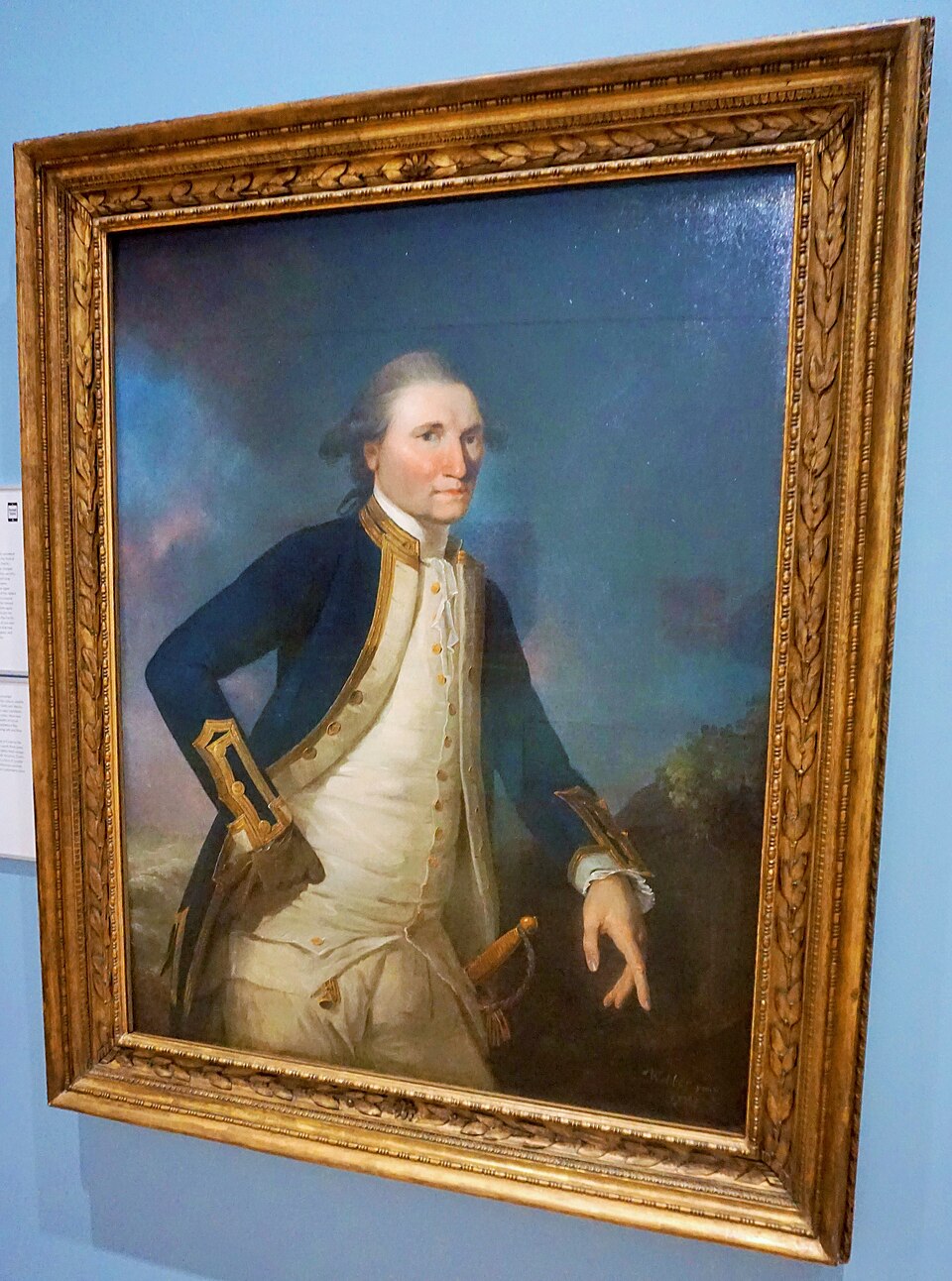
—This obstinacy was eventually recognized as far as London. What did that distinction mean to you?
In 1776, the Royal Society awarded me its medal — the Copley Medal — for preserving the health of my crews during such a long voyage. I admit this honor touched me more than many praises of my charts. Bringing a man home alive to his family seems to me a greater achievement than adding one more coast to paper. I even wrote a report to the Society: the introduction of sauerkraut into the navy would, I wrote, produce happy effects, and the crew of the Resolution could testify to it. A commander who brings back charts but loses half his men has, in my opinion, failed.
—In Hawaii, your arrival was, it is said, extraordinary. How did you experience it?
We touched those islands that I named the Sandwich Islands during my third voyage, which was to seek a passage in the north. At Kealakekua Bay, our arrival fell right in the middle of a great religious festival of their priests, and it seemed to me that I was being received with honors beyond those due a captain — as if I were being taken for a figure of their beliefs. I never sought that nor for a moment believed I deserved it. These misunderstandings between our worlds troubled me: you are bowed to without fully understanding why, and that ignorance, I felt, could become dangerous.
—And when the welcome turned, on that same beach?
We had left, then a mishap forced us to return. The mood had changed. One of our boats was stolen, and I made the mistake of going ashore to bring one of their chiefs back to the ship, as a hostage. On the sand of Kealakekua Bay, on February 14, 1779, the crowd pressed in, stones flew, my men fired, and everything collapsed in a few moments. I was fifty years old then. I had been received almost as a god, and it is on that shore that I fall, in a melee that neither they nor I had been able to prevent. Such is the fate, sometimes, of those who venture to the ends of the known world.
I had been received almost as a god, and it is on that shore that I fall.

This imaginary interview was generated by artificial intelligence from sources documented in James Cook's profile. It dramatises what the figure might have said based on what we know about them, but does not constitute attested historical testimony. For primary sources and factual documentation, refer to the full profile.