Kids interview Jane Austen
by Charactorium · Jane Austen (1775 — 1817) · Literature · 6 min read
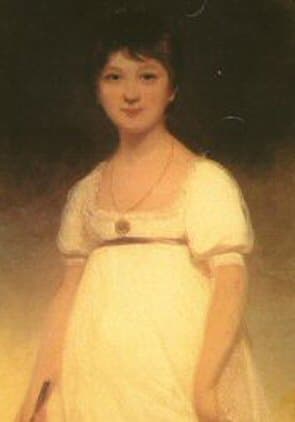
Two young visitors of twelve push open the door of a small country cottage in Chawton. A lady in a high-waisted dress awaits them near the window, a goose quill in hand. She sets down her sewing, smiles, and invites them to sit and answer all their questions.
—Is it true that you hid your stories when someone came into the room?
Yes, my child, it's quite true. I wrote in the family sitting room, where everyone passed through. When I heard the door creak, I quickly slipped my little sheets under a large blotter. You know, that thick paper that dries ink. Imagine you are doing something forbidden, and you have to conceal it in a second. Why all the secrecy? Because in my time, writing was not considered proper for a young woman. A girl was supposed to embroider, play the piano, keep house. So I hid my greatest joy like a shameful secret. And yet it was there, on those scraps of paper, that I truly felt alive.
I hid my greatest joy like a shameful secret.
—And was your name on the cover of your books?
Never. My first novel, Sense and Sensibility, came out in 1811 signed only “By a Lady.” No name. Imagine you write something beautiful, and you cannot say “it's me.” I had a small fall-front desk, a wooden box that closes with a gesture. My manuscripts slept inside, safe from prying eyes. In my lifetime, the public never knew who I was. It was my brother Henry who revealed my name, after my death, in 1817. It pained me a little, I admit. But a woman who showed herself too much risked her reputation. So I preferred to hide behind my heroines.
—How long did you wait before Pride and Prejudice was published?
Sixteen years, my child. Sixteen! I was barely twenty-one when I wrote it. It was then called First Impressions. My father sent it to a London publisher named Cadell in 1797. And do you know what he did? He refused it without even opening it. Imagine being handed back your finest drawing without a glance. I had to wait, put the manuscript away, grow up. It was only in 1813 that it finally appeared, under the title you know. And then, a miracle: success, immediately. Sold out in a few weeks. The lesson? A refusal is not an end.
A refusal is not an end.
—Were you happy when the book finally came out?
Overjoyed, my child! I wrote to my sister Cassandra that I had just received “my own darling child from London.” For I loved that book like a child. Its very first sentence is one of the most famous in my language: “It is a truth universally acknowledged, that a single man in possession of a good fortune, must be in want of a wife.” It is said with a mocking smile, you see. To finally hold that book in my hands, after sixteen years of waiting, was like clutching a treasure.
—Is it true that you said yes to a marriage, and then no the next day?
It is true, and I am not very proud of it. I was twenty-five. A wealthy man, Harris Bigg-Wither, proposed to me. He owned land, a large house. That evening, I said yes. Imagine the relief: never again fear of lacking money. But the night was dreadful. In the morning, I went to him and said no. Why? Because I did not love him. And I did not want to sell myself for a house. That choice, my child, I put into all my novels. My heroines too refuse to marry out of mere calculation.
I did not want to sell myself for a house.
—Then why do the girls in your books want to marry so much?
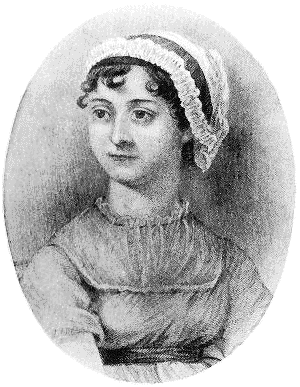
Good question, and the answer is sad. In my time, a girl could hardly inherit. There was a cruel rule called entail. It meant that an estate had to pass to the nearest male heir, never to the daughters. In Pride and Prejudice, the Bennet sisters' house must go to a cousin, a certain Mr. Collins. Imagine your parents die and a distant cousin takes your house. What then, when you are a girl without money? Marriage became almost the only way out. That is why my heroines seek a husband: not out of whim, but out of necessity. And that is what I wanted to show.
—Why did you write village stories and not great adventures?
Ah, I was already criticized for that, you know! One day I wrote to my nephew James Edward that I was working on a very small piece of ivory, two inches wide — about the width of two fingers. On that tiny surface, I painted with a brush so fine. Do you understand the image? I did not want to tell of battles or kings. I wanted to paint everyday life: a ball, a conversation, a heart that hesitates. Imagine observing your own family under a magnifying glass. That is where true passions hide. Small things, my child, often say much more than great ones.
Small things often say much more than great ones.
—Were you ever asked to write something more important?
Yes! The prince's librarian, a gentleman named James Stanier Clarke, suggested I write a great historical romance, a fresco about a royal family. It would have been more saleable, more prestigious. I politely replied that I could only do my “paintings of domestic life in country villages.” Imagine being asked to paint a cathedral when you love drawing your room. I gently refused. I knew my strengths. My tools were simple: a goose quill, paper, and my eyes for observing people. I preferred to succeed at a small true painting than to fail at a large false one.
—While you were writing, there was war in Europe, wasn't there?
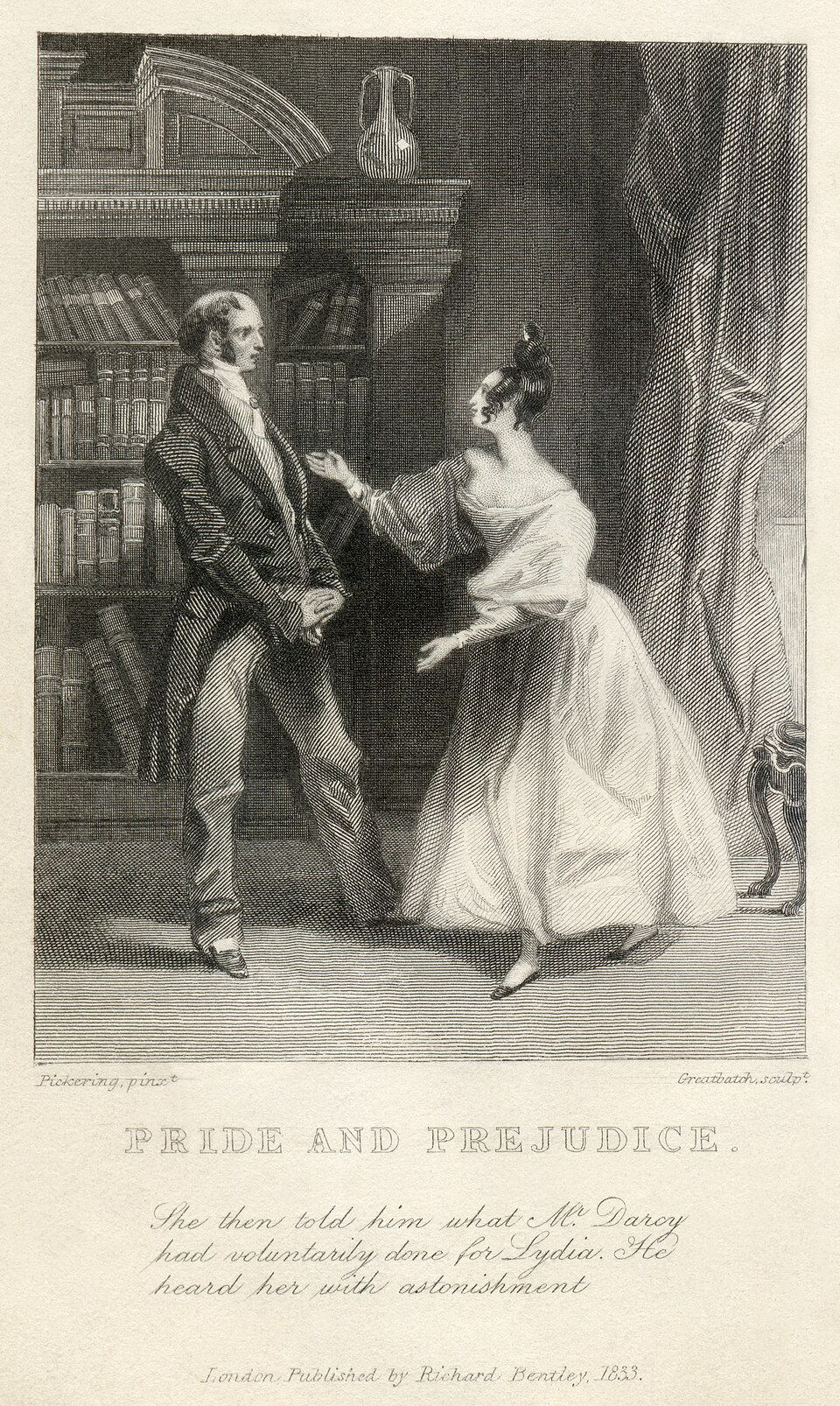
Yes, my child, an immense war. Almost all my life, France and England were fighting. Napoleon was finally defeated at Waterloo in 1815, the very year my novel Emma appeared. And yet I did not write battles. But the war was there, in the background. In Pride and Prejudice, soldiers of the militia — troops raised locally — come to settle near the village. Their uniforms turn the girls' heads! That is how the charming Wickham arrives. Imagine officers in fine red coats descending on a quiet town. Great History entered my drawing rooms through the back door.
—Is it true that a prince wanted you to dedicate a book to him?
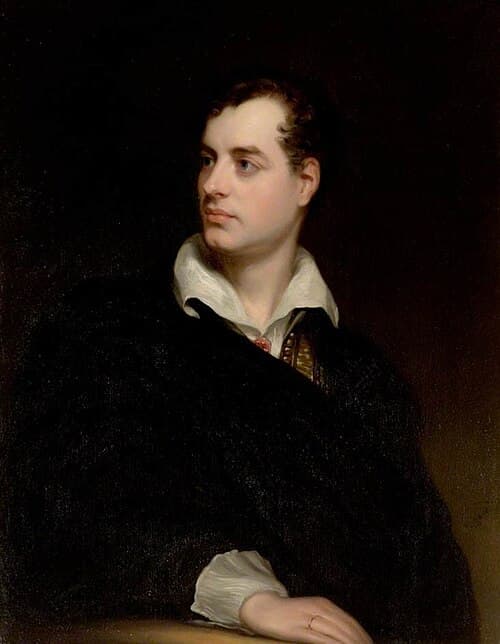
Quite true, and it troubled me greatly! The Prince Regent George, who governed in place of his sick father, greatly admired my novels. He let me know, through his librarian, that I might dedicate a book to him. The problem? I hardly liked that prince. I found him unvirtuous, a man of pleasure. But to refuse a prince was not done. So I obeyed: I dedicated Emma, in 1815, to that royal admirer. Imagine having to give your finest gift to someone you do not esteem. I smiled on the surface, and kept my opinion to myself. A polite woman sometimes knows how to hide what she thinks.
—If someone came to your house in the morning, what would they hear first?
Music, my child! I rose very early, before anyone else. And the first gesture of my day was to play the piano-forte, alone in the silent sitting room. Imagine a sleeping house, and just a few notes gliding through the fresh morning air. Then came family breakfast: tea, toast, butter. Tea, in our house, was sacred. Then, discreetly, I would bring out my sheets and my quill. Those quiet morning hours were my most precious. No visits, no imposed sewing. Just me, my brush of words, and my little piece of ivory to fill.
This imaginary interview was generated by artificial intelligence from sources documented in Jane Austen's profile. It dramatises what the figure might have said based on what we know about them, but does not constitute attested historical testimony. For primary sources and factual documentation, refer to the full profile.