Imaginary dialogue between Cassandra Austen and Jane Austen
by Charactorium · Jane Austen (1775 — 1817) · Literature · 5 min read
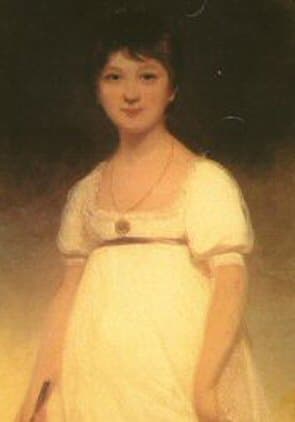
It is in the small drawing-room of the cottage at Chawton, on a grey autumn afternoon in 1816, that Cassandra finds her sister Jane bent over her fall-front desk. The goose quill still rests in the inkwell, and a blotted page lies half-hidden. The two sisters have shared this silence since childhood at Steventon, and Cassandra, who has always been able to read behind her younger sister's face, comes that day to make her speak of herself — not of her heroines.
—Jane, my dear, I have seen you so many times slip your page under the blotter when the door opened. Why hide so much, even from us?
You know better than anyone, Cassandra, you who have always shielded me from prying eyes. Writing is not an occupation readily granted to a woman of our station, and I never wished for a visitor to catch sight of my pages and smile or whisper about them. This fall-front desk that our brother procured for me closes in an instant, and the pen returns obediently to the inkwell. When my novels appeared, they were 'By a Lady,' without name, without face. I believe discretion gave me a freedom that fame would have taken away: one speaks more frankly when one thinks no one is listening.
One speaks more frankly when one thinks no one is listening.
—Do you remember 1797, when our father sent First Impressions to London, and it was returned to you unopened? How did you bear that waiting?
How could I forget it, Cassandra? That publisher, Cadell, refused it with a stroke of the pen, without turning a page. I was barely twenty-one, and for a moment I believed my manuscript would never see the light. It took sixteen years — sixteen! — before it finally appeared under the title Pride and Prejudice. But I do not regret that long sleep: the book you read in 1813 was no longer that of the young girl at Steventon. I recut it, lightened it, as one prunes a tree. When I received my first copies from London, I called it my darling child — and it truly was, after so long a gestation.
The book you read was no longer that of the young girl at Steventon.
—Our nephew James Edward showed you his spirited sketches. You replied that you worked on two inches of ivory. What did you mean to convey?
That dear boy writes with such verve, colour, variety, that I wanted to tell him, smiling, what sets me apart from him. My own work rests on a little piece of ivory, two inches wide, where I paint with so fine a brush that after much labour, the effect seems quite slight. I have been urged, you know, to write a great historical romance based on the house of Saxe-Coburg — it would doubtless bring more profit. But what would I do with so much glory and noise? I can only paint what I see: three or four families in a country village. That is my corner of the world, and it suffices me.
I can only paint what I see: three or four families in a country village.
—I still recall that morning at Manydown when you accepted Harris Bigg-Wither, then retracted by dawn. Why renounce such security?
Ah, Cassandra, that morning remains one of the most painful of my life, and you were the only one to whom I could confess my mingled shame and relief. Harris was an honest man, rich in a fine estate; by marrying him, I would secure our future, after our father's death. But I woke with the horror of a whole life spent without true affection. I know too well the fate of dowerless girls, what the entail holds in store when the estate passes to the nearest male heir. And yet, to marry without love is to condemn oneself in another way. I chose poverty over that lie — and I believe my heroines resemble me in this.
I chose poverty over that lie.
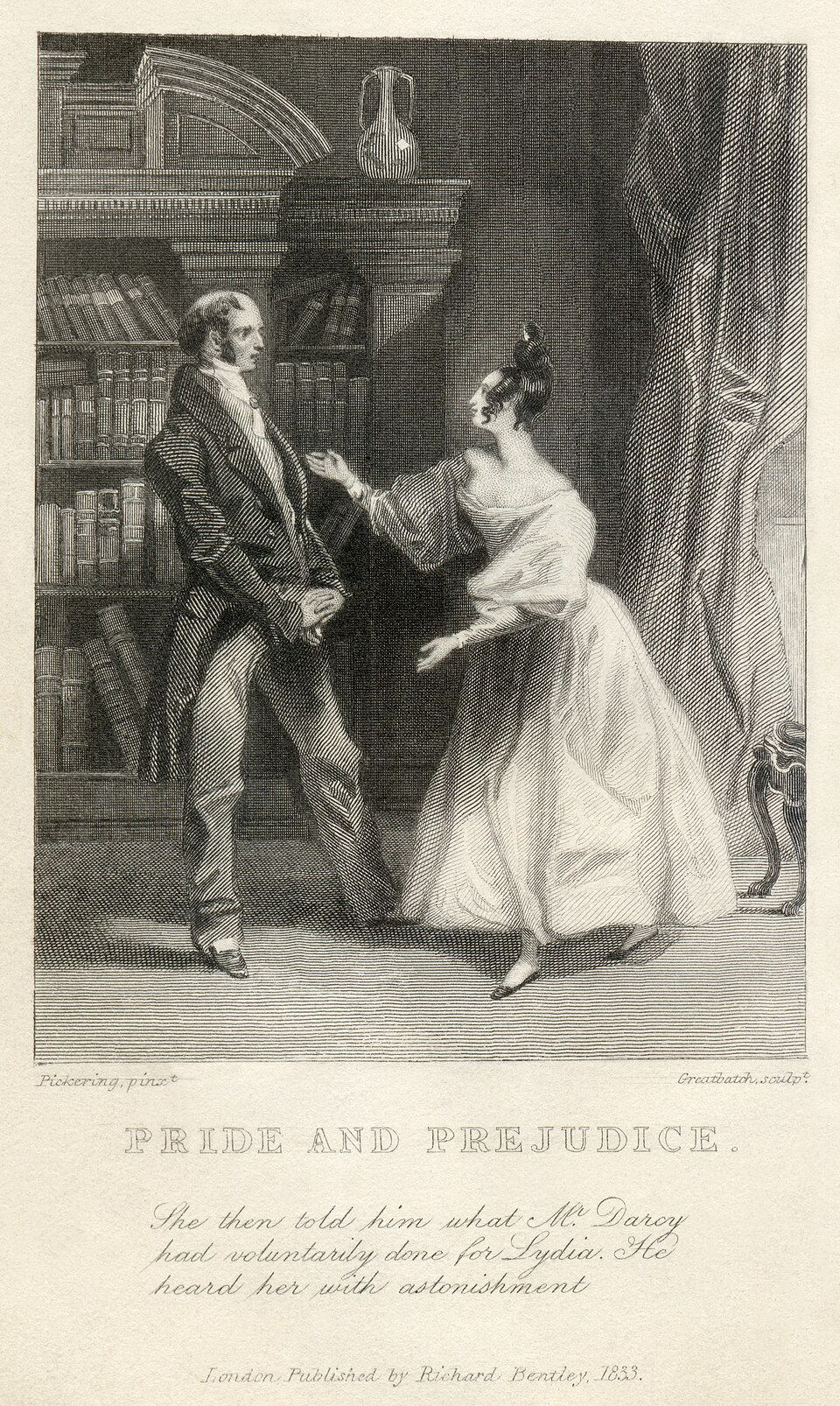
—In Pride and Prejudice, Longbourn must go to that ridiculous Mr. Collins. This mechanism of the entail, you placed it at the heart of the plot. Why did it occupy you so?
Because it is the very truth of our condition, Cassandra, and you know it as well as I. The Bennet girls are five, and not an inch of Longbourn will come to them: it all goes to a cousin they have never seen, that solemn Mr. Collins with his living obtained from the hands of Lady Catherine. That is what drives Mrs. Bennet to marry off her daughters at any cost — not out of folly alone, but from fear of destitution. I wanted to show that cold mechanism behind the balls and ribbons. Marriage, among us, is not only a matter of the heart; it is too often the only door left open to a woman.
Marriage is not only a matter of the heart; it is too often the only door left open to a woman.
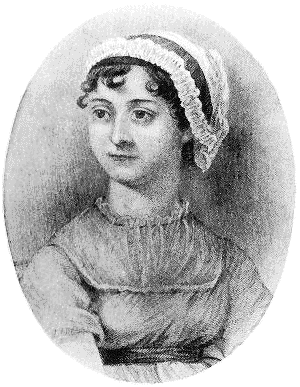
—During our stays with Edward at Godmersham Park, you observed the great houses with an eye I know well. What were you watching for?
Everything, my dear sister, absolutely everything. At our brother's, among the fine rooms and sumptuous dinners, I watched how the wealthy gentry behave: their manners, their vanities, the way a young lady displays her accomplishments — music, drawing, languages — to seem accomplished without quite being so. Think of that Miss Bingley who recites the list of talents a woman must possess! These great houses are theatres where everyone plays their rank. I had only to listen and watch, in silence, from my corner of the drawing-room. The rest I carried here, to Chawton, to set down on my little pages.
These great houses are theatres where everyone plays their rank.
—You delight in depicting the arrival of militia officers in villages, the commotion they cause. What do you find so romantic about those uniforms?
Nothing romantic in themselves, Cassandra — it is the flutter of the young ladies that amuses me! See how the arrival of a regiment in a quiet country town sets all heads spinning. That Wickham, in Pride and Prejudice, has nothing but a fine red coat and pleasing manners, and yet he turns heads, until a silly girl is lost. You and I have seen such officers quartered near us, and such young ladies driven wild by the slightest ball. I do not judge too harshly — the war has lasted so long that these uniforms have become the ordinary backdrop of our countryside. But the gleam of a uniform sometimes poorly hides the poverty of a character.
The gleam of a uniform sometimes poorly hides the poverty of a character.
—You were informed, through the Prince Regent's librarian, that you might dedicate a novel to him. You who have little liking for that prince, how did you receive this honour?
With less enthusiasm than you might imagine, Cassandra, you who know my feelings about that personage. I was given to understand, through his librarian, Mr. Clarke, that His Royal Highness kept my novels in each of his residences and that I might dedicate the next one to him. How to refuse? One does not decline such an invitation from a prince, even when one holds him in little esteem. So I dedicated Emma to the Regent, in very respectful terms. That same Mr. Clarke then pressed me to write august subjects, historical romances. I thanked him and continued my work on my little piece of ivory. A prince may command a dedication; he will never command my pen.
A prince may command a dedication; he will never command my pen.
—Each morning, before the house awakens, I hear you playing the pianoforte, alone. Those silent hours — what do they mean to you?
They are my hours, the only true ones, Cassandra. Before our mother comes down, before visits and needlework, I play for a while, then sit at my little desk while the tea grows cold. The drawing-room is still warm from last night's fire, the light barely coming. It is in this calm that my characters speak to me most clearly. You know how full our afternoons are — neighbours, walks, our mother's garden. If I did not steal these dawns from sleep, I believe not a line would ever be written. You have always respected that silence, and it is perhaps the greatest service you have rendered me.
If I did not steal these dawns from sleep, not a line would ever be written.
—Pride and Prejudice sold out in a few weeks; your pages are eagerly sought in London drawing-rooms. You who remain anonymous, how do you feel about this success?
A strange pleasure, Cassandra, made of joy and a little melancholy. My book is praised in drawing-rooms, read aloud, and no one knows that the author sews and embroiders in a Hampshire cottage. I confess this thought amuses me greatly: hearing my 'darling child' lauded without anyone being able to congratulate me to my face. After sixteen years of waiting, to see Pride and Prejudice prized by the London public is a sweetness I do not disdain. But I would not exchange my anonymity for all the glory of the salons. As long as my name is unknown, I remain free to observe the world without it observing me — and that, for a woman who writes, is the most precious asset.
As long as my name is unknown, I remain free to observe the world without it observing me.
This imaginary interview was generated by artificial intelligence from sources documented in Jane Austen's profile. It dramatises what the figure might have said based on what we know about them, but does not constitute attested historical testimony. For primary sources and factual documentation, refer to the full profile.