Imaginary dialogue between Louis Leakey and Jane Goodall
by Charactorium · Jane Goodall (1934 — 2025) · Sciences · 5 min read
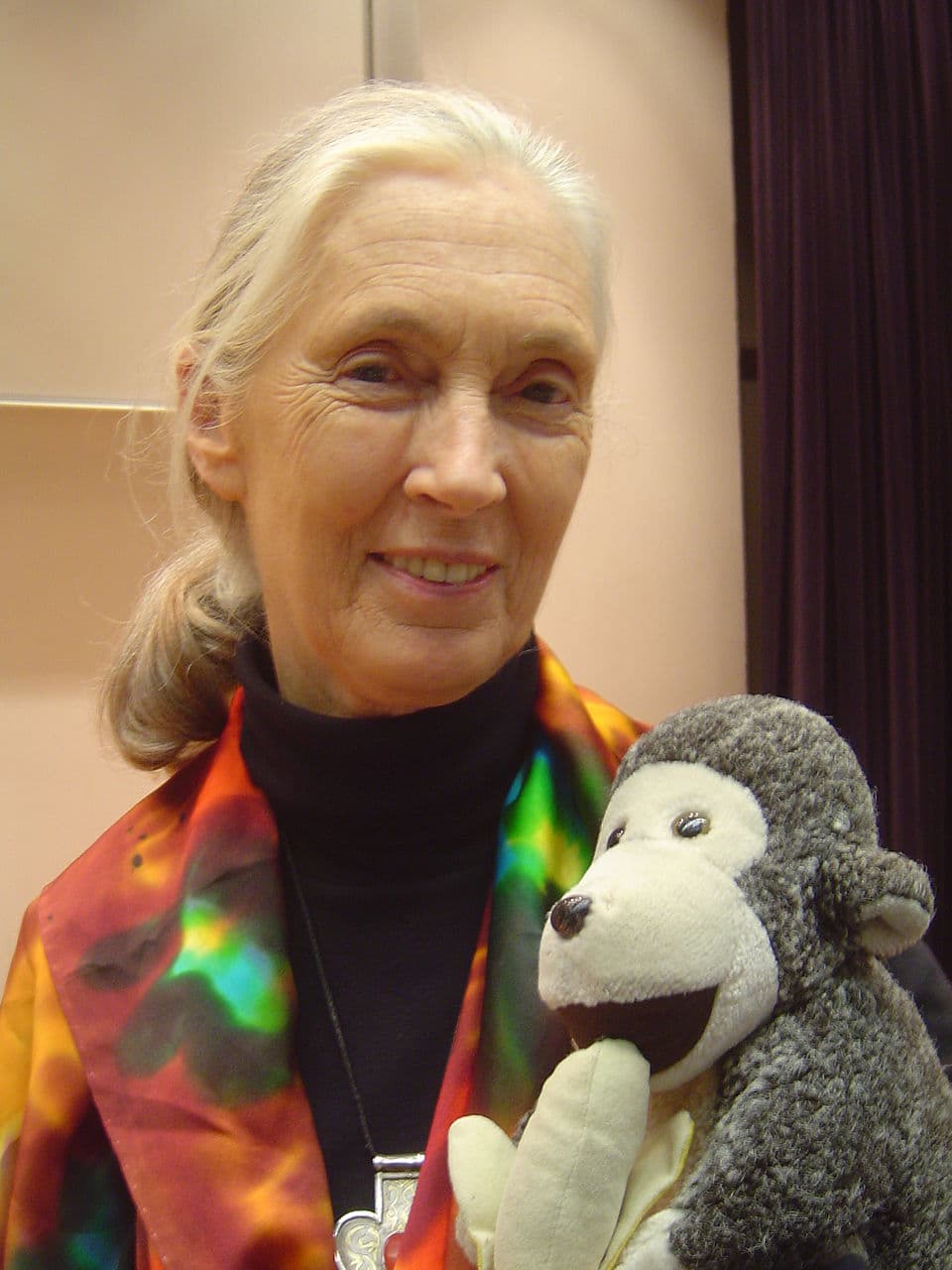
It is in a room at the National Museum of Kenya, in Nairobi, that Louis Leakey meets Jane Goodall at the end of 1971, just as her book In the Shadow of Man has been published. On the cluttered table lie boxes of fossil bones and a cup of cold tea; through the window comes the red light of the savanna. Fourteen years earlier, it was here that he had hired her as a secretary, sensing in this young Englishwoman without a degree the observer that no university could have trained. That day, he comes to get her talking about Gombe, as one questions a student one is secretly proud of.
—Jane, when I hired you here in 1957, you had never set foot in a forest. What did you feel when you arrived at Gombe?
I was scared, Louis, and I never told anyone. The authorities refused to let a young woman settle alone in the bush, so my mother Vanne came with me — we lived under a simple canvas tent, with no running water or electricity, on the shores of Lake Tanganyika. The first few weeks, I saw almost nothing: the chimpanzees fled as soon as they saw me. I climbed before dawn up the slopes, my binoculars around my neck, and waited for hours motionless, soaked by the dew. Many would have given up. But you told me to watch, just watch, without preconceived ideas — and that is exactly what my lack of a degree allowed me to do.
I was scared, Louis, and I never told anyone.
—Do you remember the telegram I sent you after your letter about that blade of grass and those termites? Tell me about that morning in October 1960.
I will remember it all my life. I saw David Greybeard, the male with the gray beard, pick a grass stem, strip off the leaves, then insert it into a termite mound to pull out the insects he ate. He was not just using a tool: he was shaping it. I had to read my notes three times before daring to write to you. And you, my old mentor, replied with that telegram I still keep: we now had to redefine tool, redefine human, or accept chimpanzees among humans. Until then, making a tool was considered unique to our species. In one morning, that boundary had cracked.
He was not just using a tool: he was shaping it.
—Your book In the Shadow of Man has just come out and the whole world suddenly wants to read you. Does that make you uncomfortable, you who prefer the forest?
A little, yes. I wrote this book so that people would meet David, Flo, Fifi — not laboratory numbers, but beings with a face and a story. When you describe a chimpanzee fishing for termites or comforting its baby, the reader can no longer see it as a mere animal. I sometimes fear that fame will steal hours of observation, the ones that truly matter. But if even one child closes this book thinking that these forests deserve to exist, then the time spent writing will not have been stolen from Gombe. You taught me that science is useless if it stays locked in museum drawers.
—Your colleagues criticized you for giving names to your chimpanzees instead of numbering them. How did you stand your ground against this criticism?
It hurt me, I admit. I was accused of anthropomorphism, of projecting human feelings where, they said, there were only reflexes. But how can you number an individual whose gait, fear, tenderness toward its young I recognized? Every chimpanzee in Gombe has a personality as distinct as yours or mine. Refusing to see that in the name of objectivity was, for me, refusing the truth I had before my eyes. So I kept naming them, noting their anger and their play. I believe that rigor is not about blinding oneself, but about faithfully describing what is — even when it disturbs professional habits.
Every chimpanzee in Gombe has a personality as distinct as yours or mine.
—When I pushed you toward Cambridge in 1965, you didn't even have a bachelor's degree. Did you ever doubt you belonged there?
Constantly! I arrived with my field notebooks and my chimpanzees with names, and I was made to understand that I was doing it wrong. Some professors wanted me to rewrite everything in a cold language, stripped of all emotion. Without you, Louis, I would never have dared to apply — you convinced the university to admit me directly to the PhD on the sole basis of my observations. I earned my degree in ethology, but I especially learned to defend my method with arguments, not just with instinct. Cambridge gave me the legitimacy I lacked to be heard; you had given me long before that the confidence to go and see for myself.
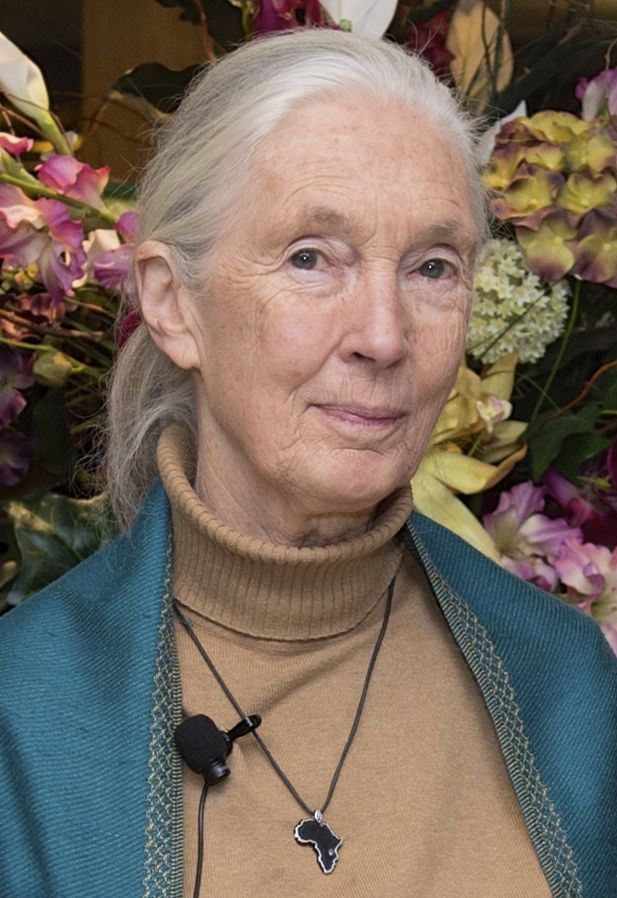
—Describe an ordinary day there. What do you do, from dawn to nightfall, in that forest you know better than anyone?
I wake before dawn, because the chimpanzees leave their nests at first light. I follow them silently across the steep slopes, avoiding any sudden movement, my binoculars in hand. In the afternoon, I take shelter under the tent to transcribe every observation in my notebooks: who ate with whom, what vocalizations, what expressions. In the evening, I write my reports for National Geographic and my letters to you, by lamplight. I eat simply — rice, beans, fruits shared with the Tanzanian assistants. These notebooks accumulated year after year are my true treasure: a memory that my head alone could never contain.
—It took you over a year for them to accept you. That patience of habituation — where did you draw it from when everything seemed futile?
From love, simply. As a child, I could spend hours watching a hen to understand how it laid its egg. At Gombe, the chimpanzees had to stop perceiving me as a threat — that is what we call habituation. At first, I set up a camp where I left bananas to attract them; that gave me my first close observations, even though I later realized it disturbed their natural behavior. The hardest lesson was accepting the forest's rhythm, not mine. You cannot force a wild creature's trust; you earn it, day after day, by becoming as patient and unobtrusive as a tree.
You cannot force a wild creature's trust; you earn it, day after day.
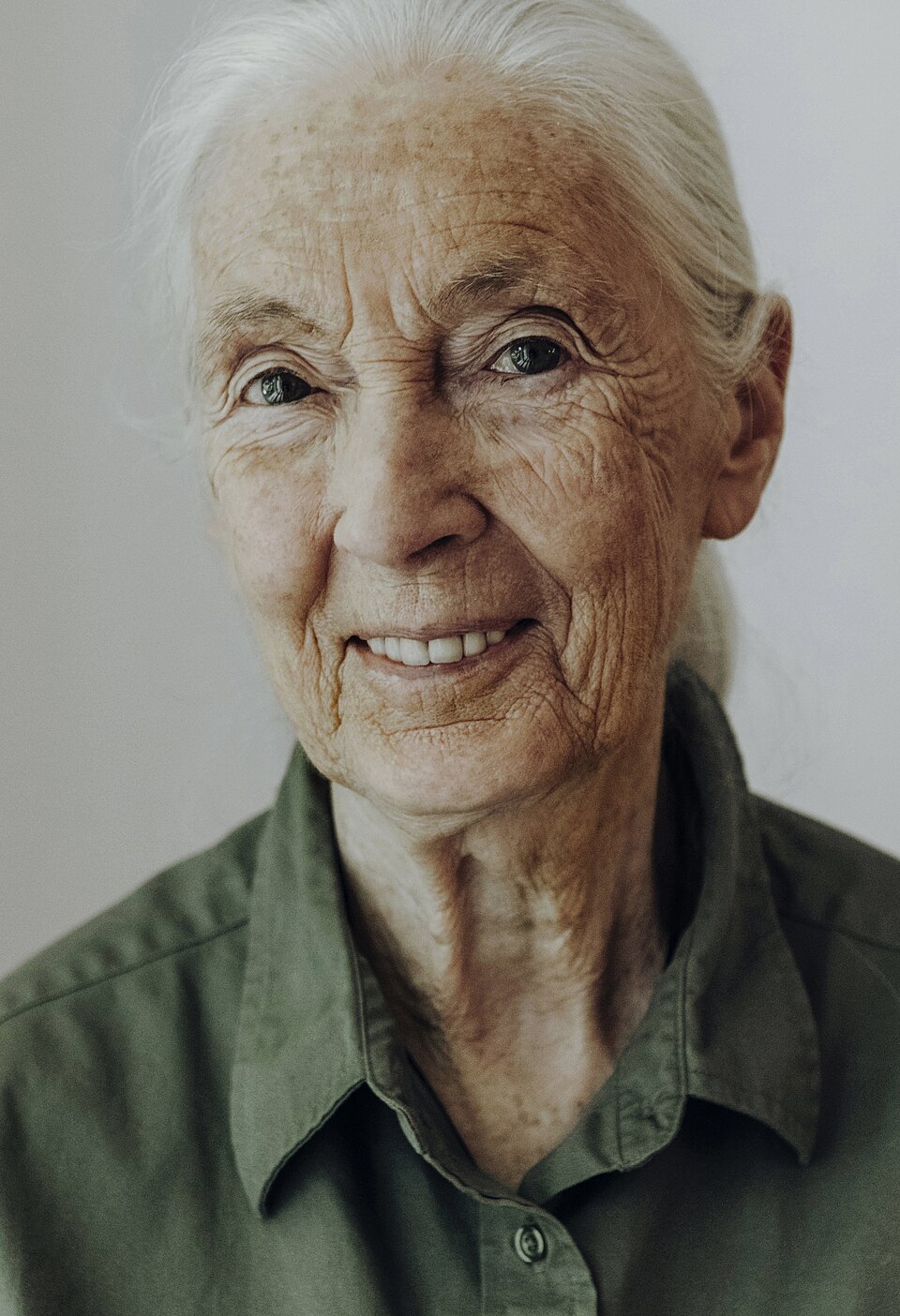
—I sense you have changed, Jane. Behind the scientist, a new worry emerges. What troubles you today, beyond your chimpanzees?
The hills, Louis. Around Gombe, I see the forests receding year by year, nibbled away by the axe and human hunger. My chimpanzees do not exist outside those trees; protecting one without the other makes no sense. I am beginning to fear that observing is no longer enough, that one day I will have to lift my eyes from my notebooks to defend these forests themselves. I do not yet know what form that will take. But I dimly feel that my task does not end with describing this world: I will also have to save it, otherwise I will have described only a paradise that is disappearing.
I will also have to save it, otherwise I will have described only a paradise that is disappearing.
—You who have no formal schooling behind you, who do you think of to carry this fight when we, the elders, are no longer here?
The young, Louis, always the young. When I speak to high school students, in Dar es Salaam or elsewhere, I see the same flame lighting up in their eyes that burned in me at their age. They still believe they can change things — and they are right. My dream would be to bring them together, to entrust them with concrete actions for their community, for animals, for the earth. A child who plants a tree or refuses to turn a blind eye to injustice is worth more than ten scholarly conferences. The future of these forests belongs to them; my role is perhaps above all to give them hope and the means to act.
—One last question, Jane. After all you have seen of the fragility of this world, do you truly still have hope?
Yes, against all odds. Hope is not naivety, it is a choice — the choice to believe that every individual matters and that each of our actions leaves a mark on the world. I saw a chimpanzee make a tool and overturn what we thought we knew about humans; I saw a young woman without a degree make herself heard by the greatest universities. So how could I give up? As long as there remains a tree standing, a curious child, and an observer patient enough to watch, I will refuse to despair. That, Louis, is perhaps the finest legacy you have passed on to me: the certainty that a single attentive gaze can change everything.
Hope is not naivety, it is a choice.
This imaginary interview was generated by artificial intelligence from sources documented in Jane Goodall's profile. It dramatises what the figure might have said based on what we know about them, but does not constitute attested historical testimony. For primary sources and factual documentation, refer to the full profile.