Imaginary dialogue between Charles Perrault and Jean de La Bruyère
by Charactorium · Jean de La Bruyère (1645 — 1696) · Literature · 6 min read

It is in a gallery of the Chantilly castle, on an autumn afternoon in 1693, that Charles Perrault meets Jean de La Bruyère, freshly elected to the Academy. The oblique light falls on a copper inkwell and sheets covered in tight handwriting. The two men have known each other since the great quarrel that opposes them — one defends the Moderns, the other the Ancients — but their esteem survives their disagreements. Perrault has come, half-mocking, half-curious, to make his rival confess where he gets this mania for painting his contemporaries.
—My dear La Bruyère, since 1684 you have been instructing the young Duc de Bourbon at the Condés. Admit it: wasn't this tutorship above all a post of observation?
You know me too well, Perrault, for me to deny it. They gave me a child to educate, and unwittingly handed me an entire court to study. At Chantilly as at Versailles, I passed for the discreet tutor, the one no one fears because they think him busy with grammar and ancient history. Yet it was precisely from this transparency that I drew my material. A courtier does not watch himself before a man he deems inconsequential. I saw the calculated bows, the friendships that shift with favor, the faces that compose themselves at the approach of a great one. My subordinate position was my best observatory; one does not flatter a tutor, one forgets him.
They unwittingly handed me an entire court to study.
—You describe the court with a surgeon's cruelty. Isn't that ungrateful, for someone who owes his bread and roof to the Condés?
Ungrateful, I do not think so. I owe the Condés my livelihood, and I acknowledge it without shame; but I do not owe them my silence on what everyone sees and no one says. The court does not make one content; it prevents one from being so elsewhere — that is what I have written, and every day spent in these galleries confirms its accuracy. Consider, Perrault, you who frequent the antechambers: how many men waste their lives there watching for a glance from the master? I do not paint this or that person; I paint the courtier as one paints the miser or the absent-minded, a type, not a person. That each recognizes himself is not my fault, it is my proof.
I do not owe the Condés my silence on what everyone sees and no one says.
—Your book published in 1688 keeps growing. With each edition you enlarge it. Do you never consider it finished?
Finished? Everything has been said, and we come too late, since for more than seven thousand years there have been men who think. I placed this sentence at the threshold of my work as much out of defiance as modesty. A book of manners cannot end as long as manners endure. Each season brings me a new foible, a vanity I had not yet captured. So I take up the pen, I reopen the Characters, I add, I tighten. The fifth edition, in 1691, was entirely enriched with a chapter, Of the Sovereign or the Republic. I work at night, by candlelight, when the courtiers sleep and their masks have fallen. This book grows as human folly grows: it has no reason to stop before I do.
A book of manners cannot end as long as manners endure.
—You speak of your writer's labor. Is it so great, to see you endlessly correct a page that others would deem perfect?
Greater than one thinks, my friend. There is no harder trade in the world than making a great name for oneself: life ends when one has barely sketched one's work. I weigh every word, I cut an adverb, I move a remark so that the punch lands just right. A portrait missed by a syllable loses all its bite. You, Perrault, write with an ease I envy; I am the man of erasures. What the reader takes for a word found at first draft cost me ten sleepless nights. But that is my pleasure as much as my fatigue: to carve the sentence as one carves the quill, until it bites the paper.
I am the man of erasures; what one thinks dashed off at first draft cost me ten sleepless nights.
—You opened your collection with a translation of Theophrastus, a Greek dead two thousand years. Wasn't that hiding behind Antiquity?
Hiding, yes, I freely admit it. By placing old Theophrastus at the head, I gave my own remarks the shelter of a venerable name. If I were reproached for audacity, I could answer that I was merely continuing an Ancient. But there was more than prudence: there was conviction. The Ancients left us the best rules, and the man they painted is still the man of today. That, Perrault, is what separates you and me: you believe our century has surpassed everything, I believe it has only rediscovered. The flatterer of Athens and the courtier of Versailles are brothers. Theophrastus held out to me a mirror twenty centuries old, and the court recognized itself without a wrinkle.
The flatterer of Athens and the courtier of Versailles are brothers.
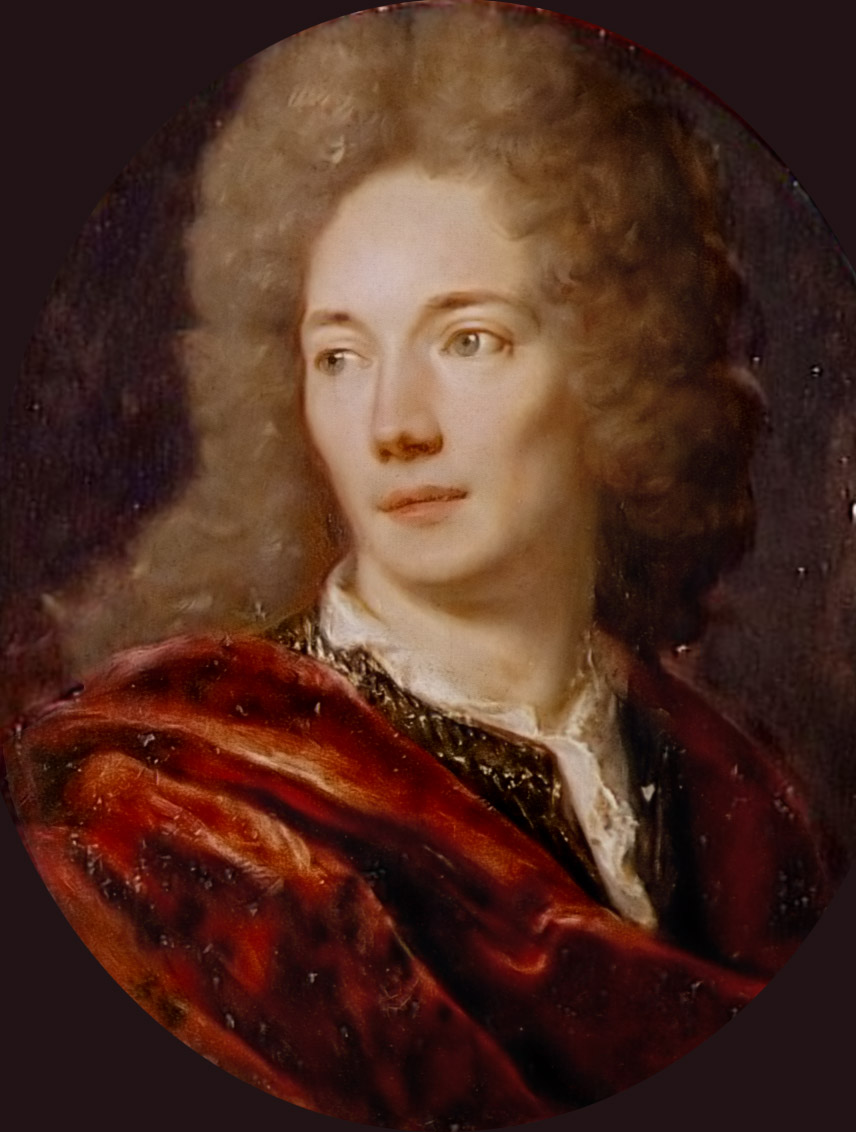
—Remember: in 1687, I read my Siècle de Louis le Grand at the Academy, celebrating the Moderns. Did my poem sting you that much?
Stung, certainly — but friendship survives stings, as you know. That day, your poem declared that our age equaled that of Augustus, and the room was divided. I was among those who could not applaud. Not that I despise our century, which has produced great men; but yours, Perrault, confuses the progress of mechanical arts with that of the mind. One builds finer machines than Archimedes, so be it; does one write finer pages than Homer? I doubt it. When I delivered my Reception Speech this very year, I took the side of the Ancients without hesitation, and I was hissed. I expected it. Our quarrel is frank, and that is what makes it bearable: we fight on paper, not behind each other's backs.
We fight on paper, not behind each other's backs.
—Let's talk about Giton and Phaedo, those two portraits everyone fights over. One rich and insolent, the other poor and self-effacing. What did you want to denounce?
Nothing but what everyone sees and pretends to ignore. Giton has a fresh complexion, a full face, a steady and assured eye, a firm gait; he speaks loudly, makes those who address him repeat themselves, and listens only halfway. Why this assurance? Because he is rich. Phaedo, on the other hand, is thin, lowers his eyes, dares not take his place in the world, coughs to be forgotten: he is poor, that is his only crime. I wanted to show that money today gives what birth and virtue alone claimed to grant: poise, voice, the right to occupy space. In a society that claims to be founded on honor, it is fortune that governs attitudes. I did not need to raise my voice; I merely described two bodies. The scandal lay in the truth.
Giton is insolent because he is rich; Phaedo effaces himself because he is poor. That is all.

—Doesn't this critique of money make you suspect? They will say the tutor to the Condés bites the hand that feeds him greatness.
They will say so, and they will be mistaken. I do not bite wealth, Perrault; I look at it without the veil it likes to cover itself with. A great lord of birth who joins virtue to his rank, I respect him. What I paint is the mechanism: how a man with no merit other than his coffers imposes his law on an entire salon. I myself hold a sinecure in Caen that feeds me without my working at it — do you think I exempt myself? The moralist does not step outside the picture; he places himself in it with the others. I write about worldly goods as a man who enjoys them and measures their price. Perhaps that is what makes the stroke accurate: I do not judge from afar, I judge from within.
The moralist does not step outside the picture; he places himself in it with the others.
—Your election to the Academy this year was stormy. Those your portraits scratched voted against you. Do you regret it?
Regret? No. An election without a battle would not have been mine. It was only fair that those I had painted without complacency made me pay for the likeness. They murmured that my Characters were nothing but a libel, that I had wounded living persons; they wanted to bar the door to the moralist in the name of the quality people he had offended. I was admitted despite them, and my Speech, in which I praised the Ancients and named a few contemporaries worthy of them, was hissed by part of the assembly. You were there, Perrault; you saw the uproar. But consider: a writer whom his company welcomes in joy has doubtless said nothing worthwhile. Scandal is, for one who paints manners, a kind of involuntary praise.
Scandal is, for one who paints manners, a kind of involuntary praise.
—Here you are an academician, celebrated and feared. At the end of such a day, do you sometimes think the pen might one day fall from your hand?
Every evening, my friend. I do not think myself more lasting than another, and the work I constantly take up could stop short, on a word left hanging. This idea does not sadden me: it urges me on. I still have chapters to revise, remarks I turn over in my head without having fixed them. If death catches me pen in hand, at least it will have found me at my post. There is something fitting about a man who has spent his life observing others dying while still watching them. You find me gloomy? I am not. I only say, Perrault, that a moralist knows better than another how little a life weighs, and it is that little that gives value to every page one finishes.
If death catches me pen in hand, at least it will have found me at my post.
Read further

This imaginary interview was generated by artificial intelligence from sources documented in Jean de La Bruyère's profile. It dramatises what the figure might have said based on what we know about them, but does not constitute attested historical testimony. For primary sources and factual documentation, refer to the full profile.