Imaginary interview with Jean de La Bruyère
by Charactorium · Jean de La Bruyère (1645 — 1696) · Literature · 6 min read
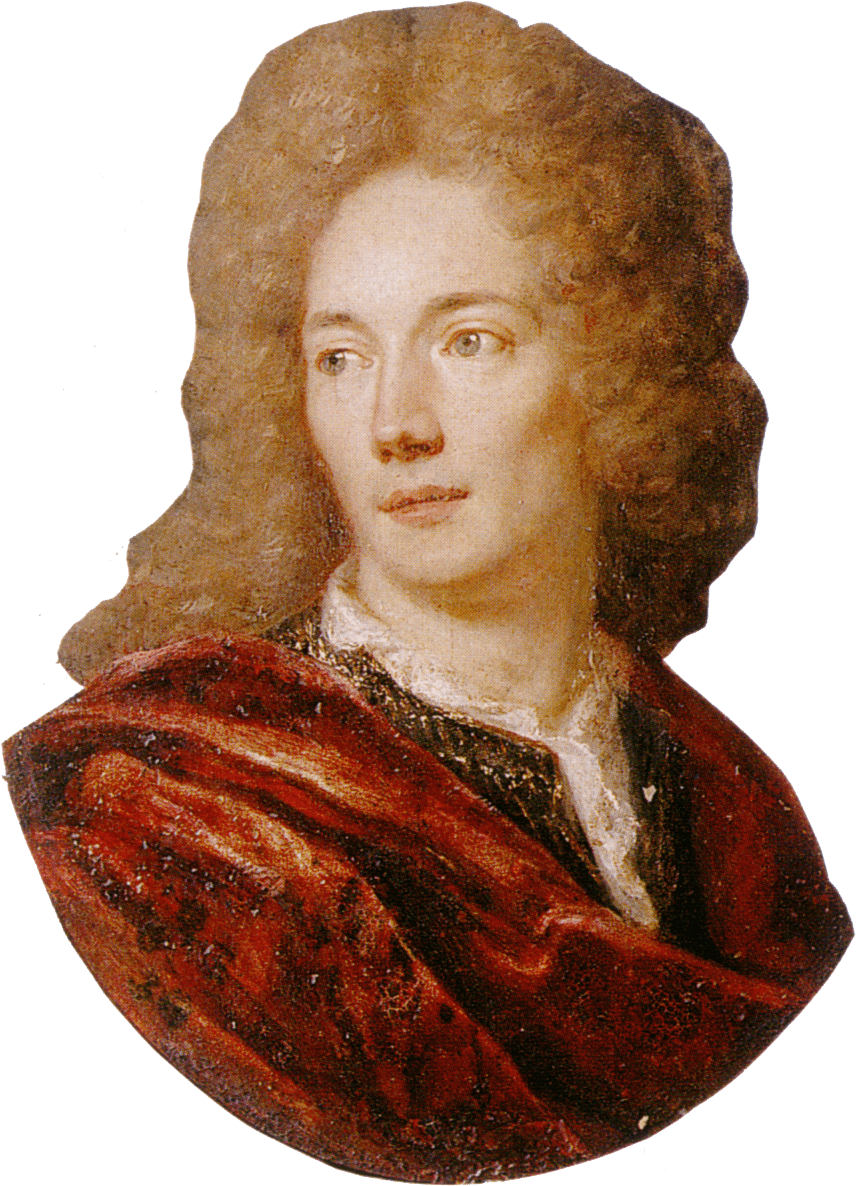
Chantilly, an autumn evening in 1693. In a study lined with books, by the light of a copper candlestick, a discreet man sets down his goose-feather pen on the inkwell. He has just been received into the Académie amid hisses; yet he agrees to speak, in a low voice, about what he has seen at court.
—How did you enter this court world that you describe with such precision?
It all began in 1684, when the Prince of Condé took me into his service to instruct his grandson, the Duke of Bourbon. I was lodged at Chantilly, then at Versailles, and from one day to the next I found myself at the heart of a theater where I was not an actor, but a spectator. Believe me, a tutor is nothing in that gallery of great lords; and it is precisely that nothingness that permitted everything. One does not distrust a man who seeks neither office nor favor. I walked in the gardens, I passed from one salon to another, and I quietly gathered what vanities let slip when they think they are alone. My court attire, that embroidered justaucorps they forced upon me, was less a costume than a disguise: it made me invisible among those I observed.
One does not distrust a man who seeks neither office nor favor.
—What did those years spent observing courtiers teach you?
That a courtier is a man who has renounced being happy in order to appear so. I wrote that the court does not make one content; it prevents one from being content elsewhere, and I have found nothing more accurate in twelve years of galleries. See those men who grovel for a glance from the King, who change their expression according to the fortune of the day, who flatter in the morning the one they will tear apart in the evening. At Versailles, since the King established his court there in 1682, it is a perpetual trade of baseness where each sells his soul in detail. The strangest thing is that they believe themselves free. I, in my afternoon walks, mentally noted these maneuvers, and in the evening I would return to shape these absurdities. The court was my book before it became my subject.
A courtier is a man who has renounced being happy in order to appear so.
—Why did you place at the head of your work the translation of a Greek philosopher, Theophrastus?
Because one needs a door to enter among men, and mine was Antiquity. Theophrastus, that disciple of Aristotle, had traced two thousand years ago the portraits of the flatterer, the miser, the bore — and I recognized my contemporaries trait for trait. So I myself translated his Characters and placed them before my own, in 1688, as one hides behind an ancient mask to say new things. It was also a matter of prudence: who would have reproached me for continuing a venerable Greek? On my table, the copy of Theophrastus remained open, annotated by my hand, and I passed from his century to mine without hardly changing my pen. The truth of manners, you see, does not age; it merely changes its wig.
The truth of manners does not age; it merely changes its wig.
—Do you remember the reception of your book upon its publication?
Dazzling — that is the only word. Les Caractères ou les Mœurs de ce siècle appeared in 1688 and the volume was snatched up in Paris as at court. But the most singular thing was the social game that took over the salons: everyone wanted to guess which great lord was hiding behind my names borrowed from Greek antiquity. Keys were drawn up, accusations flew, laughter and indignation. I had painted universal types, and they sought only individuals! That earned me many enmities, for he who recognizes himself in a cruel portrait never forgives. The book went through ten editions in my lifetime, and to each I added new traits, new remarks, like a painter who cannot bring himself to set down his brushes. I wrote thinking that everything has been said, and we come too late — and yet I continued.
I had painted universal types, and they sought only individuals!
—Among your portraits, those of Giton and Phaedon remain famous. What did you want to show in them?
The naked power of money, and nothing else. Giton has a fresh complexion, broad shoulders, a firm gait; he speaks loudly, interrupts, despises — and all because he is rich. His opposite, Phaedon, is poor: he coughs softly, he effaces himself, he yields the right of way, he dares not occupy his own place in the world. I placed these two men face to face in the chapter Des biens de fortune, and I had nothing to add: gold makes confidence, misery makes shame. Here is a society that claims to be founded on nobility and virtue, and yet bows only before the purse. I did not preach; a moralist does not raise his voice. I merely set the two portraits side by side, and let the reader feel the chill that rises from them.
Gold makes confidence, misery makes shame.
—Was it not daring, under the reign of Louis XIV, to denounce inequality thus?
Daring, perhaps; but I held not a pamphlet, I held a mirror. A moralist does not attack the throne or the altar; he observes men and reports what he sees. When I added, in the fifth edition of 1691, the chapter Du souverain ou de la République, I spoke of the duty of the great, not of their abolition. But it is true that painting Giton happy to be unjust, and Phaedon punished for being poor, is already a judgment. I believed, as a man nourished on books of piety, that human grandeurs are vanity and that fortune does not make merit. The King reigned over bodies; the moralist, for his part, keeps a little kingdom where one continues to weigh souls. I reigned there in my own way, with the pen as scepter and the inkwell as crown.
I held not a pamphlet, I held a mirror.
—Your election to the Académie française in 1693 was, it seems, highly contested. What happened?
It was more a battle than an election. I had scratched too many people in my Characters for the doors of the temple of letters to open without creaking. The supporters of the Moderns considered me their enemy, and those I had painted avenged themselves by withholding their votes. Yet I was received, in 1693, into that Académie française which Richelieu had founded in 1635. But on the day of my acceptance speech, I committed what some called an imprudence and what I consider a fidelity: I openly took the side of the Ancients against the Moderns. The assembly divided, murmurs arose, hisses — yes, they hissed a new member! I left covered equally with honors and enemies. That, I believe, is the just reward of a man who says what he thinks in a place where one says what one must.
I left covered equally with honors and enemies.
—In this great Quarrel of the Ancients and the Moderns, why did you choose the side of the Ancients?
Because I do not see how one could surpass masters whom one has not even equaled. It all began in 1687, when Perrault dared to read to the Académie his poem celebrating the age of Louis the Great above Antiquity. They wanted to make the Moderns the victors; I did not consent to it. The Ancients left us fine ideas and the best rules, and our glory would already be great to know how to imitate them. Consider that I built my entire work on Theophrastus: could I, in good faith, deny the master from whom I took my material? That does not make me a man turned toward the past. Everything has been said, and we come too late for more than seven thousand years that there have been men — but coming late does not forbid speaking well. I claim to be an heir who adds, not an upstart who denies.
Coming late does not forbid speaking well.
—You are described as a discreet man, not very social. How did you actually work?
At night, most often, and in silence. The day belonged to the Duke of Bourbon, to his lessons in history and letters, to the galleries where I gathered my observations; but when evening came, I withdrew with my goose-feather pen and my copper candlestick. There, by the trembling light of the candle, I would shape what I had caught during the day. I was one of those men who, in salons, prefer to listen rather than speak — not out of timidity, but by method: one observes well only what is forgotten in your presence. My small, tight handwriting blackened the sheets; I crossed out, I reworked, I polished a remark ten times before it sounded right. The moralist is an obscure craftsman; his glory, if he has any, comes long after his vigils.
One observes well only what is forgotten in your presence.
—You constantly corrected your work. Why this quest for a perfect formula?
Because a poorly crafted remark is a lost thought. I wrote that there is no harder trade in the world than that of making a great name: life ends when one has barely sketched one's work — and no one knows better than I how true that is. With each edition of the Characters, since 1688, I added, I condensed, I sought the word that makes one feel in a stroke what a discourse dilutes. A maxim must strike like lightning, not illuminate like a lamp. I lived soberly, wine cut with water, mind clear, for the intoxication of the senses blurs the precision of phrases. If I were read in a century — which I dare not imagine — I would like them to find not verbose sentences, but a few clean lines where a man has recognized himself despite himself. The rest, the noise, the honors, is smoke.
A maxim must strike like lightning, not illuminate like a lamp.
Read further

This imaginary interview was generated by artificial intelligence from sources documented in Jean de La Bruyère's profile. It dramatises what the figure might have said based on what we know about them, but does not constitute attested historical testimony. For primary sources and factual documentation, refer to the full profile.