Kids interview Jean de La Bruyère
by Charactorium · Jean de La Bruyère (1645 — 1696) · Literature · 5 min read
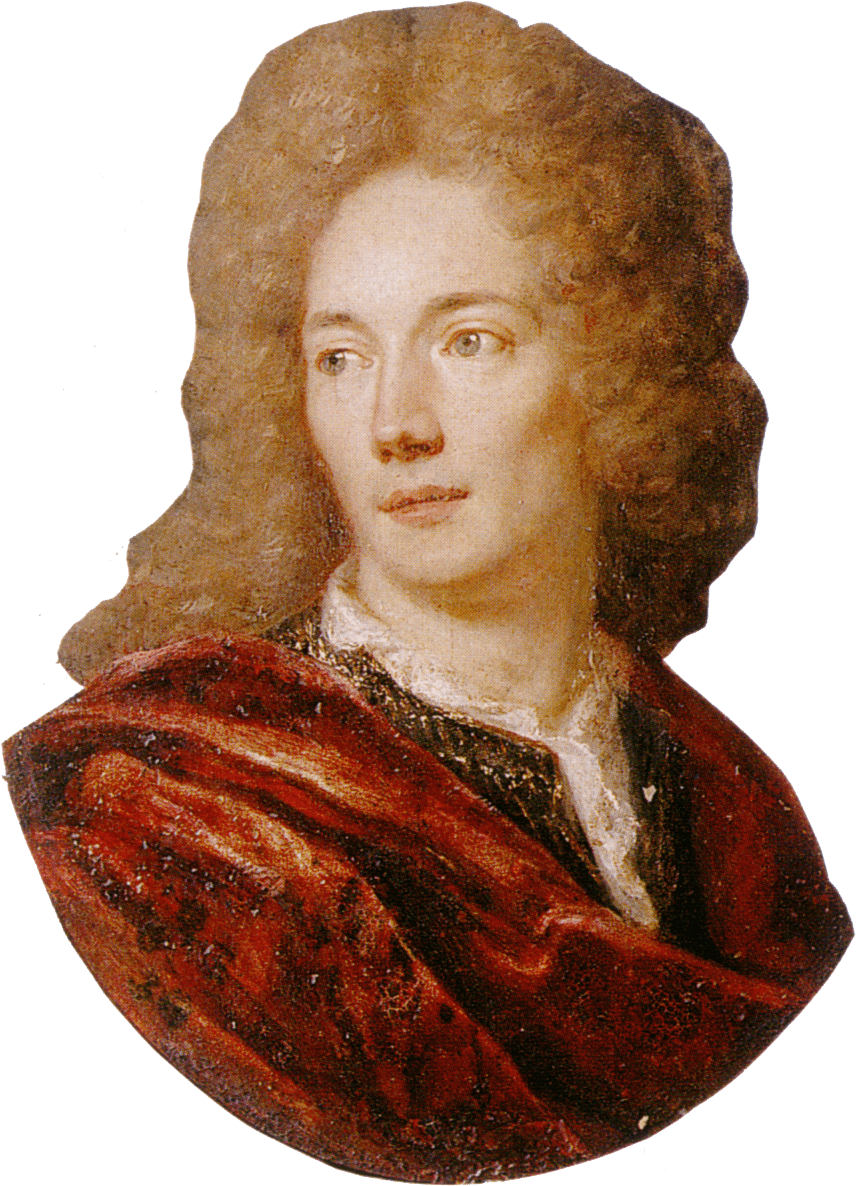
Two twelve-year-old visitors push open the door of a study full of books, in Versailles. A quiet man sets down his pen and smiles at them. He invites them to sit by the window, and begins to speak.
—What was your real job, apart from writing books?
You know, my child, I was not a great lord. I was a tutor, that is, the private schoolmaster of a single noble child. In 1684, I entered the service of the princes of Condé to teach the young Duke of Bourbon. I lived at the Château de Chantilly, a vast place with gardens stretching as far as the eye could see. Imagine a house so big you could get lost in it. I gave lessons in history and literature in the afternoon. But in the morning and evening, I was above all a man who watches and listens, without saying a word. That was my real secret job.
I taught by day, but my real job was to watch in silence.
—What were the people at the king's court like? Were they nice?
Not always, my child. At Versailles, these people were called courtiers: nobles who lived near the king to obtain favors and money. Imagine a crowd of people who smile on the surface but secretly envy each other. I walked through the galleries and gardens and observed them. Their flattery, their petty vanities, their ridiculousness. I wrote nothing in front of them; I kept it all in my head. In the evening, in my study, I put their portraits on paper. As I wrote in my chapter Of the Court: the court does not make one happy; it prevents one from being happy elsewhere.
The court does not make one happy; it prevents one from being happy elsewhere.
—Why did you put an old Greek gentleman at the beginning of your book?
Ah, you noticed! It was a little ruse, you see. That old Greek gentleman was called Theophrastus, a philosopher from a very, very long time ago. He too had painted portraits of people: the miser, the chatterbox, the flatterer. I translated his text myself and placed it right at the beginning of my book, in 1688. Why? Imagine you want to say sharp truths about your neighbors. You hide a little behind someone older and more respected. That way, you dare to say everything. I hid behind Antiquity to have the courage to paint my own century.
I hid behind an old Greek to dare speak of my own time.
—What does the strange title of your book, The Characters, mean?
Good question! Today a character means your temperament. But in my time, a character was a portrait: the depiction of a type of man with his main flaw. The proud man, the absent-minded man, the flatterer. My book is called The Characters, or the Manners of This Century. Manners are the habits and ways of living of the people of an era. So my title means: 'the portraits and ways of my time.' Imagine a gallery of paintings, but with words instead of paint. Each little text is a face you recognize around you.
My Characters are a gallery of paintings made with words.
—Did you tell the story of any character you cared about?
There are two I like to place side by side, my child: Giton and Phaedon. Giton is the rich man. Listen to how I painted him: he has a fresh complexion, a full face, a steady and assured eye, a firm gait. He speaks loudly, he interrupts, he takes up all the space. Phaedon, on the other hand, is the poor man: he coughs, he fades away, he dares not say anything. Yet these two men differ only in one thing: the money in their pocket. I wanted to show a hard truth. In the chapter Of Property and Wealth, I denounce how money decides who is respected and who is despised.
Between the respected man and the despised man, the only difference is money.
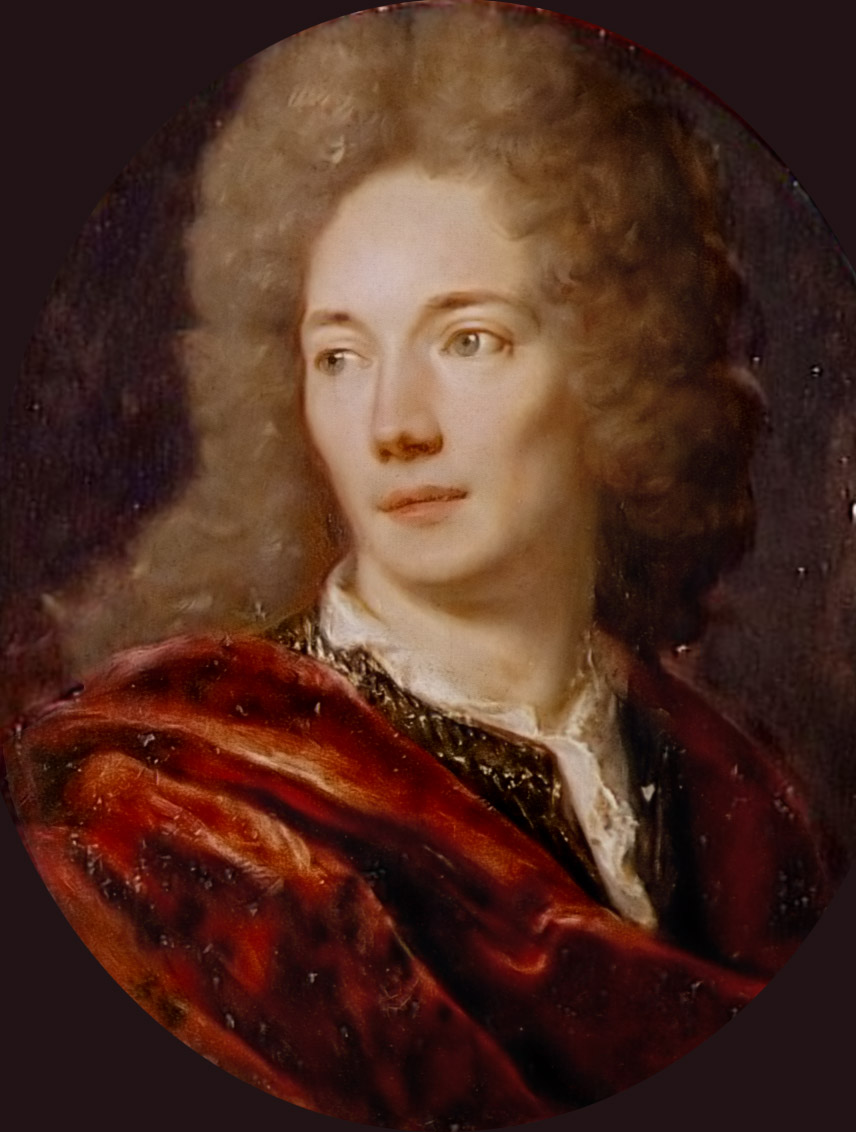
—Were you angry at the rich when you wrote that?
Not angry, no. Rather sad and clear-sighted, you see. Before my eyes, at Chantilly and Versailles, there were sumptuous tables, velvet clothes, gilded carriages. And next to them, on the roads, people who had almost nothing. I did not write to start a revolution; that did not exist in my mind. I wrote so that people might see what they preferred not to see. A moralist is that: someone who observes men and shows their faults, often with irony, but without preaching. I held up a mirror to my century. It was up to each person to recognize themselves in it, or not.
I did not preach: I held up a mirror to my century.
—Is it true you were hissed at your big speech?
Alas, yes! In 1693, I was finally elected to the French Academy, the great temple of French writers. For my acceptance speech, I took the side of the Ancients, those Greek and Roman authors I so admired. But imagine a room full of people, some of whom I had mocked in my Characters. Part of the assembly began to hiss, as if booing an actor in the theater. My heart was beating fast. But you see, you cannot paint people's faults and expect them to applaud you afterward. That was the price of my pen.
You cannot mock people and expect their applause.
—What was that quarrel between the Ancients and the Moderns?
Ah, the great quarrel of my time! It all broke out in 1687, when a certain Perrault read a poem saying that the writers of our era were better than the Greeks and Romans. Imagine two camps arguing at a table. On one side, the Moderns, who said: 'We are the best, today!' On the other, the Ancients, of whom I was one, who replied: 'The old Greek masters remain unsurpassed; let us learn from them!' I had even opened my book with the sentence: everything has been said, and we come too late. A way of saying that the Ancients had already thought almost everything before us.
Everything has been said, and we come too late.
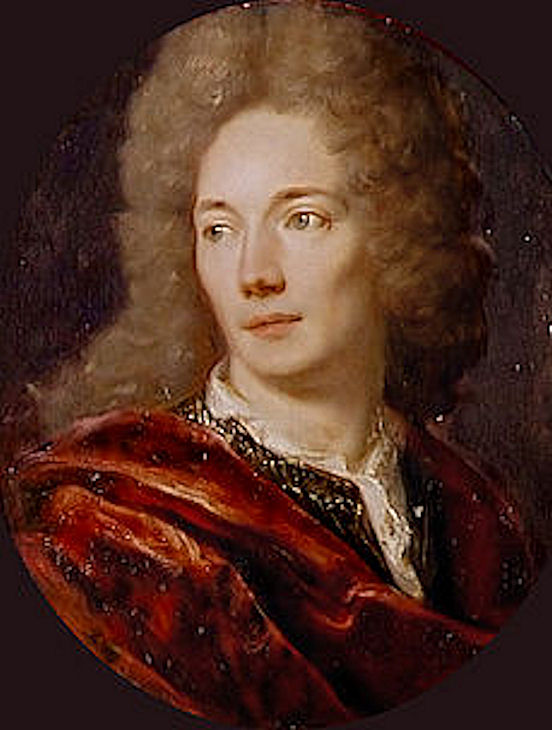
—What did it smell like, and what sounds were there, when you wrote at night?
What a lovely question, my child! At night, my study smelled of warm wax and ink. To see, I lit a copper candlestick: one candle, sometimes two, no more. Imagine a room where everything is dark, except for a small circle of yellow light on your paper. The only sound was my goose quill scratching the paper, and occasionally the creaking of wood. No engine, no light outside, just the black night and silence. It was in that silence that I best heard the voices of the people I had observed during the day. Calm, you see, is the moralist's workshop.
The calm of the night is the moralist's workshop.
—Why did you keep redoing your book instead of moving on to something else?
Because I was never satisfied, simply! My book went through ten editions in my lifetime, and each time I enriched it. I added new portraits, corrected a word, made a sentence sharper. Imagine you are sculpting a statue: you never really stop; you always chip away a little flake. As I wrote myself: there is no more painful trade in the world than that of making a great name for oneself. It was my gentle obsession. And I was still working on a new edition when death took me suddenly, in 1696, at the age of fifty.
I sculpted my book endlessly, as one never finishes a statue.
—What would you like people to remember about you, centuries later?
You touch me, my child, thinking of that. I was neither king, nor general, nor great lord. Just a quiet man, with his goose quill and inkwell, watching others live. But you see, castles eventually fall, courtiers are forgotten. My little portraits, on the other hand, have remained. Because deep down, the proud man, the flatterer, the arrogant rich man like Giton, you will always encounter them around you. I would like you to remember this: to understand men, it is often enough to open your eyes and be silent a little. And then, when you are wise, to write it down.
To understand men, open your eyes and be silent a little.
Read further

This imaginary interview was generated by artificial intelligence from sources documented in Jean de La Bruyère's profile. It dramatises what the figure might have said based on what we know about them, but does not constitute attested historical testimony. For primary sources and factual documentation, refer to the full profile.