Imaginary dialogue between Robert Schuman and Jean Monnet
by Charactorium · Jean Monnet (1888 — 1979) · Politics · 5 min read
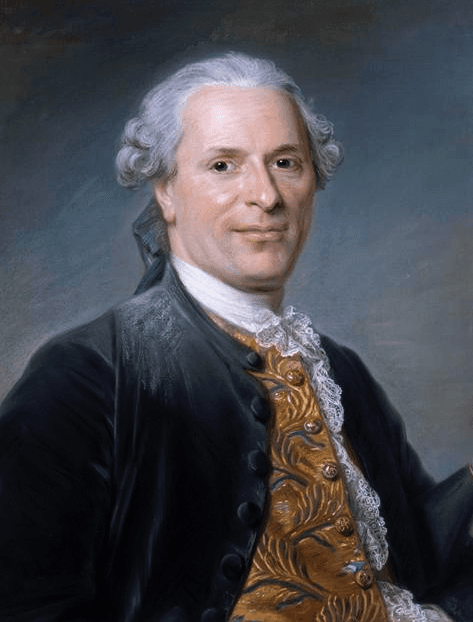
It is in the garden of the Houjarray house, in the Rambouillet forest, that Robert Schuman meets his old accomplice one spring afternoon. On the wooden table, sheets covered in corrections sit next to a lamp still lit. The two men have known each other since the feverish hours of 1950, when one brought before the world the plan that the other had written in secret. Schuman comes here not as a minister, but as a witness, to hear the man in the shadows tell what he has never said in public.
—Jean, when I stepped up to that podium on 9 May 1950, almost no one knew that you had written everything here. How did you work on those nights?
You remember, Robert, how little time we had. With a handful of collaborators, I wrote and rewrote that text right here, in this room, night after night. I corrected each sentence until it said exactly what needed to be said, no more, no less. I wanted the idea to fit into a simple formula: Europe will be built through concrete achievements, creating first a de facto solidarity. Secrecy was not a taste for mystery. It was the condition for the project to exist before it could be killed. And you had the courage to present it in your own name, knowing what it committed you to. Without that, my papers would have remained on this table.
Secrecy was not a taste for mystery. It was the condition for the project to exist before it could be killed.
—You received me a hundred times in this living room rather than in an official office. Why did you always refuse an elected mandate or office?
Because I am convinced, Robert, that one acts more by staying at one's desk than at a podium. A man who seeks votes must please; a free man can convince. I preferred the telephone and one-on-one meetings to large assemblies. You know my days: mornings with the press and notes, afternoons with a few men gathered in a room, evenings working again by lamplight. General de Gaulle, who does not much like me, calls me the man of grand schemes. Let him say so. I never needed a title to bring decision-makers together around a table.
A man who seeks votes must please; a free man can convince.
—When we signed the treaty establishing the ECSC, many saw only a coal agreement. You saw something else, didn't you?
I saw the method, Robert, more than the object itself. Europe is not made all at once, nor by a grand speech that embraces everything. It is made by a concrete fact, modest in appearance, which binds men more solidly than a treaty of alliance. Pooling the coal and steel of France and Germany made war not only unthinkable, but materially impossible. And it required a High Authority, an institution whose decisions are binding on states: the first supranationality in our history. I took its presidency in Luxembourg not to govern, but to prove that it worked. One concrete achievement is worth a thousand declarations of intent.
Europe is not made all at once. It is made by a concrete fact that binds men more solidly than a treaty.
—You left Luxembourg in 1955 when everything was succeeding. Why abandon this presidency that you had wanted?
Because an institution that works, Robert, no longer needs its founder — it needs someone to open the next step. The ECSC was standing, it was functioning, others could run it. I wanted to regain my freedom of movement to push further, toward political union. The failure of the EDC before our Assembly the year before had taught me one thing: you do not relaunch Europe from an official chair, but by bringing together the driving forces. That is why I founded the Action Committee, with unions and parties. Resigning was not giving up. It was changing tools to continue the same work.
An institution that works no longer needs its founder — it needs someone to open the next step.
—Before our paths crossed, you spent the war in Washington. What were you doing with Roosevelt during those years?
I was trying to convince the Americans to think big, Robert, much bigger than they themselves dared. Production wins wars as much as the courage of soldiers. I argued for armament targets that were then considered excessive, what was called the Victory Program. It required calculating, planning, daring numbers that scared people. Churchill, I was told, thought I was worth several divisions; it is a too-kind phrase, but it says the essential: a right idea, placed at the right time before the right men, moves more than an army. I learned there that planning was not the enemy of freedom, but its instrument.
A right idea, placed at the right time before the right men, moves more than an army.
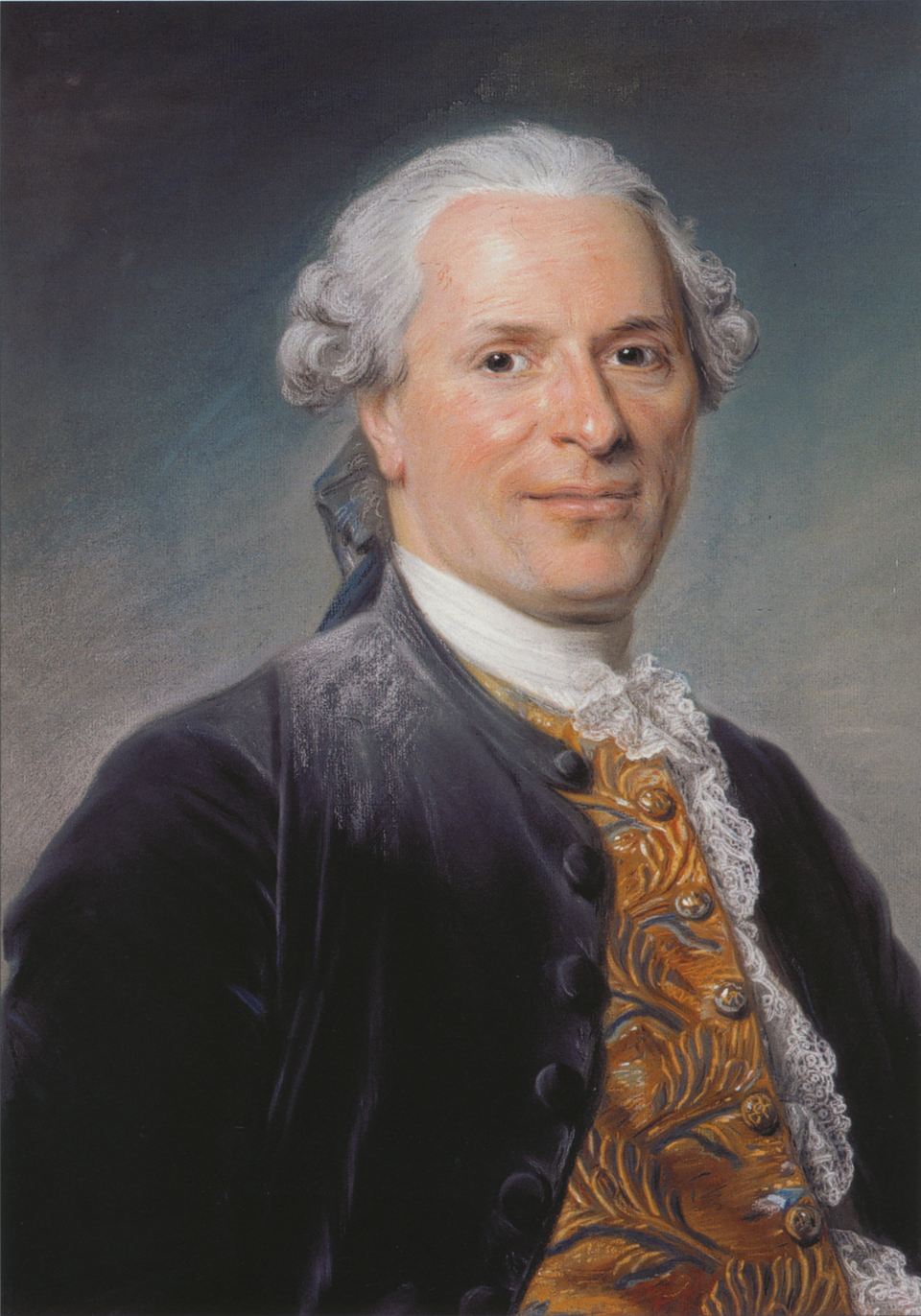
—People often forget, Jean, that you were born in Cognac, in the trading business. What do you owe to those youthful years behind the family counter?
Almost everything, Robert, in my way of doing things. Very young, I was sent to sell the family cognac in England, in Canada. You do not learn that in books: you learn to listen to the man in front of you, to understand what he really wants, to find the agreement that serves both sides. I had no diploma. During the First World War, at twenty-six, I nevertheless obtained a meeting with the President of the Council Viviani to propose coordinating our supplies with the British. It was not audacity: it was the habit of a merchant who knows that a well-posed deal gets done. Cognac gave me that.
You don't learn to negotiate in books: you learn to understand what the man opposite really wants.
—Come back to that 9 May. Did you doubt, that night, that I would agree to announce such a daring text in my own name?
I doubted everything, Robert, except you. I knew the plan was only worth it if a statesman made it his own publicly, and that such a man risked his career in a single sentence. Many would have asked to amend, to dilute, to take precautions. You understood from the start that the project's strength lay in its boldness, and you presented it as is. I remember the wait, here, while you spoke at the Quai d'Orsay. It is one of the rare moments when I had nothing left to correct, nothing left to rewrite — everything depended on a voice that was not mine. That trust between us, no treaty could have produced.
It is one of the rare moments when I had nothing left to rewrite — everything depended on a voice that was not mine.
—When I come to dinner here, you receive me simply, without pomp. Does this discreet life at Houjarray serve your way of acting?
It is inseparable from it, Robert. Far from the bustle of offices, one thinks more clearly and works longer. In the evening, after a simple dinner, I take up my texts by lamplight and seek the exact formula that will win agreement. It is here, in this room you know, that I received heads of state from around the world, around this same wooden table. The setting has no importance; what matters is that two or three men truly understand each other. I have always shunned personal fame because it gets in the way. A known man must defend his image; a discreet man only has to defend his ideas. Houjarray allowed me to remain the latter.
A known man must defend his image; a discreet man only has to defend his ideas.
—You always talk about bringing together men rather than states. Where does this deeply held conviction come from?
States, Robert, only coalesce out of interest, and their alliances dissolve when interest changes. Men, however, when they work together on a concrete task, end up changing how they see each other. That is why I say we are not uniting states, we are uniting men. My entire career taught me that: the Cognac merchant, the London coordinator, the Planning Commissioner in France. Each time, I gathered wills around a tangible goal rather than an abstract principle. Peace is not decreed. It is built through de facto solidarities, until turning back becomes impossible.
We are not uniting states, we are uniting men.
—You who have seen Washington and known our nascent institutions: do you believe the work begun at Luxembourg will continue after us?
I believe it, Robert, on one condition: that each generation understands that nothing is ever won. I saw two wars ravage this continent because sovereign nations thought they could ensure their own security alone — they can no longer. The ECSC, and then what others will build after, are only the first steps toward a federation that none of us will see completed. That is what consoles me for having no title to leave: what we are doing is not a passing alliance; it is the beginning of a slow transformation of minds. The institutions we are setting up will think for those who come after. Our task, yours and mine, was to make them irreversible.
What we are doing is not a passing alliance; it is the beginning of a slow transformation of minds.
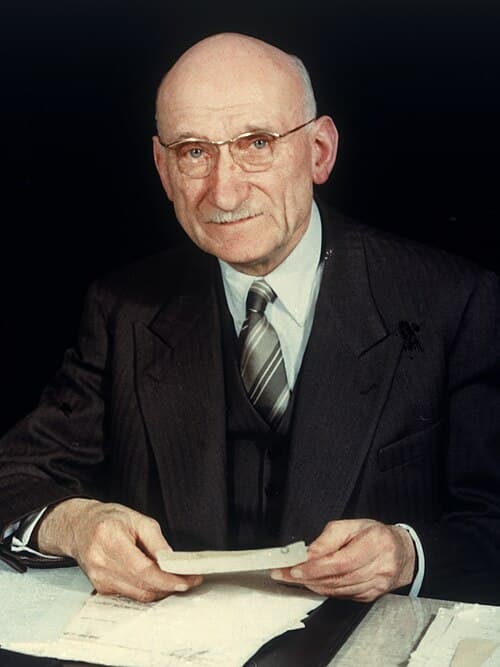
This imaginary interview was generated by artificial intelligence from sources documented in Jean Monnet's profile. It dramatises what the figure might have said based on what we know about them, but does not constitute attested historical testimony. For primary sources and factual documentation, refer to the full profile.