Imaginary interview with Jean Monnet
by Charactorium · Jean Monnet (1888 — 1979) · Politics · 6 min read
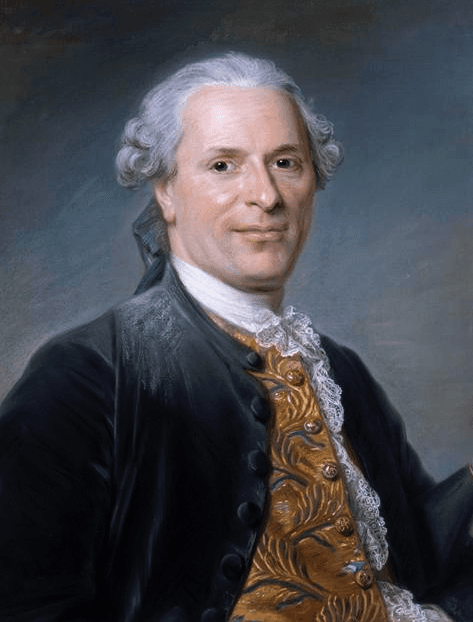
Forest of Rambouillet, late afternoon in spring. In the low house of Houjarray, a man over eighty welcomes us around a simple table, his handwritten notes piled near a lamp. His voice is calm, almost bare; you can sense the man who always preferred to persuade in the quiet of a room rather than in the tumult of a podium.
—You were born in Cognac, in a trading house. What did that town pass on to you?
Cognac is first the smell of brandy and oak in the cellars, and the very early idea that nothing sells unless you first understand what the other wants. As a teenager, I was sent to carry our cognac to England, and later to Canada, without a diploma or any title in my pocket. I learned there, on the docks and in the offices, that trust is built fact by fact, never by grand speeches. A bottle of cognac placed on a table said more than a long contract. That merchant's school stayed with me all my life: I never believed in systems imposed from above, only in concrete things that people accept because they see their usefulness.
I learned very early that trust is built fact by fact, never by grand speeches.
—How did a young merchant without a title find himself coordinating the Allied war effort?
In 1914, I was twenty-six and had the simple conviction that France and England would waste their strength if each bought wheat, coal, and ships separately. I managed to be received by the Prime Minister Viviani and told him we would not win by ignoring each other. They listened, perhaps for lack of a better option. Twenty-five years later, in Washington, I started again with Roosevelt: we needed enormous, almost insolent production figures to crush the enemy by material might. They called it the Victory Program. Churchill, who was not easy to please, once said I was worth several divisions. That was too much honor for a man who never held a rifle, only a telephone and spreadsheets of numbers.
I never held a rifle, only a telephone and spreadsheets of numbers.
—At the Liberation, you took charge of the country's economic reconstruction. Why start there?
Because a ruined France could never have spoken of Europe. In 1945, I was entrusted with the Commissariat du Plan, and we built what was called the Plan for Modernization and Equipment. We had to choose a few priorities — coal, steel, electricity, transport — and concentrate all effort there, instead of spreading thinly. My collaborators exhausted themselves on thick reports that I made them rewrite ten times, because a poorly formulated idea is a lost idea. It was not theory: it was blast furnaces to be relit, railway lines to be relaid. I learned during those years that modernizing a country means first agreeing on precise objectives, then holding firm. Without that French discipline, I would never have dared to propose what came next.
—Tell us about that spring of 1950, when you secretly wrote the declaration that Robert Schuman would deliver.
It was right here, at Houjarray, in these few rooms, at the beginning of May 1950. A handful of collaborators, sleepless nights, and the certainty that we had to strike quickly and accurately before the chancelleries diluted the idea. We wrote, tore up, started over, searching for the exact wording. The one I still hold as truest is a single line: “Europe will not be made all at once, or according to a single plan. It will be built through concrete achievements which first create a de facto solidarity.” On May 9, Schuman announced it at the Quai d'Orsay, and almost no one knew the text had come from this house. That did not matter to me: I never sought to have my name on the cover.
A handful of collaborators, sleepless nights, and the certainty that we had to strike quickly and accurately.
—What did the Coal and Steel Community, born from that plan, represent to you?
It was far more than a common market for two commodities. In the 20th century, coal and steel were the sinews of war: whoever controlled them could make cannons. Pooling them between France and Germany, under a High Authority whose decisions were binding on states, was to remove from nations the very instrument of their next war. I was its first president, in Luxembourg, in 1952 — the first time in history that an institution stood above national sovereignties. I said on the day of the signing that this pooling was to be “the first step of the European Federation.” Many smiled. But we had invented something that did not exist, supranationality, and you do not easily undo something that works.
—You never sought any elective office. Was that a renunciation or a calculation?
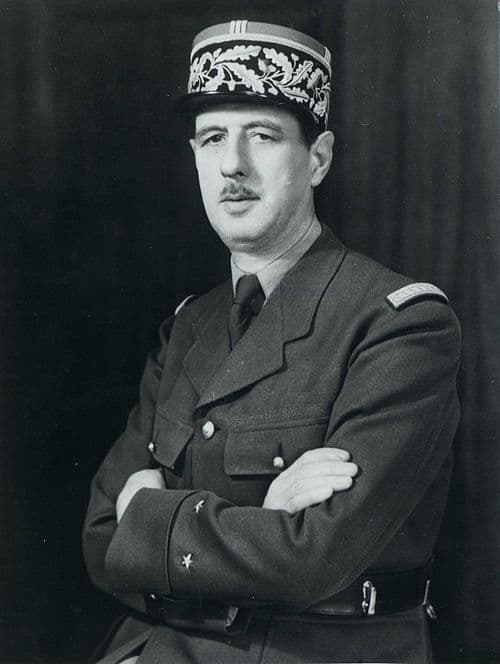
Neither: a method. I understood very early that you act more by staying behind the scenes than by mounting the rostrum. An elected official must please, manage, endure; a man free of any mandate can speak his mind and prepare decisions without expecting anything in return. General de Gaulle, who did not much like me, called me “the man of grand schemes” — he meant it ironically, I took it almost as a compliment. My office was always this country house, my weapons a desk telephone and a few one-on-one meetings. You rarely change the world before five hundred people; you change it with three men in a room, when each finally sees where the common interest lies.
You rarely change the world before five hundred people; you change it with three men in a room.
—Concretely, what did a working day look like for this man of the shadows?
I rose early and read the foreign press before anyone else, because understanding the other begins with knowing what he reads in the morning. I dictated notes, quickly, then revised them all day, fountain pen in hand, until I found the sentence that could no longer be argued. In the afternoon, meetings, never large assemblies: an industrialist, a union leader, a minister, one after another. In the evening, here, a simple dinner, then I read my texts again under the lamp, late into the night. People thought me austere; I was above all convinced that a right idea poorly written convinces no one. My whole work rested on that obstinacy of clarity, repeated a thousand times on the same page.
—Did the failure of the European Defence Community in 1954 spell the end of your project?
The night the National Assembly buried the EDC, in 1954, many thought Europe was dead. I thought exactly the opposite: we had just failed by trying to go too fast toward the army and politics, so we had to return to concrete achievements. I left the presidency of the High Authority to have a free hand, and founded in 1955 the Action Committee for the United States of Europe. I brought together around the same table parties and unions from several countries — people who usually fought each other. A failure is never more than a badly chosen step. Two years later, the Treaties of Rome vindicated that patient method, the one of de facto solidarities that can no longer be undone.
A failure is never more than a badly chosen step.
—You used to repeat that Europe was not about bringing states together. What did you mean?
That you do not durably unite nations through treaties between chancelleries — those change with governments. Before my Action Committee, I summed up my conviction in a phrase I stand by: “We are not coalizing states, we are uniting people. What we are doing is not an alliance, it is the beginning of a peaceful revolution of minds.” An alliance can be broken; a habit of working together cannot. When a miner from the Ruhr and a steelworker from Lorraine depend on the same rules, they gradually stop thinking of each other as enemies. That is the Franco-German reconciliation through matter, through facts, before feelings. Institutions are only the memory of that habit, so that the following generations do not have to learn everything anew.
An alliance can be broken; a habit of working together cannot.
—At the end of a life spent building, what would you like to be remembered about your approach?
Not a name — mine matters little — but a way of doing things. I wrote in my Memoirs that “the sovereign nations of the past can no longer ensure their own protection or control their own development”; I still believe that, looking at the world from this house in Houjarray. If someone reads me in a century, I would like them to understand that I never wanted a finished edifice, only to set in motion a movement that each generation will have to take up and correct. European integration is not a monument, it is a construction site that never closes. The rest — titles, honors — I gladly left to others. I preferred the lamp, the fountain pen, and the next concrete step to prepare.
I never wanted a finished edifice, only a movement that each generation will have to take up.
This imaginary interview was generated by artificial intelligence from sources documented in Jean Monnet's profile. It dramatises what the figure might have said based on what we know about them, but does not constitute attested historical testimony. For primary sources and factual documentation, refer to the full profile.