Imaginary interview with Jean Moulin
by Charactorium · Jean Moulin (1899 — 1943) · Politics · 5 min read
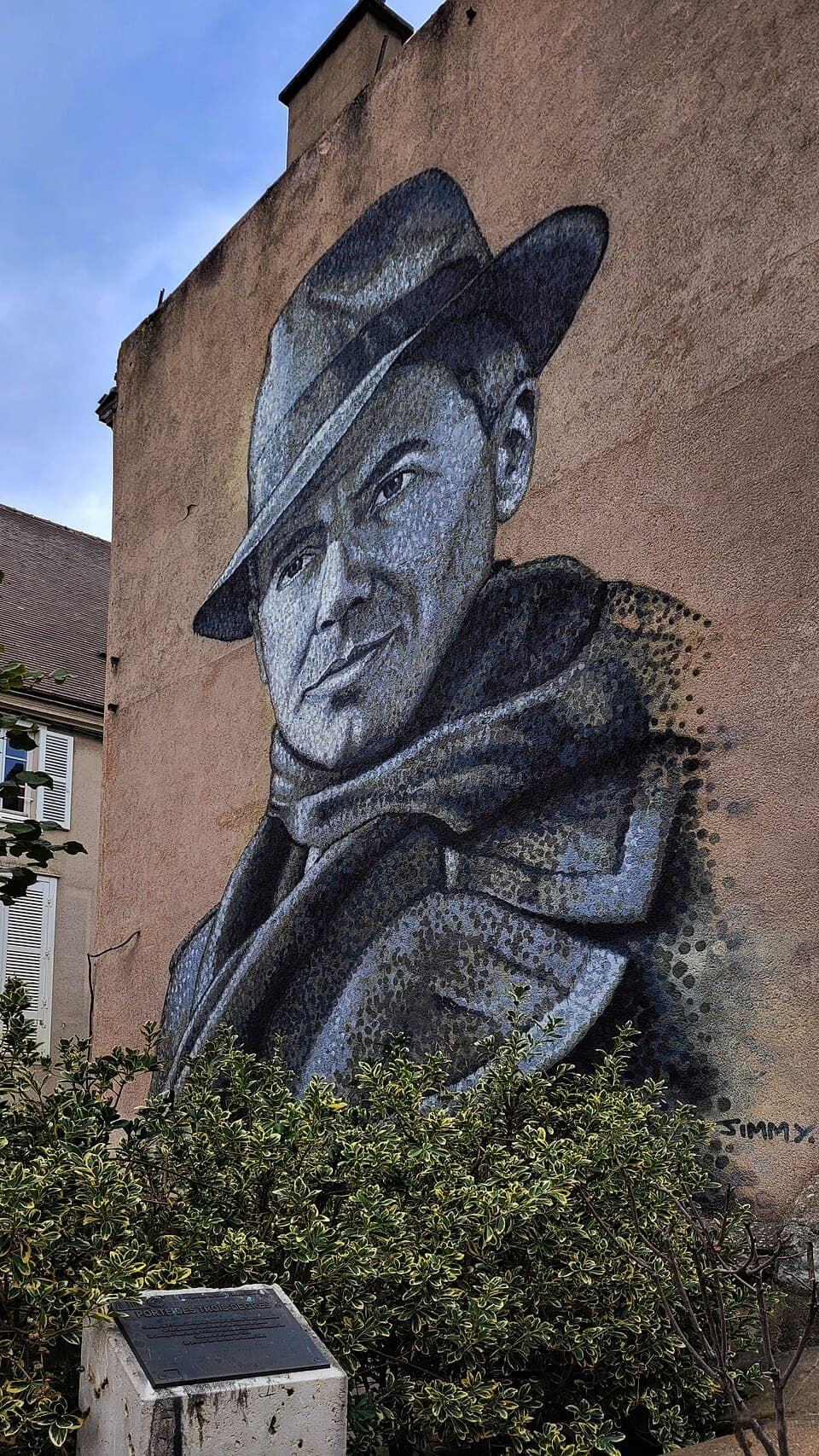
Summer 1943, in a borrowed apartment somewhere in the southern zone. The shutters are half-closed, an identity card in the name of Monsieur Mercier lies on the table. The man speaking wears a scarf tied high, despite the heat. He agrees to answer, in a low voice, as one confides a heavy secret.
—How does one present oneself to a provincial prefect on the first morning one chooses to disobey?
It was June 1940, at the prefecture of Chartres. The Germans wanted my signature at the bottom of a paper accusing Senegalese tirailleurs of massacres they had not committed. One does not disobey in the morning out of theory; one disobeys because a sheet of paper is handed to you and putting your name on it would mean besmirching the dead. I refused. The following night, I thought I would not hold up under the blows, and that a word torn from me would be worse than silence. So I looked for a shard of glass. I survived, but since then, see this scarf: it never leaves me. I recorded it all in a narrative I called Premier Combat, because that is what it was, indeed, the first.
One did not put one's name at the bottom of a lie that would besmirch the dead.
—What remains, in your body, from that night?
A scar on my neck, and the habit of high collars. People think I am sensitive to cold, or vain; in truth I hide the trace of a gesture I did not quite complete. Vichy revoked me soon after — a prefect who refuses the occupier's orders is no longer a presentable prefect. I could have stopped there, lived quietly in Béziers where my father had taught me to love the secular Republic. But a revocation, you see, frees as much as it punishes. I no longer had a position to protect, a career to manage. That scarf became, in its own way, my first false paper: it told of fragility while hiding a crack.
A revocation frees as much as it punishes.
—Why go to London at the end of 1941, rather than wait for the storm to pass?
Because waiting was consenting. At the end of 1941, I made my way to London and met General de Gaulle. Many in France refused the armistice without knowing in whose name to refuse it; he offered a name, Free France, and an authority. I wrote to my sister Laure before leaving again that I knew the risks I ran, but that I could not stand idly by while France suffered. It is not courage, it is moral arithmetic: one cannot watch oneself grow old as a spectator to dishonor. De Gaulle entrusted me with a mission — to unite those fighting in scattered order. I accepted knowing I might not return.
One cannot watch oneself grow old as a spectator to dishonor.
—How does one become someone else, when one must disappear to act?
One returns to what one was. In my youth, I drew; I gave satirical sketches to magazines like Le Rire under the name Romanin. That talent lay dormant. It awakened when a cover was needed: I opened an art gallery in Nice, under the same pseudonym. In front of a German, I talked about watercolors and dealers, and it was sincere — that is what made it credible. A liar betrays himself; a man who tells a part of the truth never does. My sketchbooks were not a disguise, they were a fragment of myself taken for the whole. The rest — the reports, the meetings — lived in the shadow cast by that light.
A man who tells a part of the truth never betrays himself.
—What did a man who no longer had the right to a name carry on him?
Papers that did not say who I was. Sometimes Rex, sometimes Max, sometimes Monsieur Mercier — each name a short, disposable life. Resistance fighters made those cards better than the French administration made the real ones. One learns to answer to a name that is not one's own without hesitation, because hesitation at a checkpoint is death. I also carried, at times, messages condensed on microfilm, slipped into unremarkable objects — a matchbox, a pen. My whole person consisted in that discipline: reveal nothing, keep nothing that could speak in my place. The gallery owner of Nice had an address; the man uniting the Resistance had none.
Each name a short, disposable life.
—What did an ordinary day of that life without a fixed address look like?
A series of precautions. I rose early, in a borrowed room or at a comrade's who put me up, and I changed roofs more often than shirts. The Free Zone was no longer truly free since the Germans had invaded it in November 1942; the Gestapo prowled, radio direction finding tracked our transmitters. In the afternoon, meetings in cafés, arbitrations between touchy leaders. In the evening, I listened to the BBC and its personal messages, those absurd sentences that meant everything. I sometimes drew, to keep my hands steady. We dined frugally, to the rhythm of ration tickets. And we fell asleep knowing that a burned address, one word too many, and everything would collapse.
I changed roofs more often than shirts.
—What made the unification of the movements so difficult, and yet so necessary?
Imagine three brave men fighting the same enemy, but each on his own street, without speaking to each other. Combat, Libération, Franc-Tireur: three southern zone movements, three prides, three mutual suspicions. As early as 1941 and 1942, I sent reports to de Gaulle saying these divergences were real but surmountable, because the same spirit animated them. Federating them into the Mouvements Unis de la Résistance was not a matter of doctrine, but of patience: each had to yield a bit of its sovereignty without feeling subjugated. A scattered force weighs nothing; gathered under a single authority, it becomes an interlocutor even the Allies must respect.
A scattered force weighs nothing.
—What did that meeting of 27 May 1943 represent for you?
Everything, and immense peril. On 27 May 1943, at 48 rue du Four in Paris, I brought together around the same table men whom nothing should have seated together: movements, parties, unions, from right to left, Christians and Communists. It was the first meeting of the National Council of the Resistance. Think of the risk: so many wanted heads in a single room, and the Gestapo a few blocks away. But that day, the internal Resistance ceased to be a dust of courage and became a voice, and that voice placed clandestine France under the authority of General de Gaulle. Before the Allies who doubted him, it was proof that he spoke for France.
The Resistance ceased to be a dust of courage and became a voice.
—Living constantly hunted, does that change the way one thinks about danger?
One learns to wear it like a garment. At first, fear seizes you at every uniform you pass; then it settles, it waits its turn. I knew that a betrayal, an imprudent person, would suffice. On 21 June 1943, at Caluire-et-Cuire, near Lyon, I went to a meeting in Doctor Dugoujon's office. Something was wrong, I felt it too late. The Gestapo of Klaus Barbie was waiting for us. I will not tell you I was not afraid — I was afraid of talking, above all, of giving up under the blows what so many men had confided in me. The only freedom left to an arrested man was his silence. I swore to keep that one intact.
The only freedom left to an arrested man is his silence.
—If you could imagine being read a very long time from now, what would you want to be remembered?
Not the man — the man is a small thing, a revoked prefect who painted watercolors. But the idea that a few people can gather what is tearing apart. I wrote to my sister that if I did not return, she should know I died for something worth dying for. I still believe it. What we are building in secrecy — that fragile unity of the National Council of the Resistance — is not just a weapon of war; it is the sketch of a France to be rebuilt, more just. If anything is to be remembered, let it be this: that in the darkest hour, French people of all stripes agreed to silence their quarrels and speak with one voice. The rest, my name, my ashes, matters little.
A few people can gather what is tearing apart.
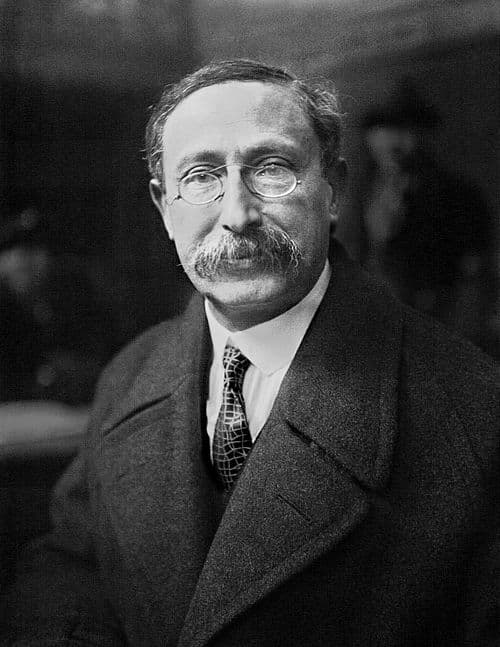
This imaginary interview was generated by artificial intelligence from sources documented in Jean Moulin's profile. It dramatises what the figure might have said based on what we know about them, but does not constitute attested historical testimony. For primary sources and factual documentation, refer to the full profile.