Kids interview Jean Moulin
by Charactorium · Jean Moulin (1899 — 1943) · Politics · 5 min read
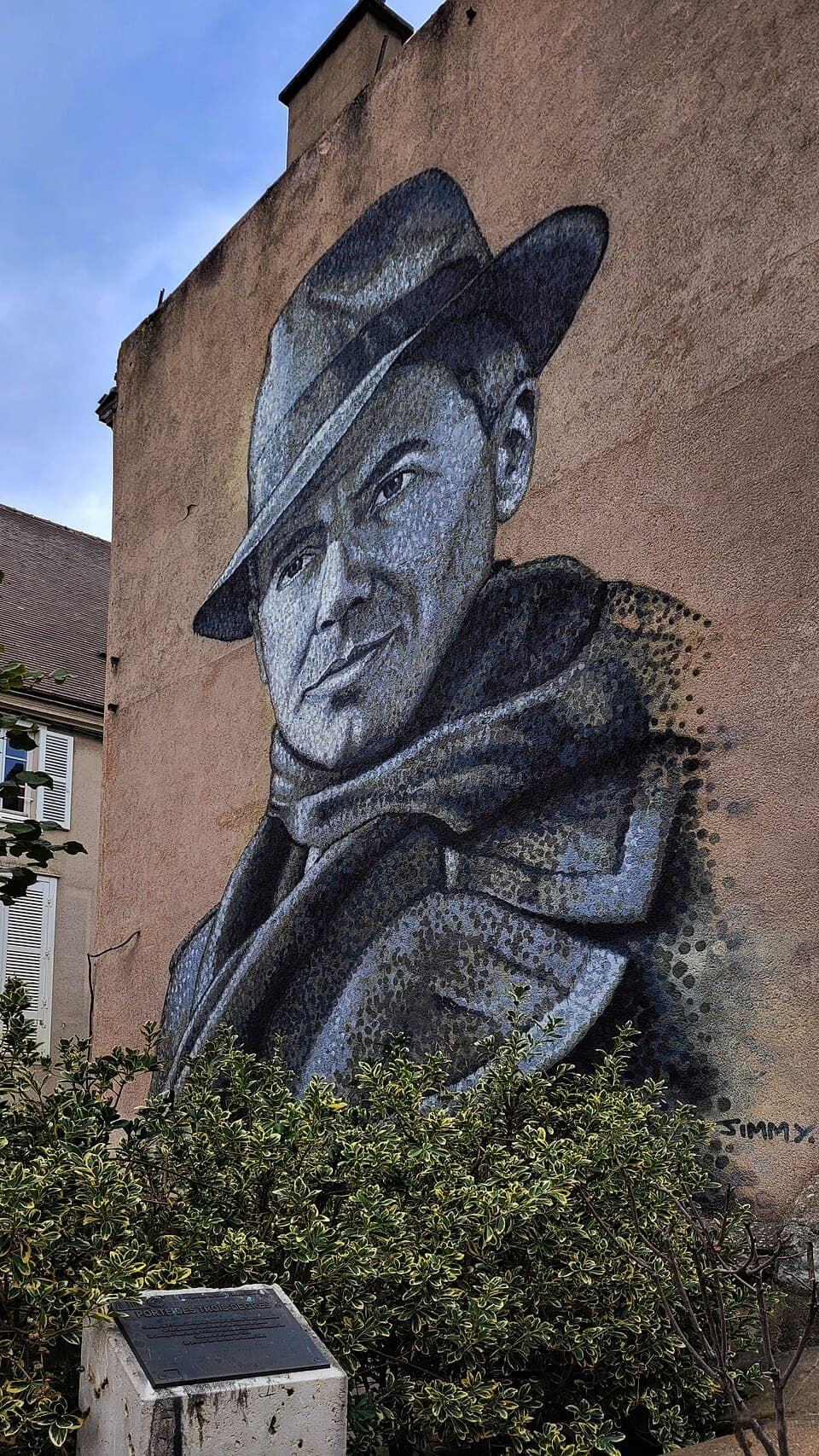
Two young visitors, on a school trip, push open the door of a silent room. At the back, a man in a dark scarf waits for them, a tired smile on his lips. He has so much to tell, and he is moved that children want to listen.
—What was it like, the day you refused to sign the Germans' paper?
You know, my child, it was in June 1940, at the prefecture of Chartres. I was prefect, the youngest in France. The Germans wanted me to sign a lie: accuse soldiers from Africa of having committed massacres. It was false. Imagine being asked to smear innocent people to have peace. I said no. They locked me up, beat me. I was so afraid I would give in under the pain that, at night, I tried to slit my throat with a shard of glass. I survived. Later, I wrote it all down in a little story, Premier Combat. A prefect must protect people, not lie against them.
A prefect must protect people, not lie against them.
—Why do you always wear that scarf around your neck?
Come closer, look carefully. You see this scarf? It hides a scar. The night I tried to slit my throat at Chartres, in 1940, the blade left a mark forever. So I wear a scarf, or a high collar, you see, that goes up to my chin. At first, it was so as not to frighten people. And later, in the underground, it became useful: a policeman who knew my real face might have recognized me by that scar. Imagine a detail so small that could betray you and cost you your life. A simple wool scarf, and I went unnoticed in the street.
A detail so small, a scar, could betray me and cost me my life.
—Is it true that you drew and had a fake gallery?
Yes! And that, that makes me happy you ask. Before the war, I drew for real. I signed my mocking drawings Romanin, in newspapers that made people laugh, like Le Rire. A real little talent! So when I went underground, I opened an art gallery in Nice, still under the name Romanin. To the Germans, I was just an art dealer who liked painting. But in my pockets, I had false papers, and other names: Rex, then Max. You see, my real passion served as my mask. It's cleverer to hide behind something real.
My real passion as a drawer served as my mask.
—What was it like having lots of different names?
It's strange, you know. In the morning, I checked my false papers before going out. I was Rex, or Max, sometimes Monsieur Mercier. A resistance fighter made those fake IDs by hand, with a real photo and a fake name. Imagine having to forget who you are every morning, and never make a mistake. If a policeman asked my name and I hesitated for a second, it was over. Jean Moulin no longer existed, he had to disappear. It was tiring for the heart, I tell you. But that hidden name protected all my friends in the Resistance.
Every morning, I had to forget who I was and never make a mistake.
—What did you eat, and where did you sleep, when you were hiding?
Ah, it was no life of luxury! Because of the Occupation, everything was rationed: poor-quality bread, a few vegetables, very little meat. Imagine a day when you are always a bit hungry. And I had no home of my own. I changed lodgings all the time, I slept at resistance friends' houses, in borrowed rooms. Never two nights in the same place for too long, otherwise the Gestapo — the Nazis' secret police — would eventually find you. In the evening, I pressed my ear to the radio to secretly listen to messages from London. Living hidden means never really resting.
Living hidden means never really resting.
—Were you afraid at night that they would come to arrest you?
Of course I was afraid, my child. Anyone who tells you they are never afraid is lying. In the evening, I listened quietly to the BBC, the London radio. It sent little coded messages, strange phrases with no rhyme or reason, that meant something secret to us. And at the slightest sound of footsteps on the stairs, my heart stopped. One mistake, one word too many, and it was arrest, maybe death. But you know, fear did not stop me from acting. I was afraid, and I carried on anyway. That is true courage: it is not the absence of fear.
True courage is not the absence of fear.
—What exactly did General de Gaulle ask you to do?
At the end of 1941, I went all the way to London to meet General de Gaulle, the leader of Free France. Before that, I had sent him reports, long secret letters, to explain what was happening in France. The problem was that there were many resistance groups, each acting on its own, without talking to each other. Imagine a team where no one plays together. De Gaulle gave me an immense mission: to unite them all. It was hard, these people didn't always agree with each other. But together, we are so much stronger than alone.
Together, we are so much stronger than alone.
—What was that famous Council you created in Paris?
Here is the work I am most proud of. On May 27, 1943, in Paris, in a discreet apartment at 48 rue du Four, I gathered around the same table the leaders of the major resistance movements, the parties, the unions. For the first time! It was called the National Council of the Resistance. Imagine people who agreed on almost nothing, sitting together, united for a single cause: to liberate France. Doing it in secret, under the noses of the Nazis, was a crazy feat. That day, the whole Resistance finally spoke with one voice, behind de Gaulle.
That day, the whole Resistance finally spoke with one voice.
—Why did you agree to risk your life like that?
You ask a beautiful question, and it's a simple one, really. I could have stayed quiet, you know. I was a high-ranking civil servant, I had a good position. But when France was crushed in 1940, and the Vichy regime began to obey the Nazis, I could not stay silent. I grew up in Béziers, in a family that loved the Republic and freedom. My father passed that on to me. Imagine seeing your home invaded, and being asked to look down. I could not sit idly by while my country suffered.
I could not sit idly by while my country suffered.
—And in the end, what happened to you?
I will tell you gently, because it is sad. On June 21, 1943, I was at a secret meeting in Caluire, near Lyon, at a doctor's house. Someone had betrayed us. The Gestapo arrived, led by a cruel man, Klaus Barbie. They arrested me, and they hurt me very, very badly to make me give the names of my friends. Imagine the worst pain, and the strength not to speak. I said nothing. Not a single name. I died shortly after, in July, taking all my secrets with me. And you know what? By staying silent, I saved hundreds of lives.
By staying silent, I saved hundreds of lives.
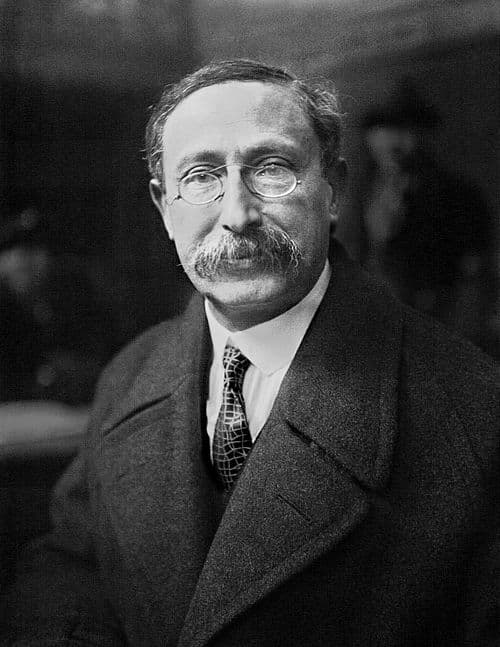
This imaginary interview was generated by artificial intelligence from sources documented in Jean Moulin's profile. It dramatises what the figure might have said based on what we know about them, but does not constitute attested historical testimony. For primary sources and factual documentation, refer to the full profile.