Imaginary dialogue between Charles de Gaulle and Jean Moulin
by Charactorium · Jean Moulin (1899 — 1943) · Politics · 5 min read
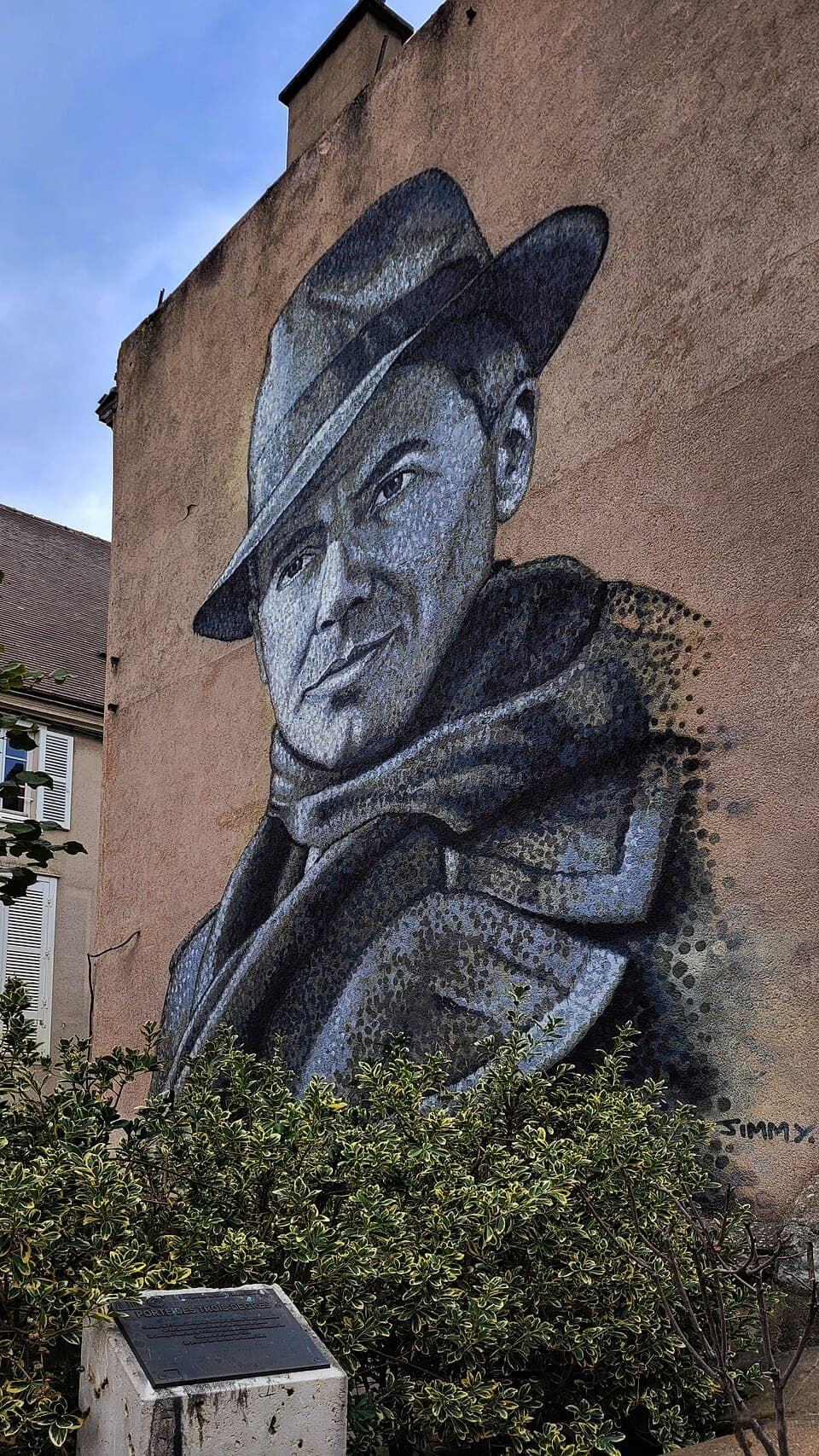
It is in a discreet office in London, at Carlton Gardens, headquarters of Free France, that one evening in late 1941 General de Gaulle receives the man who has come from the southern zone. The low lamp lights a map of France pinned to the wall, and the smell of cold tobacco still lingers. The two men have known each other only for a few hours, but already the leader senses that he holds the instrument of the unity he lacks. This imaginary dialogue extends that first meeting: de Gaulle questions, Moulin answers, and one senses between them the silent pact that will seal the Resistance.
—Before you came to me, Moulin, at Chartres in 1940, you preferred glass to your throat rather than a signature. Why that absolute refusal?
My general, they wanted me to put my prefect's name on a lie: to accuse Senegalese soldiers of crimes they had not committed, to cover up their own massacres. A prefect of the Republic does not sign infamy. When I realized that torture would come, I was afraid not of dying, but of giving in, of sullying my word with a torn-out confession. So in that cellar, with a shard of glass, I wanted to end it before I weakened. I survived, and since then I wear a scarf to hide the mark. You can see it, you who received me: it is not coquetry. It is the memory of an evening when I measured how far one must be ready to go to remain honest.
A prefect of the Republic does not sign infamy.
—That scar you conceal, is it a burden or, deep down, what gave you the right to come and find me?
Both, my general. The burden is that at every German checkpoint, this high collar could betray me if a policeman knew the story of the prefect of Chartres. But the right, yes, I believe I earned it there. When I wrote what I experienced in June 1940, what I called my First Battle, I did not think of publishing it. It was for myself alone, to prove to myself that I had not bent. Today, when I ask the leaders of movements to trust me, I do not come empty-handed: I carry under my scarf the proof that I will not talk. A man who cut his own throat rather than lie, you can entrust secrets to him.
A man who cut his own throat rather than lie, you can entrust secrets to him.
—I've been told you ran an art gallery in Nice, under the name Romanin. A dismissed prefect turned art dealer: is that a mask, or a man hiding?
A mask, my general, but sewn onto my own skin, and that is what makes it solid. In my youth, I drew for satirical magazines, Le Rire among others, and I already signed Romanin. My love of painting is not a pretense: I know prices, schools, I can talk about a watercolor for hours. That is why the Germans suspect nothing — a chatty, refined gallery owner does not fit the profile of an agent. When I travel with my canvases under my arm, no one imagines the reports sleeping in the lining. The best cover is never a total lie: it is an old truth turned inside out like a glove.
The best cover is never a total lie: it is an old truth turned inside out like a glove.
—When I had you parachuted into France under the name Rex, I sent you into the shadows. What do your days as a hunted man look like?
Like a geometry of caution, my general. I wake up in a room I do not always recognize, I check my false papers — Rex, then Max, sometimes Monsieur Mercier — and I change lodgings more often than shirts. My afternoons consist of meetings in cafés, where I settle quarrels between men who distrust each other as much as they distrust the Germans. In the evening, I press my ear to the radio for messages from London, and I write coded reports that others will microfilm. I eat little, at the homes of those who shelter me at the risk of their lives. Fatigue, I no longer feel it. What exhausts me is knowing that a single imprudence, a single name let slip, and everything collapses.
I change lodgings more often than shirts.
—You alone carry the full weight of this mission I entrusted to you. Have you never thought of giving up, there, in the solitude?
Give up, no, my general; doubt, often. Solitude is the true price of this task. I cannot confide in anyone completely, because every man I meet could, under torture, become the link that destroys me. I wrote to my sister Laure that I knew the risks, but that I could not stand idly by while France suffers. That is what keeps me going: not courage, which comes and goes, but the impossibility of doing otherwise. You gave me a precise mission, unity, and as long as it is not accomplished, I have no right to listen to myself. Fear, I put away every morning in the pocket where I keep my false papers.
Fear, I put away every morning in the pocket where I keep my false papers.
—On May 27, 1943, you gathered in Paris, rue du Four, all the factions of the Resistance. How do you make men who hate each other sit together?
With a patience that looks like stubbornness, my general. Gathering at 48 rue du Four the movements, the old parties and the unions, under one roof and in secrecy, was like holding water and fire in the same vessel. Each arrived with his suspicions: the communists feared being drowned out, the radicals being erased, the military serving politicians. I did not erase their differences; I showed them that above them there was you, and France to liberate. The National Council of the Resistance was born from that first session. For the first time, the entire internal Resistance recognized a single authority. That day, I understood that uniting is not reconciling: it is giving a common goal to men who will never love each other.
Uniting is not reconciling: it is giving a common goal to men who will never love each other.
—By placing all these movements under my authority, you gave me a strength the Allies denied me. Did you measure what you were putting into my hands?
I measured it, my general, perhaps better than you that day. In London, in Washington, you were seen as a general without troops, a symbol without territory. But once the movements, parties and unions of all France recognize you with a single voice, you cease to be a lone man on the radio: you become France itself speaking. That was the whole meaning of my mission. Before federating the United Movements of the Resistance, then the Council, I had written to you in my reports: their unification was possible and necessary. What I was handing over to you was not a shadow army — it was legitimacy. And legitimacy, no Allied landing can grant you in your place.
You become France itself speaking.
—I hear reports of arrests in Lyon, around you. Do you feel Barbie's net tightening, and do you fear betrayal more than the enemy?
Yes, my general, and that is the poison of our trade. The enemy, we know him, he wears a uniform. But betrayal comes from within, from a friendly face, from an imprudence or a weakness. The nets of the Lyon Gestapo are tightening, I feel it through small signs: a tail, a burned address, a comrade who no longer answers. Klaus Barbie is no fool; he knows that by catching me, he makes the whole edifice tremble. I multiply precautions, I change my habits, but at Caluire soon there will have to be one meeting too many. I know I play my life every day on a coin toss. If I am taken, I will not talk — that, you can tell France.
The enemy wears a uniform; betrayal, it wears a friendly face.
—If the enemy tears you from us, Moulin, what do you want me to say of you, and what should France remember of your silence?
Do not say that I was a hero, my general; say that I did my duty as a civil servant, to the end. If Barbie takes me, he will have my body but not my secrets: the names, the networks, the meetings will die with me. That is all I can offer those who trusted me — their silence guaranteed by mine. Let France remember that one can hold, that a lone man, unarmed, can refuse to betray his brothers. You sent me to unite the Resistance; the day I fall silent under the blows, it will be my last way of uniting it, by not betraying it. The rest — the honors, the memory — does not belong to me. That will be up to you and those who survive.
He will have my body but not my secrets.
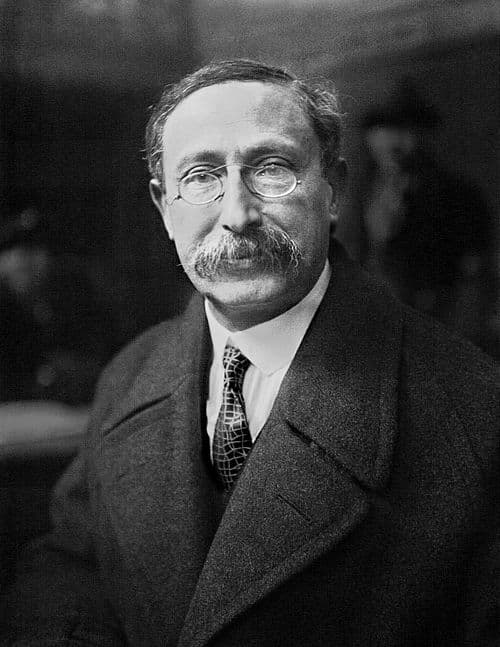
This imaginary interview was generated by artificial intelligence from sources documented in Jean Moulin's profile. It dramatises what the figure might have said based on what we know about them, but does not constitute attested historical testimony. For primary sources and factual documentation, refer to the full profile.