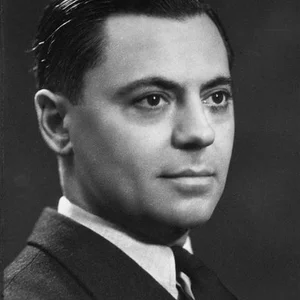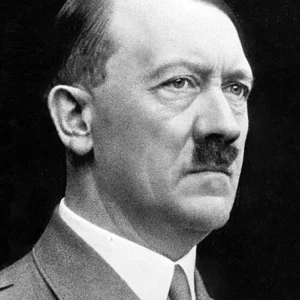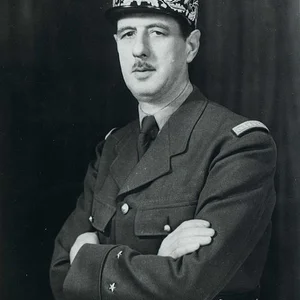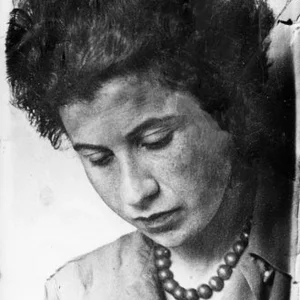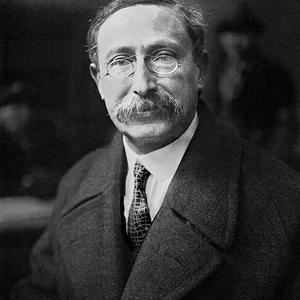

Léon Blum (1872–1950) was a French politician and intellectual, leader of the French Socialist Party and a major figure of the left in the 20th century. He is best known for leading the Popular Front government in 1936, which marked the first time the left came to power in France.
Léon Blum(1872 — 1950)
Léon Blum
France
8 min read
Frequently asked questions
Famous Quotes
« A democracy is only as good as the quality of its institutions and the civic conscience of its people»
Key Facts
- 1919: Joined the Socialist Party and elected as a member of parliament
- 1936: Formed the Popular Front government (May–June), the first socialist-led government in French history
- 1936: Implemented major social reforms (40-hour work week, paid holidays, collective bargaining agreements)
- 1940–1944: Imprisoned under the Vichy regime and the Nazis
- 1946–1947: Returned to government as President of the Provisional Government
Works & Achievements
Blum's first notable literary work, an imaginary dialogue with Goethe on politics and art. It reveals his formation as a humanist intellectual before his full political commitment.
A bold sociological essay advocating for equality within couples and sexual freedom before marriage, which scandalized the bourgeoisie of the time. It demonstrates the modernity of Blum's social ideas well before the Popular Front.
A major literary study on Stendhal that established itself as a reference in French criticism. It bears witness to Blum's erudition and artistic sensibility, as he remained a man of letters until the end.
A set of historic measures: the 40-hour work week, two weeks of paid leave, mandatory collective bargaining agreements, and trade union freedom within companies. These reforms profoundly transformed the condition of the French working class.
A work written in Nazi captivity, a profound reflection on democracy, socialism, and the future of Europe. Considered his political testament, it was published upon his release and remains a reference of humanist socialist thought.
Financial agreements negotiated with the United States allowing for the partial cancellation of France's war debt in exchange for commercial openings. They enabled France to rebuild but sparked controversy over their cultural provisions (cinema).
Anecdotes
At the Congress of Tours in December 1920, Blum refused to join the Third Communist International and remained at the head of the historic SFIO. Before a largely hostile audience, he delivered his now-famous phrase: 'We stay in the old house.' This founding speech defined for decades the line of French democratic socialism in the face of communism.
In June 1936, the Matignon Agreements he negotiated granted French workers two weeks of paid vacation for the first time. Special trains at reduced fares were chartered, and the beaches of Normandy and Brittany filled with working-class families going on holiday for the very first time in their lives.
At the Riom trial in 1942, organized by Vichy to judge him as 'responsible for the defeat,' Blum turned the tables and transformed the tribunal into a republican platform. His pleadings were so brilliant and embarrassing for the regime that Pétain personally ordered the suspension of the hearings in April 1942.
Arrested in 1940 and deported to Buchenwald then Dachau, Blum married his companion Jeanne Levylier while in captivity in 1943, with the authorization of his Nazi jailers, in a simple but emotionally charged ceremony. This marriage symbolized his moral resistance in the face of barbarism.
In 1936, Blum's appointment as President of the Council triggered a wave of virulent antisemitism from the far right: the newspaper Je suis partout and Xavier Vallat at the Chamber's podium publicly insulted him on account of his Jewish origins. Blum responded with a cold dignity that earned him admiration even from his republican adversaries.
Primary Sources
We are men who can, between two groups that are separating, seek to maintain the continuity of the socialist tradition. We remain in the old house, and let everyone prepare to defend it.
For the first time, the Republic will be governed, within the framework of its institutions, by those for whom it is a natural home and who have never ceased to be its defenders.
Democracy is the governance of the people by themselves, with their informed consent. It cannot survive if economic inequality is too glaring for political freedom to retain any real meaning.
I do not need to defend myself — it is the republican regime that you are judging here. Yet the Republic did not collapse: it was murdered by those who today sit on the benches of the accused.
Socialism is not merely an economic doctrine; it is a way of conceiving relations between people, founded on fraternity and justice distributed equitably among all.
Key Places
Official residence of the President of the Council where Blum governed between June 1936 and June 1937. It is here that the Matignon Agreements were signed on June 7, 1936, the founding act of French social legislation.
Seat of the Chamber of Deputies where Blum served as deputy for the Aude and then for Paris from 1919 to 1940. It is here that he delivered his major speeches against fascism and in defense of democracy.
Venue of the Tours Congress of December 1920 where Blum, refusing the split, embodied the continuity of French reformist socialism against the majority that founded the PCF.
Blum was deported here in 1943 following his imprisonment by Vichy. His survival in this camp symbolizes the resistance of democracy against Nazi barbarism.
Blum's place of residence after the Liberation, where he wrote his final works and received French socialists until his death in 1950. His house there is today a site of remembrance.
Typical Objects

Official daily newspaper of the SFIO, of which Blum became political director and chief editorialist from 1921. His articles in this newspaper shaped French reformist socialist ideology for more than two decades.

Characteristic accessory of the intellectual and man of letters he remained throughout his life, visible in the majority of official photographs. They symbolize his dual identity as intellectual and politician.

The cardboard folders containing the Popular Front bills he signed in June 1936. These administrative documents give material form to the most significant social reforms of the Third Republic.

Daily work tool of a man who was first a literary critic and essayist before becoming head of government. Blum personally wrote his speeches and articles, including À l'échelle humaine while in captivity.

Blum was an avid reader and recognized literary critic, author of studies on Stendhal and Goethe. His literary works bear witness to a humanist culture that nourished all of his political thinking.

Working tool of the parliamentarian he had been since 1919, used to prepare debates in the Chamber of Deputies. Blum was renowned for the precision and rigor of his speeches at the podium.
School Curriculum
Vocabulary & Tags
Key Vocabulary
Tags
Concept
Daily Life
Morning
Blum rises early and begins his day with a methodical reading of the press — Le Figaro, L'Humanité, Le Populaire — to take the pulse of public opinion and the opposition. He dictates or writes his own daily editorial for Le Populaire before any political meeting.
Afternoon
His afternoons are dominated by sessions at the Chamber of Deputies, meetings of the SFIO executive bureau, or, during the Popular Front government, the interminable cabinet councils at the Hôtel Matignon. A skilled negotiator, he receives trade unions and employers with a distant yet firm courtesy.
Evening
In the evenings, Blum rejoins his circle of intellectual friends — writers, artists, philosophers — in the salons or cafés of the Latin Quarter. A great lover of music and theatre, he frequents the Paris Opera and remains an active literary critic until the end of his life, reading for hours before sleeping.
Food
Coming from the Parisian bourgeoisie, Blum follows classic French cuisine, without any particular ostentation. During his years of detention in Riom and in deportation, he endures the conditions of captivity with a stoicism noted by his fellow prisoners.
Clothing
Blum dresses with the sober elegance of the republican upper-middle class: dark three-piece suit, silky tie, bowler hat in the city. His neatly trimmed moustache and thin metal-framed glasses are his unchanging distinguishing marks, visible in all his official photographs.
Housing
Blum lives in a bourgeois apartment in the Marais district and later in the 7th arrondissement of Paris, surrounded by books and works of art. After the war, he moves to a country house in Jouy-en-Josas, in the Yvelines, where he ends his life in relative retirement, receiving socialist visitors in his garden.
Historical Timeline
Period Vocabulary
Visual Style
Esthétique photographique noir et blanc des années 1930 : Paris art déco, meetings ouvriers, affiches du Front populaire en rouge et noir, portraits officiels austères contrastant avec les premières images de vacanciers populaires sur les plages normandes.
Sound Ambience
L'environnement sonore de Blum mêle le bouillonnement politique des rues parisiennes des années 1930 — meetings, grèves, journaux criés — au calme studieux des cabinets ministériels et des salles de rédaction.
Liens externes & ressources
Références
Œuvres
Nouvelles conversations de Goethe avec Eckermann
1901
Du mariage
1907
Stendhal et le beylisme
1914
Les Accords de Matignon et les lois sociales du Front populaire
Juin 1936
À l'échelle humaine
1945