Imaginary dialogue between Pierre-Jules Hetzel and Jules Verne
by Charactorium · Jules Verne (1828 — 1905) · Literature · 5 min read
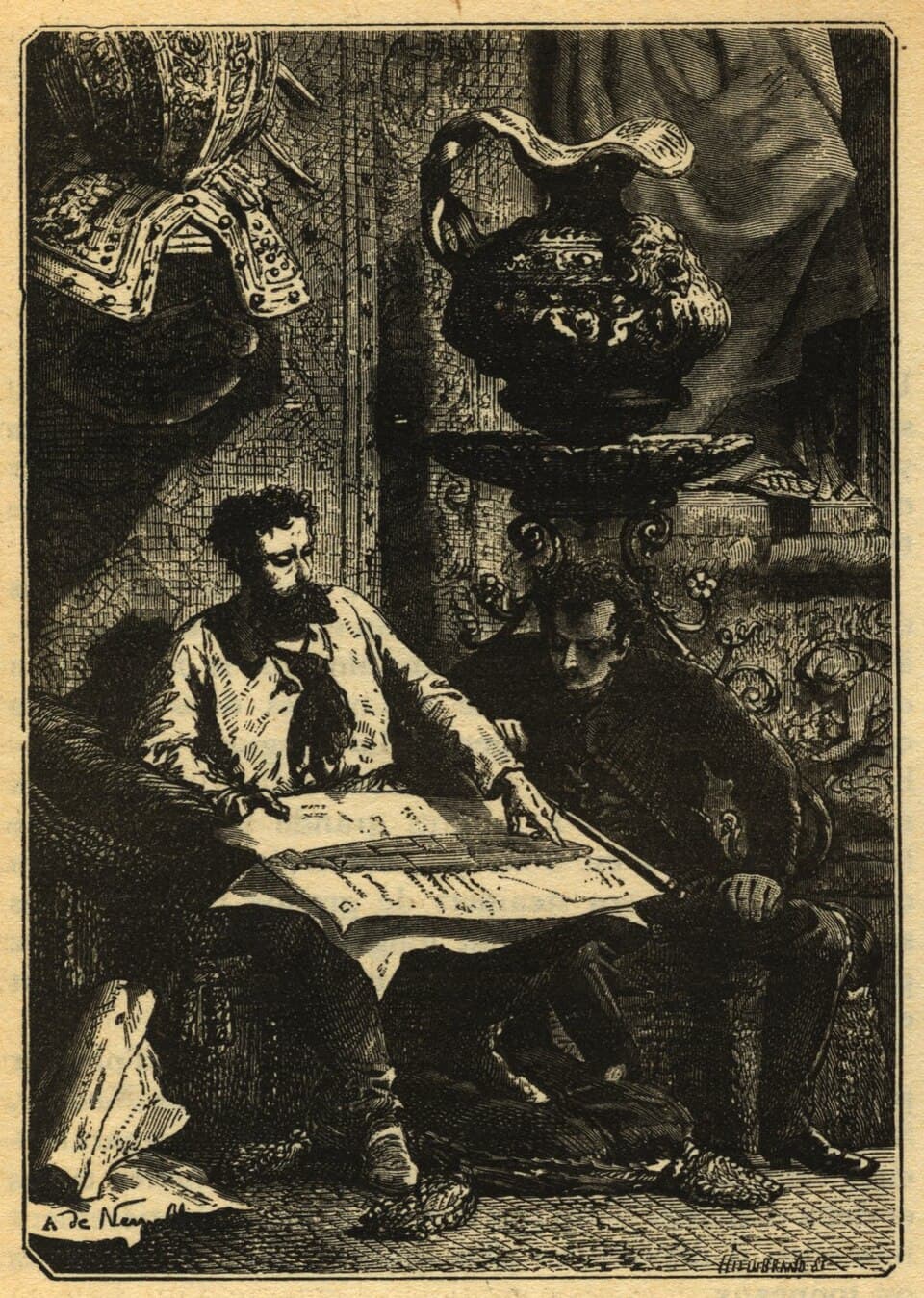
It is in the study in Amiens, at the top of the red brick tower on rue Charles-Dubois, that Pierre-Jules Hetzel meets his author at the end of 1879. Maps cover the walls, a terrestrial globe sleeps near the inkwell, and the lamp illuminates stacks of index cards cut from journals. The two men have known each other for seventeen years already, since that manuscript first rejected then bought that changed everything. The editor comes tonight not to discuss a contract, but to make the man behind the Voyages extraordinaires speak.
—My dear Verne, do you remember the day in 1862 when I first returned your balloon, before buying it back? What did you think of me then?
How could I forget, my dear Hetzel! I was a thirty-four-year-old man who had staked everything on that manuscript. When you first returned it, I thought my career was over; I had burned many nights on that Five Weeks in a Balloon. Then you called me back, you wanted it, and you offered me more than a contract: a program, a collection, a reason to continue. Without you, I sincerely believe I would have put away my pens for good and returned to stockbroking. You gave me the only gift that mattered: the certainty of being read. It is a debt no advance can settle.
You offered me more than a contract: a reason to continue.
—That name Voyages extraordinaires we gave the collection, do you still find it fitting, after so many volumes published under our common banner?
It is more fitting than ever, and you were the one who foresaw it. Your idea was to summarize in the novel all the geographical, geological, physical, and astronomical knowledge amassed by modern science. At first, I admit I feared being trapped in the work of a disguised encyclopedist. But that constraint freed me: it forced me to base every adventure on truth, never to invent a machine without having studied its principles. The reader thinks he is traveling for pleasure, and he learns without noticing. You knew before I did that instruction smuggled into narrative would reach more young minds than all the textbooks in the world.
The reader thinks he is traveling for pleasure, and he learns without noticing.
—You once told me about your childhood escape in Nantes. What remains, in the settled man of today, of the boy caught at Paimbœuf?
Everything remains, believe me. I was eleven and had stowed away on a three-master bound for the Indies, mad with the idea of bringing back a coral necklace. My father plucked me from the stopover, and I had to swear to him that I would travel only in dreams. See the irony: that oath of a scolded child became the driving force of all my work. Each novel is an escape I finally allow myself, but at the writing table. Nantes, its port, the smell of tar and tides, the ballet of ships leaving for the ends of the earth, that is what still sleeps beneath each of my pages. One never recovers from a childhood by the water.
Each novel is an escape I finally allow myself, but at the writing table.
—Your manuscripts arrive with clockwork regularity. Tell me, here in this tower, how do you concretely craft one of these volumes that I print?
Through discipline, my friend, nothing else. I rise at five, winter and summer, and lock myself in this study until eleven. It is the hour when the mind is fresh, when the world still sleeps and does not dispute my heroes. In the afternoon, I do not create: I read. I go through scientific and geographical journals, I cut, I classify; I have thousands of index cards arranged by subject, my true mine. When I tackle a novel, the itinerary is already traced on the globe, the distances calculated, the science verified. Imagination comes only afterward, like varnish on wood. They think me a dreamer; I am above all a man of method who dreams at fixed hours.
They think me a dreamer; I am above all a man of method who dreams at fixed hours.
—This brick tower where we speak, lined with maps, do you really prefer it to a Parisian study where I would see you more often?
A thousand times, and you know it well, you who now have to take the train to visit me. Amiens gave me the silence I needed. In Paris, in the old days, I wasted my mornings in visits, in circles, in boulevard chatter. Here, at the top floor of my tower, I am the captain of my own motionless ship. The maps on the walls are my portholes; the globe on the table, my ocean. From this narrow room I command expeditions to the pole, under the seas, into the bowels of the earth. The province that is so pitied has made me freer than the capital ever would have. The noise of the world, I want it in my pages, not under my windows.
Here, at the top floor of my tower, I am the captain of my own motionless ship.
—Let us talk about the Nautilus. When you gave me Twenty Thousand Leagues Under the Sea, that submarine existed nowhere. Where did you draw it from?
From the science of our time, pushed a notch further. Diving boats were already being experimented with, clumsy, dangerous; I only gave them the perfection that engineers had not yet achieved. The rest is electricity, that force whose powers we barely suspect and which moves my vessel and its captain. My Nemo wanted to flee men; he needed a refuge that no flag could reach, and the sea offered it to me. Remember the proofs you sent back, riddled with your remarks about that too dark character. You were right to push me: Nemo gained in mystery. The sea covers seven-tenths of the globe; how could one not lodge all the world's freedom there?
I only gave the machines the perfection that engineers had not yet achieved.
—You sent men to the Moon by a cannon. Were you not afraid you would be accused, at my place, of falling into pure fantasy?
The fear was mine, indeed, and that is why I calculated everything. From the Earth to the Moon rests on figures that scientists were kind enough to verify: the speed to reach, the mass of the projectile, the firing site closest to the equator. I did not want a fairy tale, but a defensible hypothesis, where each audacity rests on a known principle. Astronomy has always fascinated me; my telescope and my globes are not ornaments. That is the pact I offer the reader: I take him where no one has gone, but by a path an engineer could follow. The marvelous is only worthwhile if it keeps one foot in the possible; without that, it is no longer a voyage, it is a dream.
The marvelous is only worthwhile if it keeps one foot in the possible.
—Your yacht, the Saint-Michel, takes you far from me for weeks at a time. What do you seek on the waves that this tower does not give you?
The truth of sensations, my dear editor. One does not write the sea well from the depths of an armchair; one must have felt it roll under one's feet, have seen the sky load and the deck heel. My Mediterranean voyages, my stops as far as the northern coasts, at Edinburgh, gave me settings that no journal could provide. When I write the Nautilus, I know from experience what the silence of the open sea is and the color of the water in the morning. Le Crotoy, where I often moor, has become my floating workshop. I am a man of letters, yes, but also a man of action; my heroes act because I wanted, in my own measure, to act like them. The pen lies less when the body has known the thing.
One does not write the sea well from the depths of an armchair; one must have felt it roll under one's feet.
—How, in this so regulated discipline, do you manage to juggle several manuscripts without losing yourself?
Precisely because everything is regulated. Each novel lives in its folder, with its itinerary and its own index cards; I move from one to the other like a captain changes watch. In the morning, I draft a first version of one story; another day, I correct the proofs of a book you already expect at the printer's; a third, I document the work that will not be written until next year. This rotation keeps my mind fresh: one tires of the same hero if one never leaves him. Your deadlines, which I sometimes curse, are in truth my best spurs. Without this mechanism, I would never have delivered so many volumes to you; genius, if it exists, is here nothing but order applied to imagination.
Genius, if it exists, is here nothing but order applied to imagination.
—Forgive my frankness as a friend: since the tragedy of that year, your leg and your pen seem darker. Would you like to say a word about it?
You have the eye of someone who knows me too well for me to lie to you. This ankle wound now keeps me nailed down, and my step fails me like the heroes I send running around the world. But it is not the bullet alone that darkens me. It is the idea that progress, which I have so praised, can serve designs I had not foreseen. My early books laughed with confidence; I feel rising in me the need to warn as much as to amaze. Science is a blind force: it obeys the hand that holds it. You will see, in the novels I will bring you, shadows you did not know in me. One ages, and the world with us; it would be dishonest to go on smiling as at twenty.
Science is a blind force: it obeys the hand that holds it.
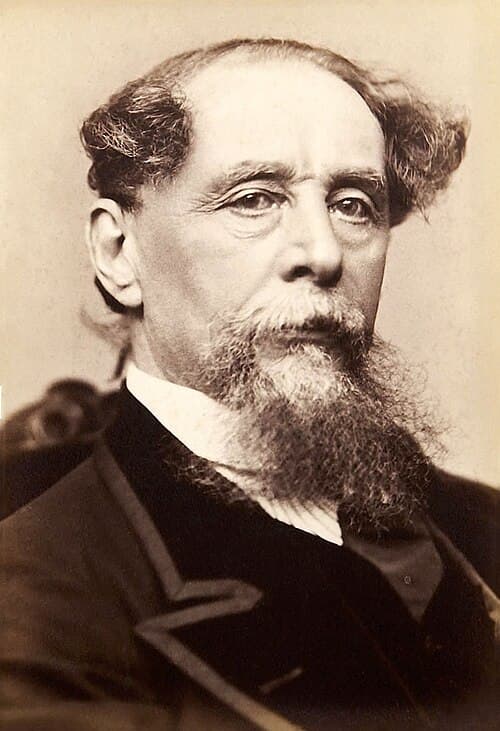
This imaginary interview was generated by artificial intelligence from sources documented in Jules Verne's profile. It dramatises what the figure might have said based on what we know about them, but does not constitute attested historical testimony. For primary sources and factual documentation, refer to the full profile.