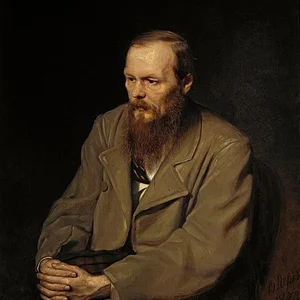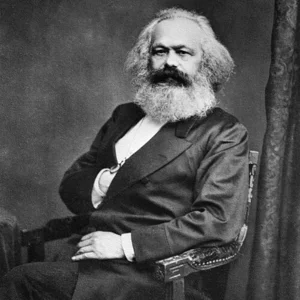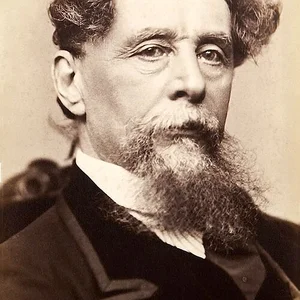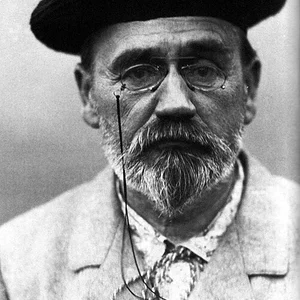

French novelist, journalist and literary critic (1840-1902), founder of the Naturalist movement. He is the author of Germinal and L'Assommoir, landmark novels of the 19th century that expose the living conditions of the working class. Zola took a decisive political stand during the Dreyfus Affair by publishing his famous open letter 'J'Accuse'.
Émile Zola(1840 — 1902)
Émile Zola
France
7 min read
Frequently asked questions
Famous Quotes
« I have little talent for happiness.»
« Truth is on the march, and nothing will stop it.»
« Talent is patience.»
Key Facts
- 1868: Publication of The Fortune of the Rougons, first volume of the Rougon-Macquart cycle
- 1885: Publication of Germinal, a landmark novel on the working-class condition and miners' strikes
- 1898: Publication of the open letter 'J'Accuse', defending Captain Dreyfus — a decisive political act
- 1893: Publication of The Debacle, on the Franco-Prussian War of 1870
- 1902: Suspicious death by accidental asphyxiation, months after his political battles
Works & Achievements
A precursor novel of naturalism, a physiological study of a murderous couple consumed by remorse. The work caused a scandal and asserted Zola's naturalist method.
The seventh volume of the Rougon-Macquart series, this novel about alcoholism and working-class poverty in Paris achieved considerable success and established Zola as a major author.
A portrait of a Parisian courtesan under the Second Empire, the novel denounces the hypocrisy of the bourgeoisie and was an immediate bestseller upon publication.
The thirteenth volume of the Rougon-Macquart series, an epic fresco about a miners' strike in northern France. Considered Zola's masterpiece and one of the greatest social novels in French literature.
A novel set in the railway world that explores hereditary criminal impulses. The work blends thriller and naturalist study against the spectacular backdrop of the railroad.
A major theoretical essay in which Zola sets out the principles of literary naturalism, drawing on the scientific method of Claude Bernard.
An open letter to President Félix Faure published in L'Aurore, denouncing the injustice done to Captain Dreyfus. This text has become a universal symbol of intellectual commitment.
Anecdotes
Émile Zola was a childhood friend of Paul Cézanne, whom he had met at the Collège Bourbon in Aix-en-Provence. Their friendship broke apart in 1886 following the publication of L'Œuvre, in which Cézanne recognized himself in the character of the failed painter Claude Lantier. The two men never spoke to each other again.
To write Germinal, Zola descended into the mines of northern France himself in February 1884. He spent several days in Anzin, sleeping in miners' homes, going down into the galleries at depths of over 600 meters, and observing the appalling working conditions that would fuel his novel.
Zola was a passionate photography enthusiast. He owned about ten cameras and took more than 7,000 photographs over the course of his life. He photographed his family, his travels, and Parisian landscapes, building up a precious visual record of the late 19th century.
The publication of 'J'accuse…!' in L'Aurore on January 13, 1898 caused a veritable political earthquake. The newspaper sold more than 300,000 copies that day. Zola was sentenced to one year in prison and a 3,000-franc fine for defamation, forcing him into exile in England for eleven months.
Zola died of asphyxiation in his Parisian apartment on September 29, 1902, poisoned by fumes from a blocked chimney. The hypothesis of a criminal act carried out by an anti-Dreyfusard opponent was put forward: in 1953, a chimney sweep named Henri Buronfosse reportedly confessed on his deathbed to having deliberately blocked the flue.
Primary Sources
I have but one passion, that of light, in the name of humanity which has suffered so much and has a right to happiness. My impassioned protest is nothing but the cry of my soul.
The novelist is made up of an observer and an experimenter. The observer in him provides the facts as he has observed them, sets the starting point, establishes the solid ground upon which the characters will walk.
It is a work of truth, the first novel about the common people that does not lie and that has the smell of the people. One must not conclude that the people as a whole are bad, for my characters are not bad — they are merely ignorant and corrupted by their environment.
Where are you going, young men, where are you going, students, running through the streets in groups, demonstrating in the name of your anger and your enthusiasms? Are you going to protest against some abuse of power?
Key Places
Zola purchased this Seine-side property in 1878, where he wrote most of his major novels. The house became a gathering place for the naturalist group and hosted the famous 'Soirées de Médan'.
Zola conducted his field research here in February 1884, descending into the mine galleries to prepare Germinal. This northern mining basin inspired the setting of the novel.
The city of Zola's childhood, where he spent his school years and formed a friendship with Paul Cézanne. The Provençal landscapes nourished several of his works.
Zola's last Parisian residence, where he died of asphyxiation on September 29, 1902. It was in this apartment that the tragic circumstances of his death unfolded.
Zola's ashes were transferred here in 1908, six years after his death. This national consecration honors both the writer and the defender of Dreyfus.
Typical Objects

Zola wrote every morning at his desk with an almost mechanical regularity, producing his daily pages with a pen. His inkwell was the central tool of his methodical writing ritual.

A passionate photography enthusiast, Zola owned several cameras and a darkroom. He developed his own prints and left behind thousands of photographs.

Before each novel, Zola filled entire notebooks with field notes: descriptions of places, technical vocabulary, and testimonies gathered from workers.

A symbol of his fieldwork for Germinal, this object represents Zola's descents into the Anzin mines to document the lives of miners.

The newspaper that published "J'accuse…!" on its front page has become a symbol of intellectual engagement and freedom of the press.

Zola had drawn a detailed family tree of the fictional Rougon-Macquart family, planning the twenty volumes of the cycle with scientific rigor.
School Curriculum
Vocabulary & Tags
Key Vocabulary
Tags
Concept
Mouvement
Daily Life
Morning
Zola rose early, around six or seven in the morning, and set to work after a frugal breakfast. He wrote methodically each morning, imposing a daily page quota on himself. This rigorous discipline allowed him to regularly produce volumes of the Rougon-Macquart series.
Afternoon
The afternoon was devoted to fieldwork, visits, and correspondence. Zola often went to the places he described: the Paris Halles, railway stations, department stores, mines. He took copious notes in his research notebooks and met with specialists to verify his information.
Evening
In the evenings, Zola willingly received writer and artist friends at his home, particularly during the famous 'Médan Thursdays'. He enjoyed literary conversations and debates about art. He went to bed relatively early to maintain his morning writing discipline.
Food
Zola was known for his generous appetite and love of food. He enjoyed traditional French bourgeois cuisine: pot-au-feu, meat stews, cheeses, and pastries. At Médan, he kept a kitchen garden and loved fresh produce. His stoutness reflected his fondness for good food.
Clothing
Zola dressed as a Parisian bourgeois of his era: dark frock coat, waistcoat, tie, and top hat for outings. At home, he wore a comfortable indoor jacket for writing. His attire reflected his social ascent, from penniless young man to prosperous novelist.
Housing
After the success of L'Assommoir, Zola purchased the Médan estate on the banks of the Seine in 1878, which he greatly expanded. The house included a large study, a photographic laboratory, and beautiful gardens. In Paris, he occupied a comfortable apartment in the Nouvelle-Athènes neighborhood.
Historical Timeline
Period Vocabulary
Visual Style
Un style visuel naturaliste aux tons sombres et terreux évoquant le Paris haussmannien et le monde ouvrier du XIXe siècle, entre lumière au gaz et fumées industrielles.
Sound Ambience
L'atmosphère sonore du cabinet de travail de Zola dans le Paris haussmannien : le grattement méthodique de la plume, les bruits de la rue et le crépitement du feu, entre concentration littéraire et vie urbaine du XIXe siècle.
Liens externes & ressources
Références
Œuvres
Thérèse Raquin
1867
La Bête humaine
1890
Le Roman expérimental
1880