Imaginary interview with Jules Verne
by Charactorium · Jules Verne (1828 — 1905) · Literature · 6 min read
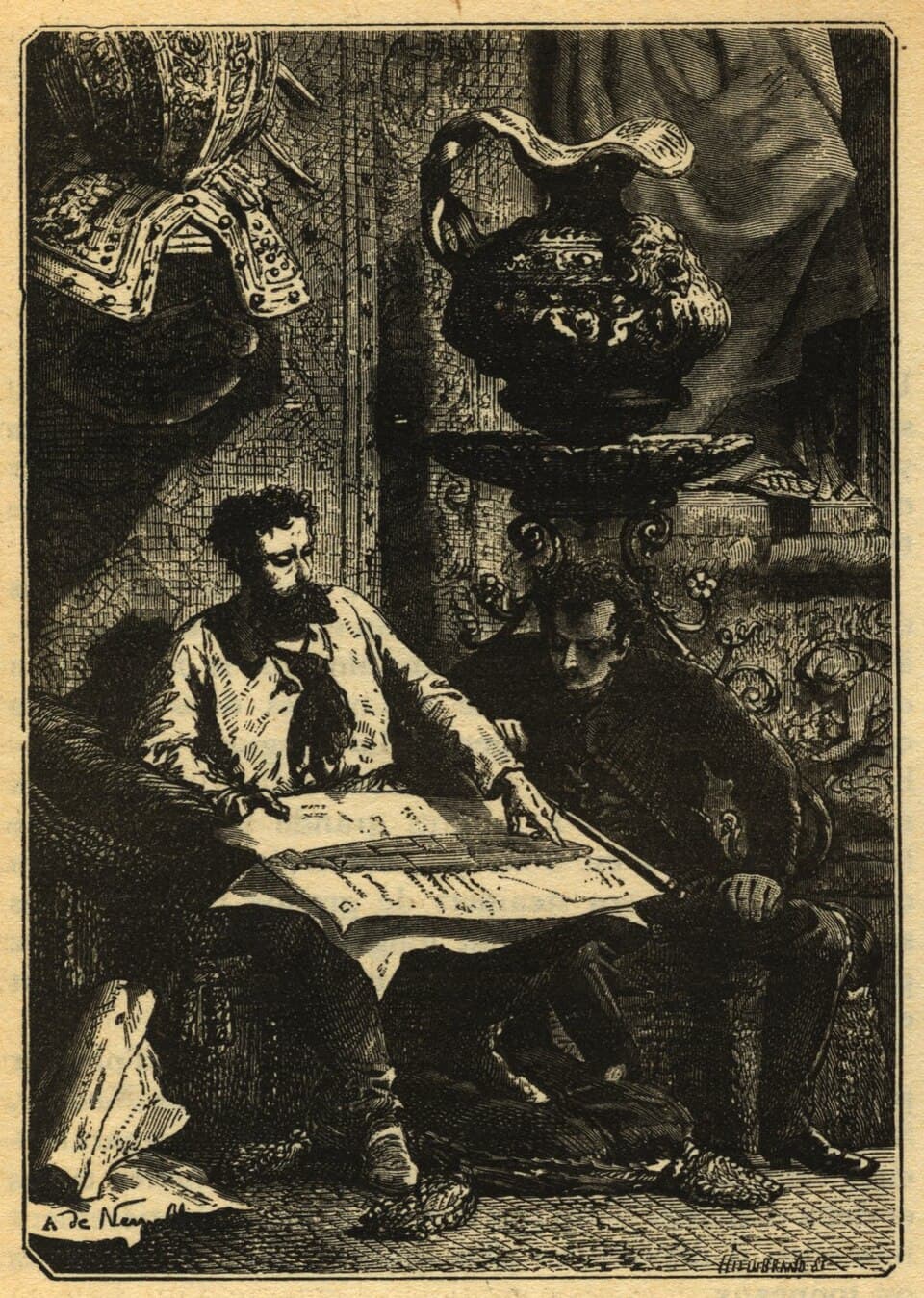
Amiens, one morning in the winter of 1897. In the red brick tower on rue Charles-Dubois, at the top of a spiral staircase, a sixty-nine-year-old man closes a notebook covered in tight handwriting. Maps line the walls, a globe sleeps in a corner, and the North Sea, glimpsed through the window, seems to await only a word to enter the room.
—They say it all started with a runaway attempt. What exactly happened on that quay in Nantes?
I was eleven years old, and the smell of tar and rigging went to my head. Nantes was a living port; the three-masters set sail for the West Indies, for the Indies, and I dreamed of horizons I knew only from stories. One morning, I stowed away on a long-haul ship, convinced my life was finally beginning. My father, warned, took the carriage and caught up with me at Paimbœuf, on the estuary, before the ship could reach the open sea. The shame was great, the sermon even greater. It was that day that I made the promise I laugh about today: that henceforth I would travel only in dreams. But see the irony — I kept my word beyond all measure, and I traveled around the world a thousand times without hardly leaving my study.
I traveled around the world a thousand times without hardly leaving my study.
—Did this port city mark you so deeply that it nourished your entire work?
How is a man born who spends his life describing seas he has not always seen? In Nantes, you grow up with your gaze turned downstream, where the Loire widens and becomes a promise. As a child, I counted the flags, listened to sailors talk about monsoons and flat calms, and devoured atlases as others devoured novels. Later, when I bought my first boat, then the Saint-Michel III, I understood that I was only rejoining that boy on the quay. Geography was never a school subject for me; it was a hunger. All my heroes — Fogg, Nemo, Hatteras — are sons of this city where you learn very early that the land ends somewhere and curiosity begins there.
—How would you describe your first meeting with Pierre-Jules Hetzel?
In 1862, I was a thirty-four-year-old man who had written forgotten vaudevilles and scattered short stories in the Musée des Familles. I had a manuscript under my arm, Five Weeks in a Balloon, already rejected by several publishers. Hetzel initially set it aside too — then he picked it up again, read it truly, and summoned me. That man had an eye. He saw in my balloon crossing Africa not a fantasy, but a formula: marry science and adventure, instruct while making people dream. From this meeting was born the Extraordinary Voyages collection. I say it without hesitation: without this publisher, I would probably have put away my pen and ended up a stockbroker. One never measures enough what a writer owes to the man who believed in him first.
Without this publisher, I would probably have put away my pen and ended up a stockbroker.
—What did the Extraordinary Voyages project mean to you?
Hetzel wanted a work that would summarize all the geographical, geological, physical, and astronomical knowledge amassed by the science of our time — nothing less. The idea suited me perfectly, for I never believed a novel had to choose between entertaining and teaching. I published in serial form, episode after episode, and I felt readers hanging on to the next week as one awaits the mail. In a letter, I wrote this sentence that sums it all up: “The sciences obsess me, and I seek to make them accessible through narrative. That is my mission.” That is the contract of the Extraordinary Voyages: to bring the steam engine, the telegraph, and the submarine into a child's room, so they fall asleep learned without realizing it.
—You have a reputation for almost military discipline. What does one of your days look like?
I get up at five o'clock, summer and winter, and go up to my tower before the household awakens. From five to eleven, I belong to no one: I write, sometimes standing, my pen racing across the paper, until fatigue drives me away. In the afternoon, I read. I go through scientific journals, cut out articles, file them — I have thousands of index cards arranged by subject, my true winter supply. People think I am inspired; I am mostly methodical. Before sending Fogg around the globe, I checked every steamer and railway connection on my maps. Dreams, you see, require rigorous accounting. Without these cards and atlases, my heroes would get lost on the first page.
People think I am inspired; I am mostly methodical.
—What do we find on the walls of this study where you work?
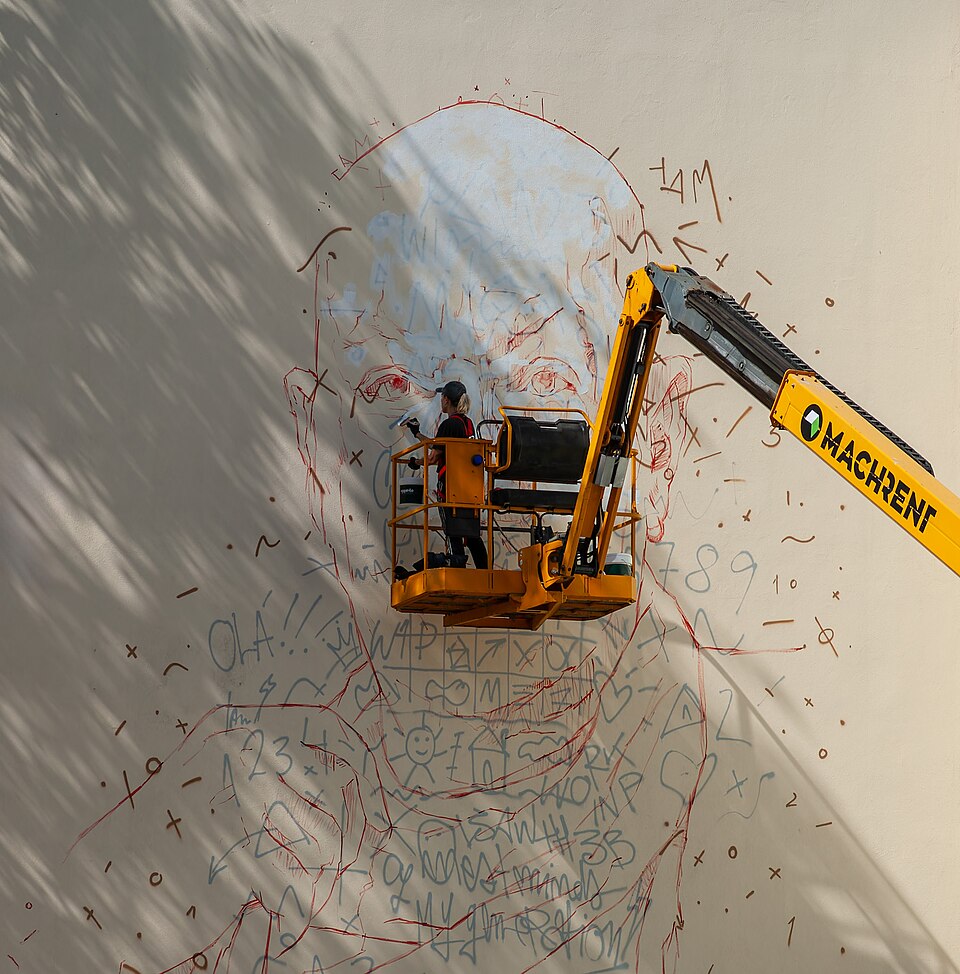
Little, and everything. Maps, everywhere, up to the ceiling; a globe that I spin with my fingertip when I search for a strait or a cape; an armillary sphere that reminds me the Earth is a point in a larger mechanism. I have an astronomical telescope, for I long looked at the Moon before daring to send a projectile there in From the Earth to the Moon. This room, at the top of the tower on rue Charles-Dubois in Amiens, is nothing like a salon: it is a cockpit. When I enter it in the morning, I am no longer quite a Picardy bourgeois; I become the captain of a motionless ship that can, in six hours of writing, reach the pole or the center of the Earth.
—Captain Nemo and his Nautilus fascinate readers worldwide. Where did this submarine come from?
The submarine in my time was merely an engineer's curiosity, a fragile machine that barely dived. But the idea of a free man beneath the waves, escaped from nations and their wars, seized me. I wanted the sea itself to be a character. When Nemo exclaims, “The sea is everything! It covers seven-tenths of the globe. Its breath is pure and healthy,” he speaks my own faith. The Nautilus, I built it plate by plate in my head, with its air reserves, its electricity, its great salon with windows open onto the abyss. Twenty Thousand Leagues Under the Sea was partly written on my yacht, the Saint-Michel III, where I felt beneath the hull that immense life that quivers. Science gave me the bolts; the rest is the desire of a man who wanted to flee dry land.
I wanted the sea itself to be a character.
—Why, as early as 1865, did you imagine sending men to the Moon by cannon?
Because the Moon was there, every night, taunting the scholars. The positivism of my century had persuaded me that no frontier was final for human reason. So I took what science gave me — ballistics, the industrial machine, the arithmetic of trajectories — and built my colossal cannon. From the Earth to the Moon, in 1865, is not a prophecy; it is a calculation pushed to the end of its audacity. I placed my launch point in Florida, weighed the forces, discussed weightlessness. Does one ever know what a century will make of such dreams? If people read me in a hundred years, perhaps they will smile at my inhabited shell — or perhaps a man will truly have left the earth. I will not see it. But I wanted to leave the blueprint.
—The year 1886 was dark. Can you speak of the assault you suffered?
One evening in March 1886, my nephew Gaston, whom I loved and whom mental illness was devouring, waited for me at my door. He fired two revolver shots. One bullet went through my ankle. The pain was atrocious, but the worst was not the wound: it was seeing that boy, my brother's blood, fall into the night from which one does not return. They locked him away. As for me, I stayed in Amiens, leg stiff, condemned to limp for the rest of my days. I had sailed, run the coasts of Scotland up to Edinburgh, and now I was nailed down. That same year, I also lost Hetzel. Two gunshots and a buried friend: one does not emerge unscathed from such a winter.
Two gunshots and a buried friend: one does not emerge unscathed from such a winter.
—Your readers find your later novels darker. Do you acknowledge this change in tone?
I do not deny it. The young man who made the Victoria glide over Africa, convinced that “the wind is favorable to us,” believed in progress like a sun without cloud. Age, the limp, the bereavements taught me that the machine can crush as much as it elevates. My later heroes doubt more, my scientists sometimes turn into tyrants. I remain faithful to science — it is still my compass — but I now regard it without naivety, like a captain who knows that the most beautiful sea hides reefs. Perhaps that is what aging is: continuing to love what you have sung, while knowing its cost. The dream has not left me; it has only learned prudence.
The dream has not left me; it has only learned prudence.
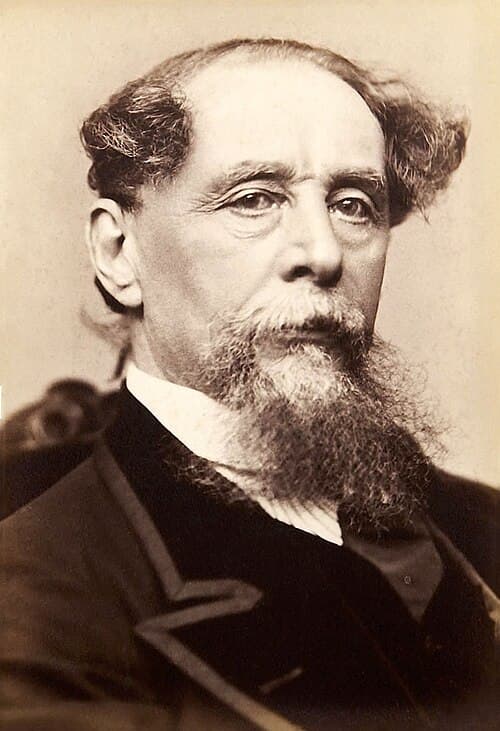
This imaginary interview was generated by artificial intelligence from sources documented in Jules Verne's profile. It dramatises what the figure might have said based on what we know about them, but does not constitute attested historical testimony. For primary sources and factual documentation, refer to the full profile.