Kids interview Julian of Norwich
by Charactorium · Julian of Norwich (1342 — 1500) · Spirituality · Literature · 5 min read
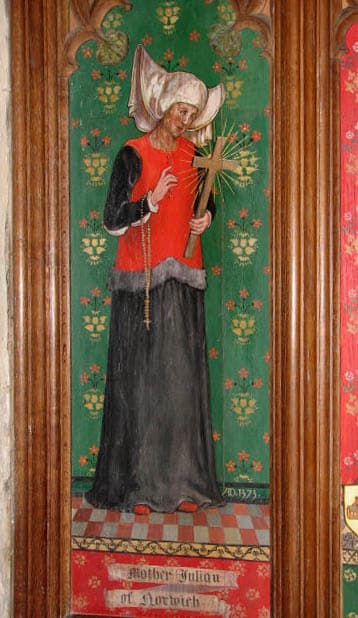
Two young visitors of twelve stop before a small window set into the wall of a Norwich church. Inside, an old woman in dark clothing greets them with a smile. She is Julian, the anchorite, and she has all the time in the world to answer their questions.
—Is it true that one day you fell so ill you thought you were going to die?
Yes, my child. I was about thirty years old, and a terrible fever kept me in bed. Everyone thought it was the end, myself included. A priest came and held a crucifix before my eyes, so that I might look at the dying Christ. And then, imagine: instead of fading away, I began to see. Sixteen visions, one after another. I call them my showings, which means 'what was shown to me'. The next morning, the fever was gone. I was healed, and I was never the same again.
They held out a crucifix for me to die by, and I began to see.
—Were you afraid while you were seeing all those things?
A little, yes. Imagine you are very weak, in a dark room, and suddenly the invisible world opens before you. In one of my visions, I felt like looking away from the cross, elsewhere. But I sensed that as long as I kept my eyes on the Christ, I was safe, sheltered from everything frightening. So I did not look away. It was not terror, you know. It was more like holding someone's hand very tightly in the dark. The fear was there, but trust was greater.
—Afterwards, did you write a book about all that?
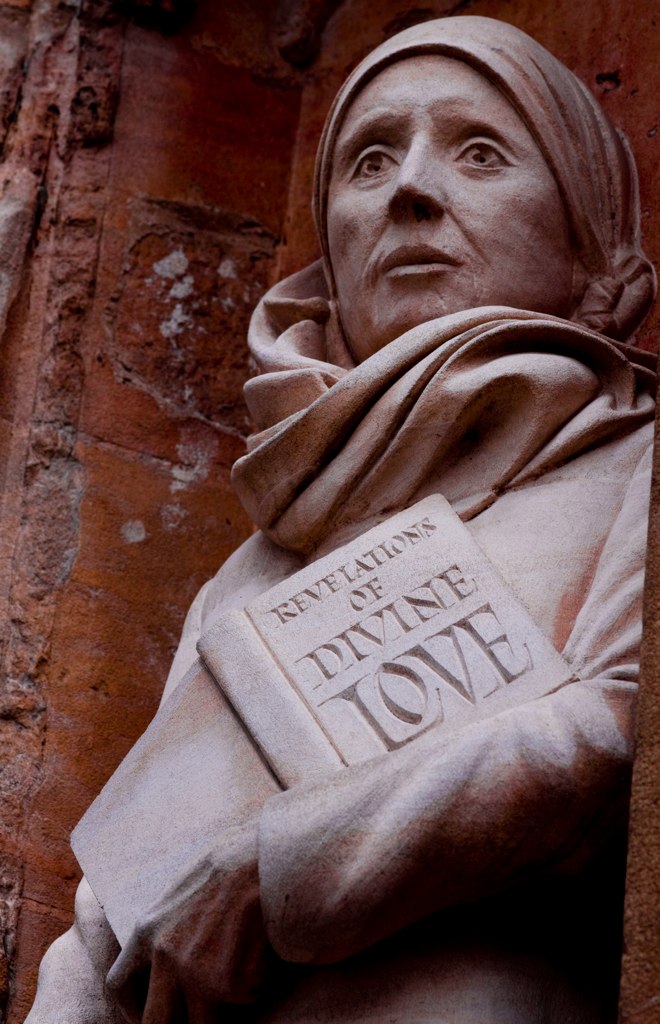
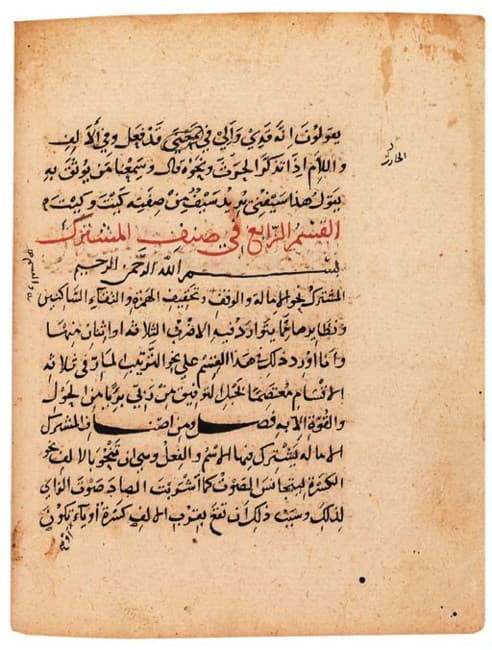
Twice, even! First a fairly short text, right after my visions, around 1373, while the memory was still burning. Then, twenty years later, around 1393, I rewrote everything, much longer. Why? Because in twenty years I had meditated, turned each vision over in my mind, and understood things I had not seen at first. I wrote on parchment, with a cut goose quill. It is slow, the ink dries poorly, the sheepskin costs dearly. Every word counted. These Revelations of Divine Love are the work of my whole life.
It took me twenty years to understand what I had seen in one night.
—But in your time, could a woman write a book?
It was very rare, my child, and I knew it well. Learned books were written in Latin, the language of priests, which few people understood. I wrote in English, the everyday language of the merchants and peasants of Norwich. It is called the vernacular, the people's tongue. I called myself a poor, unlettered creature. And yet, without meaning to, I became the first woman from whom we have a book written in the English language. I did not write to be learned. I wrote so that even a little girl could understand the love of God.
—Is it true that you lived enclosed and never went out?
Never, yes. I was what is called a recluse: a woman who chooses to live walled up in a small cell against the church, to pray constantly. Imagine a room a few meters wide, in stone, where you spend your whole life. This choice was sealed by a strange ceremony: the bishop said a funeral mass over me, as at a burial. I was 'dead to the world', you see. But I did not feel imprisoned. I had chosen this silence. For me, these walls were not a prison: they were an open door to God.
They buried me alive in a cell, and there I felt free.
—But then, how did you eat, how did you see Mass?
Through my three windows, my child! Each served a purpose. The first, a small oblique opening in the wall, is called a hagioscope: it looked onto the altar, and through it I followed the Mass and saw the host raised. The second looked onto the street: people from the neighborhood passed me a bit of bread, vegetables, sometimes cheese. I ate simply, whatever they gave me. And the third I used to talk with those who came seeking advice. Three small windows, and through them, the whole world came to me.
—What was your time like? Were grave things happening?
Oh, terrible things, my child. When I was a child, a disease swept across Europe: the Black Death. It carried off perhaps one person in three. Norwich, my city, was struck very hard. And on top of that, a never-ending war between England and France. Imagine streets where entire families were buried, where people feared the next day. People wondered: has God abandoned us? It was in this world that I received my visions. And the most astonishing thing is the message I kept from them: in the midst of all this sorrow, a word of consolation.
—And what was that word of consolation?
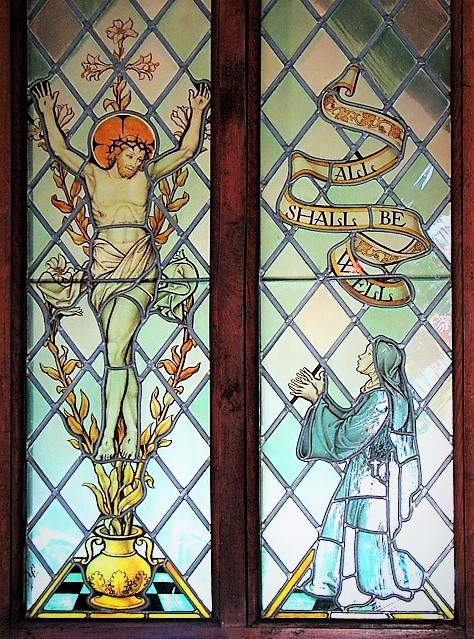
A very simple little phrase, which I felt came from God himself: 'All shall be well' — all will be well, and every kind of thing will be well. I know, said like that, in the middle of the plague, it sounds crazy. How can you say 'all will be well' when you are burying your neighbors? But God did not promise me that I would never be tested. He told me something else: 'Thou shalt not be overcome', you shall not be overcome. A nuance, you see. Pain exists, but it will not have the last word. Once, I was shown everything that exists, the size of a hazelnut lying in my hand — and it held, because God loved it.
He did not promise I would not be tested, but that I would not be overcome.
—Did people really come to see you for advice?
Many, yes, especially in the afternoon. They approached my window on the street and spoke to me in low voices about their troubles. I did not go out, but the world came and sat under my window. One day, a woman came from far away: her name was Margery Kempe. She too said she had visions, and many around her thought she was mad. She came to ask me if her experiences were truly from God. We talked a long time. I listened to her, then I encouraged her to hold fast and not be discouraged. We know all this because she later told it in her own book.
—If we could meet you today, what would you tell us?
The same thing I told Margery, my child. You will go through dark days, fears, sorrows — that is certain, no one escapes them. But never believe that love has let you go. Remember my little hazelnut: everything that exists is held in God's hand because he loves it. You too are held there. I invented nothing learned. I only listened, for twenty years, to what I had seen one night in May 1373, and I wrote it down so that it would be remembered. So keep these words with you: whatever happens, you shall not be overcome.
Everything that exists is held in a hand, because it is loved.
This imaginary interview was generated by artificial intelligence from sources documented in Julian of Norwich's profile. It dramatises what the figure might have said based on what we know about them, but does not constitute attested historical testimony. For primary sources and factual documentation, refer to the full profile.