Kids interview Junichiro Tanizaki
by Charactorium · Junichiro Tanizaki (1886 — 1965) · Literature · 5 min read
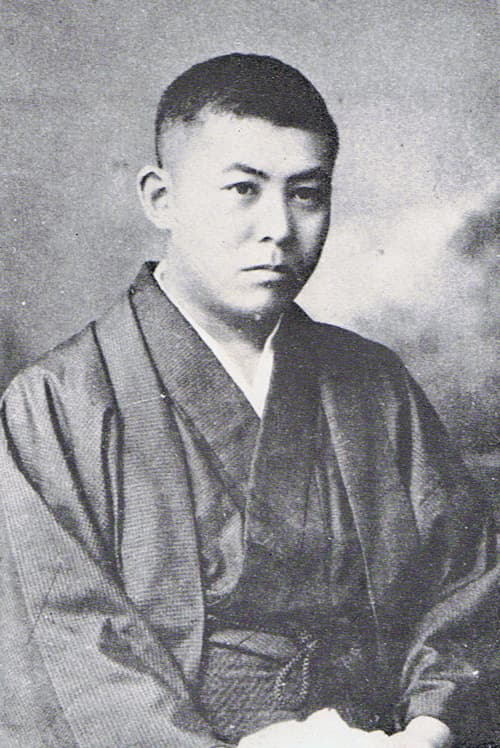
Two 12-year-old students visit an old Japanese house during their school field trip. Sitting on the tatamis, in the soft light filtering through the paper screens, they meet an elderly writer with a mischievous look: Jun'ichirō Tanizaki. He welcomes them with a smile, happy that people still take an interest in his stories.
—Where were you born, and what was your neighborhood like when you were little?
I was born in 1886 in Nihonbashi, a merchant district in the heart of Tokyo. Picture a street full of stalls, shouts, smells of fish and tea. My family sold things, but our business was doing poorly, you know. We weren't rich. It was the Meiji era: Japan was changing very fast, copying the West, its clothes, its machines. As a child, I already saw two worlds rubbing against each other. On one side, the old Japan of my grandparents, all wood and paper. On the other, the novelty coming from far away. This clash between the two stayed in all my stories.
Two worlds were rubbing against each other, and I was in the middle.
—Is it true that an earthquake changed your whole life?
Yes, my child, and I remember it as if it were yesterday. In September 1923, a huge earthquake shook the Tokyo region. The city collapsed, there were terrible fires. I was on vacation near Hakone, in the mountains, so I survived. Many told me: rebuild your house in Tokyo. I said no. That city was going to become all modern, all electric. I preferred to leave for the west, to the Kansai, around Kyoto and Osaka. There, the old Japan still breathed. A disaster had taken everything from me, and yet it gave me a second birth.
A disaster took everything from me, and yet it gave me a second birth.
—What did you find so beautiful there in the Kansai?
Ah! Everything, really. I settled in Ashiya, a small town between Osaka and Kobe. I often went to Kyoto, the old capital, with its temples and gardens a thousand years old. The people spoke a soft, singing dialect, different from Tokyo's. Imagine quiet alleys, wooden houses, ancient festivals. I, who had grown up in noise and modernity, discovered a patient, refined Japan. That's where I wrote my great family novel, The Makioka Sisters, thinking of those streets of Ashiya. The Kansai didn't just change my life: it changed my way of writing.
—Why did you love the shadows so much? We prefer it when it's bright!
I understand you, we all like to see clearly! But listen to me for a moment. In my time, electric light was arriving, very bright, showing everything all at once. I found that a bit sad. In my essay In Praise of Shadows, in 1933, I defended a surprising idea: true Japanese beauty is born from half-light. Look at a dark lacquer bowl by candlelight: it shines softly, it seems alive, mysterious. In full light, it would lose all its charm. I wrote that beauty is not in the object alone, but in the play of shadow it creates with what surrounds it. The shadow, my child, is like a secret you are left to guess.
Beauty is born in the play of shadow that one thing creates with another.
—What did your home smell like in the evening when you were writing?
What a lovely question! In the evening, at home, it was soft and dark. No harsh light: just a paper lantern, the andon, spreading a dim, honey-colored glow. Through the shōji, the translucent paper screens, the light entered filtered, as if veiled. It smelled of wood, tatami, rice straw under my feet. Sometimes, the smell of miso soup rose from the kitchen. I liked to go see bunraku, our puppet theater, in that same half-light. All my Japan was in those gentle atmospheres. Writing in that dim light was like dreaming with my eyes open.
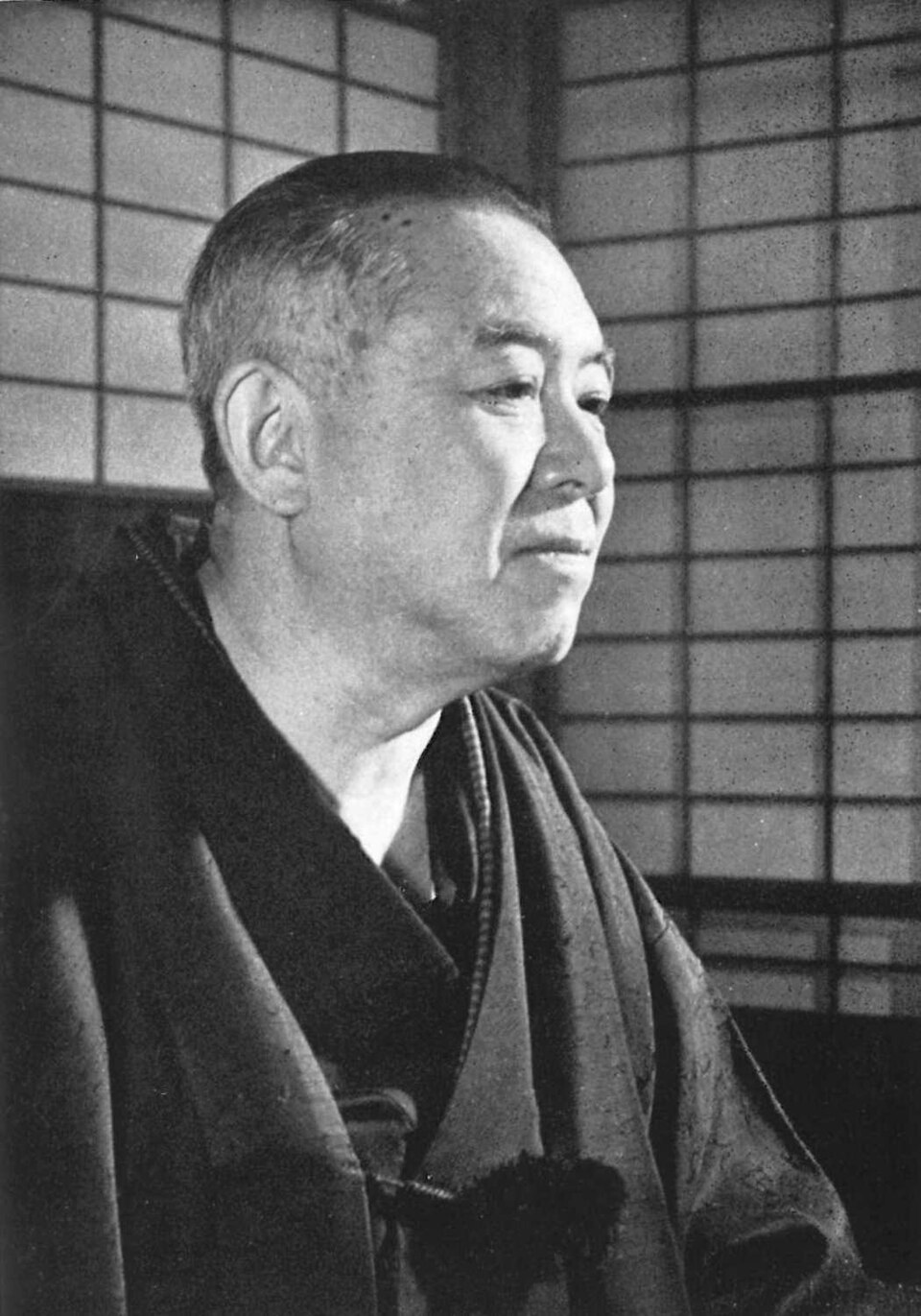
—We read that you gave your wife to a friend. Is that a joke?
Ah, you read well, and no, it's not a joke! In 1930, I did something that stunned the whole country. My wife, Chiyo, and my friend the poet Satō Haruo loved each other. So we three wrote a joint letter to announce it: I was “ceding” my wife to my friend. The newspapers called it “the wife-transfer incident.” Imagine the scandal: all over Japan, people talked of nothing else! Today it may shock you, and back then it shocked many too. But you see, I always thought complicated feelings are part of life. And my novels, precisely, often speak of these disturbing desires.
—What is that very old book you spent your life rewriting?
You're talking about The Tale of Genji! It's an immense novel, written a thousand years ago, in the 11th century, by a lady of the imperial court named Murasaki Shikibu. Some say it's the first great novel in the history of the world. The problem, my child, is that it was written in such ancient Japanese that my contemporaries understood nothing of it. So, between 1939 and 1941, I translated it into modern Japanese, so that it could still be read. It was enormous work! I even revised it several times in my life, never satisfied. It was my way of reaching out across a thousand years, so that this treasure would not be lost.
Translating this book was reaching out across a thousand years.
—Why did the military ban your novel about the Makioka sisters?
That surprises you, huh? The Makioka Sisters tells the life of a bourgeois family in Osaka: four sisters, their parties, their kimonos, their little heartaches. Nothing harmful! But we were in the middle of World War II, around 1943. The novel was being published in installments in a magazine. The military authorities judged it too frivolous, too light: meaning not serious enough, not useful enough for the war effort. They wanted stories of brave soldiers, not sisters choosing their dresses. So they banned the rest. It pained me greatly, you can imagine.
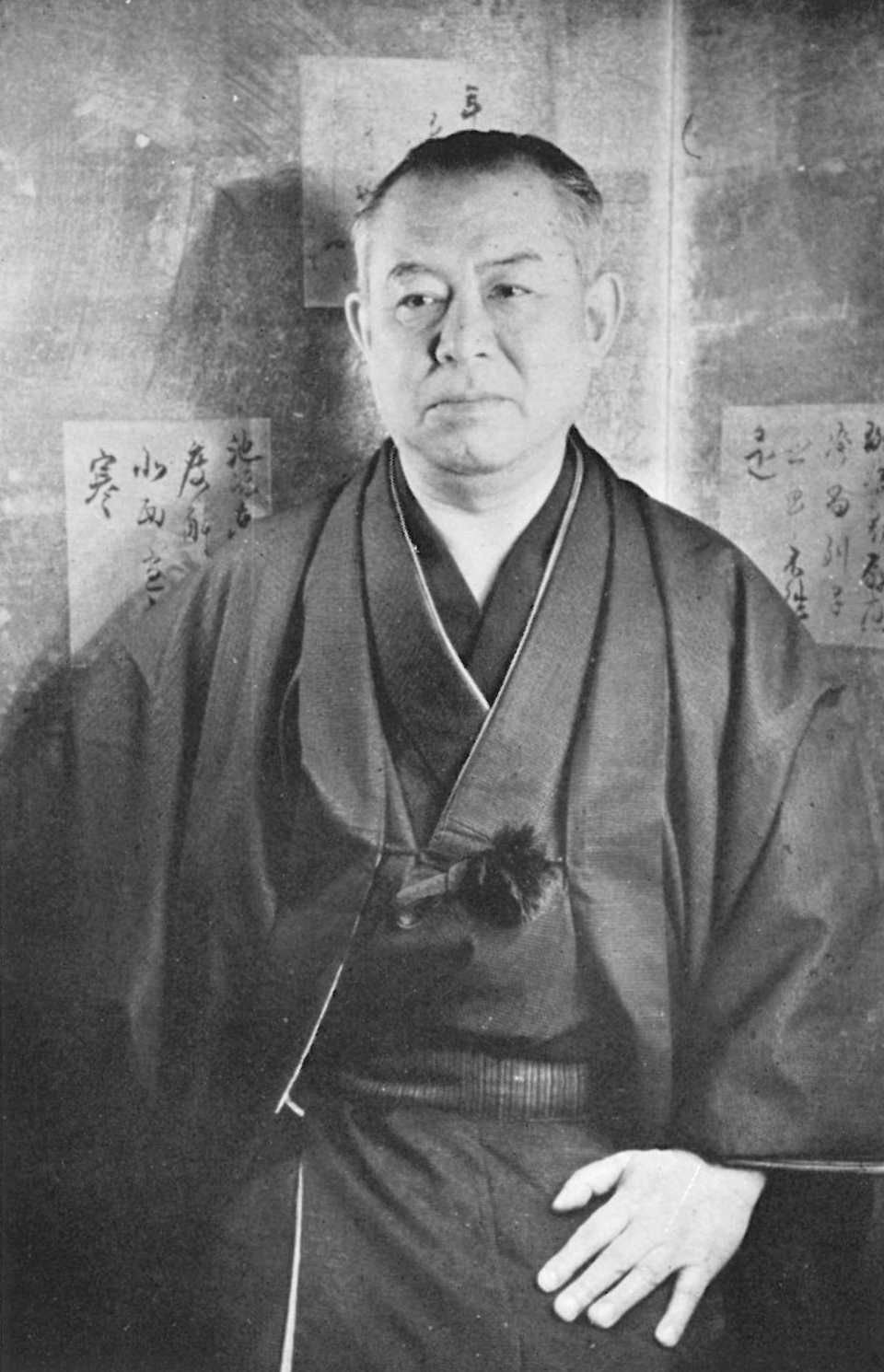
—And did you stop writing, then, during the war?
Stop? Never! They had forbidden me to publish, but no one could forbid me to write. So I continued in secret, hidden, page after page. I traced my characters by hand on my squared paper, the genkō yōshi, a sheet where each small box receives a sign. Around me, the country suffered: in 1945, the atomic bombs fell on Hiroshima and Nagasaki, and the war finally ended. Only after peace could I publish my novel in full. You see, a story they want to silence, sometimes you just have to hide it for a while so it survives.
A story they want to silence, you just have to hide it for a while.
—If we could visit your house, what would we notice first?
First, you would take off your shoes! Then you would walk on the tatami, those thick rice-straw mats, soft and a bit cool underfoot. You would see few pieces of furniture, lots of empty space, and that dim light I love so much. At meals, you would be served rice, fish, seasonal vegetables in bowls of dark lacquer, so beautiful you'd hesitate to fill them. In the morning, I would sit down to write; in the afternoon, I read my old classics or strolled through the ancient streets. A simple and slow life, my child. The opposite of the noise of my birth in Tokyo.
—Today, what would you like people to remember about you?
That's a very grown-up question, and it touches me. I don't want a complicated lesson to be remembered about me. I would just like you to look around you differently. To notice the beauty of discreet things: a soft light, an old lacquer, the shadow of an evening. The world goes fast, it wants to illuminate everything, show everything at once. I invite you to slow down, to guess, to savor mystery. I spent my life between old Japan and the modern world, without ever fully choosing. If my stories teach you to love what is fragile and discreet, then I will not have written in vain.
Learn to love what is fragile and discreet.
This imaginary interview was generated by artificial intelligence from sources documented in Junichiro Tanizaki's profile. It dramatises what the figure might have said based on what we know about them, but does not constitute attested historical testimony. For primary sources and factual documentation, refer to the full profile.