Imaginary interview with Junichiro Tanizaki
by Charactorium · Junichiro Tanizaki (1886 — 1965) · Literature · 5 min read
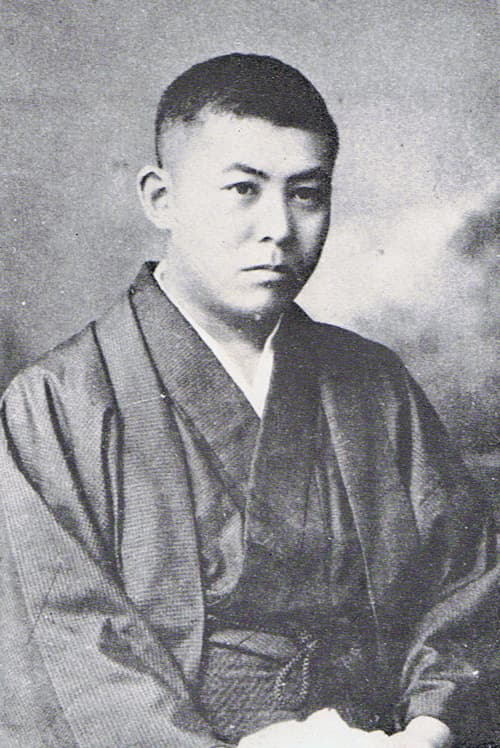
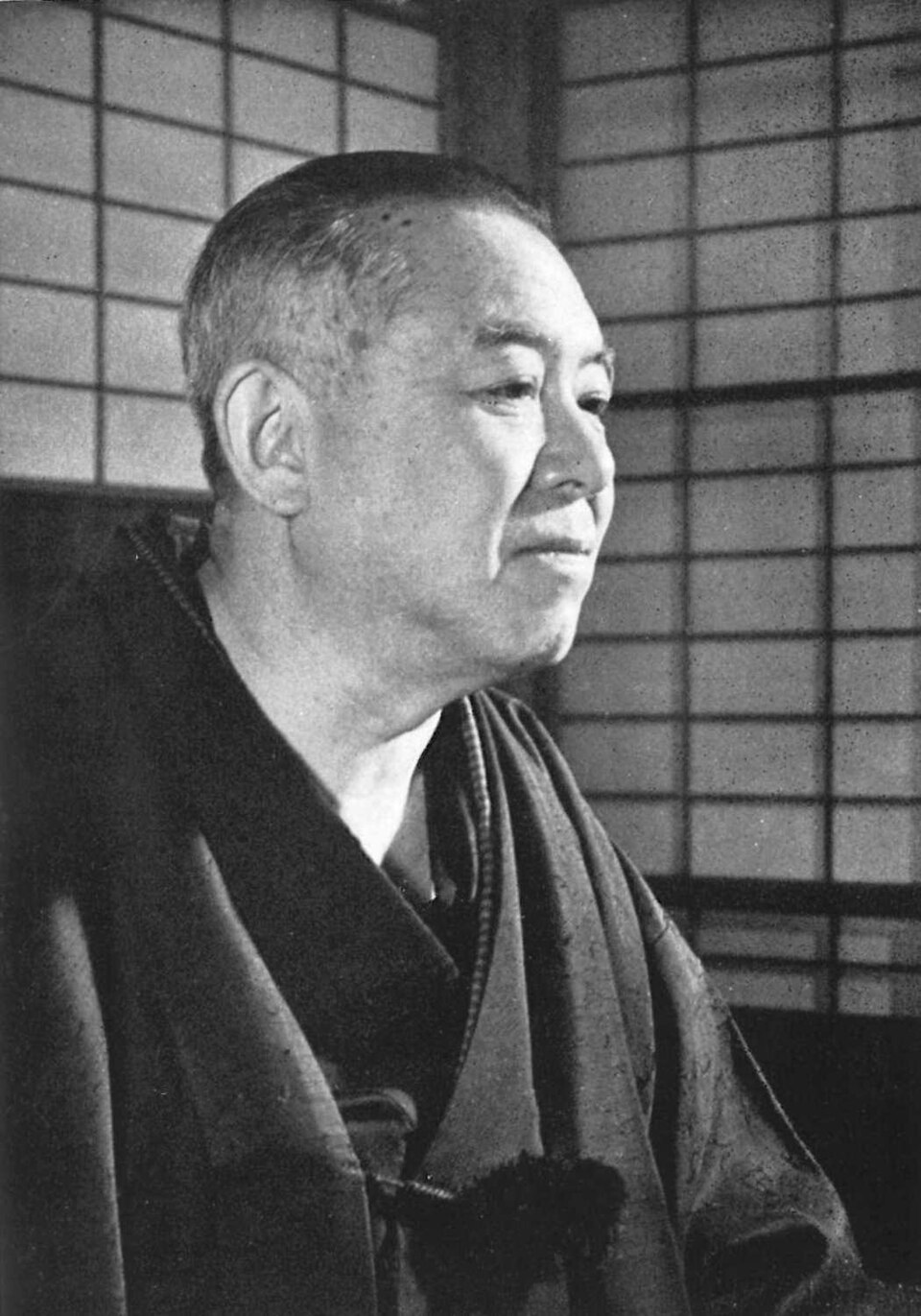
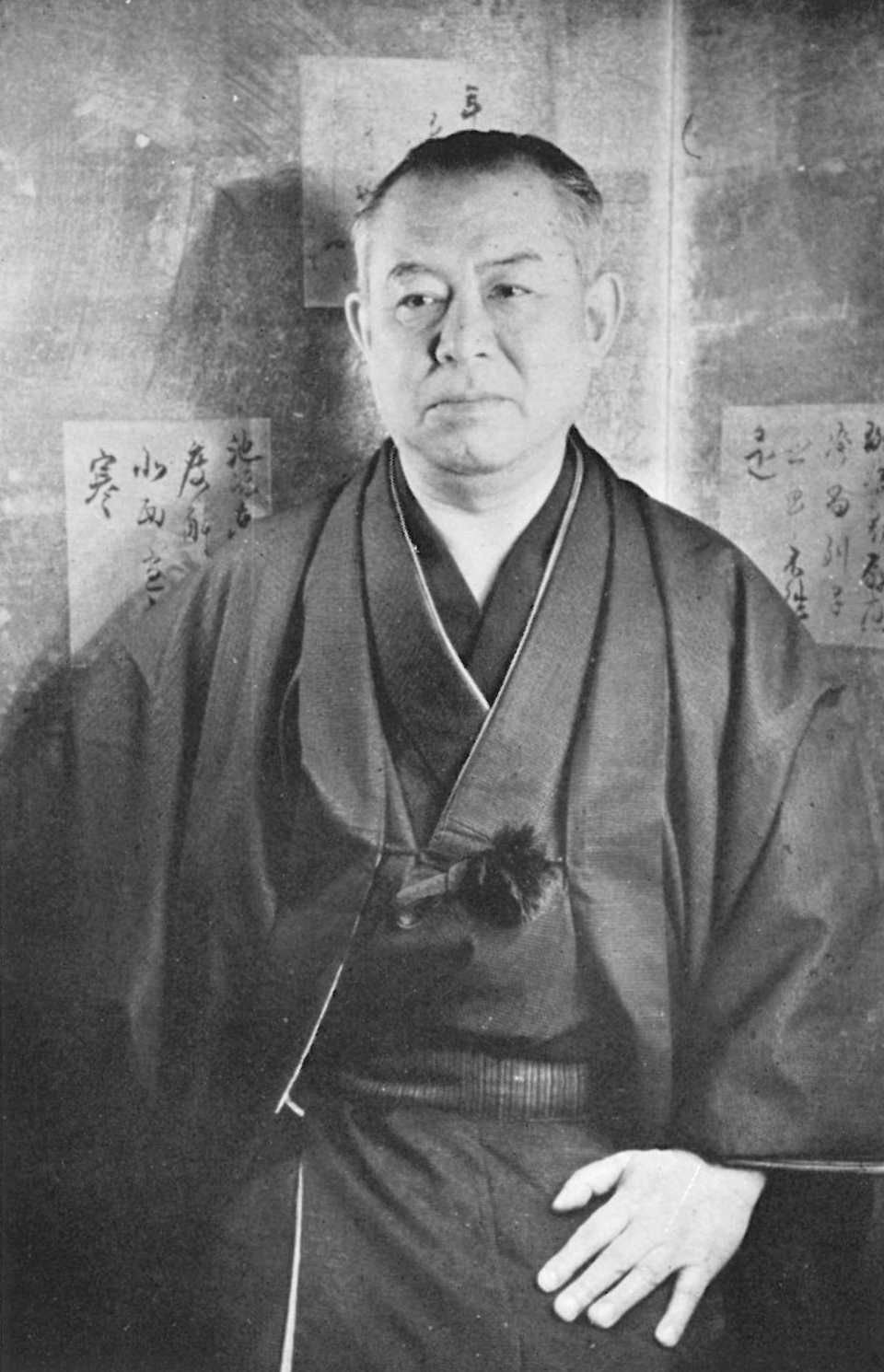
Autumn 1958, in a wooden house in Atami where the garden light lingers behind paper partitions. Junichirō Tanizaki receives guests at a low table, an iron teapot before him, his voice measured, that of a man who has spent his life watching what the shadows conceal. He speaks slowly, weighing the shadows as much as the words.
—Do you remember the day the earth shook beneath Tokyo, in 1923?
I was on holiday near Hakone when the ground began to ripple like a mat being shaken. Later, I learned that Nihonbashi, the merchant district where I was born in 1886, was nothing but a geography of ashes. Strangely, I felt not only grief. Tokyo was already dreaming of becoming a city of concrete and electric trams, and this destruction freed me from a capital I no longer loved. I looked westward, toward the Kansai, toward Osaka and its singing dialects, and I understood that my life as a writer would be played out there, among tatami houses and the old shadows that no earthquake could modernize.
This destruction freed me from a capital I no longer loved.
—What did the Kansai region change in your writing?
Everything, or nearly. In Ashiya, between Osaka and Kobe, I found a residential town where families still lived by rituals that Tokyo had renounced. Later I set The Makioka Sisters there. In Kyoto, the ancient capital, the temples and gardens taught me a slowness, a way of inhabiting indirect light. Before, I wrote desire as a fever from the West; now, I listened to women speaking Osaka-ben, that soft, round dialect, and I began to translate old Japan rather than reject it. One thinks one chooses a place; in truth, the place rewrites you.
One thinks one chooses a place; in truth, the place rewrites you.
—How did that singular idea arise, that Japanese beauty dwells in shadow?
It arose from annoyance, I admit. People were installing harsh bulbs everywhere, chasing away the least shadow as if it were dirt, and calling it 'progress.' Yet in In Praise of Shadows, published in 1933, I wanted to defend the opposite: our beauty lies not in things themselves, but in the play of light and shadow, what I call in'ei. Take a black lacquer bowl placed in the half-light of an andon, that paper lantern: it does not shine, it breathes, it holds darkness like still water. Under electric light, that same bowl becomes vulgar. Our ancestors did not suffer shadow; they made it an art.
Our ancestors did not suffer shadow; they made it an art.
—What do we see by candlelight that electricity hides from us?
We see depth. Behind a shōji, that translucent paper screen, daylight already arrives softened, filtered, reduced to a milky clarity that caresses rather than illuminates. Add a candle flame, and old lacquer begins to tell stories: gleams of gold that surface then withdraw, patterns you sense without ever quite grasping. I wrote that we find beauty not in the thing itself, but in the shadows it creates with what surrounds it. Bright light kills this mystery; it shows everything and leaves nothing to imagine. Yet it is imagination, that slight tremor of uncertainty, that makes the pleasure of a Japanese room.
Bright light shows everything and leaves nothing to imagine.
—Why did the military authorities see a threat in The Makioka Sisters?
Because my novel spoke neither of sacrifice nor glory, but of four sisters from a bourgeois family in Osaka busy marrying off the third, gazing at Kyoto’s cherry blossoms, worrying about a kimono fabric. In the midst of war, the censors deemed this refinement 'frivolous,' harmful to the national effort, and banned it from serialization in 1943. At bottom, they reproached me for not being warlike. I continued writing Sasameyuki in secret, page after page on my graph paper, like keeping an ember under ash. The complete work could only appear after 1945. I think a faithful portrait of ordinary life frightened them more than any pamphlet.
At bottom, they reproached me for not being warlike.
—What did you feel continuing this work in secrecy while the country was collapsing?
A nearly gentle obstinacy. Around me, Japan marched toward the abyss — Manchuria, then Pearl Harbor, then cities in flames — and I was describing a walk under cherry trees, a child’s illness, the hesitations of a marriage arrangement. One might have thought me indifferent. It was the opposite: I was saving what was about to disappear. Each filled box on the genkō yōshi was a way of saying that this family in Ashiya, its seasons, its gestures of politeness, deserved to survive the din. When everything burns, recording the beauty of an ordinary afternoon is not an escape: it is an act of fidelity to the world.
When everything burns, recording the beauty of an ordinary afternoon is an act of fidelity.
—In 1930, a public letter co-signed with your wife scandalized the entire country. What exactly did you mean to say?
Ah, that episode the newspapers called 'the wife transfer incident'… With Chiyo, my wife, and my friend the poet Satō Haruo, who sincerely loved her, we published a joint letter announcing that I was giving her to him. Japan made headlines for weeks, as if it were a crime. I was not seeking scandal for its own sake — though I have never feared it. I wanted to honestly untangle a situation that ordinary hypocrisy would have let fester. My entire work questions this: desire cannot be confined by propriety. I simply refused to lie about what three adults truly felt.
Desire cannot be confined by propriety.
—You often shocked your era. Is it a writer's role to disturb?
I never sought scandal like a child trying to break a vase. But from The Tattooer in 1910, that story where an artist engraves his desire onto a young woman’s skin, I knew my material would be disturbance, fascination, what society prefers to silence. Later, with A Fool’s Love, I painted a man enslaved to a 'Westernized' woman, and was reproached for immorality. Even as an old man, in Diary of a Mad Old Man, I dared to write desire for a sick body. Disturbing is not my goal; it is the consequence of my honesty. A writer who looks only at what it is permitted to look at has nothing to say.
A writer who looks only at what it is permitted to look at has nothing to say.
—What drove you to translate a nine-centuries-old novel into modern Japanese?
The Genji monogatari, The Tale of Genji, written in the 11th century by the court lady Murasaki Shikibu, is our greatest novel — and yet my contemporaries could no longer read it, its language had drifted so far from theirs. I undertook to make it alive again, between 1939 and 1941, then returned to it again, for such a monument is never translated once and for all. Spending months in that ancient prose, I learned restraint, the art of suggesting a feeling without naming it, that melancholy of the passage of things we call mono no aware. This colossal work irrigated all my late writing.
Such a monument is never translated once and for all.
—What did you retain from those years spent in the company of Murasaki Shikibu?
I gained patience and an ear. The language of the Heian court proceeds by nuances, by half-tones, like light behind a shōji; nothing is brutal, everything is allusion. In rendering that world of courtiers, perfumes, and seasons, I understood that true modernity for a Japanese writer was not to imitate the West, but to reconnect with that ancient delicacy. The Makioka Sisters owe much to Genji: that same attention to robes, cherry blossoms, the slow ceremony of daily life. Translating the Ancients is not locking oneself in the past — it is drawing from it a way to stand upright in the noise of the present.
Translating the Ancients is drawing from it a way to stand upright in the noise of the present.
This imaginary interview was generated by artificial intelligence from sources documented in Junichiro Tanizaki's profile. It dramatises what the figure might have said based on what we know about them, but does not constitute attested historical testimony. For primary sources and factual documentation, refer to the full profile.