Imaginary dialogue between Ang Tsering and Junko Tabei
by Charactorium · Junko Tabei (1939 — 2016) · Exploration · 5 min read
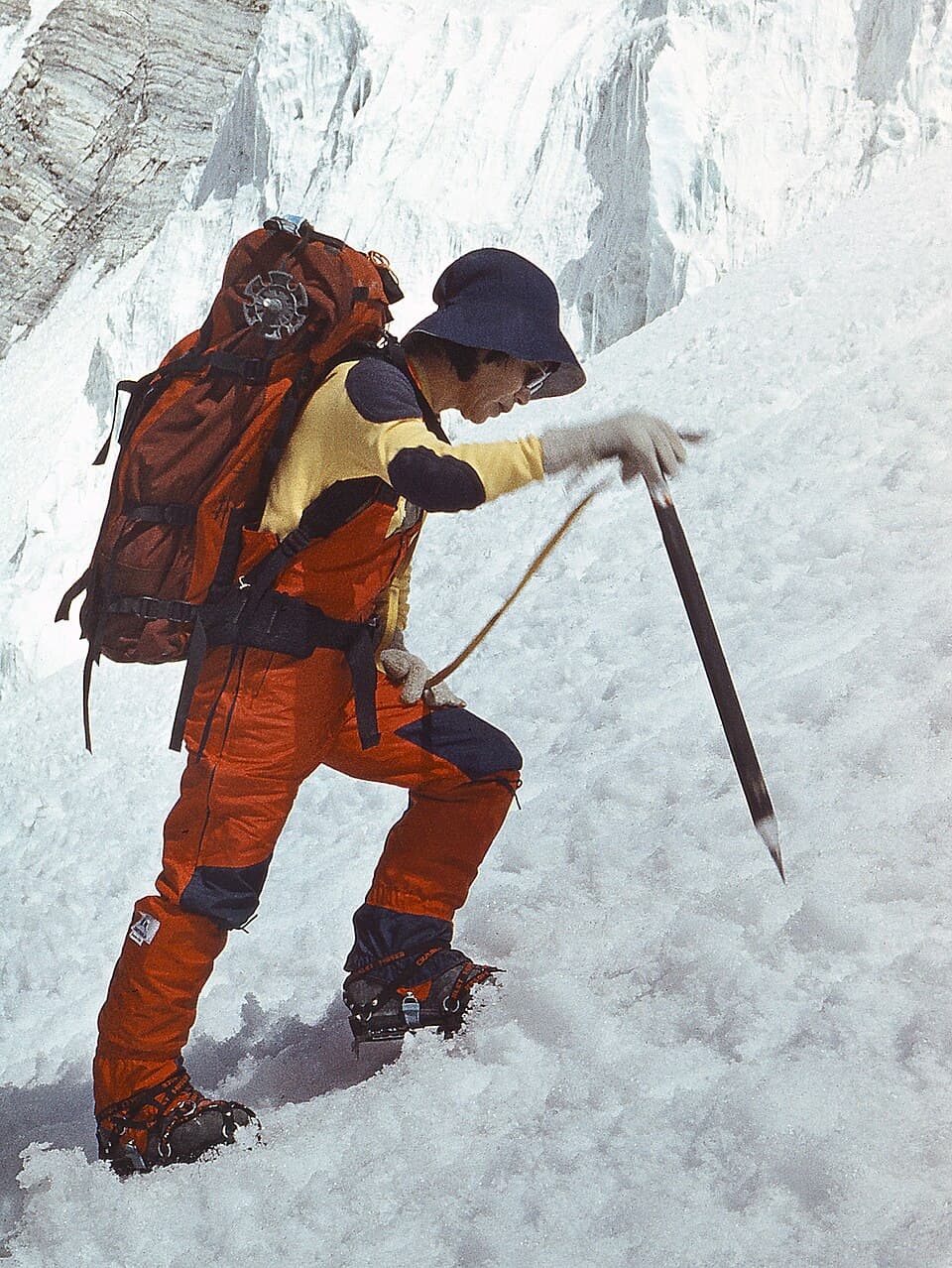
It is in a small inn in Kathmandu, in the autumn of 1975, that Ang Tsering meets Junko Tabei again, a few months after their return from Everest. Outside, prayer flags flap in the cold wind coming down from the Himalayas, and the smell of butter tea wafts between them. The sherpa and the mountaineer shared the rope, the avalanche and the summit; he comes that day, simply, to listen to the one he saw return from the dead. They no longer need protocol to speak.
—Junko, do you remember that morning of April 6, at 6,300 meters? When we pulled you out of the snow, you were barely breathing.
How could I forget it, Ang Tsering? I was sleeping under the high-altitude tent when the wall of snow engulfed us. I was told later that I was unconscious for six minutes, crushed by my teammates and the weight of the collapsed camp. I have no memory of the darkness, only your hands and those of the other sherpas digging, pulling, bringing me back to air. When I opened my eyes again, my first thought was not fear, but the summit: was it still possible? My body was bruised, my legs barely strong. I waited twelve days, then resumed the climb. One does not survive an avalanche to go back down.
One does not survive an avalanche to go back down.
—Many would have given up after that. What made you go back up, when your body was begging you to return to Japan?
You ask as if the answer were heroic, but it is not. I did not want to die, and yet I did not want to stop. It is hard to explain to someone who does not climb, but you know. The mountain does not punish us out of malice; it tests us without hating us. After the avalanche, I understood that fear was useless up there: it freezes the hands and clouds judgment. So I set it aside, like setting down a too-heavy pack. I had a team counting on me, women who had saved every yen for this trip. Giving up would have betrayed far more than my own desire.
—On May 16, at twelve thirty-five, we set foot on the summit together. What went through you at that exact moment?
Less than what the newspapers imagined, my friend. It was bitterly cold, the sky was almost black-blue, and I was mostly exhausted. I did not think: I am the first woman. I thought: there is nothing above anymore, we must descend alive. You were there, by my side, and that is what I remember best: the two of us, on that tiny point where the Earth stops. I did not want to be the first woman on the summit of Everest. I simply wanted to climb Everest. Being a woman was a circumstance, not a goal. The rest — the honors, the King of Nepal, the crowds in Japan — came after, and often embarrassed me more than they pleased me.
I simply wanted to climb Everest. Being a woman was a circumstance, not a goal.
—In Japan, you were welcomed as a national heroine. You, who are so discreet, how did you experience all that noise around your name?
Badly, I admit. They wanted to make me a flag, and I am not a flag. I climbed for my own pleasure, for that simple joy of putting one foot in front of the other in a place where no one else goes. I did not climb to represent Japan, nor all the women of the world. When I was presented as the pride of the nation, I thought of you, of the other sherpas, of my eleven companions on the expedition. The summit was not the work of a single person standing on a peak. One went up, but dozens carried her. Individual glory is a comfortable lie that crowds like to tell themselves.
—Before Everest, there was the club. They say an instructor told you, as a young girl, that women were not made for climbing.
That is true, and he was not the only one to think so. In the Japan of my youth, a woman who climbed was either looking for a husband among the club's men, or an eccentric. They looked at me askance, they attributed intentions to me that I did not have. Rather than argue endlessly, I preferred to build. In 1969, I founded the Ladies Climbing Club Japan, the first all-female club in the country, with a simple motto: let's go to foreign mountains. Mountains do not discriminate; they pose the same challenges to everyone. It is human societies that draw boundaries between what women and men can achieve. The club was my answer, not a speech, but a fact.
Mountains do not discriminate. It is human societies that draw boundaries.
—Bringing together women for a Himalayan expedition in those days must have cost a lot and raised many obstacles. How did you persevere?
Through stubbornness and resourcefulness. No major patron was eager to fund a troop of women heading to Everest. We sewed our own gloves, salvaged materials, saved every sen. Some gave lessons, others sold what they could. They asked us why we did not stay with our families — as if a woman could only have one life at a time. We proved otherwise by climbing Annapurna III in 1972, to prepare. Each female summit made the next a little less unthinkable. What I wanted to pass on to those young women was not just rope technique, but the idea that the horizon belonged to them too.
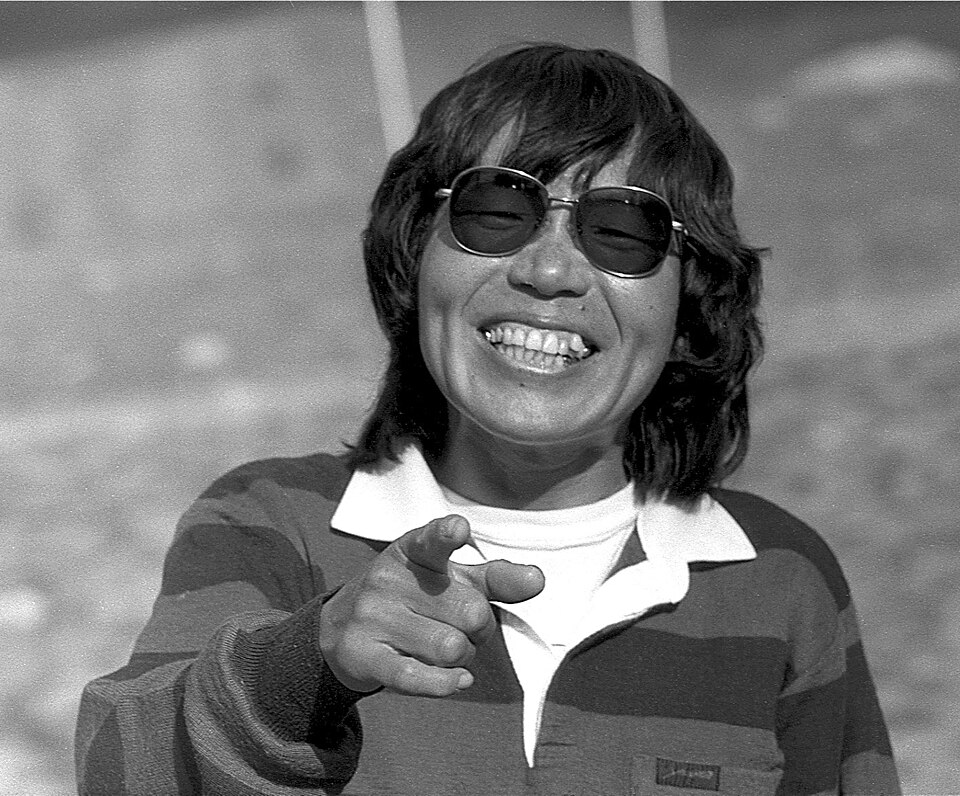
—You are a mother, and you teach piano to children. How do you reconcile this ordinary family life with these long expeditions?
I am often asked this question, and never to male mountaineers, have you noticed? Yes, I am a mother, yes, I teach piano in our house in the Tokyo suburbs — and it is partly that piano that funds my climbs. There is no contradiction. In the morning, I prepare my children's meal; a few weeks later, I melt snow for tea at 7,000 meters. Both are part of the same woman. I do not believe one must choose between a rooted life and great ambitions. My children saw me leave and return; they learned that a mother can have a horizon. Perhaps that is the most useful thing I will pass on to them.
—You already talk about climbing the highest peak on each continent. Where does this idea of running all over the world come from?
Once Everest is behind you, you might think nothing remains. But each continent has its queen mountain, and each tells a different land: the ice of Antarctica, the forests of Africa, the Andes. The idea of the seven summits is recent, people have been talking about it for a short time, and it appeals to me not for the performance but for the journey it imposes. It will take me years, I know, and a lot of money I do not yet have. I will do it piece by piece, between piano lessons and the children's school. It will not be a sprint; it will be a life patiently stitched together from climbs. I prefer it that way: haste is the enemy of the mountain.
—One last thing, Junko. You confided in me up there your concern about the waste on the routes. Does that anger follow you all the way down?
It follows me everywhere, Ang Tsering, and it grows. You have seen as I have what now accumulates on the busiest routes: empty bottles, abandoned tents, rotten ropes. We come to these mountains seeking a purity that we soil with our own hands. It outrages me. When my legs will no longer carry me to the peaks, I want to devote the rest to defending them — organizing clean-ups, on Mount Fuji first, which is so trampled. Perhaps I will even study the environment seriously, to speak with authority and not just passion. A mountain welcomes us for a moment; we owe it to leave it intact. The true summit is not to go up, but to know how to forgo it to preserve it.
A mountain welcomes us for a moment; we owe it to leave it intact.
This imaginary interview was generated by artificial intelligence from sources documented in Junko Tabei's profile. It dramatises what the figure might have said based on what we know about them, but does not constitute attested historical testimony. For primary sources and factual documentation, refer to the full profile.