Imaginary interview with Junko Tabei
by Charactorium · Junko Tabei (1939 — 2016) · Exploration · 5 min read
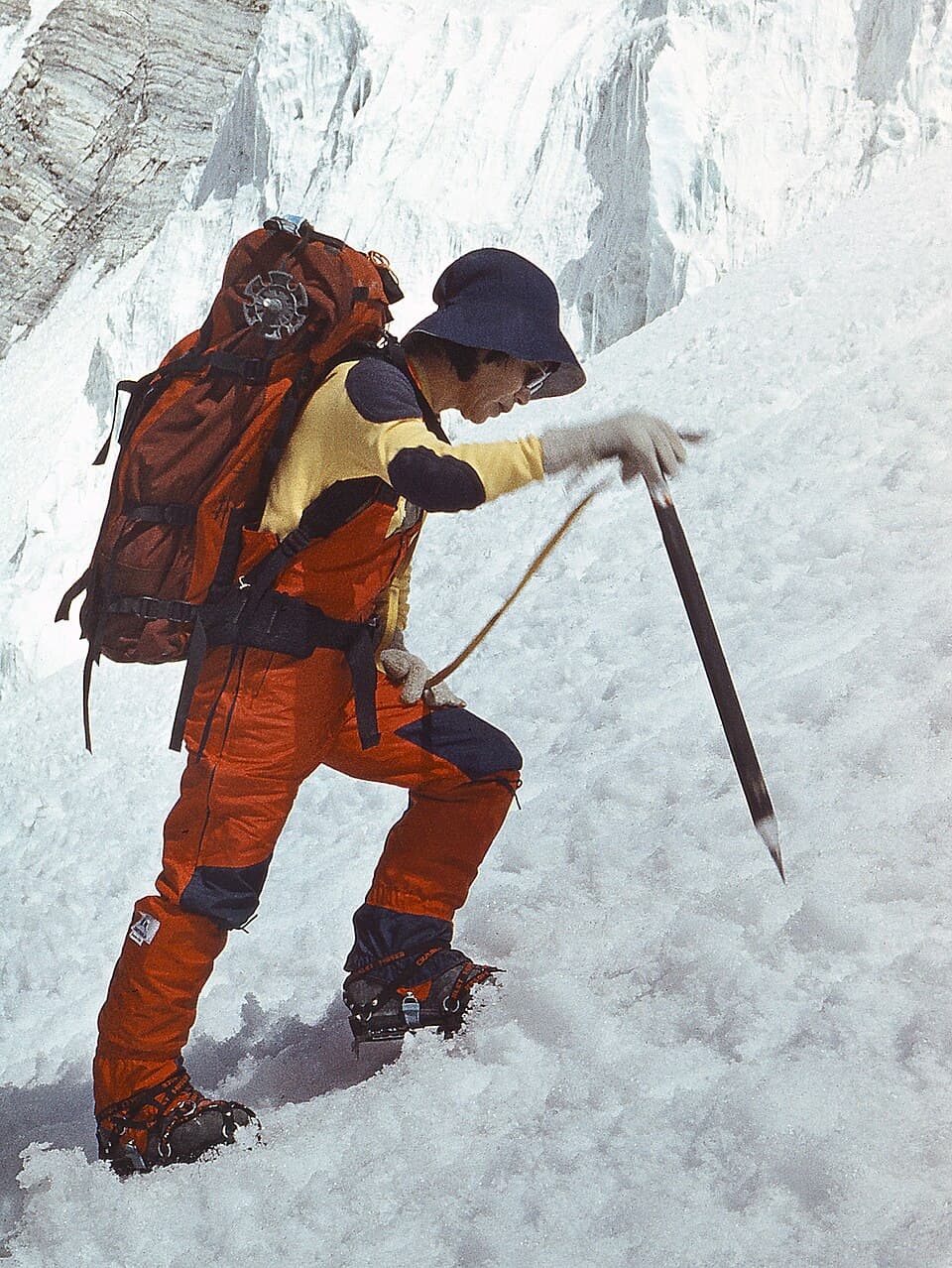
Tokyo, autumn 2015. In a suburban house where a piano still occupies the living room, Junko Tabei receives, a steaming cup of tea in her hands, a scarf tied over hair thinned by illness. Behind her, hung on the wall, a worn ice axe and the photograph of a white summit that changed her life.
—How did you discover the mountains, coming from a small town in the north?
I was ten years old, in Miharu, Fukushima Prefecture, when a school trip took me to the slopes of Mount Nasu. I was a frail child, often sick, and the mountain offered me something the classroom never had: an effort that rewarded neither the fastest nor the strongest, only the most patient. Later, at university, I joined a climbing club, and an instructor told me that women were not made for climbing. I didn't reply. I simply kept putting one foot in front of the other on the rock, because the rock had never asked me if I was a girl.
The rock had never asked me if I was a girl.
—Why did you found an all-female mountaineering club in 1969?
Because in the mixed clubs of the time, we were entrusted with tea and camp cooking while the men led the climbs. I had had enough of waiting below. In 1969, I founded the Ladies Climbing Club Japan, the first of its kind in the country, with a motto I had chosen like a flag: Let's go to foreign mountains. We were office workers, mothers, teachers, and we met on weekends to learn to rope up on our own, to place our own pitons. People looked at us as eccentrics. But a rope of women who depend on no one, you see, is already a small revolution before even reaching any summit.
I had had enough of waiting below.
—What happened on April 6, 1975, on the slopes of Everest?
We were sleeping under the high-altitude tent, at 6,300 meters, when the avalanche engulfed us. I remember a roar, then nothingness: the snow pinned me to the ground, bent under the weight of the collapsed camp. I was unconscious for nearly six minutes, until the sherpas dug with bare hands and pulled me out by the ankles. My body was bruised, my legs barely usable. They thought I was finished for the expedition. But twelve days later, I set off again toward the top. It wasn't courage, believe me; it was the stubbornness of a woman who had waited too long for this mountain to let an avalanche take it away.
It wasn't courage; it was the stubbornness of a woman who had waited too long for this mountain.
—Do you remember the exact moment you reached the summit?
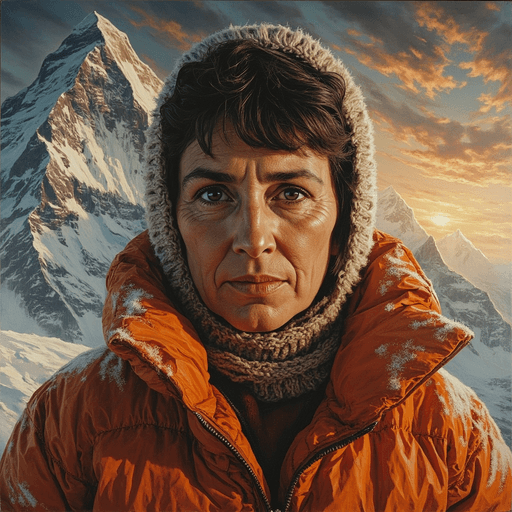
On May 16, 1975, just after noon, with sherpa Ang Tsering by my side, there was nothing above us. The death zone makes the mind slow, breath short behind the oxygen mask, and I didn't feel the exhilaration one imagines. I mainly thought: finally, I can sit down. Much has been written that I was the first woman on the roof of the world, but I didn't climb for that. As I later said, "I didn't want to be the first woman on the summit of Everest. I simply wanted to climb Everest. Being a woman was a circumstance, not a goal." The title was something others hung on me upon my return.
Being a woman was a circumstance, not a goal.
—How did you experience the triumphant welcome that awaited you in Japan?
I was received as a national heroine, even received by King Birendra of Nepal. The newspapers made me a symbol, and I found that a bit strange, almost embarrassing. I had climbed for my own pleasure, not to carry a country or a gender on my shoulders. And then there was this truth I refused to forget: without the sherpas who dug me out of the avalanche, there would have been no summit. Mountaineering remains a collective adventure, even when only one person sets foot on the highest point. Receiving all the honors for a feat that other hands had made possible seemed like unfair accounting to me.
Mountaineering remains a collective adventure, even when only one person sets foot on the highest point.
—How did you manage a life as a mother and piano teacher while planning Himalayan expeditions?
One didn't manage it elegantly, I assure you. Between climbs, I gave piano lessons to neighborhood children in our suburban Tokyo house, because we had to fund the oxygen bottles and plane tickets. I raised my children among mountain notebooks covered in route calculations and sheet music. Many thought a woman had to choose: family or summits. I sewed our expedition pants from old car seat covers to save money, and I came home in time for dinner. An ordinary life and outsized ambitions are not mutually exclusive; they coexist, simply, in a happy fatigue.
An ordinary life and outsized ambitions are not mutually exclusive; they coexist in a happy fatigue.
—What did the challenge of the Seven Summits, completed in 1992, represent for you?
Seventeen years of patience, that's what it represented. The concept of the Seven Summits — climbing the highest point of each continent — had just been popularized when I took it on. From Kilimanjaro to Aconcagua, from Elbrus to Puncak Jaya in Indonesia, where I completed the series in 1992, each mountain required colossal logistical and financial organization. And between each, I returned to my students, my kitchen, my bills. I became the first woman to complete this collection of peaks, but what I remember is not the record: it's the slow accumulation, season after season, monsoon after monsoon, of a life held together at both ends.
What I remember is not the record: it's the slow accumulation, season after season.
—What did high altitude teach you about yourself?
That one becomes terribly small there. Above 8,000 meters, in the death zone, the body burns faster than it can fuel, and each step costs an absurd amount of will. You melt snow on the stove to drink, eat freeze-dried miso soup without appetite, sleep poorly in the wind-beaten tent. The mountain does not hate you, but it does not love you either: it is perfectly indifferent. And in that indifference, I found a kind of peace. As I once said, mountains do not discriminate; they pose the same challenges to everyone. It is our societies that invent boundaries where the rock knows none.
The mountain does not hate you, but it does not love you either: it is perfectly indifferent.
—Why did you turn, in the 2000s, to defending the mountain environment?
Because on coming down from the world's most beautiful mountains, I now saw something other than beauty: trash. The most popular climbing routes have become high-altitude dumps, littered with empty bottles and packaging. On Mount Fuji, our sacred mountain, I organized clean-up operations involving schools and associations. In 2000, I even earned a master's degree in environmental science, because I wanted my anger to be based on knowledge, not just indignation. You cannot claim to love the summits and let them suffocate under our waste.
You cannot claim to love the summits and let them suffocate under our waste.
—What would you say to young girls who, even today, hesitate to take the plunge?
I would tell them what no instructor told me when I was their age: the mountain awaits you, and it doesn't care about your gender. When I wrote Hohoemi no Himalaya, the Smile of the Himalayas, I wanted to convey that to them — not a feat to imitate, but permission to set out. You don't need to be the strongest; I was a scrawny child from Fukushima. You just have to not stop. Put one foot, then the other. The summit is only a succession of stubborn steps, and each of those steps, a woman can take as well as a man, sometimes better, because we less often have the luxury of giving up.
The summit is only a succession of stubborn steps.
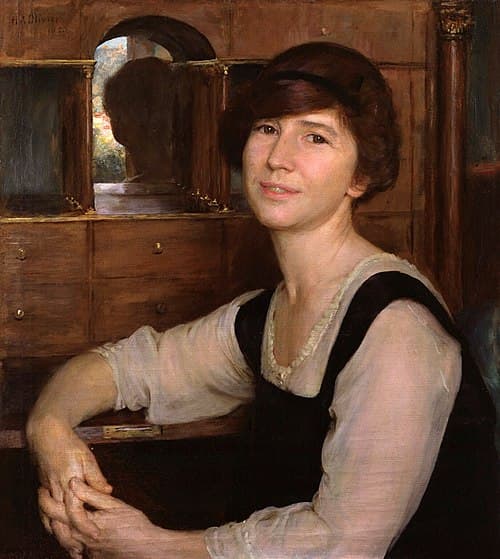
This imaginary interview was generated by artificial intelligence from sources documented in Junko Tabei's profile. It dramatises what the figure might have said based on what we know about them, but does not constitute attested historical testimony. For primary sources and factual documentation, refer to the full profile.