Kids interview Junko Tabei
by Charactorium · Junko Tabei (1939 — 2016) · Exploration · 5 min read
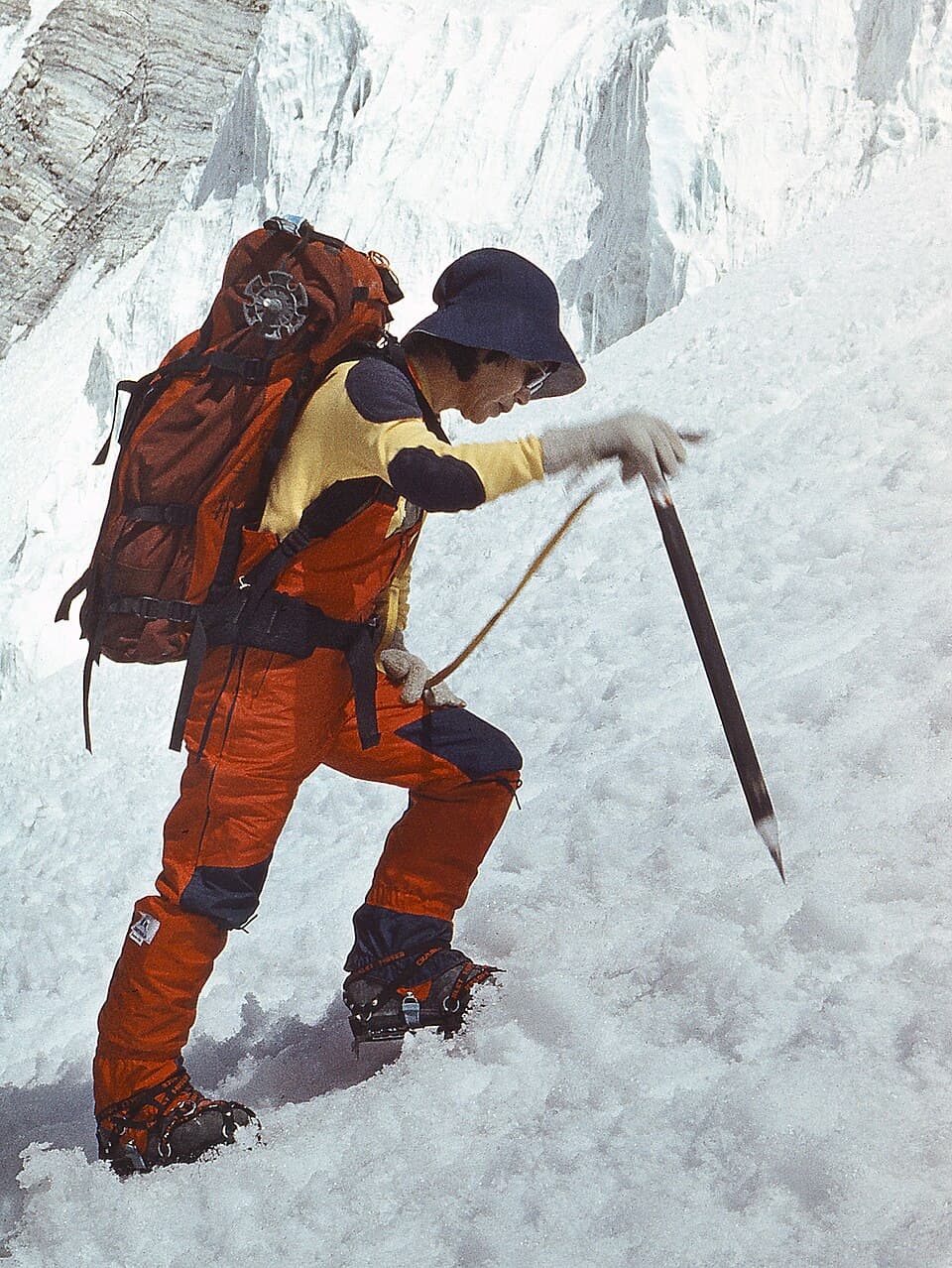
Two young visitors, aged twelve, push open the door of a small suburban house in Tokyo. A smiling lady awaits them, an old mountain notebook on the table. She gestures for them to sit down and begins to tell her story.
—How old were you when you started climbing mountains?
You know, my child, it started when I was very small. I was ten years old, and a schoolteacher took us up Mount Nasu, near my home in Miharu. Imagine a shy girl, not very fast at running, who suddenly discovers that in the mountains, it's not speed that counts, but patience. You take one step, then another, and the world opens up. I never forgot that feeling. Later, at university, I joined a climbing club. And there I understood: the mountain didn't ask me to be a girl or a boy. It just asked me to keep going.
In the mountains, it's not speed that counts, but patience.
—Is it true that someone told you girls couldn't climb?
Yes, and it hurt me, I won't lie. At a youth club, an instructor flatly told me that women were not made for climbing. Imagine being told that what you love most is not for you. Many girls bowed their heads. I gritted my teeth. In 1969, I founded the Ladies Climbing Club Japan, the very first all-female mountaineering club in Japan. Our motto? “Let's go to foreign mountains.” We no longer waited for anyone's permission. We set off, together, and climbed for real.
We no longer waited for anyone's permission.
—What was the most dangerous moment you experienced on Everest?
Ah, that one I remember in my body. On April 6, 1975, we were sleeping in our tents at 6,300 meters. The high-altitude tent is a tiny canvas shelter, pitched in the snow, tied down with ropes. And then, in the middle of the night, an avalanche buried us. Darkness, cold, no air. I was unconscious for six minutes. It was the sherpas, the mountain guides, who dug me out with their bare hands. I was injured, shaken. But twelve days later, I set off again for the summit. Fear doesn't decide for you.
Fear doesn't decide for you.
—Did you ever want to give up and go home?
Of course I did! Who wouldn't have wanted to? After the avalanche, I ached all over, and the mountain scared me. But you know, one thing held me: I wasn't alone. We were a team of women, and the sherpas were with us. Imagine a rope team: each person is tied to the others by a rope. If you give up, it's not just you who stops. Later I said that without my sherpas, there would have been no summit. It's true. One person reaches the highest point, but you always climb up together.
One person reaches the summit, but you climb up together.
—What was it like to be the first woman on top of the world?
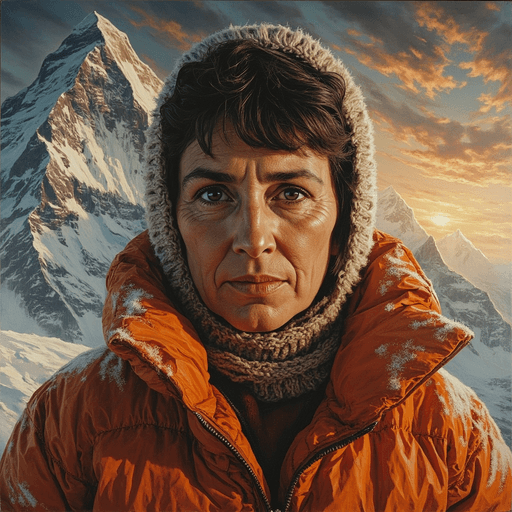
On May 16, 1975, just after noon, I set foot on the summit of Everest, at 8,848 meters. The first woman in all of history. But do you want to know a secret? I hadn't climbed for that. I didn't want to be the first woman on the summit. I simply wanted to climb Everest. Being a woman was a circumstance, not a goal. At the top, I didn't think “I'm a heroine.” I thought about my next step, to get down alive. The mountain doesn't congratulate you. It just asks you to be careful.
I simply wanted to climb Everest. Being a woman was a circumstance, not a goal.
—When you returned to Japan, everyone was shouting your name, right?
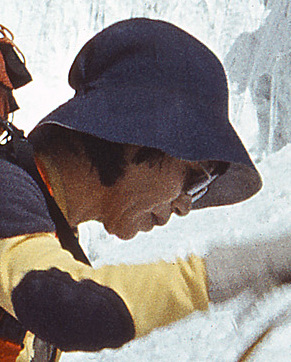
Oh yes, I was welcomed as a national heroine! Imagine crowds, journalists, honors. In Nepal, I was even received by the king. It was impressive for the modest girl from Miharu that I was. But deep down, it made me a little uncomfortable. I said frankly that I had climbed for my own pleasure, not to represent my country or my gender. You know, mountains don't discriminate. They pose the same challenges to everyone. It's human societies that draw boundaries between what girls and boys are allowed to do.
Mountains don't discriminate. It's humans who draw boundaries.
—How did you pay for trips to such faraway mountains?
Ah, that's a real question! Expeditions cost a lot: tickets, equipment, sherpas, permits. And I wasn't rich, my child. So at home, in my Tokyo suburb, I gave piano lessons to neighborhood children. Each lesson put a few coins aside for the next mountain. Imagine: in the morning, a sheet of music; a few months later, an ice axe in the ice. I never believed you had to choose between an ordinary life and a big dream. You can hold both, as long as you are patient.
In the morning a piano score, a few months later an ice axe in the ice.
—Did you really climb the highest mountain on every continent?
Yes! Seven continents, seven summits, the highest point of each. They call them the Seven Summits. It took me seventeen years to climb them all, and I finished in 1992, in Indonesia, on Puncak Jaya. The first woman to do it. But during those seventeen years, I didn't just climb: I raised my children, I worked. Imagine a mom who prepares meals, checks homework, then packs her crampons—those metal claws you strap on your shoes to walk on ice—into her bag. An ordinary life and an extraordinary life, in the same heart.
An ordinary life and an extraordinary life, in the same heart.
—Why did you go clean mountains instead of climbing them?
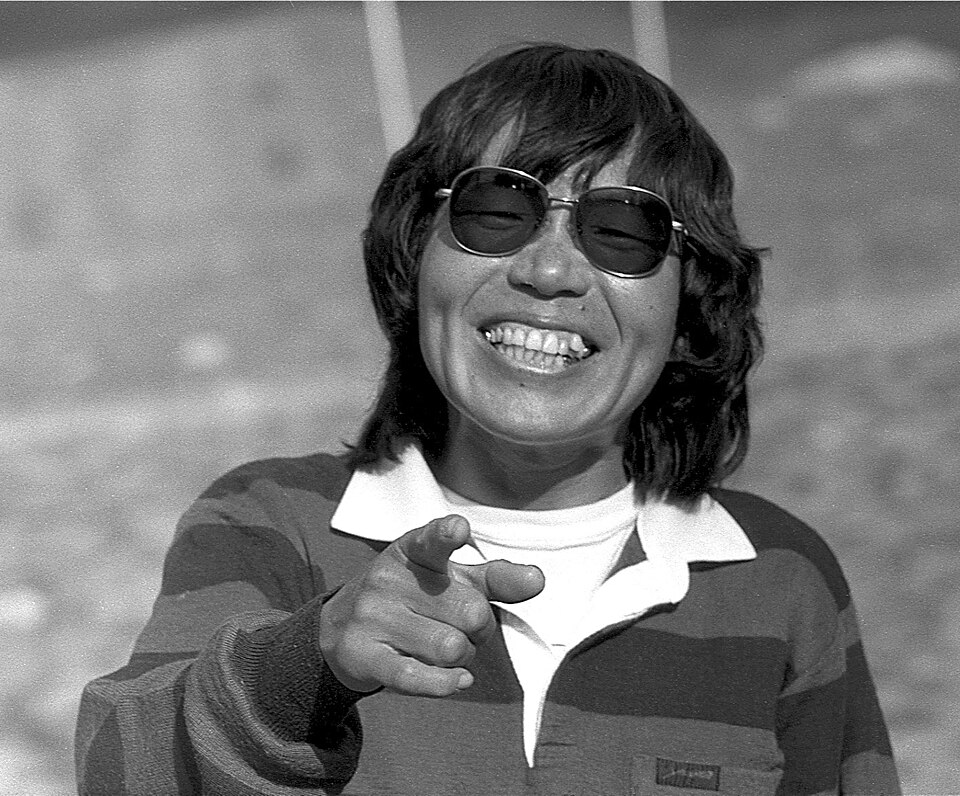
Because one day, while climbing, I saw something that broke my heart: trash. Bags, wrappers, abandoned on the world's most famous trails. The mountain that had given me everything was being dirtied. So in the 2000s, I launched clean-up operations on Mount Fuji, our sacred volcano. I involved schools, children like you. Imagine a long line of people going up, not to break a record, but to pick up and bring down the mountain clean. Climbing is beautiful. But respecting what you travel through is even more important.
Climbing is beautiful. Respecting what you travel through is even more important.
—Did you go back to school to learn, at your age?
Yes indeed! And I'm not ashamed of it, quite the opposite. In 2000, I earned a master's in environmental science, a big university degree. You wonder why? Because having a nice speech is not enough. I really wanted to understand how to protect mountains: the soil, water, fragile high-altitude plants. Imagine you love a garden: to take good care of it, you need to learn how it lives. You can start something new at any age. I had climbed the highest peaks, yet I became a student again, notebook in hand.
You can start something new at any age.
—If you could speak to us today, what would you want us to remember?
That you don't need to be the strongest to move forward. I was a shy child from Miharu, not especially gifted. But I put one foot in front of the other, again and again. Imagine a very long staircase in the fog: you can't see the top, so you only look at the next step. That's my whole secret. I was told girls couldn't, and I climbed the roof of the world. I was thought ordinary, and I climbed seven continents. You too have your mountain. Don't look at it whole. Look at your next step.
Don't look at the whole mountain. Look at your next step.
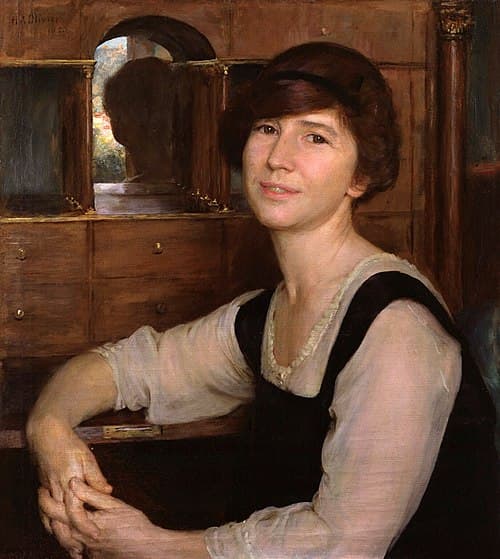
This imaginary interview was generated by artificial intelligence from sources documented in Junko Tabei's profile. It dramatises what the figure might have said based on what we know about them, but does not constitute attested historical testimony. For primary sources and factual documentation, refer to the full profile.