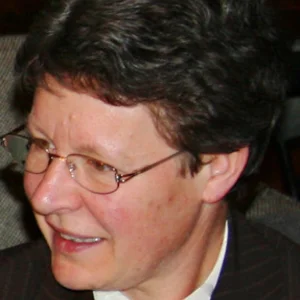
Polish mountaineer (1943–1992), she was the first woman to climb Everest in 1978 and the first European woman to reach its summit. She disappeared in 1992 during her attempt to climb Kangchenjunga.
Wanda Rutkiewicz
Wanda Rutkiewicz
8 min read
Frequently asked questions
Key Facts
- 1943: born in Plungė, Lithuania (then under Soviet occupation)
- 1978: first Polish woman and third woman in the world to climb Everest (8,848 m)
- 1986: first woman to climb K2 (8,611 m), the second highest mountain in the world
- She climbed 8 of the 14 peaks over 8,000 metres
- 1992: disappeared during the ascent of Kangchenjunga (8,586 m)
Works & Achievements
Rutkiewicz reached the summit of Everest (8,849 m) during a German-Austrian expedition, becoming the first European woman to achieve this feat. The ascent established her international reputation.
She became the first woman to climb K2 (8,611 m), widely regarded as the world's most difficult mountain. She survived a season that claimed the lives of thirteen climbers, including several of her companions.
Rutkiewicz embarked on a program to climb all 14 peaks above 8,000 metres, a goal no woman had ever accomplished. She summited seven of them — including Shishapangma, Gasherbrum II, and Cho Oyu — before her disappearance.
Rutkiewicz climbed both Gasherbrums a year apart in the Karakoram range, Pakistan, cementing her place as one of the rare mountaineers to string together multiple eight-thousanders in quick succession.
Through lectures, interviews, and landmark expeditions, Rutkiewicz shattered prejudices about women's place in extreme high-altitude climbing, inspiring a generation of mountaineers around the world.
Anecdotes
On October 16, 1978, Wanda Rutkiewicz reached the summit of Everest at 8,849 meters, becoming the first Polish woman and the first European woman to achieve this feat. She had joined a German-Austrian expedition at the last minute and completed the final ascent in difficult weather conditions, refusing supplemental oxygen during part of the descent.
In June 1986, during a catastrophic season on K2 — the world's deadliest mountain — Rutkiewicz reached the summit at 8,611 meters, becoming the first woman to climb this feared peak. That season claimed the lives of thirteen climbers, including her rope partner Liliane Barrard, who disappeared during the descent. Rutkiewicz survived, displaying extraordinary physical and mental resilience.
Rutkiewicz harbored a project she called the 'Caravan of Dreams': to climb all 14 peaks above 8,000 meters, a goal no woman had yet accomplished. She had conquered seven before her departure for Kanchenjunga in 1992, treating each expedition as a milestone in a life entirely devoted to the mountains.
In May 1992, during her attempt to summit Kanchenjunga (8,586 m, the world's third-highest peak), Rutkiewicz was last seen at around 8,200 meters by Mexican climber Carlos Carsolio, who was descending after reaching the summit. She refused his help and continued climbing alone toward the top. Her body was never found.
A trained electronics engineer, Rutkiewicz had also survived a serious car accident in 1967 that could have ended her athletic career. After a lengthy rehabilitation, she returned to climbing with even greater determination. In communist Poland of the 1970s and 1980s, where shortages were a daily reality, she embodied for many young women the possibility of breaking through the limits imposed by society.
Primary Sources
Wanda Rutkiewicz reached the summit on October 16, 1978 at 6:00 PM local time, becoming the first European woman to climb Everest. The ascent was completed without supplemental oxygen during the final phase.
I crossed paths with her at around 8,200 metres. She was moving slowly but seemed determined to push on. She refused my help and told me she would continue toward the summit. That was the last time anyone saw her alive.
I want to climb all 14 eight-thousanders. It is not an obsession — it is a life's project. Each summit is a step, an answer to a question the mountain puts to me. I cannot stop now.
Wanda Rutkiewicz took part in more than twenty Himalayan expeditions between 1970 and 1992, summiting seven peaks above 8,000 metres. She remains to this day one of the most decorated mountaineers in Polish history.
Key Places
Birthplace of Wanda Rutkiewicz, on February 4, 1943, then under Soviet occupation. Her family later settled in Poland after World War II.
The city where Rutkiewicz studied electronics engineering and developed her passion for mountaineering through local clubs. She lived and worked there for most of her life.
The world's highest peak (8,849 m), which Rutkiewicz summited on October 16, 1978, becoming the first European woman to reach the top. The climb catapulted her to the status of a world-class mountaineering figure.
The world's second-highest peak (8,611 m) and one of its deadliest. In 1986, Rutkiewicz became the first woman to reach its summit during a dramatic season.
The world's third-highest peak (8,586 m) and the place where Rutkiewicz disappeared in May 1992. She was last seen at an altitude of 8,200 metres.
Typical Objects

The mountaineer's iconic tool, with a metal head and rigid shaft, used to make progress on ice and arrest a fall. Rutkiewicz carried one on every high-altitude ascent.

Spiked metal devices attached to the underside of boots to grip ice and hard-packed snow. Essential on the icy slopes of the Himalayas and the Karakoram.

An extreme insulating garment designed to withstand temperatures below -40 °C. Rutkiewicz wore suits tailored to conditions above 8,000 metres, evolving with the technology of the time.

A device that allows climbers to breathe enriched oxygen in the "death zone," above 8,000 metres. Rutkiewicz sometimes chose to go without one in order to climb in a purer style.

A technical rope used to secure climbers on difficult passages and descend steep faces. In a Himalayan rope team, it represents the vital link between members.

An instrument that measures altitude by atmospheric pressure. It allowed Rutkiewicz to track her progress and plan the stages between high-altitude camps.

An ultralight, aerodynamic shelter built to withstand the fierce winds of the Himalayas. The successive camps (C2, C3, C4) were established using these tents, kept to a bare minimum to reduce weight.
School Curriculum
Vocabulary & Tags
Key Vocabulary
Tags
Daily Life
Morning
On expedition, Rutkiewicz rose before dawn to make the most of the stable weather conditions of the early hours. She ate a frugal breakfast — hot tea, crispbreads, chocolate — before putting on her crampons and harness in temperatures that often dropped below -20 °C. Back in Poland, her mornings were devoted to physical training: running, indoor climbing, or climbing on rock faces.
Afternoon
On an expedition, the afternoon was dedicated to moving between high-altitude camps or acclimatizing. She studied routes on topographic maps and coordinated logistics with porters and Sherpas. Back in Poland, she worked as an electronics engineer while planning her next expeditions.
Evening
At base camp, evenings brought the team together over a hot meal and strategic discussions for the following day. Rutkiewicz kept a logbook and wrote to her family. At high altitude, nights were spent in an extreme-rated sleeping bag, sometimes lulled by the sound of winds exceeding 100 km/h against the tent walls.
Food
At high altitude, meals were reduced to freeze-dried soups, energy bars, chocolate, and very sweet tea to offset the physical effort. Above 7,000 metres, appetite drops dramatically due to oxygen deprivation. In communist Poland during the 1970s and 1980s, everyday eating was shaped by shortages: black bread, potatoes, and rationed meat.
Clothing
For high-altitude ascents, Rutkiewicz wore multiple layers: thermal underwear in wool or synthetic fibers, a fleece mid-layer, then a waterproof down suit and windproof shell. High-altitude boots with gaiters protected against frostbite. Double gloves, a balaclava, and glacier goggles completed the protection against cold and UV rays.
Housing
In Poland, Rutkiewicz lived in a standard Soviet-era apartment — modest and functional. On expeditions, she spent several weeks at base camp in a large tent shared with the team, equipped with a generator, a stove, and basic comforts. Higher up, the high-altitude camps were reduced to tiny two-pole tents anchored to the mountainside.
Historical Timeline
Period Vocabulary
Liens externes & ressources
Références
Œuvres
Première ascension féminine européenne de l'Everest
16 octobre 1978
Première ascension féminine du K2
23 juin 1986
Projet 'Caravane des rêves' — les 14 huit-milles
1985-1992
Ascension du Gasherbrum I et du Gasherbrum II (Karakoram)
1989-1990
Promotion de l'alpinisme féminin en Pologne et en Europe
1970-1992