Imaginary interview with Karl Marx
by Charactorium · Karl Marx (1818 — 1883) · Philosophy · Politics · 5 min read
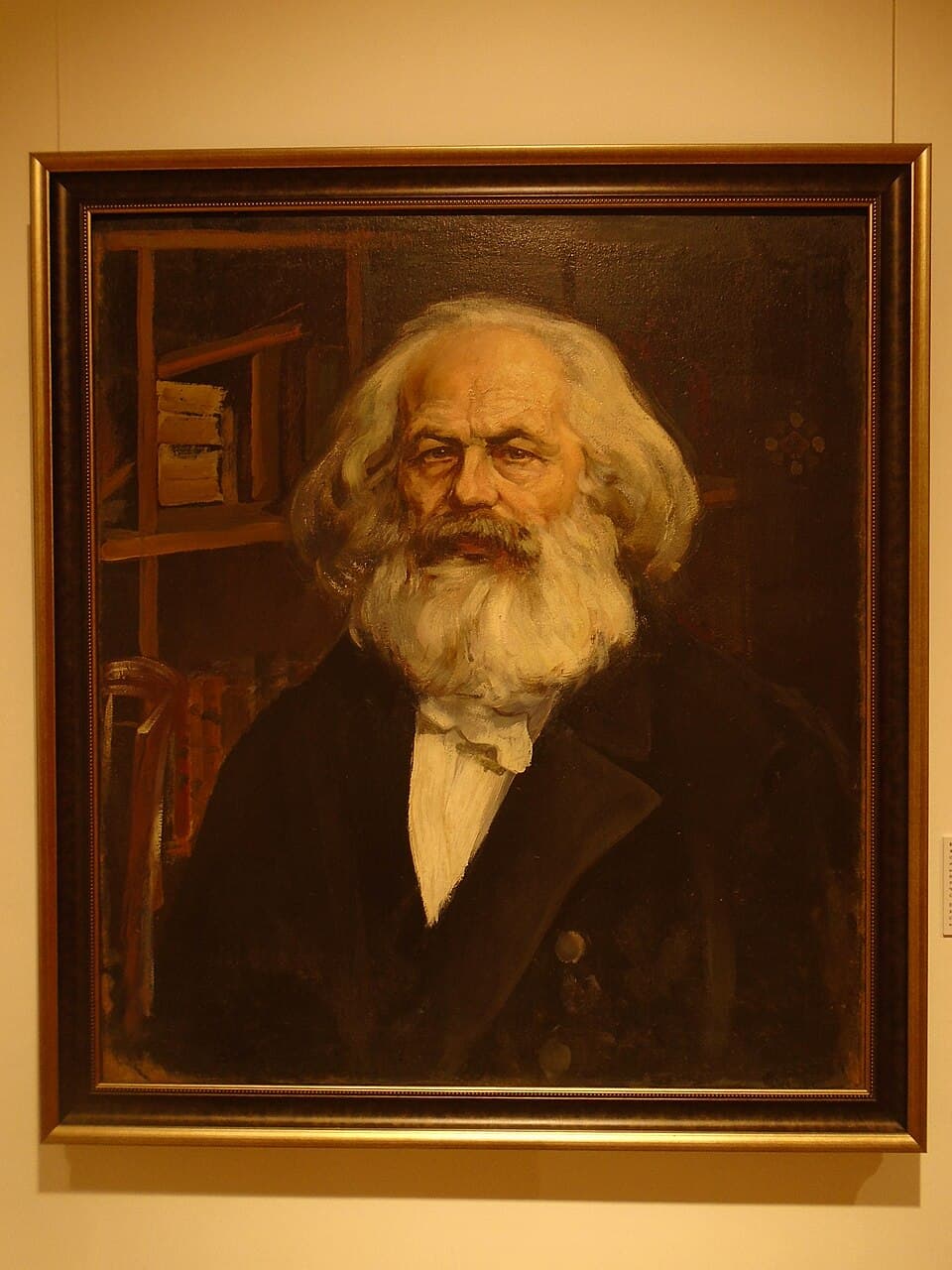
London, a damp afternoon in the late 1870s. In two cramped rooms in Soho, amid piles of newspapers and collapsing manuscripts, a man with a thick beard relights his pipe and brushes aside British parliamentary reports. He agrees to answer, on condition that he is not asked about morality, but about commodities.
—What was an ordinary day like for you in London?
Bad, and that is precisely why they all looked alike. I get up late—the night having been my true day—I smoke with the first coffee, then walk to the reading room of the British Museum. There, under the dome, I comb through entire registers—industrial statistics, Commons debates, factory inspectors' reports. My reader's pass was my homeland for more than twenty years. In the evening, I return to Dean Street, take up my pages by lamplight, and write to Engels. People think I am an armchair thinker: I am above all a man who copies down the figures that the bourgeoisie carelessly leaves lying around in its own accounts.
My reader's pass was my homeland for more than twenty years.
—Isn't there a cruel irony in theorizing working-class poverty while living it yourself?
I ate that irony cold, like our potatoes. At Dean Street, several of us lived in two dark rooms, and I buried children there who were carried off by the lack of everything. Without the money orders that Engels sent me from Manchester, Capital would have remained a starved draft. People will say: here is a man who denounces poverty and wallows in it. I reply that I never claimed to be above the laws I describe; I was caught in them like everyone else. That threadbare black frock coat I wore to the reading room was the exact uniform of my condition: a bourgeois by birth, proletarianized by exile and by the stubbornness to finish my book.
I ate that irony cold, like our potatoes.
—Why on earth open a work as vast as Capital with the study of a simple commodity?
Because the commodity is the cell of the whole organism, and you cannot operate on a body without knowing its tissue. I wrote that “the wealth of societies in which the capitalist mode of production prevails presents itself as an immense accumulation of commodities,” and that “the analysis of the commodity is therefore the starting point of our research.” That seems modest, almost boring. But behind this ordinary object—a piece of cloth, a quintal of iron—lies a relation between men disguised as a relation between things. It is in this database I drew from at Bloomsbury, in the economic journals and the blue books of the British inspectorate, that the commodity begins to speak. And what it confesses is stolen labor.
Behind the commodity lies a relation between men disguised as a relation between things.
—You speak of stolen labor: what exactly do you mean by this surplus value that keeps recurring in your writing?
The word frightens honest folk; it should only frighten shareholders. The worker sells his labor power for a wage, but during his day he produces more value than it costs to maintain him. This difference, this surplus he creates and does not receive, the capitalist pockets: that is surplus value, and that is the secret that honest trade conceals under the innocent word “profit.” I had already sensed it in my early manuscripts in Paris, when I wrote that “the worker becomes all the poorer the more wealth he produces.” The proletarian is not poor despite his work; he is poor because of it, and that is the whole logical scandal of the system.
The proletarian is not poor despite his work; he is poor because of it.
—Let us return to 1848: under what circumstances did this Manifesto of the Communist Party come into being?
In Brussels, where exile had thrown me after my expulsion from France, the League of the Communists commissioned Engels and me to write a profession of faith. We wrote it in haste, on the eve of a seismic event: the whole of Europe was about to catch fire in the spring. I wanted a text that would strike like a tocsin, and it begins with these words—“A spectre is haunting Europe—the spectre of communism. All the powers of old Europe have entered into a holy alliance to exorcise this spectre.” It was no idle metaphor: the chancelleries were already trembling before an idea that had no army yet. A pamphlet of a few pages, and it outlived all the empires that claimed to bury it.
I wanted a text that would strike like a tocsin.
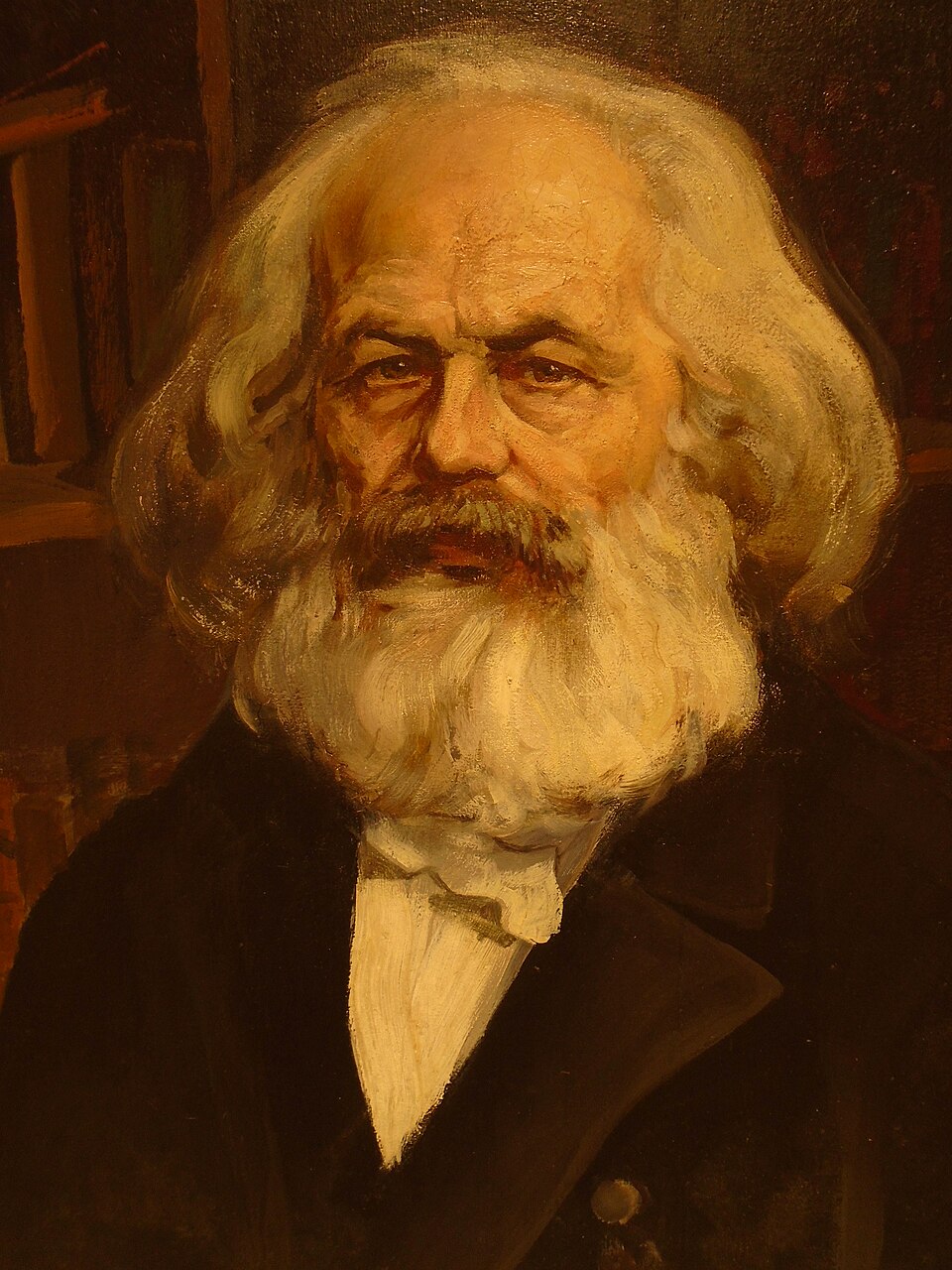
—You mention expulsion: what does this life of an exile, chased from capital to capital, mean to you?
A geography drawn by the police. As editor of the Rhenish Gazette in Cologne, I first tasted Prussian censorship; then Paris welcomed me before banishing me in 1845, under pressure from Berlin; then Brussels, until the wave of 1848 cast me out again. In 1849, London became my last port, not out of love for England, but because no continent wanted me anymore. You measure the impact of an idea by the nervousness of the governments it annoys. If my pen had been mere philosophical chatter, do you think they would have bothered to escort me from one border to another? The harmless are not exiled.
You measure the impact of an idea by the nervousness of the governments it annoys.
—It is said that you “turned Hegel upside down.” What should we understand from this image?
That I put him back on his feet, for I found him walking on his head. Hegel saw History driven by Spirit, by the Idea unfolding in the world; I kept his dialectic—that movement through contradictions—but I turned it inside out. It is not ideas that shape the economy; it is the economy that secretes ideas. In The German Ideology, written with Engels, we posited that the infrastructure of production relations determines the superstructure of laws, religions, philosophies. Men do not first think and then eat; they eat first, and their thought bears the trace of how they obtained that bread. Historical materialism is that: history made of matter before it is made of dreams.
I put him back on his feet, for I found him walking on his head.
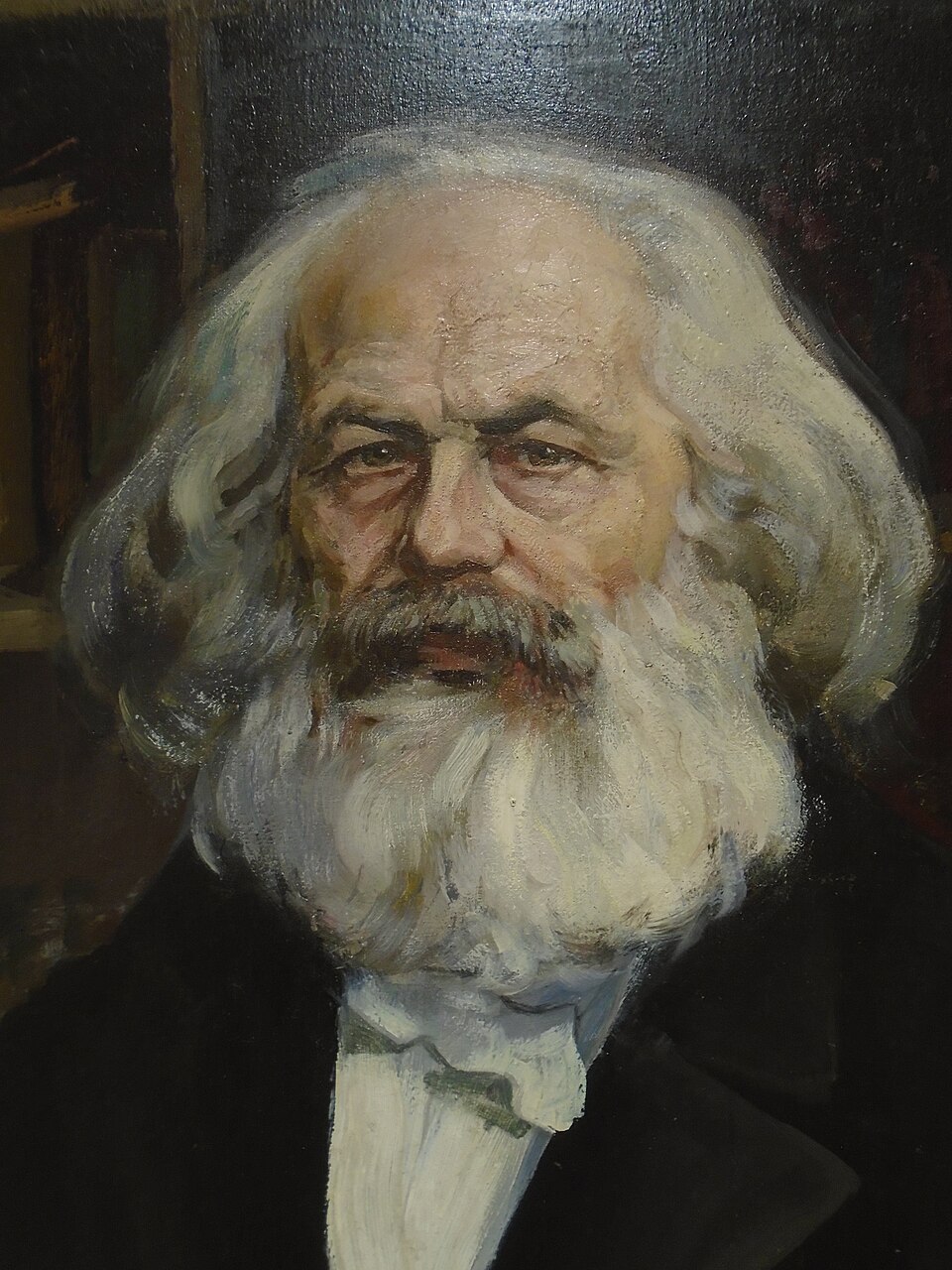
—What do you reply to those who see you as just another philosopher?
That I never wanted to join that brotherhood. I wrote, in my theses on Feuerbach, that “the philosophers have only interpreted the world in various ways; the point is to change it.” All of German philosophy seemed to me a magnificent commentary on the existing order, a learned way of blessing what is. But I am not seeking one more reading of the world: I am seeking the lever that moves it. That is why I left the lecture halls for factory reports and workers' associations. An idea that does not descend into the street, that does not arm itself with a class, remains a beautiful display piece—and I never had, as you may have gathered, a taste for display cases.
I am not seeking one more reading of the world: I am seeking the lever that moves it.
—The Paris Commune of 1871: why did this brief episode matter so much to you?
Because for the first time, heaven was stormed. During those few weeks in 1871, the Parisian workers did not merely overthrow a power: they began to invent their own, by disarming the old state instead of seizing it ready-made. In The Civil War in France, I wanted to fix this lesson before the blood covered it: the working class cannot simply take over the existing state machine and run it for its own ends; it must break it. The communards were massacred by the thousands, and people thought they had killed the experiment along with them. But a first time in history is not erased: it becomes a memory, hence a promise.
For the first time, heaven was stormed.
—You led the First International, later torn apart by your quarrels with Bakunin. What remains of that effort?
The idea that the proletarians of all countries have no common homeland but their condition. Founded in London in 1864, the International Workingmen's Association was to coordinate unions and relief societies across borders, and I wrote its inaugural address. But Bakunin and his followers wanted to abolish the state at a stroke, without the patient organization of the class; our disputes eventually shattered the house. I do not absolutely regret it: better a dissolved International than a confused one. The workers of Europe learned, at our expense, that capital is not abolished by moral decree but by organized force—and that lesson will outlive our squabbles.
The proletarians of all countries have no common homeland but their condition.
This imaginary interview was generated by artificial intelligence from sources documented in Karl Marx's profile. It dramatises what the figure might have said based on what we know about them, but does not constitute attested historical testimony. For primary sources and factual documentation, refer to the full profile.