Imaginary dialogue between Friedrich Engels and Karl Marx
by Charactorium · Karl Marx (1818 — 1883) · Philosophy · Politics · 6 min read
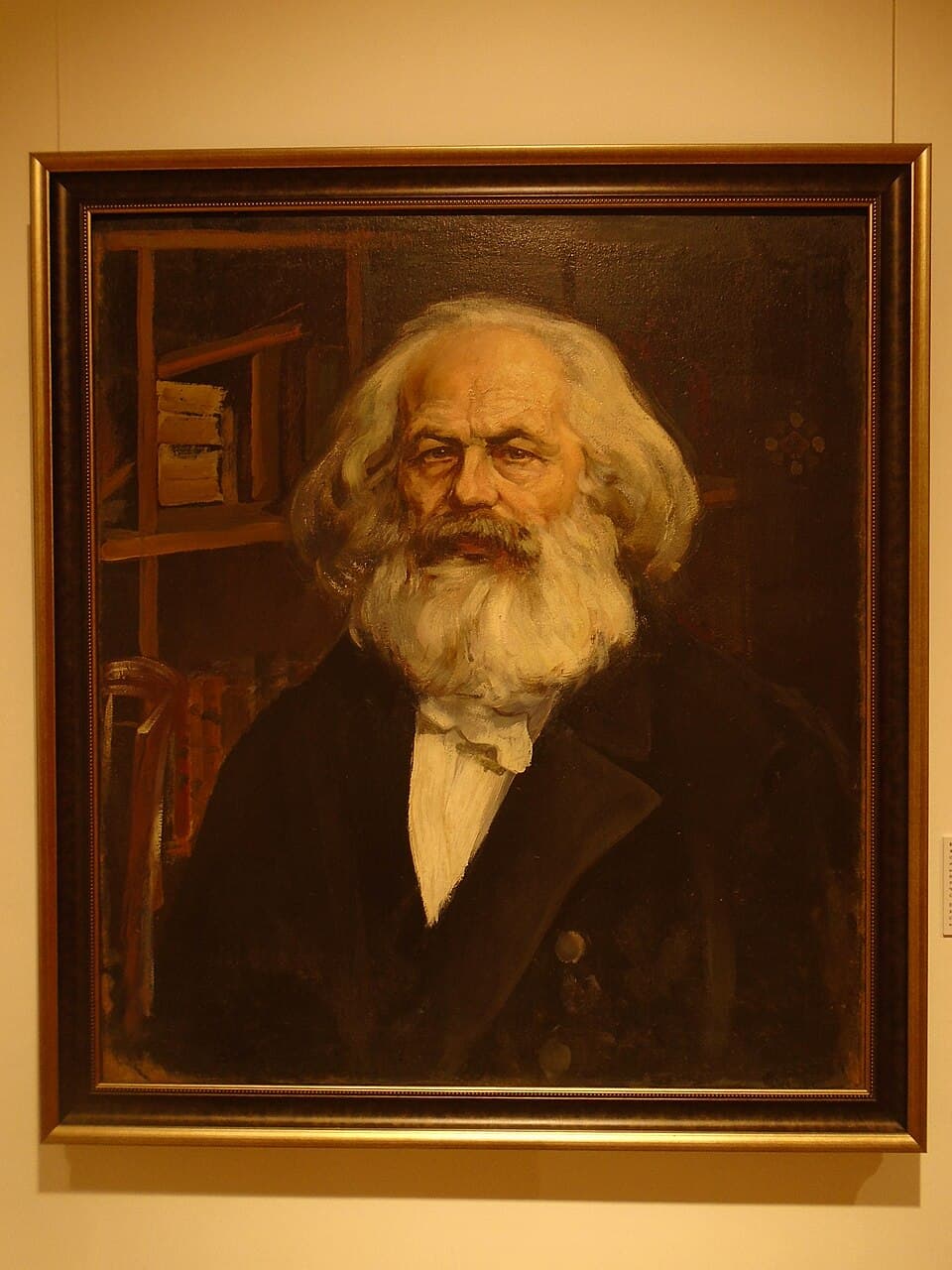
It is in the dim light of the lodging at 28 Dean Street, in Soho, that Friedrich Engels finds his old comrade one winter evening, around 1870. The oil lamp illuminates a table groaning under newspapers and proofs of Capital, and the smell of stale tobacco permeates the room. They have known each other since that decisive meeting in 1844, in Paris, and Engels — who for twenty years has been sending from Manchester enough to feed the family — comes tonight not to debate theory, but to make the man behind the work speak. Marx, in a worn dressing gown, pushes aside his pen and accepts the game.
—Maure, remember 1845, when they drove you out of Paris: how many countries must one be expelled from before realizing one truly disturbs?
You have a good memory, Frederick. After Paris, it was Brussels, then France again, Switzerland in passing, and finally this England where they left me in peace out of contempt more than tolerance. Do you think those governments feared me, a penniless man? No — they feared what 1848 had revealed: that the proletarians of all Europe could recognize themselves in a single cry. The Manifesto was only a pamphlet, but the police saw a spectre in it. One does not expel a man, one tries to expel an idea — and that is precisely the admission that it is alive. Every border I was forced to cross confirmed that I had hit the mark.
One does not expel a man, one tries to expel an idea.
—You who hate to see me tear you away from your table, tell me: what brings you back each day, for so many years, to that reading room of the British Museum?
What you call my table, Frederick, is only the draft; my real workshop is over there, under the dome. There I comb through the reports of English factory inspectors, industrial statistics, parliamentary inquiries that the bourgeoisie itself publishes without understanding that it is signing its own indictment. They take me for a dreamer; I am an accountant of exploitation. Thousands of pages, entire registers of notes — it is necessary, because I do not want to oppose capital with indignation, but with a demonstration. You have often reproached me for my slowness, my promises of manuscripts endlessly postponed. But one does not crush a science with a pamphlet. This poverty of light and heat I exchange for the only wealth that no one can take from me: the proof.
They take me for a dreamer; I am an accountant of exploitation.
—When you first explained your surplus value to me, you started from a simple commodity. Why begin so low, with a trivial object?
Because everything is there, Frederick, in that trivial object. The wealth of this capitalist world presents itself as an immense accumulation of commodities — so I take the humblest and dissect it like an anatomist. What do we discover? That the worker creates by his labour a value greater than the wage given back to him, and that this difference, this surplus value, the bourgeois pockets, calling it profit. Exploitation is not a moral outcry, it is an arithmetic operation hidden under the appearance of free exchange. The proletarian sells his labour power as a commodity, and the more wealth he produces, the more miserable he himself becomes. That is why I begin so low: because the secret of the whole edifice lies in its first stone.
Exploitation is not a moral outcry, it is an arithmetic operation.
—Forgive the question, old friend, but without the notes I send you from Manchester, how would your family manage in these two rooms?
Do not apologize — who else but you could ask me that? Yes, without you we would be on the street, and you know it better than anyone, Frederick. There is an irony I do not hide: the man who spends his nights analyzing the misery of workers often cannot afford the apothecary for his own children. I have buried several here, in this damp neighbourhood, for lack of means. My frock coat goes to the pawnshop and comes back depending on the remittances you send me. But understand this: your generosity is not alms, it is our common work. You became a merchant in Manchester so that I could remain poor at my table. Capital will bear my name; it should also bear your sacrifice.
You became a merchant so that I could remain poor at my table.
—Describe one of your days for me, Maure — those that Jenny tells me about in her letters, when no one sees you before noon.
Jenny barely exaggerates. I work at night, when the house falls silent and thought runs unhindered; so I rise late, my head heavy, and the pipe in the morning before even coffee. The afternoon is the long walk to the Museum, on foot through the streets of Soho, and hours bent over registers. In the evening, sometimes a passing visitor, a militant from the continent, or I resume my letters — that correspondence that ties me to all Europe and first of all to you. It is a life of apparent disorder, I admit: my table is a chaos of books and newspapers. But in that chaos, Frederick, I know how to find every figure. The method is not in the cleanliness of the desk, it is in the head.
I work at night, when thought runs unhindered.
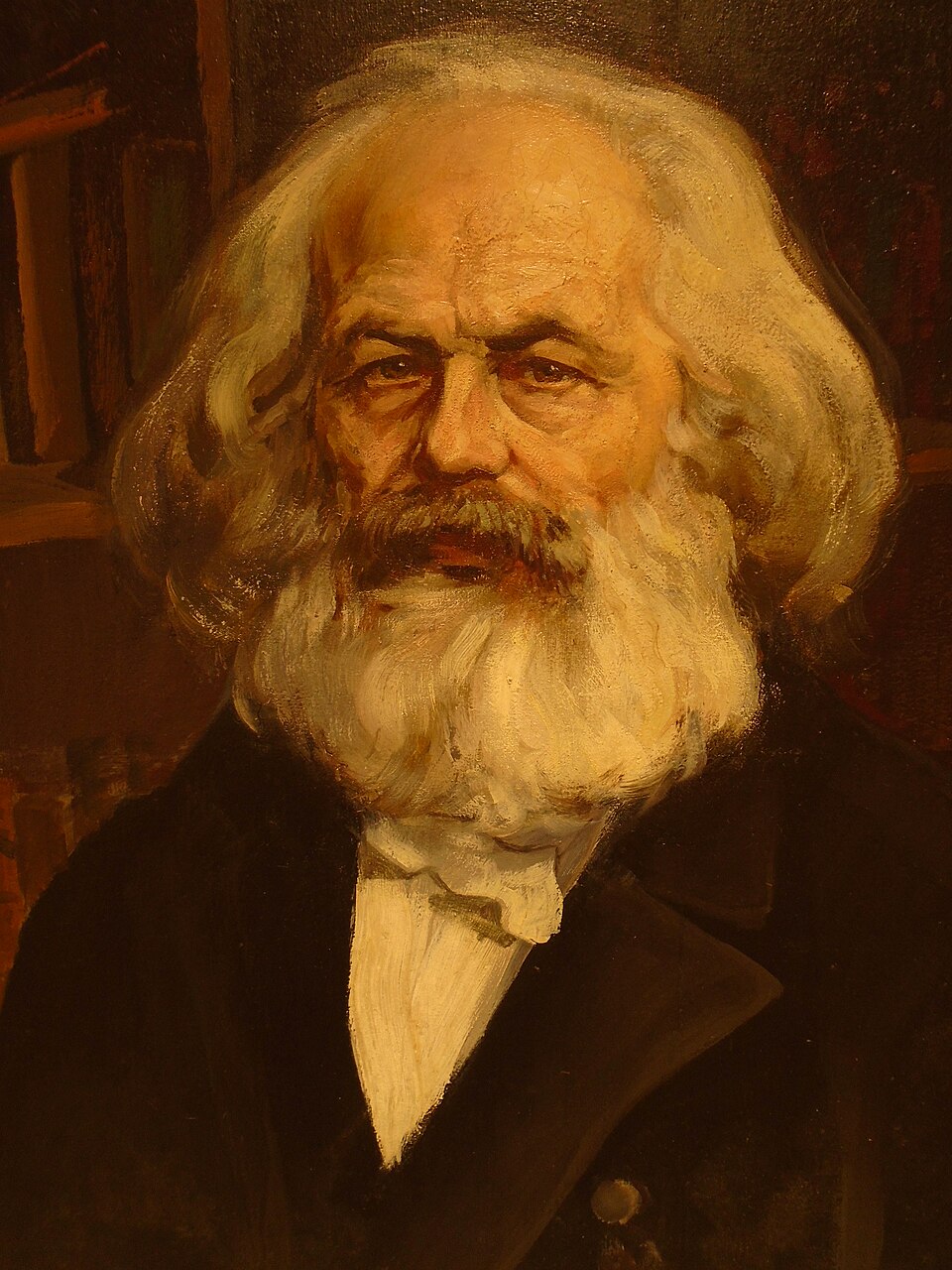
—Last spring, in Paris, workers took the city in hand for two months. You who have written so much about the state — what did you see in that Commune?
I saw there, Frederick, what no book had yet shown me: proletarians not dreaming of power, but exercising it. During those weeks, the workers of Paris proved that the working class cannot be content to seize the state machine as it is — it must break it and forge another, its own. They governed, poorly armed, surrounded, and they were crushed in blood; but their defeat teaches more than many victories. That is why I wrote The Civil War in France — not a funeral eulogy, but a lesson. The First International we founded in 1864 found its first living flesh there. They shot them; they did not shoot what they demonstrated.
They shot them; they did not shoot what they demonstrated.
—Hegel influenced you so much in your youth. How do you still owe him something while claiming to overturn him?
You put your finger on what I am reproached for, Frederick. With Hegel, dialectics walks on its head: it is the Idea that engenders the real world. I have put it back on its feet. The motor of history is not the unfolding spirit, but the material contradictions between the forces and relations of production. It is economic conditions that determine ideas, laws, religions — the infrastructure that bears the superstructure, and not the reverse. But I do not throw out the master: I take his method, that movement through contradictions, and I tear it from its heaven to plant it in the earth. The philosophers have interpreted the world in a thousand ways enough; what matters now is to transform it.
With Hegel, dialectics walks on its head: I have put it back on its feet.
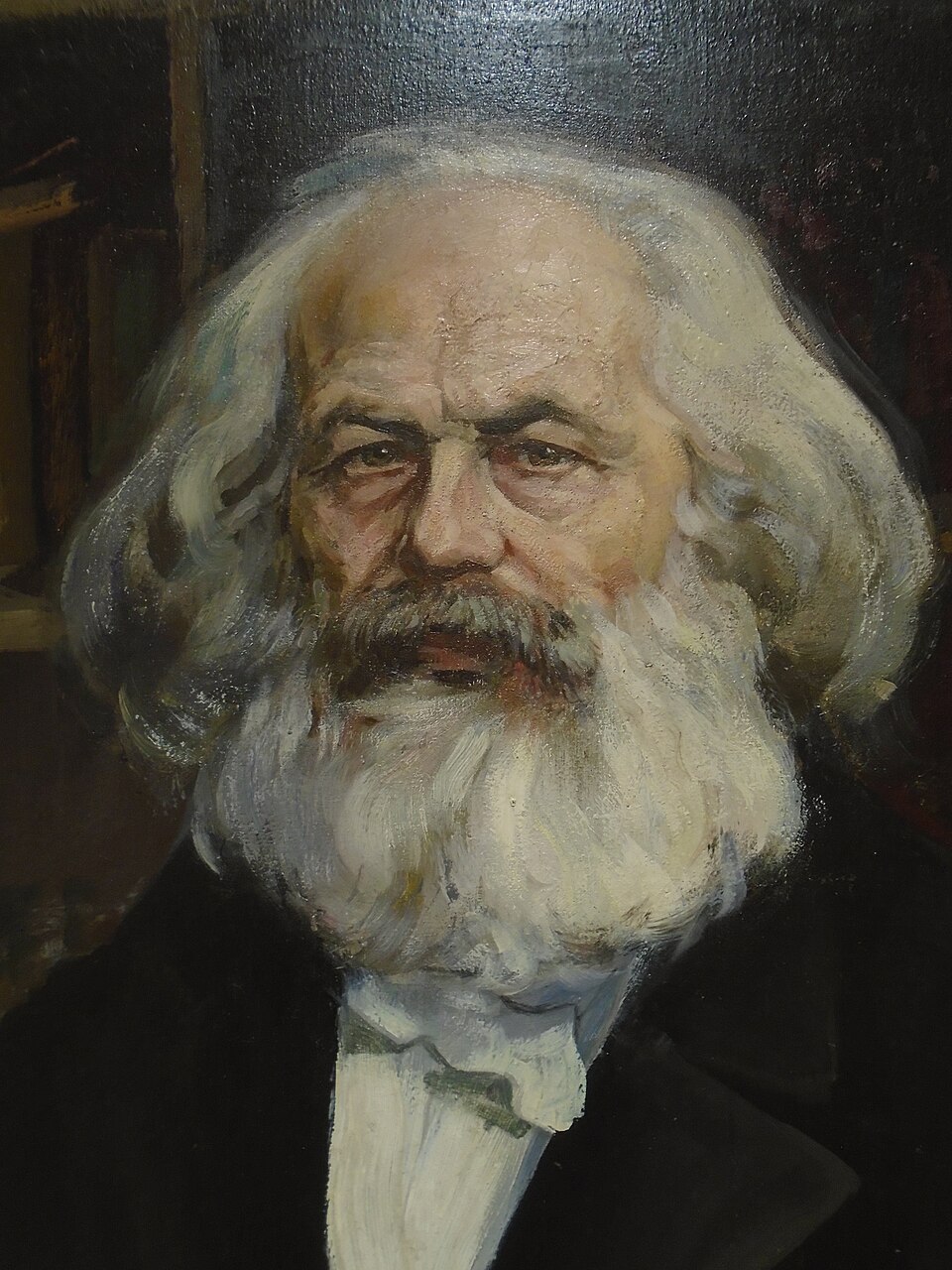
—In your early manuscripts, in Paris, you spoke constantly of alienation. Do you still hold to that word, or did you leave it behind?
I did not leave it, Frederick — I matured it. In those pages of 1844 that you read before anyone else, I already saw that the worker impoverishes himself as he enriches the world: the more commodities he produces, the more he himself becomes a vile commodity. That is alienation — man dispossessed of the product of his hands, of his activity, of his own nature. The young man I was felt it as a philosophical drama. The man I am has translated it into economic laws, into figures of surplus value. But the wound is the same. They thought I had abandoned this idea for cold economics; in truth, Capital is only the scientific anatomy of that youthful cry.
The worker becomes a commodity all the viler the more commodities he creates.
—That beard, that look the caricaturists love: do you truly believe, as they say, that a spectre haunts Europe by your pen alone?
The beard makes people laugh, and let them laugh — it perhaps frightens more than my theses! But do not be mistaken, Frederick: the spectre our Manifesto speaks of did not come from my pen, it comes from the factories. All the powers of old Europe have leagued together in a holy hunt against it, and that alone proves it exists. A single man, even bearded and exiled in London, haunts no one; what haunts princes and bankers is the class that large-scale industry has engendered and can no longer contain. I am not the ghost — I am merely its clerk. They would like to reduce communism to an agitator; it is a force that history has already set in motion.
I am not the ghost — I am merely its clerk.
—One last, my old Maure: after so many years of destitution and bereavement, do you regret having chosen this life rather than a comfortable chair?
Regret? You who have seen me pawn my coat and watch over my sick children, you know the price paid. Yes, a German chair would have spared me Soho, the dampness, the pawnshop. But what would I have written, watched over by a minister, censored as at the Rhenish Gazette in 1842? Poverty cost me dearly, but it also made me free — free to say that this world rests on exploitation, owing nothing to those who profit from it. I did not choose misery; I chose not to lie, and misery came with it. If I had to do it again, Frederick, I would do it — provided I had you by my side again. As for the rest, posterity will judge, and it will not ask my opinion.
I did not choose misery; I chose not to lie.
This imaginary interview was generated by artificial intelligence from sources documented in Karl Marx's profile. It dramatises what the figure might have said based on what we know about them, but does not constitute attested historical testimony. For primary sources and factual documentation, refer to the full profile.