Kids interview Karl Marx
by Charactorium · Karl Marx (1818 — 1883) · Philosophy · Politics · 5 min read
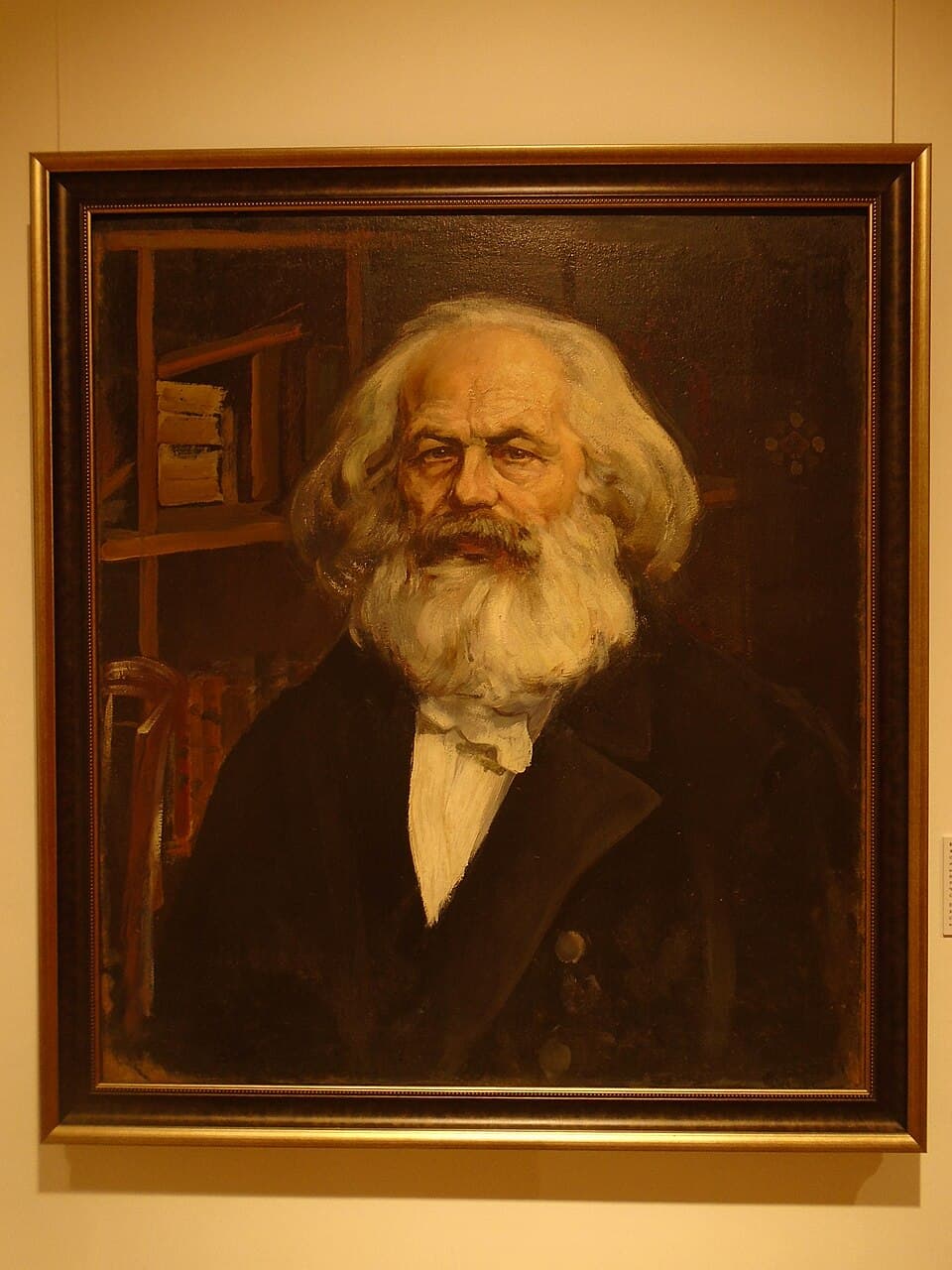
That morning, two middle-school students push open the heavy door of a room full of books. An old man with an enormous beard waits for them, pipe in hand. His name is Karl Marx, and he has agreed to answer all their questions.
—Where did you go every day to write your big book?
You know, my child, almost every day I walked to the great reading room of the British Museum in London. Imagine a huge silent hall, with thousands of books all around, and me always sitting in the same spot. There I read reports from the English Parliament, statistics on factories, numbers and more numbers. I did that for over twenty years! All that work was for a single book: Capital, published in 1867. I wanted to understand, truly understand, how the world of money worked. A book doesn't fall from the sky: it's dug out, page after page.
—What were your afternoons like in that big room?
My afternoons were very much alike. I arrived with my library pass in my pocket and didn't leave it until evening. Imagine the soft rustle of turning pages, the smell of old paper and dust. I filled entire notebooks with notes, in a tight, nervous handwriting. Sometimes I forgot to eat. The guards knew me well: I was the man with the big beard always bent over his ledgers. It wasn't glorious, you know. It was slow, patient, hard on the eyes. But it was there, in that silence, that everything I wanted to tell the world gradually came into being.
—How did you meet your best friend, Engels?
Ah, Engels! The finest meeting of my life. We truly got to know each other in Paris, in 1844. Imagine two young men talking for days without stopping, discovering they thought exactly alike. From that moment on, we were inseparable. Friedrich had a bit of money, I had almost none. All my life, he sent me enough to feed my family. Without him, I would never have finished my books. We wrote together, discussed together, grew old together. A friend like that, my child, is rarer and more precious than all the gold in the world.
—Why did you write the Manifesto? Were you asked to?
Yes, I was commissioned, believe it or not! A group of activists, the Communist League, asked Engels and me to write a clear text explaining their ideas. It was in Brussels, where I had taken refuge after being expelled from France. The Manifesto of the Communist Party came out in 1848, a year when all Europe was rising up. It begins with a sentence I love: 'A specter is haunting Europe: the specter of communism.' A specter is like a ghost. I meant that the powerful were afraid of a new idea, and you can't put an idea in prison.
—What did your home in London smell like?
Oh, you ask a real question! At home in Soho, it didn't smell good, I must admit. We lived in just two rooms at 28 Dean Street, in an overcrowded neighborhood. It was dark, damp, and smelled of my pipe smoke, coal, and wet laundry. Books and papers lay everywhere, on the table, on the floor. It was often cold. The hardest part, my child, wasn't the smell: several of my little children died there, too weak, too sick. Poverty isn't an idea in a book.
Poverty isn't an idea in a book: it's a cold house.
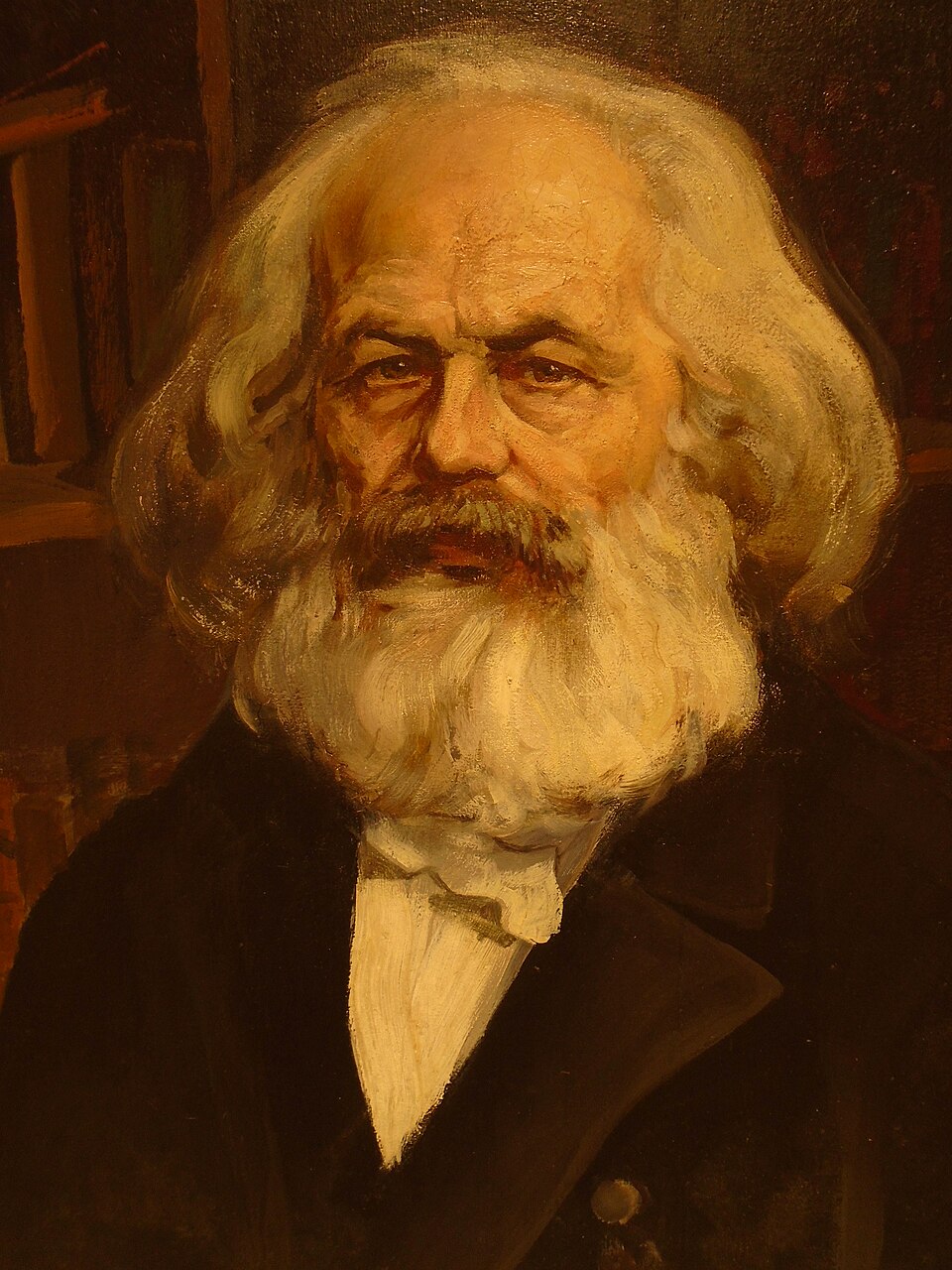
—Were you sad to live poor while studying poverty?
You've noticed the paradox, that's very clever. Yes, I studied the poverty of workers, and I lived poor myself. My clothes were worn, my frock coat threadbare. Without the money Engels sent, my family wouldn't have eaten. Sad? Sometimes, very. But it also helped me understand. I had a word for it: alienation. That's when a worker gives all his strength, all his life, and stays poor anyway, as if dispossessed of himself. I saw it in the factory workers... and I felt it a little in my own home. You understand something better, you know, when you've touched it with your finger.
—What is your big idea about history?
Here is my most important idea, listen carefully. Many scholars thought that great ideas drive history. I say the opposite: first look at how people earn their bread, who owns the factories, who works for whom. That decides the rest. I call it historical materialism. My master Hegel said that ideas command everything; I turned his thinking upside down, like turning an hourglass. And everywhere I saw the same thing: the rich and the poor clashing. This struggle between classes, for me, is the real engine of human history.
First look at how people earn their bread: that decides the rest.
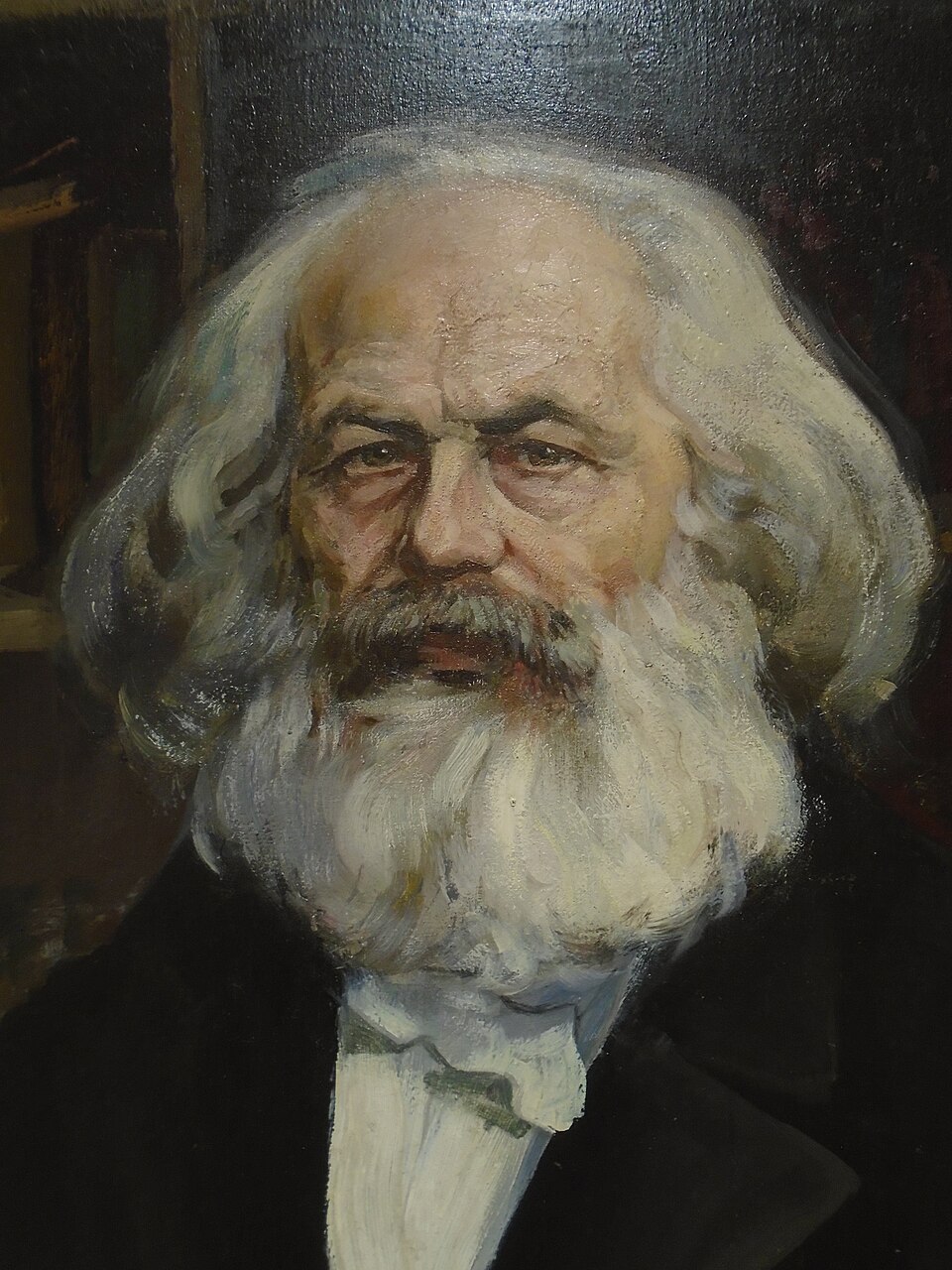
—Why did you want to change the world, not just understand it?
Because understanding is fine, but it's not enough! I wrote a short sentence one day, brief as an arrow: 'The philosophers have only interpreted the world in various ways; the point is to change it.' You see the difference? For centuries, thinkers explained the world, comfortably in their armchairs. I wanted us to change it for real, so that workers could live better. An idea that only serves to shine didn't interest me. An idea must go down into the street and get its hands dirty. Otherwise, what's the point of thinking?
—Did you see the Paris Commune? What was it?
I followed it from afar, from London, with passion. In the spring of 1871, the workers of Paris took power in their city for a few weeks. It was called the Commune. For the first time, ordinary people governed themselves, without a king or boss above them. I wrote a text about it, The Civil War in France. The end was terrible: the army crushed the Commune in blood. But for me, it was something immense: proof that workers could run their own lives. A failed attempt, perhaps. But the first attempt at a new world.
—What did you hope for the workers after you?
I had helped found, in 1864, a great association of workers from several countries: the International. My dream, my child, was that workers from all over the world would join hands across borders. It wasn't easy: we quarreled a lot inside, sometimes harshly. But I had a simple formula for the world I hoped for: 'From each according to his ability, to each according to his needs.' Each gives what he can, and receives what he needs. I won't see that world, I know. But perhaps one day, children like you will build it.
Let the workers of the world join hands across borders.
This imaginary interview was generated by artificial intelligence from sources documented in Karl Marx's profile. It dramatises what the figure might have said based on what we know about them, but does not constitute attested historical testimony. For primary sources and factual documentation, refer to the full profile.