Imaginary interview with Kate Gleason
by Charactorium · Kate Gleason (1865 — 1933) · Technology · Economics · 6 min read
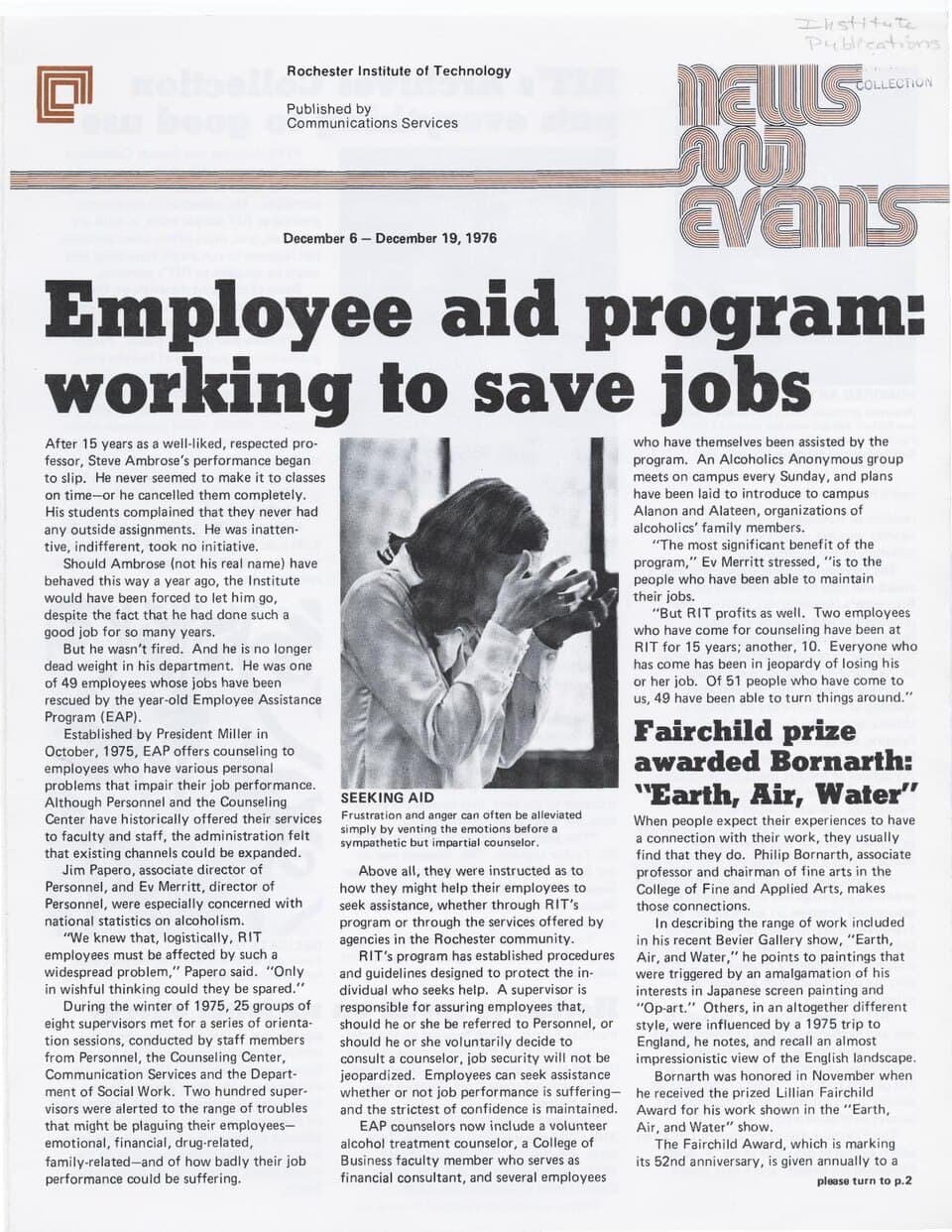
Rochester, a winter morning in the early 1920s. The smell of cutting oil still lingers in the office overlooking the Gleason Works workshops, where milling machines and lathes turn. Kate Gleason, in a dark suit and high collar, closes a ledger and agrees to tell the story of a life spent among metal, concrete, and columns of figures.
—Do you remember the day you entered Cornell University?
It was in 1884, I was nineteen, and I walked through the doors of Sibley College of Engineering as the first woman ever enrolled in that program. Around me, nothing but boys bent over their drawing boards, T-squares, and set squares. I thought I had my revenge on those who believed a girl had no business in mechanics. Then my father's workshop in Rochester hit a rough patch, and I closed my notebooks to go home and keep the books and sell our machines. I never got that diploma. For a long time it stuck in my pride like a splinter; then I understood that the best engineering school for me was the noise of the lathes and the grinding of the bevel gears we cut.
The best engineering school for me was the noise of the lathes and the grinding of the gears.
—How did a young woman without a diploma learn this trade of iron and grease?
By watching, by touching, by wearing my fingers down. As a little girl, I already hung around the family foundry, fascinated by the metal that was melted and poured into molds. My father William spared me nothing: the plans, the dimensions to calculate, the precision to the hundredth. I learned what a machine tool was by taking it apart, what a bevel gear was by tracing its slanted teeth that transmit motion from one shaft to another at a right angle. A diploma proves you listened; the workshop proves you understood. I could talk as an equal with a seasoned machinist, and no professor in Ithaca could have given me that. Metal, you see, makes no distinction between a man's hand and a woman's hand.
—They say that in Europe, many took you for the inventor of your flagship machine. What did you reply?
The truth, always. In the 1890s, I traveled Europe as a saleswoman to place our bevel gear planer, that precision machine that Gleason Works built. I knew it so intimately — every adjustment, every chip it tore from the metal — that German or English industrialists congratulated me on inventing it. I corrected them at once: the invention belonged to my father William and my brother Tom; I was only its voice and commercial arm. It would have been easy to drape myself in stolen glory; but an engineer who lies about technical authorship dishonors himself. I sold that planer all across the old continent, and it became famous throughout precision mechanics. That was enough for me.
An engineer who lies about technical authorship dishonors himself.
—What, in your opinion, distinguishes a good machine-tool salesman from a bad one?
The bad one recites a price list; the good one understands his client's workshop better than the client himself. When I became secretary-treasurer of Gleason Works, I kept the books in the ledger in the morning, and in the afternoon I prepared my tours across the United States and then Europe. I never arrived at an industrialist's to sell him a bevel gear planer: I arrived to show him how many more gears he would cut in a day, how much scrap he would save. You don't sell iron; you sell saved time and precision. Susan Anthony, whom I knew in Rochester, said I was the businesswoman she had dreamed of seeing emerge. That compliment I wore like a medal.
—How did you get the odd idea of pouring houses like manufacturing automobiles?
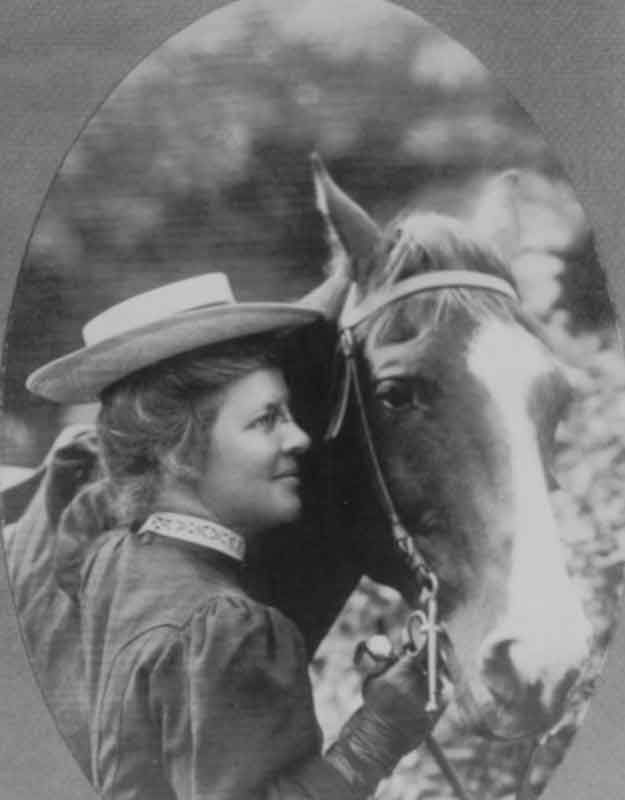
By watching Henry Ford. His assembly lines dazzled me: that Model T produced in series since 1908, identical and affordable, while the car remained a luxury. I told myself that housing, after all, was just an object to be produced — heavier, but subject to the same laws. So in East Rochester, I launched the Concrest development: six-room houses in cast concrete, poured into reusable forms, fireproof, and sold cheap. They called me a dreamer; I answered that a worker's family had as much right to a roof that doesn't burn as a banker. I also became the first woman in the American Concrete Institute. Concrete, that gray mix of cement, sand, and water, seemed more democratic to me than many speeches.
A worker's family has as much right to a roof that doesn't burn as a banker.
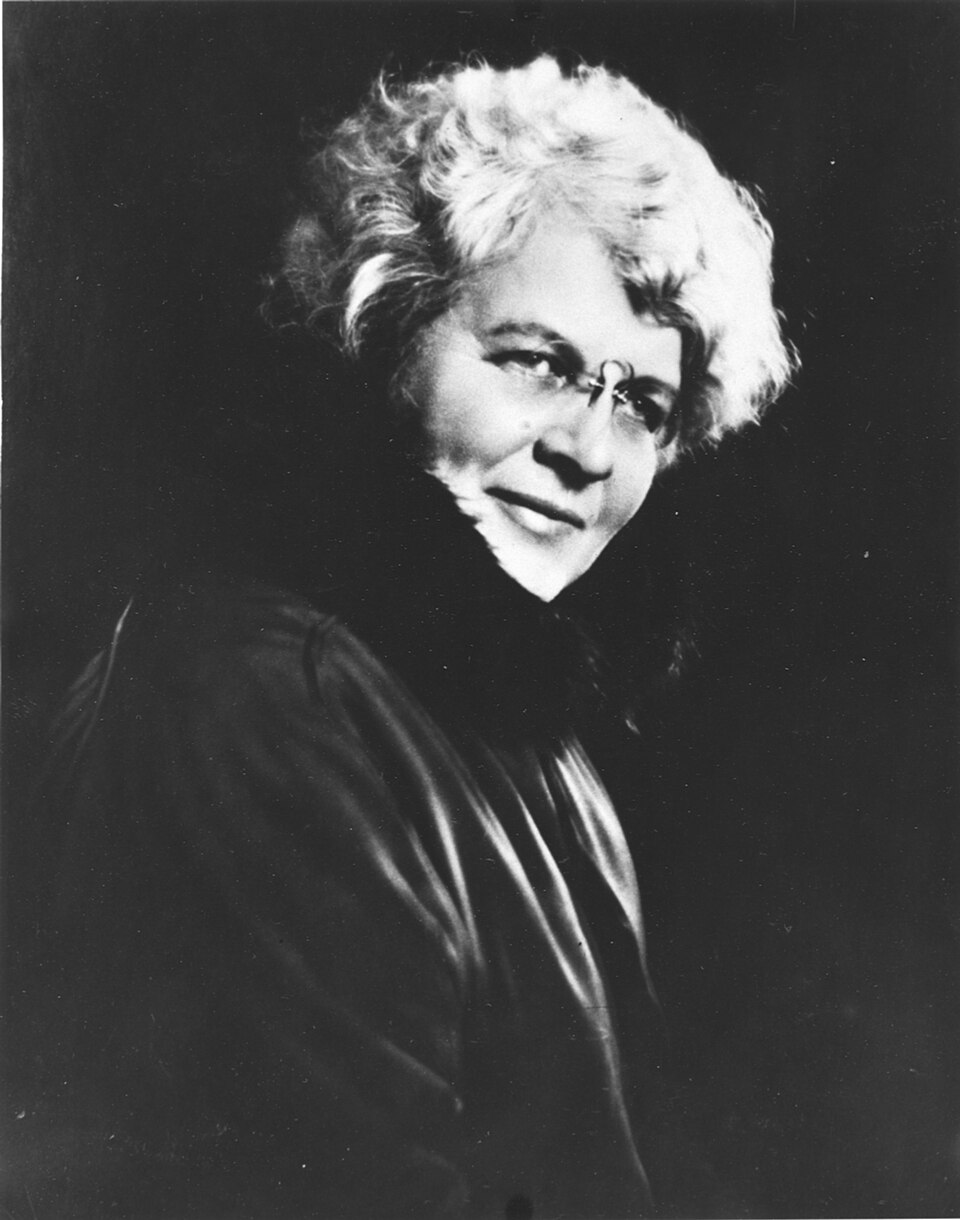
—Didn't the shift from machine tools to building confuse your loved ones?
It astonished them, yes. Going from bevel gears to concrete walls seemed a whim. But to me the logic was clear: in both cases, you mass-produce identical parts with controlled precision. A form is just a mold, exactly like those in my childhood foundry; the only difference is the scale. I wanted to show that mass production wasn't just for enriching factories, but could house ordinary people. Later, these methods took me all the way to France, to Septmonts in the Aisne, a village shattered by war that I helped rebuild in concrete. Rebuilding houses for French peasants with the recipes of an American factory: that pretty much sums up my life, this habit of making ideas circulate from one world to another.
—In 1917, how did you end up at the head of a bank?
Through circumstances more than ambition. The United States had just entered the war, and the president of the First National Bank of East Rochester went to the front, leaving the institution in bad shape. They asked me to take the helm; I accepted. So there I was, said to be the first woman to run a national American bank. I had spent my life in the columns of the Gleason Works ledger: reading a sick balance sheet and setting it right didn't scare me any more than adjusting a misaligned planer. I straightened the accounts, cleaned up the debts, and when the president returned from the war, I handed him a house in better health than I had received it. They thought me daring; I was just a bookkeeper to my fingertips.
Reading a sick balance sheet didn't scare me any more than adjusting a misaligned planer.
—Running a workshop, a bank, a construction site: where did you get that confidence to command everywhere?
From the habit of being the only woman in the room, no doubt. Very early, at the foundry in Rochester, I understood that no place would be given to me: I had to take it through competence. When you know exactly how much a part costs, how long a machining takes, what interest runs on a debt, no one can send you back to the parlor. Numbers know no prejudice. At the bank as at the Concrest development, I applied the same rule: master the detail before giving an order. I never commanded for the pleasure of being obeyed, but because I had done the math before anyone else. A director who doesn't understand the numbers of his house is just a figurehead sitting in a nice chair.
—What did your admission to the American Society of Mechanical Engineers in 1914 mean to you?
A door broken down. In 1914, the ASME, one of the most prestigious engineering societies in the country, admitted me as its first woman member. Imagine what that meant in an almost exclusively male machine-tool world: they recognized that a woman could sit among mechanical engineers, discuss steels and machining without being asked to serve tea. I didn't fight this battle for myself alone; I knew others would come through that breach after me. It was the same year Europe went up in flames in war — the men's world was tearing itself apart, while a woman quietly took out her engineer's membership card. I have always believed that a place earned through work is more solid than a place granted out of pity.
—You knew Susan B. Anthony and her fight for women's suffrage. What connection with your work of iron and concrete?
The same thread, stretched differently. In Rochester, I frequented circles of committed women, the circle of Susan Anthony, whose suffragism demanded that we be recognized as full citizens. She once told me I was the ideal businesswoman she had dreamed of half a century earlier. We fought the same battle by different means: she with ballots, I with columns of accounts and concrete forms. Proving that a woman can cut a gear, sell a machine in Europe, straighten out a bank — that was pleading for our rights without a podium or placard. I believe that in 1920, when the vote was finally granted to us, every planer I had sold had, in its own way, pushed the door a little.
She pleaded with ballots, I with columns of accounts and concrete forms.

This imaginary interview was generated by artificial intelligence from sources documented in Kate Gleason's profile. It dramatises what the figure might have said based on what we know about them, but does not constitute attested historical testimony. For primary sources and factual documentation, refer to the full profile.