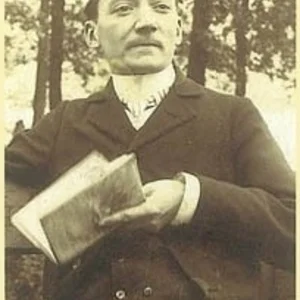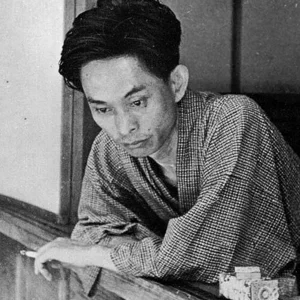

Yasunari Kawabata (1899-1972) was a Japanese writer, the first author from his country to receive the Nobel Prize in Literature, in 1968. His work, imbued with melancholy and traditional Japanese aesthetics, explores fleeting beauty, solitude, and the passage of time.
Yasunari Kawabata(1899 — 1972)
Yasunari Kawabata
Japon
6 min read
Frequently asked questions
Key Facts
- Born in Osaka in 1899, orphaned in early childhood, which deeply shaped his work
- Published “Snow Country” (Yukiguni), one of his masterpieces, beginning in 1935
- Received the Nobel Prize in Literature in 1968, the first Japanese person to be awarded this distinction
- Delivered the lecture “Japan, the Beautiful, and Myself” upon accepting the Nobel Prize
- Died in 1972 in Zushi, likely by suicide
Works & Achievements
The short story that made Kawabata's name: a lonely student follows a troupe of travelling performers and falls for a young dancer. A masterpiece of delicacy and restraint.
Kawabata's most famous novel, about the impossible love between a Tokyo aesthete and a provincial geisha. A work of icy beauty, long and repeatedly reworked.
A novel woven around the tea ceremony, where antique bowls carry the weight of passions and of the dead. A meditation on inheritance and desire.
Portrait of an old man confronting decline, family and death in post-war Japan. Regarded by many as the summit of his fiction.
A narrative inspired by a real game of go, pitting an aging master against a young champion. An allegory for the end of a traditional Japan.
A novel about twin sisters separated in the old capital, unfolding across the seasons and the traditional festivals. A tribute to the beauty of Kyoto.
A lecture delivered in Stockholm, in which Kawabata introduces the West to the Zen aesthetic and classical poetry of his country. A text that became a cultural manifesto.
Anecdotes
Orphaned very young, Kawabata lost his father at age two, his mother at three, then his grandmother and his sister. Raised by his blind and ailing grandfather, at fifteen he kept watch alone over the dying old man and drew from it a moving account, the “Diary of My Sixteenth Year.” This childhood solitude would feed his entire body of work, haunted by loss and melancholy.
In 1968, Kawabata became the first Japanese writer to receive the Nobel Prize in Literature. For his Stockholm lecture, titled “Japan, the Beautiful and Myself,” he chose to appear in a kimono and to present to the West the poems of Zen monks and his country's traditional aesthetics, rather than aligning himself with European literary fashions.
Kawabata was the mentor of the young writer Yukio Mishima, whose talent he championed from his earliest days. When Mishima committed suicide by seppuku in 1970 after an attempted coup, a devastated Kawabata went to the scene. Many saw in this grief a sign foreshadowing his own end.
To write “Snow Country,” Kawabata stayed for several winters at a hot-spring inn in Echigo-Yuzawa, in the snowy mountains of Niigata. He observed at length the life of the hot springs and the provincial geishas, and took nearly twelve years (1935-1947) to perfect this short novel, which he reworked endlessly.
On 16 April 1972, Kawabata died in his studio in Zushi, asphyxiated by gas, leaving no note. His death, at age 72, is generally presented as a suicide, but some of those close to him and some scholars have doubted whether it was deliberate, the mystery remaining unsolved.
Primary Sources
The train came out of the long tunnel into the snow country. The earth lay white under the night sky.
In the spring, cherry blossoms; in the summer, the cuckoo; in autumn, the moon; and in winter, the snow, clear and cold. Kawabata quotes this poem by the monk Dōgen to convey the soul of Japan.
A shower swept across the foot of the mountain, whitening the cryptomeria forest just as the road began to climb toward the pass.
Key Places
Kawabata's birthplace, where he was born in 1899 into a family soon decimated by illness. It was there that his childhood as an orphan began.
Kawabata studied Japanese literature here and graduated in 1924. With friends, he founded the magazine that launched the “New Sensationist” movement.
A snowy hot-spring resort in the mountains of Niigata where Kawabata stayed for several winters. The place directly inspired the setting of “Snow Country”.
A region of hot springs that the young Kawabata explored on foot. It is the setting of “The Dancing Girl of Izu”, the story of his encounter with a troupe of travelling performers.
A former shogunal capital south of Tokyo where Kawabata settled and lived for many years. Surrounded by temples and ancient art, he wrote several of his great novels there.
A coastal town where Kawabata kept a working studio. He died there on 16 April 1972, asphyxiated by gas.
Typical Objects
Traditional Japanese garment that Kawabata liked to wear, notably to receive his Nobel Prize in Stockholm. It symbolizes the writer's attachment to the aesthetics of his country.
📷 CC BY-SA 2.0 · Wikimedia Commons ↗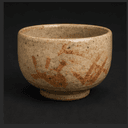
An old ceramic bowl used in the tea ceremony, at the heart of the novel “Thousand Cranes.” Kawabata, an art collector, made it an object laden with memory and fragile beauty.
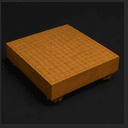
A wooden grid on which go is played, a strategy game thousands of years old. Kawabata devoted the novel “The Master of Go” to it, a meditation on the end of a traditional world.

The tools of the Japanese writer, from the ink brush to washi paper. Kawabata composed very short stories, chiseled like poems, which he called “palm-of-the-hand stories.”

A gold medal awarded in Stockholm in 1968, making Kawabata the first Japanese laureate in literature. It marked the worldwide recognition of Japanese culture.
📷 CC BY-SA 4.0 · Wikimedia Commons ↗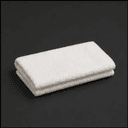
The small towel of Japanese hot springs, a recurring setting in “Snow Country” and “The Izu Dancer.” The onsen gave Kawabata the hushed atmosphere of his stories.
School Curriculum
Vocabulary & Tags
Key Vocabulary
Daily Life
Morning
A chronic insomniac, Kawabata often woke late after restless nights. His mornings were spent in the quiet of his Kamakura home, between reading the mail and contemplating his ancient art objects.
Afternoon
Afternoons were devoted to writing — slow and demanding — which he practiced in finely chiseled fragments. He also received young writers whom he advised, or sat as a juror for literary prizes.
Evening
In the evening, Kawabata loved to visit hot springs and traditional inns, observing the faces and conversations that fed his stories. A great collector, he spent hours examining ceramics and prints.
Food
He ate traditional Japanese cuisine: rice, fish, pickled vegetables and green tea, often in small quantities. His fragile health and insomnia drove him toward a frugal diet.
Clothing
Kawabata was fond of the kimono and Japanese dress, which he wore even on major official occasions, such as the Nobel Prize ceremony. In this way he embodied his attachment to tradition.
Housing
He lived in Kamakura, an ancient city of temples south of Tokyo, in a residence surrounded by art objects and antiques. He also kept a studio in Zushi, on the coast, where he would retreat to work.
Historical Timeline
Period Vocabulary
Liens externes & ressources
Références
Œuvres
La Danseuse d'Izu (Izu no Odoriko)
1926
Pays de neige (Yukiguni)
1935-1947
Nuée d'oiseaux blancs (Senbazuru)
1949-1952
Le Grondement de la montagne (Yama no Oto)
1949-1954
Le Maître ou le tournoi de go (Meijin)
1951-1954
Kyôto (Koto)
1962
Discours Nobel « Le Japon, par sa beauté, et moi-même »
1968