Kids interview Kōmyō
by Charactorium · Kōmyō (1322 — 1380) · Politics · Spirituality · 5 min read
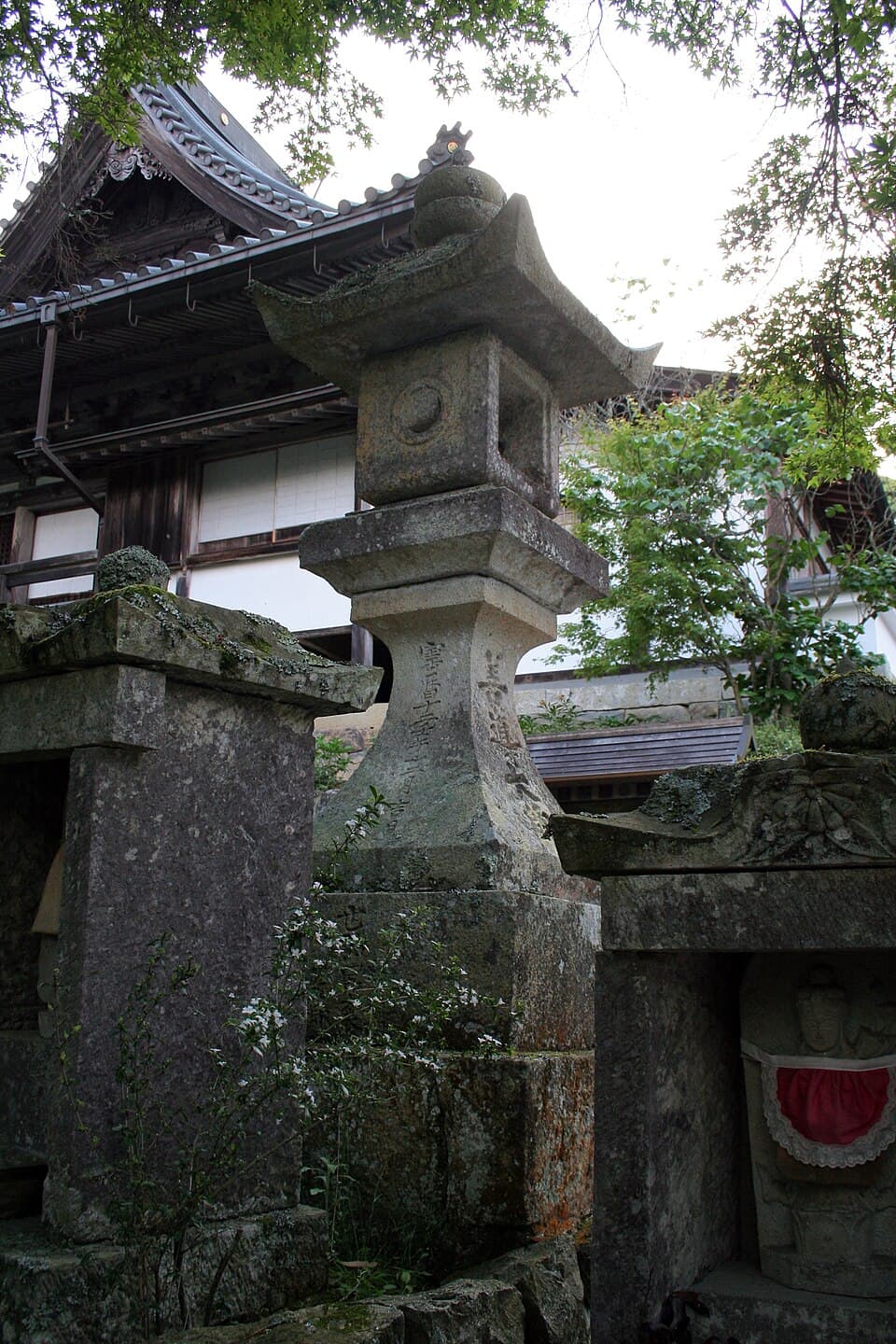
Two twelve-year-old visitors, here with their class, sit on the tatami mats of an old Kyoto temple. Before them, an old man in a dark monk's robe smiles gently. This is Kōmyō, who was once emperor. He invites them to ask any questions they like.
—How old were you when you became emperor?
I was fourteen, my child, barely older than you. It was in 1336. A great warlord, Ashikaga Takauji, placed me on the throne at the Imperial Palace in Kyoto. Picture a vast wooden pavilion, elegant roofs, paper sliding doors called shōji. They dressed me in heavy layered silk robes, the sokutai, the ceremonial attire. I was impressed, and a little lost. A child seated on a throne does not yet understand the weight placed on his shoulders. That day I smiled, but I trembled a little under all that silk.
A child seated on a throne does not yet understand the weight placed on his shoulders.
—Is it true you were missing sacred objects to be a real emperor?
You remember well, and it pained me all my life. In our land, a true emperor must possess three treasures: a mirror, a sword, and a jewel. They are called the Sanshu no Jingi. They proclaim: 'This is the rightful sovereign.' But my rival, Emperor Go-Daigo, had fled into the mountains of Yoshino taking all three with him. So I was crowned empty-handed, without those proofs. Imagine being named captain of a team, but the real ball is still with the other team. All my life, a little voice whispered: are you truly the right emperor?
I was crowned empty-handed, without the three treasures that make a true emperor.
—So did you command the whole country, like a king?
Ah no, my child, not at all! Here is my somewhat sad secret. I bore the title of emperor, but I governed nothing. Real power belonged to the Ashikaga warriors, based in the Muromachi district of Kyoto. Their government was called the bakufu, the 'tent government.' Their leader, the shōgun, decided everything. I received their decisions and made them official with my edicts. My role was to give a sacred face to their force. Imagine a beautiful sign painted above a shop: nice to look at, but the letters don't sell the rice.
I bore the title of emperor, but my role was to give a sacred face to the warriors' force.
—And who really ran the court, then?
It was my elder brother, the former emperor Kōgon. Among us, there was a strange custom: an emperor could abdicate, retire, and yet continue to rule from the shadows. This was called insei, 'cloistered government.' My brother held the reins of the court, while I sat on the throne, the takamikura, that great ceremonial dais. In the afternoons, I received the court nobles, the kuge, in a long procession of bows and ceremonies. Everything was very solemn, very beautiful, very slow. But deep down, my child, I was a bit like a beautiful statue on display: present, respected, but silent.
I was a bit like a beautiful statue on display: present, respected, but silent.
—Did it make you sad not to decide anything?
Sometimes, yes. But you know, court life had its pleasures. In the evening, I composed poems called waka, practiced calligraphy with my brush and ink. I listened to the music of the koto, a long stringed instrument placed on the floor. Our cuisine was simple: rice, seasonal vegetables, seaweed, clear soups, little meat, for the Buddha taught us kindness to all beings. So no, I did not decide wars. But in the quiet of my chambers, I cultivated beauty. That is another way to leave a mark on the world.
—Is it true that enemies took you prisoner?
Alas, yes, and it was the worst ordeal of my life. Around 1350, the Ashikaga warriors quarreled among themselves—two brothers fighting, what a misfortune. It was called the Kannō Disturbance. My rival from the South took advantage of the chaos to enter Kyoto. In 1352, his soldiers seized me, my brother Kōgon, and Emperor Sukō. They dragged us far into the southern mountains, toward Kawachi. Imagine being torn from your home and taken on foot, under guard, to an unknown land. I was very afraid, and very far from everything I loved.
When two brothers fight, the whole country bleeds.
—How long were you imprisoned?
Five long years, my child. From 1352 to 1357. Five years away from the gardens of Kyoto, away from my poems and silk robes. I lived in uncertainty, not knowing if I would ever see my city again. In such times, you learn what life truly rests on: not the throne, not titles, but patience and prayer. When I was finally released and allowed to return to Kyoto, I was a different man. My body was tired, but something inside had calmed. Captivity had taken my freedom, but it gave me a taste for silence.
Captivity had taken my freedom, but it gave me a taste for silence.
—How did you endure all that time?
I held in my hand a simple little object: a prayer bead, the juzu, a string with wooden beads. With each bead, I recited a prayer. It calmed my anxious heart. I also thought of my brother Kōgon, prisoner like me; we gave each other courage. You know, when you can't change anything outside, you must work inside. The beads slipped through my fingers, one by one, and the days passed. It was there, in that trial, that I first felt the religious path calling me, stronger than the throne.
When you can't change anything outside, you must work inside.
—Why did you become a monk at the end of your life?
Because the world of the powerful had tired me, my child. I had already abdicated in 1348, leaving the throne to my nephew Sukō. Then, around 1370, I decided to go further. Among us, this is called shukke: 'leaving one's home' to enter religion. I exchanged my sumptuous silk robes for the dark monk's robe, the kesa. Imagine: a man who had worn the finest garments in the land chose a simple woolen habit. After so many wars and captivity, I no longer sought glory. I sought peace. And I finally found it in prayer.
I had worn the finest garments in the land, and I chose a simple monk's habit.
—What was it like leaving the palace for a temple?
It was a big change, but a relief. At the palace, each morning began with rites, bows, heavy robes that others helped me put on. Everything was regulated, watched, ceremonial. At the temple, my days became simple and calm. Around Kyoto stood the great Mount Hiei, heart of the Buddhism of our time. I lived to the rhythm of prayers, no longer to the rhythm of edicts. I was no longer 'the emperor without the treasures,' nor the prisoner of the mountains. I was just an old man seeking to make peace with his life. And that, you see, no shogun could have given me. I had found it on my own.
At the temple, I lived to the rhythm of prayers, no longer to the rhythm of edicts.

This imaginary interview was generated by artificial intelligence from sources documented in Kōmyō's profile. It dramatises what the figure might have said based on what we know about them, but does not constitute attested historical testimony. For primary sources and factual documentation, refer to the full profile.