Imaginary interview with Kōmyō
by Charactorium · Kōmyō (1322 — 1380) · Politics · Spirituality · 6 min read
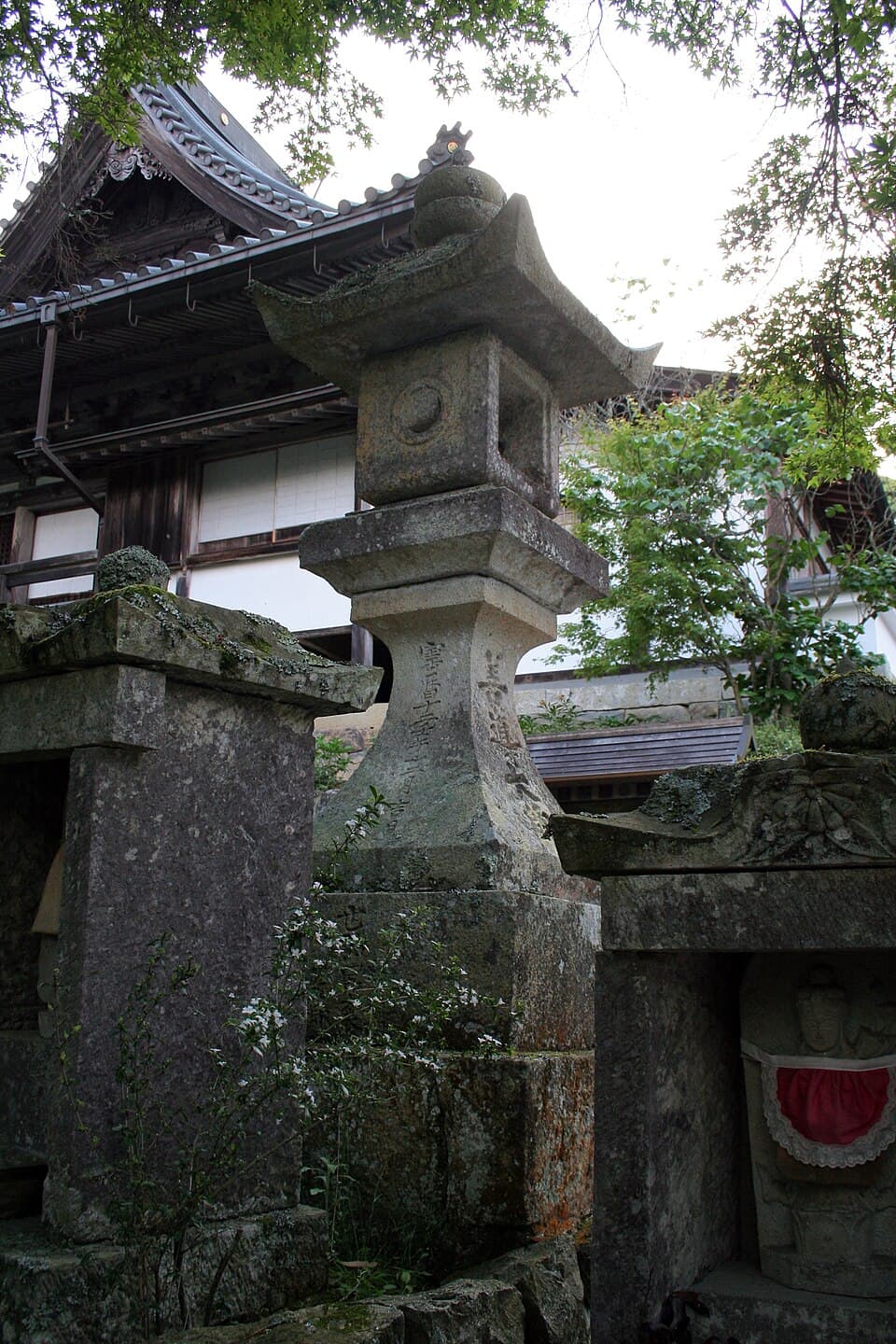
We are in Kyoto, at dusk on a day in 1375. In a discreet hermitage away from the Imperial Palace, an old monk with a shaven head receives us; under the dark robe, one senses the former Emperor Kōmyō, whose throne is now merely a simple cushion and whose scepter is a prayer bead rosary.
—How do you remember that day in 1336 when you were made to ascend the throne?
They dressed me in the sokutai, those layers of silk so heavy that a child struggles to bear them, and guided me to the Takamikura, the ceremonial canopy of the Imperial Palace in Kyoto. Everything was there: the prostrate courtiers, the rites, the incense smoke. But the essentials were missing. The mirror, the sword, and the jewel — the Sanshu no Jingi — were not there. Go-Daigo had taken them in his flight to Yoshino. So I was emperor of a perfect ceremony but of a truncated legitimacy. They crowned me, and yet I knew that in the eyes of many, I held in my hands only the void left by three absent objects.
I was emperor of a perfect ceremony but of a truncated legitimacy.
—What did you say to those who contested your reign for that reason?
What could I say? They were right, and I could not ignore it. The three treasures have passed from the goddess Amaterasu from imperial hand to imperial hand; without them, a tennō is but a shadow cast upon the throne. So I relied on what remained: the Jimyōin lineage, from which I descend through my father Go-Fushimi, and the strength of the armies of Ashikaga Takauji that had raised me there. But deep down, every edict I sealed reminded me of Yoshino and those regalia I would never see. You do not heal such a wound; you learn to govern with it open.
Without the three treasures, an emperor is but a shadow cast upon the throne.
—Why do you say you never truly governed?
Because it is the simple truth. Real power lay in the Muromachi district, where the Ashikaga bakufu decided war and peace. As for the conduct of the court, it fell to my elder brother Kōgon, the retired emperor, according to the old system of insei, the government of the cloistered. As for me, I sat. I received the edicts transmitted by the shogun and affixed imperial legitimacy to them, those decrees called rinji. They needed my name far more than my will. I was the living seal with which the Ashikaga stamped their authority, and the seal, as you know, does not choose what it marks.
I was the living seal with which the Ashikaga stamped their authority.
—Was it not bitter to wear the crown while another wielded power?
Bitterness would be the feeling of a man who thought he would reign. I quickly understood my place. My days followed an unchanging order: morning purification rites, afternoon ceremonies and receiving Muromachi affairs, evening waka poems and the koto. A role entirely of protocol, a slow dance on the edge of the void. The warrior houses, the buke, were rising everywhere, while we court nobles, the kuge, maintained the forms of a world slipping away from us. I learned to find in this etiquette not a prison but a discipline. To reign over gestures, if not over men, was already an art.
—How would you explain to someone ignorant of it that Japan suddenly had two emperors?
Imagine a single sun, and two men claiming to be its reflection. That is the Nanboku-chō, the era of the Northern and Southern Courts. When Takauji placed me in Kyoto in 1336, Go-Daigo fled into the mountains of Yoshino and proclaimed his own court there. On one side my lineage, the Jimyōin-tō, supported by the Ashikaga; on the other the Daikakuji-tō, that of the South. Two tribunals, two calendars, two truths. Chronicles like the Taiheiki tell this rift better than I can, for they see from above what I lived from within: a kingdom cut in two, each half swearing the other did not exist.
Imagine a single sun, and two men claiming to be its reflection.
—What did you really think of the men of the Southern Court, your rivals?
I did not hate them as some believed. Go-Daigo was a sovereign of formidable will; his Kenmu Restoration, in 1333, had momentarily overturned the order of things before collapsing. We were two branches of the same imperial tree, the Daikakuji-tō and the Jimyōin-tō, doomed to tear each other apart by a broken alternation. Chroniclers favorable to the Ashikaga, like the author of the Baishōron, painted me as a legitimate emperor restored against the usurper of the South; those of Yoshino said the opposite. The truth of a dynastic war, you see, always depends on the hand holding the brush. I merely held my rank in a quarrel older than myself.
The truth of a dynastic war always depends on the hand holding the brush.
—Do you remember the moment when the Southern Court took you prisoner?
How could I forget it. It was during the Kannō disturbances, in 1351, when the Ashikaga brothers were tearing each other apart — Takauji against Tadayoshi. Taking advantage of this fratricidal chaos, the Southern forces entered Kyoto. They seized us without ceremony — me, my brother Kōgon, my nephew Sukō — and forcibly took us into the Southern mountains, near the province of Kawachi. Gone were the Palace with its paper partitions and gardens; those were years of waiting, silence, and uncertainty, not knowing whether they would keep us alive or forget us there until the end. Captivity teaches you one thing: an emperor stripped of his court is just a man among the rocks.
An emperor stripped of his court is just a man among the rocks.
—What remains of a man after so many years of detention?
Very little of what he thought he was. I was released around 1357 and brought back to Kyoto, but the man who returned was no longer the one they had taken. I had seen the legitimacy of my lineage hang by a thread, depend on a ransom, a negotiation between warriors. I had understood that the throne they had given me could be snatched away in one night. In the mountains, deprived of the koto and evening poems, I had turned to Buddhist texts, the only companions that did not betray me. It was there, I believe, that what would lead me out of the world germinated. Prison had taken an empire from me; it had given me back to myself.
Prison had taken an empire from me; it had given me back to myself.
—What finally made you decide to become a monk?
Nothing like a sudden flash, everything like a slow erosion. After my abdication in 1348 in favor of Sukō, I had become Daijō Tennō, retired emperor, a title more than a function. Captivity had finished detaching me from courtly things. So, in my old age, I performed the shukke: I “left my home” to enter religion. I laid down the silk sokutai for the dark robe and the kesa of the monk, exchanged the scepter for the juzu, that rosary whose beads one tells with each invocation. Japan knew well this path of emperors renouncing the world. I merely followed it, like coming home.
I laid down the silk sokutai for the dark robe and the kesa of the monk.
—Are your monk's days similar to those of the emperor you once were?
They are the exact reversal, and yet I find in them a peace that the throne never offered me. Once, I was awakened for Shintō rites and dressed in ten layers of silk; today, a single coarse robe suffices, and no one prostrates. The evening when I composed waka has become the evening when I recite sutras, the beads of the juzu slipping between my fingers instead of the koto strings. Even at court we ate frugally — rice, vegetables, fish, seaweed — out of respect for the Buddha; here the table is even barer. I have traded legitimacy for silence. Believe me, at my age, it is the best of exchanges.
I have traded legitimacy for silence — the best of exchanges.
—What would you say about how you will be remembered?
I harbor few illusions. If I am read about in a century, they will likely say: here is the emperor without regalia, the one the Ashikaga placed on the throne like a seal. Perhaps they will be right. My lineage, the Jimyōin-tō, will have provided the framework for this Muromachi shogunate, and it is already something to have held the form while everything else wavered. But I, the man, prefer to be forgotten under the robe rather than on the Takamikura. Let only the old monk of Kyoto remain of me, telling his beads far from the din of the Northern and Southern Courts. An emperor is written in the chronicles; a man at peace is written nowhere, and that is very well.
I prefer to be forgotten under the robe rather than on the throne.

This imaginary interview was generated by artificial intelligence from sources documented in Kōmyō's profile. It dramatises what the figure might have said based on what we know about them, but does not constitute attested historical testimony. For primary sources and factual documentation, refer to the full profile.