Imaginary dialogue between Baruch Spinoza and Leibniz
by Charactorium · Leibniz (1646 — 1716) · Philosophy · Sciences · 6 min read
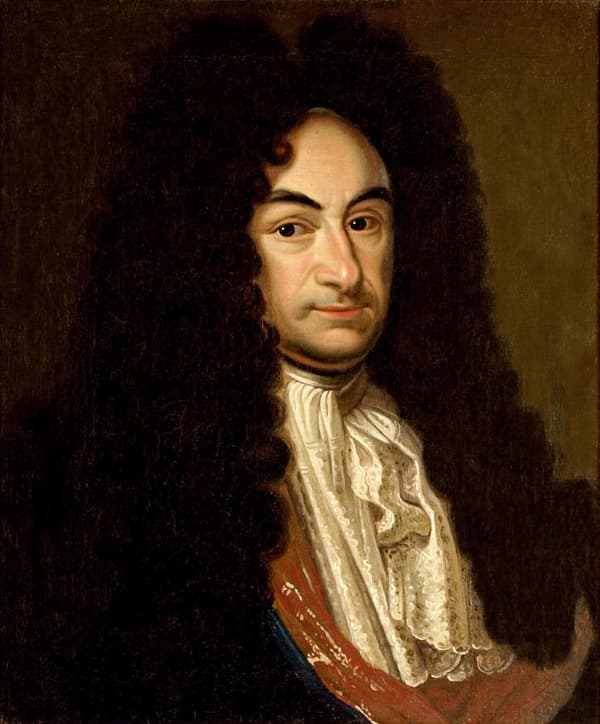
It is in the quiet house on the Paviljoensgracht, in The Hague, in this month of November 1676, that Baruch Spinoza receives the young diplomat from Hanover. A gray light falls on the table where the manuscript of the Ethics lies, which the sick host, already coughing, has consented to let his visitor read. The two men know each other through their letters and through that cautious curiosity that mixes admiration with mistrust: one seeks a single, necessary God, the other an infinity of living substances. Spinoza, perhaps sensing that time is running short, wants to understand the fertile and disorderly mind facing him before he leaves for Germany.
—Since your arrival at my home, you have spoken constantly of Paris. What did you find there that the English geometers already dispute with you?
In Paris, Master Spinoza, I found a method I had been seeking since childhood: a calculus of infinitely small quantities. Last year, in 1675, I fixed a notation — a dx, a dy — that makes visible and manageable what eluded intuition. But now, through Mr. Oldenburg, letters from a certain Newton reach me, who claims to have followed the same path on his side. I do not deny it; two travelers may discover the same river. But I fear that his friends want to make me a copyist rather than an inventor. What matters to me is not the glory of the first step, but that my notation speaks for itself and can be taught to any mind.
Two travelers may discover the same river, but my notation speaks for itself.
—I have been told that you presented to the scholars of Paris a machine that calculates on its own. Why entrust calculation to gears?
Because it is unworthy, you see, that an excellent man waste hours like a slave multiplying and dividing. I had a stepped-wheel machine built that can perform the four operations, and I showed it to the Academy. My aim is not a toy: it is to unburden the mind of mechanical drudgery so that it can devote itself entirely to invention. Think of it, you who grind lenses with such patience: every task that the machine takes over is time given back to pure thought. I dream that tomorrow the scholar will calculate as today he breathes, without thinking, attention free for only the truths that are worth it.
It is unworthy that an excellent man waste hours like a slave multiplying.
—You claim that a well-made language would put an end to our quarrels. Do you really believe that one can calculate truth as one calculates a number?
I believe it, and it is my oldest dream. Imagine a script of ideas, a characteristica universalis, where each thought would have its exact sign as each magnitude has its digit. Then, when two men disagree — you and I, for example, on the nature of God — we would not shout at each other: we would take up the pen and say, let us calculate. The dispute would become an addition error, which a third party could correct. You smile at my confidence, I see. But consider what your demonstrations in the manner of geometers already attempt in your Ethics: you string truths together like Euclid his theorems. I only want to push this ambition to the end, and give all thought the rigor of a figure.
We would not shout at each other: we would take up the pen and say, let us calculate.
—You have read the manuscript I entrusted to you. For me, there is only one substance. Why would your universe contain an infinity of them?
That is where our paths diverge, Baruch, and I tell you plainly since you have opened your pages to me. Your unique God swallows everything: things are only his folds, and I myself would be but a passing mode of the one being. This my heart refuses as much as my reason. I conceive rather an infinity of simple, living, indivisible substances, each of which carries within itself, like a mirror, the entire universe seen from its point. They receive nothing from outside, have no open windows; everything comes to them from their own depths. Thus each soul retains its full reality instead of dissolving into the great Whole. Your system is admirably coherent; it terrifies me because it leaves no room for individuals.
Your system is admirably coherent; it terrifies me because it leaves no room for individuals.
—If your substances have no windows, tell me: how does my soul move my arm? How do body and mind agree?
That is the objection I expected from you, and it is just. If nothing enters or leaves substances, the soul cannot push the body as a hand pushes a door. I answer with the image of two clocks. Picture two pendulums so perfectly matched from the beginning that they chime together forever, without any thread connecting them. Such are soul and body: God regulated them at creation so that they harmonize of themselves, each following its own laws. When I want to raise my arm, my soul wills it according to the laws of the mind, and my body raises it according to the laws of matter, and the two coincide by this harmony pre-arranged. No action of one upon the other: a concert, not a push.
Soul and body are two clocks matched from the beginning: a concert, not a push.
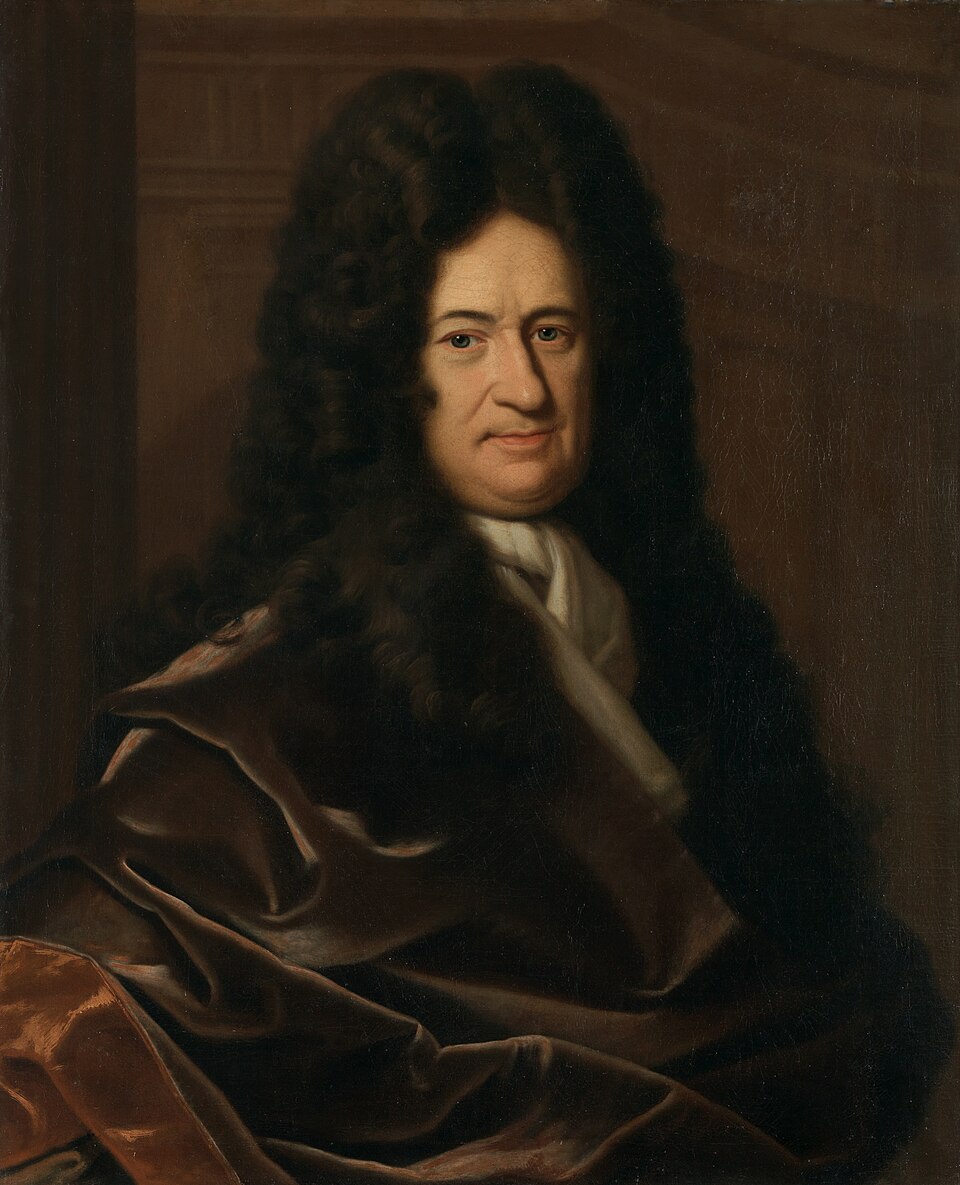
—Your God chooses, you say. Mine chooses nothing; he acts by the sole necessity of his nature. Why do you cling so to choice?
Because without choice, Baruch, there is neither goodness nor wisdom, only a blind mechanism unfolding. Your necessary God could do no other; mine contemplates an infinity of possible worlds and, because he is supremely good, elects the one containing the most perfection. That is why I maintain that this world is the best of all possible worlds. Not that it is without evil — you would soon point to your own sick body to confound me — but because God chose the one where good outweighs evil as much as possible. Evil is not a denial of his goodness: it is the necessary shadow without which the painting would lose its relief and light.
This world is not without evil; it is the one where good outweighs evil as much as possible.
—Is it not pride to claim to justify God before the tribunal of men? By what right would you plead his cause?
You hit the mark, and I admit it: it takes audacity. But see what presses us. The libertines use the evil in the world — plague, a dying child, the tortured innocent — to conclude either that God does not exist or that he is cruel. I want to oppose them with a systematic defense of divine justice, and I dream of a work that would bear the very name: a justification of God. Everything rests for me on a principle I hold unshakable: nothing ever happens without a sufficient reason. If evil is there, it is because it had to be for a greater good that our short sight does not embrace. Pleading God's cause is not the pride of judging him: it is refusing to slander him through ignorance.
Pleading God's cause is not judging him: it is refusing to slander him through ignorance.
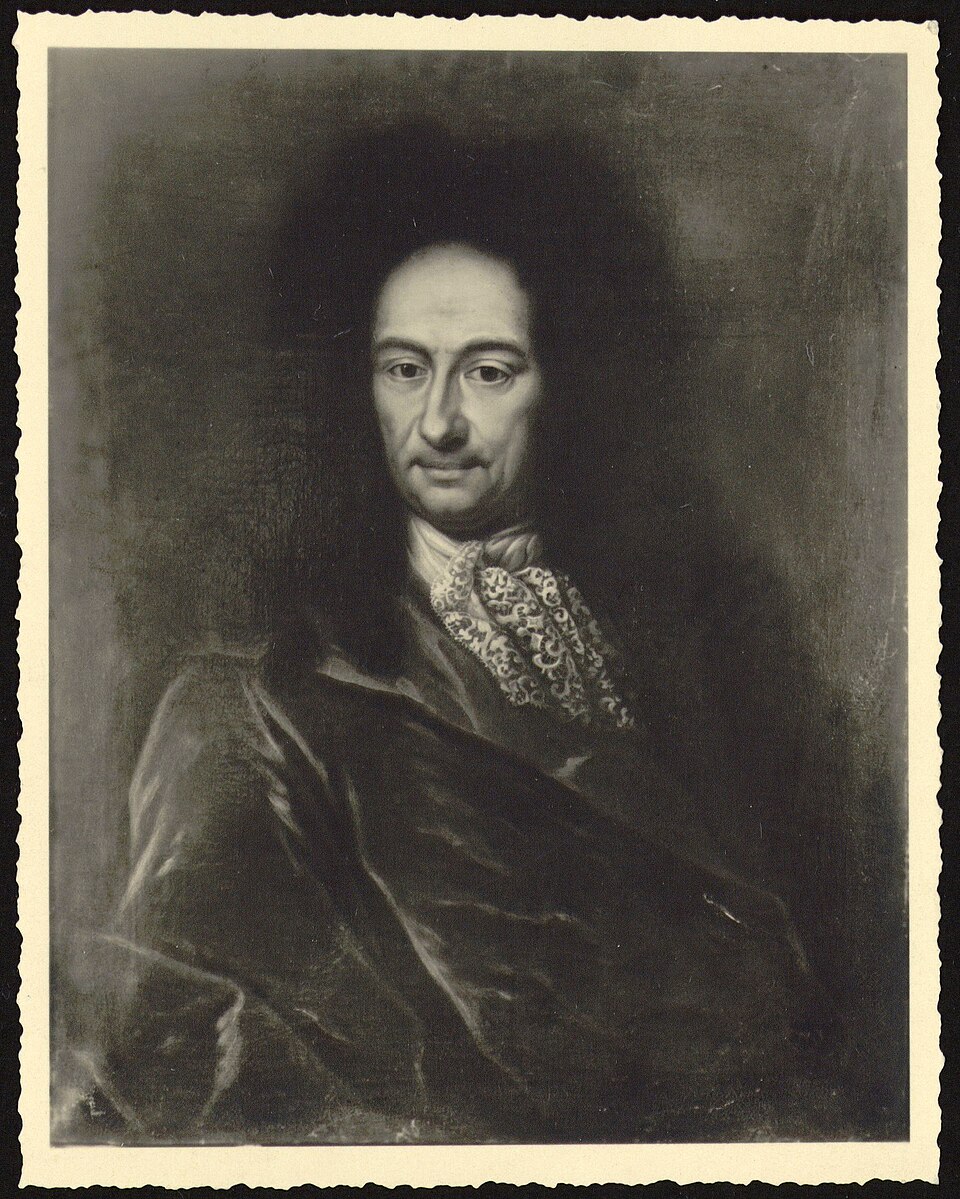
—I see you constantly scribbling sheets that you stuff into your pockets. So many subjects at once: are you not afraid of scattering yourself?
You have observed me well. Law, theology, the mines of the Harz, the origin of languages, geometry — everything demands my attention at once, and I move from one object to another like a bee from flower to flower. I write everywhere, on loose sheets that I pile around me, and they accumulate faster than I can order them. Is it a flaw? Perhaps. But I hold that all sciences correspond and form a single chain, and he who cultivates only one understands it poorly. I sleep little, often in my armchair, and I get up to seize an idea before it flees. My fear is not of embracing too much: it is of dying before I have put order into this harvest.
All sciences correspond and form a single chain; he who cultivates only one understands it poorly.
—You serve the princes of Hanover. But what good are so many vigils, if no one reads these papers you pile up without publishing them?
This thought haunts me more than you think. I give my days to the dukes, to their libraries, to their genealogy, and only my nights truly belong to me. I publish little — almost nothing — because I always want to perfect before delivering, and the moment never comes. I know well that a scholar who serves the great may end up forgotten by them the day he is no longer useful; courts have no memory. It may be, then, that I will die surrounded by my bundles, without anyone knowing what they contain. If that happens, I console myself by thinking that truth does not need to be signed. My sheets will sleep in Hanover; one day, perhaps, a patient mind will open them and find alive what my century thought lost.
I may die surrounded by my bundles; but truth does not need to be signed.
—The day is fading and my cough returns. Before you take the road, tell me: what will you remember from these few days in The Hague?
I will remember, Baruch, that one can disagree on everything essential and part as friends of reason. We will never agree on God: for you a single necessary substance, for me an infinite crowd of free monads under a God who chooses. But I take from you a lesson I would not say in public, where your name inspires fear: that of a man who sacrificed everything to rigor, expecting nothing from the powerful. Allow me to say frankly, since you have opened your home and your pages to me: I wished to convince you, and I leave without having succeeded. That is perhaps the finest compliment one mind can pay another. Take care of yourself, I beg you; the world needs opponents of your caliber.
One can disagree on everything essential and part as friends of reason.
Read further
This imaginary interview was generated by artificial intelligence from sources documented in Leibniz's profile. It dramatises what the figure might have said based on what we know about them, but does not constitute attested historical testimony. For primary sources and factual documentation, refer to the full profile.