Kids interview Leonhard Euler
by Charactorium · Leonhard Euler (1707 — 1783) · Sciences · 4 min read
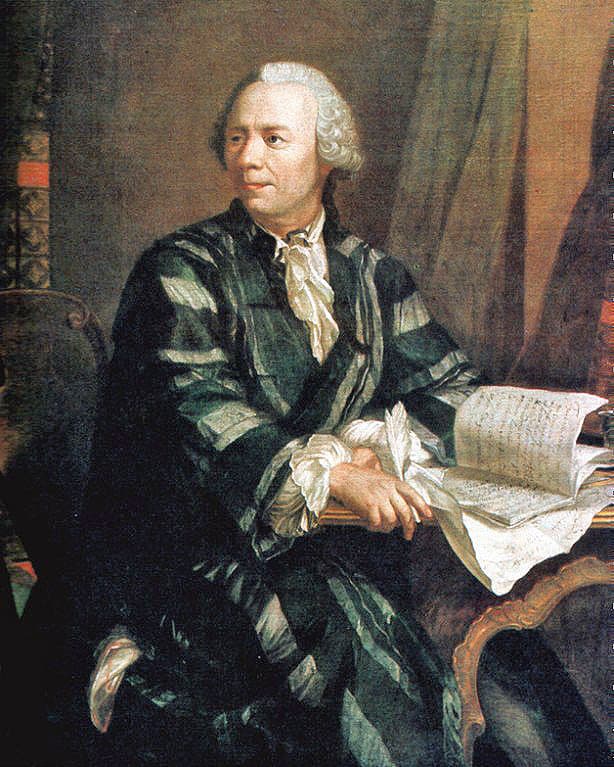
Two twelve-year-old students visit an old academy of sciences. In a silent room, an elderly man with tired eyes listens to them with a broad smile. It is Leonhard Euler, and he has agreed to answer all their questions.
—Is it true you went blind? How did you manage to work?
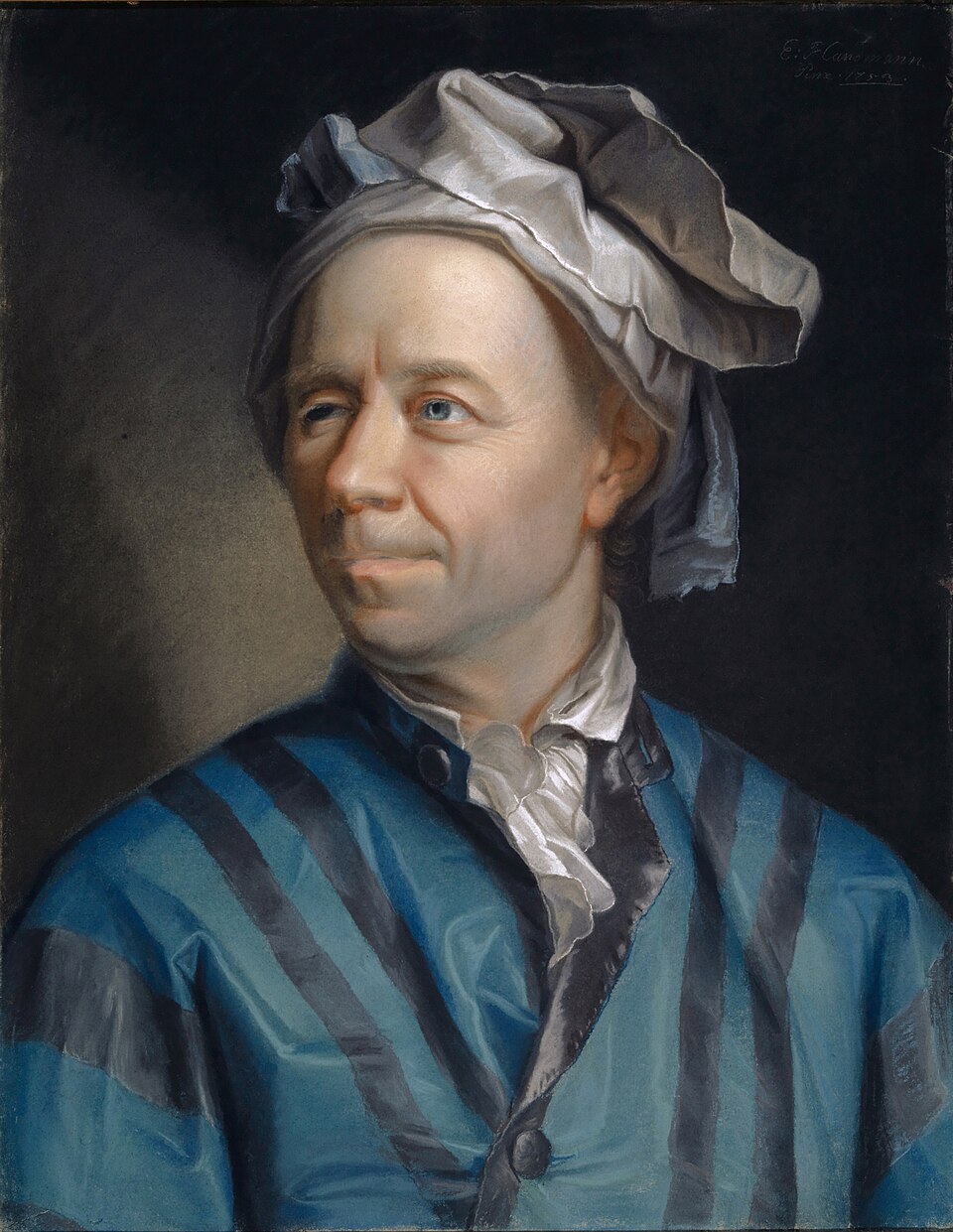
Yes, my child, it's true. I lost my right eye in 1738, and the other faded around 1766. Imagine closing your eyes very tightly: everything goes black, forever. But do you know something? My mind could still see. I did the calculations in my head, and I dictated them to my sons and assistants. They wrote down with quills what I whispered to them. That's how I produced nearly half of my works. The night had become my office.
My eyes went dark, but my mind could still see.
—Didn't it make you too sad to see nothing anymore?
You know, I was sad, of course. But let me tell you a secret: to do mathematics, you don't need your eyes. You need calm. And suddenly, I had all the calm in the world! In the morning, they would read my notes to me, I would think, then dictate. Nothing disturbed me anymore. Imagine a room where you hear only your own thoughts. I even worked faster than before. My secretaries struggled to keep up with my invisible pen.
To think about numbers, silence is better than light.
—What's this story about bridges you can cross only once?
Ah, the famous bridges! In a city called Königsberg, there were seven bridges over a river. People played a game: can you cross each bridge exactly once, without going back over the same one? No one could do it. So in 1736, I took a paper. Instead of drawing the city, I drew points and lines. And I proved it was impossible! It wasn't ordinary geometry, you see. It was a brand-new science, now called graph theory.
An impossible walk gave birth to a new science.
—How did you know it was impossible, without even trying?
Good question, my child! I didn't try all the paths—there were too many. I thought differently. Imagine each piece of land as a house, and each bridge as a door. To enter and leave a house, you need two doors, right? One to enter, one to exit. In Königsberg, almost every house had an odd number of doors. It was like being stuck inside. The calculation proved it without my having to walk. Numbers saw what my feet could not do.
Numbers see what feet cannot do.
—How old were you when you left to live so far away, in Russia?
I was very young, my child, barely twenty. In 1727, I left my native Basel, in Switzerland, to join the Academy of St. Petersburg, in Russia. Imagine the journey: weeks in a carriage and boat, over icy roads, to an unknown country where they spoke a different language. My heart was heavy leaving my mountains. But there, scholars, books, and the freedom to seek awaited me. A mathematician, you see, has no real country. His homeland is wherever he is allowed to calculate in peace.
A scholar's homeland is where he is allowed to calculate in peace.
—Were you really friends with a king? What was that like?
Yes! In 1741, I went to Berlin, to the king of Prussia, Frederick II. I stayed there for twenty-five years. The king liked to have scholars at his table, near his palace in Potsdam. But I'll be honest with you: he preferred brilliant philosophers who made pretty speeches. I was simple, I talked about calculations. He found me a bit boring! So in 1766, I returned to Russia, where I was more respected. You see, even a king doesn't always recognize his best friends.
Even a king doesn't always recognize his best friends.
—Is it true you had thirteen children? The house must have been noisy!
Thirteen, yes! With my wife Katerina. Imagine our house: laughter, shouts, little feet running everywhere. And in the midst of all that noise, me, calculating. People think a scholar needs great silence to work. Not me! Often, my best ideas came to me with a child on my lap, or while walking in the academy gardens. Family life didn't disturb my mathematics. On the contrary, it warmed my heart. A happy mind thinks better than a sad one.
My best ideas came with a child on my lap.
—What did you eat in the morning before starting work?
Oh, nothing extraordinary, my child! I got up early, like everyone in my time. In the early morning, they served me bread, some cheese, and a warm herbal tea. Imagine a street outside with no engine noise, only horse hooves on cobblestones and the calls of merchants. After this light meal, I would immediately start working: I dictated my ideas even before the household fully awoke. The morning was my favorite time, fresh and quiet.
—Why did you say that everything in nature has a reason?
Because I believed it with all my heart! In a book from 1744, the Methodus inveniendi, I wrote that nature is most perfect and that nothing happens without reason. Here's what I meant. Imagine a marble rolling to the bottom of a bowl: it always stops at the lowest point. Never elsewhere. Nature always chooses the most economical, simplest path. Light, water, falling bodies: all follow this hidden rule. And mathematics, you see, is the language that allows us to read this rule.
Nature always chooses the simplest path.
—Did you invent symbols that we still use today?
Yes, and that makes me quite proud! You surely know some, without realizing it. The little Greek circle we write for circles, π? I popularized it. And the way to write 'the function of x,' with those parentheses? That was me too. Imagine mathematics as a language: before, everyone wrote in their own way, it was a great mess. I helped organize this language, to give it clear words. Even today, when a child traces these signs on his slate, a little bit of me continues to write with him.
When a child traces these signs, a little bit of me writes with him.
Read further
This imaginary interview was generated by artificial intelligence from sources documented in Leonhard Euler's profile. It dramatises what the figure might have said based on what we know about them, but does not constitute attested historical testimony. For primary sources and factual documentation, refer to the full profile.