Imaginary interview with Leonhard Euler
by Charactorium · Leonhard Euler (1707 — 1783) · Sciences · 5 min read
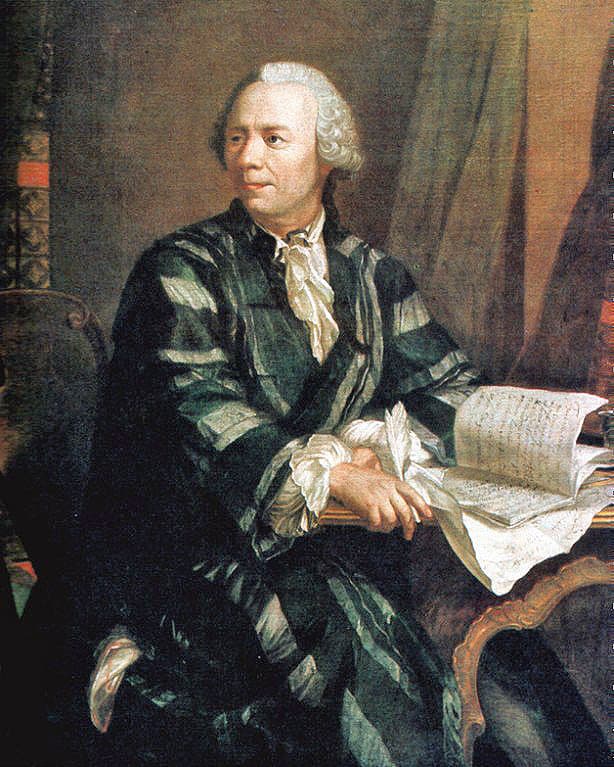
Saint Petersburg, autumn 1783. In a study cluttered with papers his eyes can no longer see, a blind old man dictates numbers to his son from daybreak. He agrees to interrupt his calculations for a moment to speak of sixty years spent chasing curves, bridges, and the hidden order of the world.
—How did a young man from Basel, destined for theology, find himself a mathematician on the banks of the Neva?
In Basel, I had studied theology as much as mathematics, and my father Paul readily intended me for a pastor's chair. But it was Daniel Bernoulli who wrote to me from Saint Petersburg: the brand-new Russian Academy of Sciences was looking for minds. In 1727, at age twenty, I made the long journey from the Rhine to the Neva, and they first placed me in the medical section, for lack of a better spot! Imagine a boy raised on rye bread and psalms, thrown into this city of ice where Peter the Great had only just built his palaces. Yet I found there what mattered: time, paper, and colleagues who did not laugh when I spent my nights pursuing the properties of curves.
—What led you to leave Russia for the court of Frederick II?
In 1741, the troubles of a regency made Russia uneasy for anyone who thought too high. Frederick II of Prussia called me to Berlin to rebuild his Royal Academy, and I stayed there twenty-five years: directing the mathematics class, calculating canals, regulating the fountains of the gardens of Potsdam. The king, for his part, loved witty minds who made clever remarks; I made few, and he called me, they say, his cyclops geometer. I gave him numbers, not epigrams. So when Empress Catherine offered me in 1766 to return to the banks of the Neva with all honors, I did not need to be asked twice: a scholar serves better where his silence is respected.
—Do you remember the first time you were presented with the puzzle of the seven bridges of Königsberg?
Königsberg is crossed by the Pregel, and seven bridges span its arms around two islands. The townsfolk amused themselves wondering if one could tour the city crossing each bridge only once, without ever retracing one's steps. The question was brought to me in 1736 as a curiosity, almost a Sunday stroll game, and I admit it first seemed beneath a geometer. Then I saw that the answer depended neither on distances nor on measurements — only on how the landmasses are connected. I proved the feat impossible, and that solving it required another kind of geometry: one where what counts is not magnitude, but position.
It required another geometry: one where what counts is not magnitude, but position.
—Why do you claim that this problem opened an entirely new geometry?
In my paper — the Solutio problematis ad geometriam situs pertinentis — I wrote that "the solution of this problem has no relation to ordinary geometry, but seems to belong to a new branch of geometry, which Leibniz once called geometry of position." You see, Leibniz had sensed that there existed a calculus of place and adjacency, distinct from the calculus of lengths; but no one had given an example. The seven bridges were the first. Reduce each landmass to a point, each bridge to a line joining two points: only a network remains, and the whole problem is read in the number of lines meeting at each point. It is a very small thing, and it is, I believe, the seed of a science that others will cultivate after me.
—What exactly were you seeking in your 1744 treatise on curves?
That 1744 treatise, the Methodus inveniendi lineas curvas, was born from a challenge the Bernoullis had posed: find the curve along which a weight descends from one point to another in the shortest time — the brachistochrone. I forged a general method for discovering curves that make some quantity maximal or minimal. And I advanced a conviction I still hold: "since the fabric of the universe is most perfect and nothing happens without reason, it is extremely probable that everything happens in such a way that some quantity always remains a maximum or a minimum." The world, you see, is thrifty and perfect: it wastes nothing.
The world is thrifty and perfect: it wastes nothing.
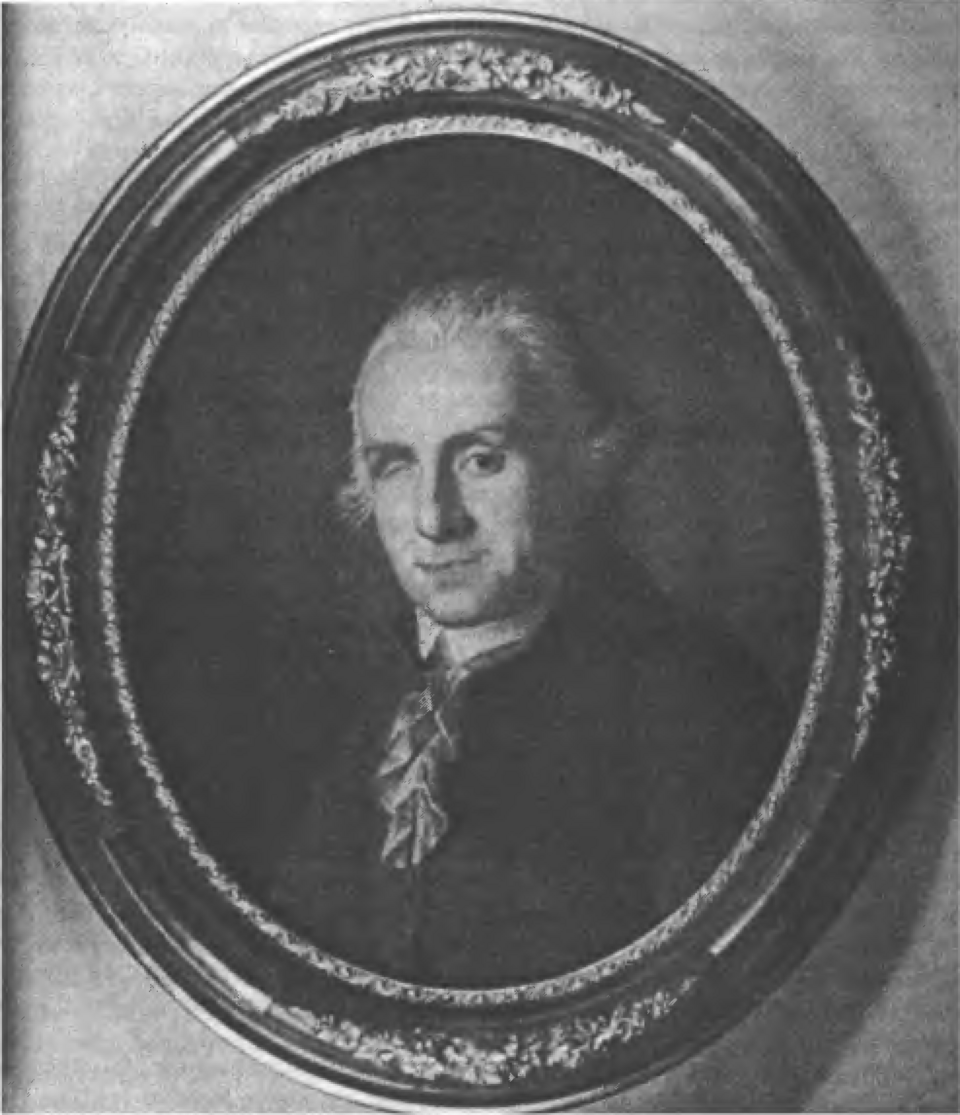
—What do you reply to those who see in your principle of economy of nature a matter of pure metaphysics?
Some have tried to turn it into a salon quarrel. Maupertuis, who presided over our Berlin Academy, maintained that every action of nature economizes, is done with the least expenditure; he was harshly attacked. I saw in it no matter for dispute, but the signature of an order. If the curve traced by a planet, the ray that breaks in water, the vibrating string all obey this same economy, how not to read the hand of a supreme geometer? I am a pastor's son, I admit, but my faith has never contradicted my calculation. Mathematics is not for me a mental game: it is the grammar in which Creation lets itself be spelled out.
—How did you experience the loss of sight in your right eye, in 1738?
It was in 1738. I was working, they say, too ardently — weeks bent over astronomical calculations, sometimes three days without looking up. A violent fever set in, and when it subsided, my right eye distinguished only shadows. The doctors spoke of abscess, of humors; I had only a pair of spectacles and the firm resolve to yield nothing. I even joked that I would henceforth have fewer distractions to turn me from my thoughts. A man raising thirteen children learns early to work in noise; I was going to learn to work in shadow.
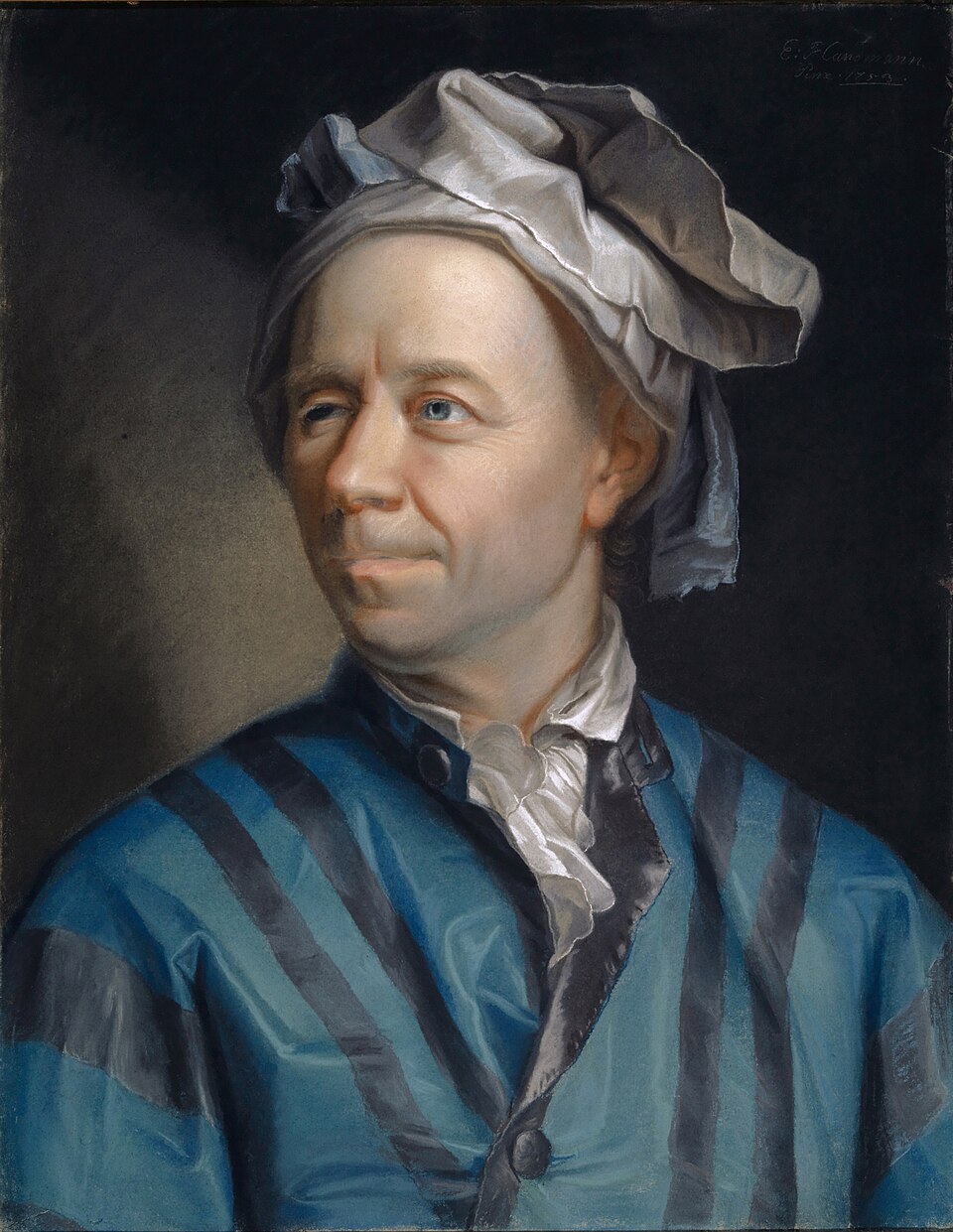
—How were you able to continue your work once plunged into total blindness?
Upon my return to Saint Petersburg, a cataract finished what the fever had begun: around 1766, I sank into complete darkness. People thought me finished; they were wrong. Imagine that I hold an entire tableau of calculations in my head, as others remember an opera tune: I go through it, I correct it, and all that remains is to dictate it. My sons and assistants write at my voice from daybreak, starting with a little bread and herb tea. The truth is, I produced nearly half of my work without seeing a single line. Blindness took the world from my eyes; it gave me in return a silence where numbers resonate better.
Blindness took the world from my eyes; it gave me a silence where numbers resonate better.
—It is hard to imagine reconciling thirteen children and such a vast body of work — how did you manage?
I had thirteen children by my dear Katerina, and it must be said that barely half reached adulthood: that was the common lot of our century, and no family was exempt. People marvel that I calculated so much amid such a brood; yet it is quite the opposite. I never thought better than with a little one on my knee and another tugging my sleeve. The bustle of a household never bothered me; it rested me. The silence of studies makes scholars sad and vain; the laughter of children restores the mind to its proper place. Some of my happiest ideas came to me there, between two games.
—If people were to read you in a century, what would you wish them to remember about you?
One paper every three days, they have calculated — I never kept that count myself, I was too busy writing them. The Academy of Saint Petersburg holds so many of my memoirs in reserve that it will publish them, they say, for many years after my departure. That neither flatters nor worries me. If I may imagine being read in a century, I hope they will remember not the number of my pages, but that a single one of my notations — an e, a π, an f(x) — will have made calculation easier for some schoolchild. That, I believe, is the true posterity of a geometer: not to be admired, but to be useful to the point of being forgotten.
The true posterity of a geometer: to be useful to the point of being forgotten.
Read further
This imaginary interview was generated by artificial intelligence from sources documented in Leonhard Euler's profile. It dramatises what the figure might have said based on what we know about them, but does not constitute attested historical testimony. For primary sources and factual documentation, refer to the full profile.