Imaginary dialogue between Daniel Bernoulli and Leonhard Euler
by Charactorium · Leonhard Euler (1707 — 1783) · Sciences · 5 min read
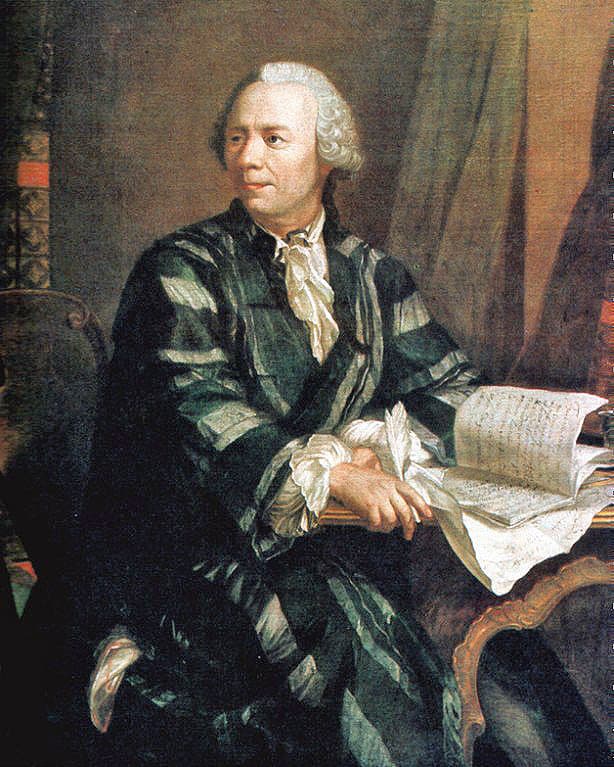
It is in a quiet house in Basel, on an autumn afternoon in 1776, that Daniel Bernoulli meets his old friend Leonhard, passing through to visit his family. Light enters through the window, but Euler no longer sees it: his eyes have gone dark. A quill, an inkwell, and sheets covered with dictated calculations lie on the table, near the armchair. The two men have known each other since their shared youth at the Saint Petersburg Academy, and Bernoulli has come to listen, as in the old days, to what his friend still carries in his mind.
—Leonhard, I see you again bent over your sheets in Saint Petersburg. Today you see nothing. How do you continue to calculate like this?
My dear Daniel, you who knew me with eyes wide open on curves, know that I see better than before. The outside light distracted me; now nothing troubles my mind. My right eye went out as early as 1738, you remember, and complete darkness took me in 1766. But I hold a whole tableau in my head, I arrange numbers there, and I dictate to my sons and secretaries what I see within. Half of my work was born this way, without a sheet before me. Calculation never needed my eyes: it needs only my memory and a faithful hand to write it down.
Calculation never needed my eyes: it needs only my memory and a faithful hand.
—And in the morning, how do you start your day, you who already rose before all of us in our youth?
I rise early, as always, Daniel. They bring me some bread, cheese, an herbal tea, and then immediately I summon one of my sons or an assistant. Even before full daylight, I dictate the thoughts that have matured during the night. It is the hour when the mind is clearest, when no visit breaks the thread of reasoning. My boys write quickly, they have learned to follow my voice, and some days I give them more pages than a sighted person would fill. Blindness has taken away the outside world, but it has given me back my entire mornings, and I believe I have never produced as much as when blind.
—Tell me about those famous bridges of Königsberg. When you wrote to me about them, I admit I first thought it was a pedestrian's puzzle.
You were not entirely wrong, my friend: it was indeed a pedestrian's puzzle! They asked whether it was possible to cross the seven bridges of the city without crossing the same one twice. But I soon realized that neither the length of the paths nor the measurement of distances mattered. This did not belong to ordinary geometry, but to a new branch, that geometry of position Leibniz once spoke of. I showed that the walk was impossible, and the proof came down to counting how many bridges lead to each bank. From a stroller's game was born a completely new way of reasoning about connections and networks.
This did not belong to ordinary geometry, but to a new branch: the geometry of position.
—In your Methodus inveniendi of 1744, you write that nature does nothing without reason. Is that not more philosophy than calculation?
The two go hand in hand, Daniel, and you know it better than anyone, you whose family has pondered so much on curves and forces. I have the firm conviction that nothing in the universe happens that does not follow some law of maximum or minimum. Light takes the shortest path, the catenary hangs in the shape that costs it the least, nature everywhere seems to seek the most perfect economy. My calculus of variations is nothing other than the art of finding, among an infinity of possible curves, the one that nature itself would choose. That is where mathematics joins the order of the world, and I see no presumption in it: only wonder at a design so well regulated.
Nothing in the universe happens that does not follow some law of maximum or minimum.
—That bridge problem, I've been told you solved it in just a few days. Is that true?
They exaggerate a little, as always, but it is true that the matter did not detain me long. Once I understood that distances played no role, everything became simple: it was enough to look at how many bridges connected each quarter to the others. If too many banks received an odd number of bridges, then the entire walk became impossible — and that was the case in Königsberg. What struck me was not the speed of the solution, but that such a humble question opened a territory no one had yet trodden. That is the greatest pleasure of the geometer, my friend: discovering that under a street riddle sometimes sleeps an entire science.
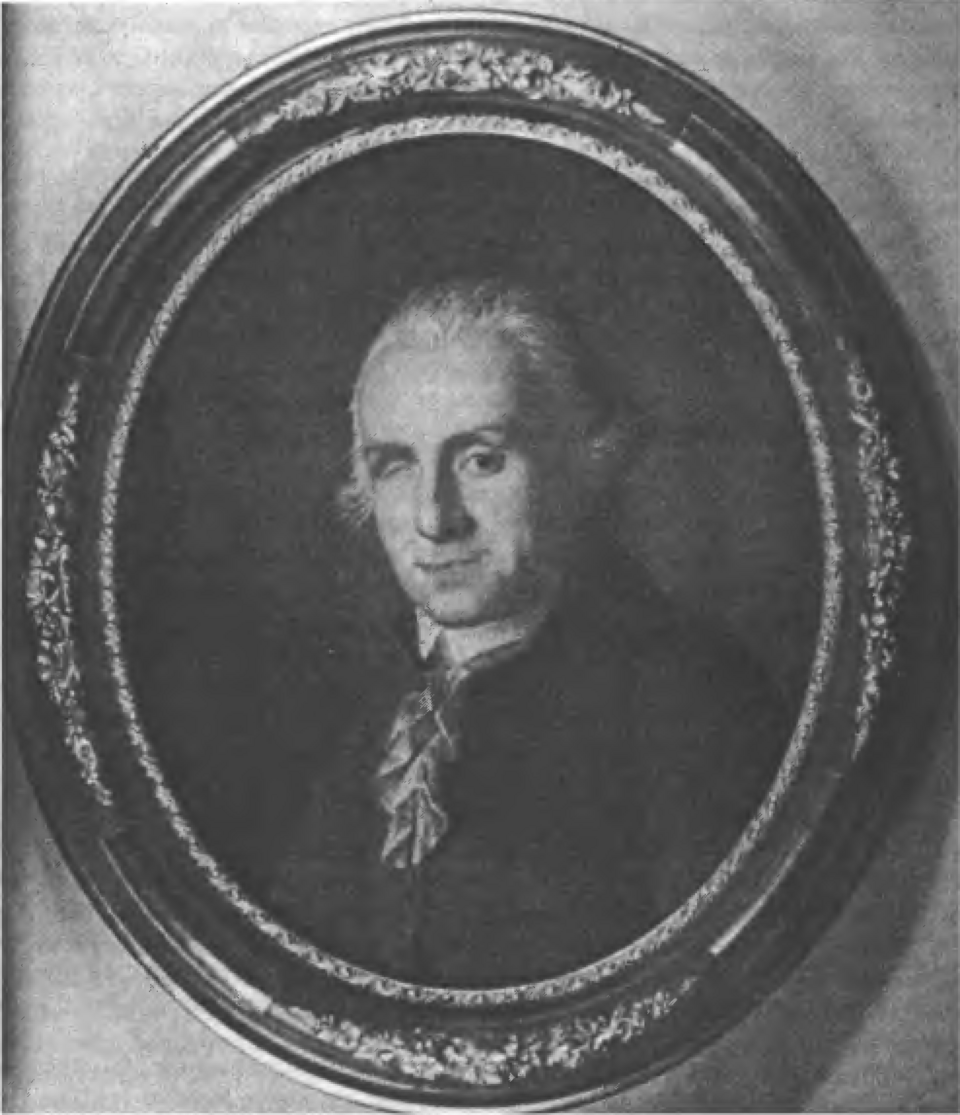
—Here we are far from Saint Petersburg, where we were young together. You then went to Berlin, to the King of Prussia. Were you happy there?
Happy to work, yes; at ease with the prince, much less. Do you remember the cold of the Neva and our friendly disputes about fluids? In Berlin, where I stayed from 1741 to 1766 under Frederick II, I directed the mathematics of the Academy and produced a lot, in analysis as well as number theory. But the king preferred wits to calculators; he found me too simple, too little a courtier. I was a man of family and numbers, not a man of court. So when the empress called me back to Russia, I returned willingly, because there they respected work more than conversation. A scholar needs to be left to work in peace.
I was a man of family and numbers, not a man of court.
—You even instructed a princess through your letters, they say. You who flee salons, now a court tutor?
Do not mock me, Daniel! Those Letters to a German Princess were a true joy to compose. A young princess wished to understand physics and natural philosophy, and I strove to explain light, sound, attraction, without a single daunting formula. Believe me, it is harder to write clearly for someone who knows nothing than to cover twenty pages of calculations for our peers. I found that science gains by being stated simply, and that any upright mind can grasp its essence. It was not a courtier's work, but a teacher's: reducing the great phenomena of the world to ideas that an attentive young girl could embrace.
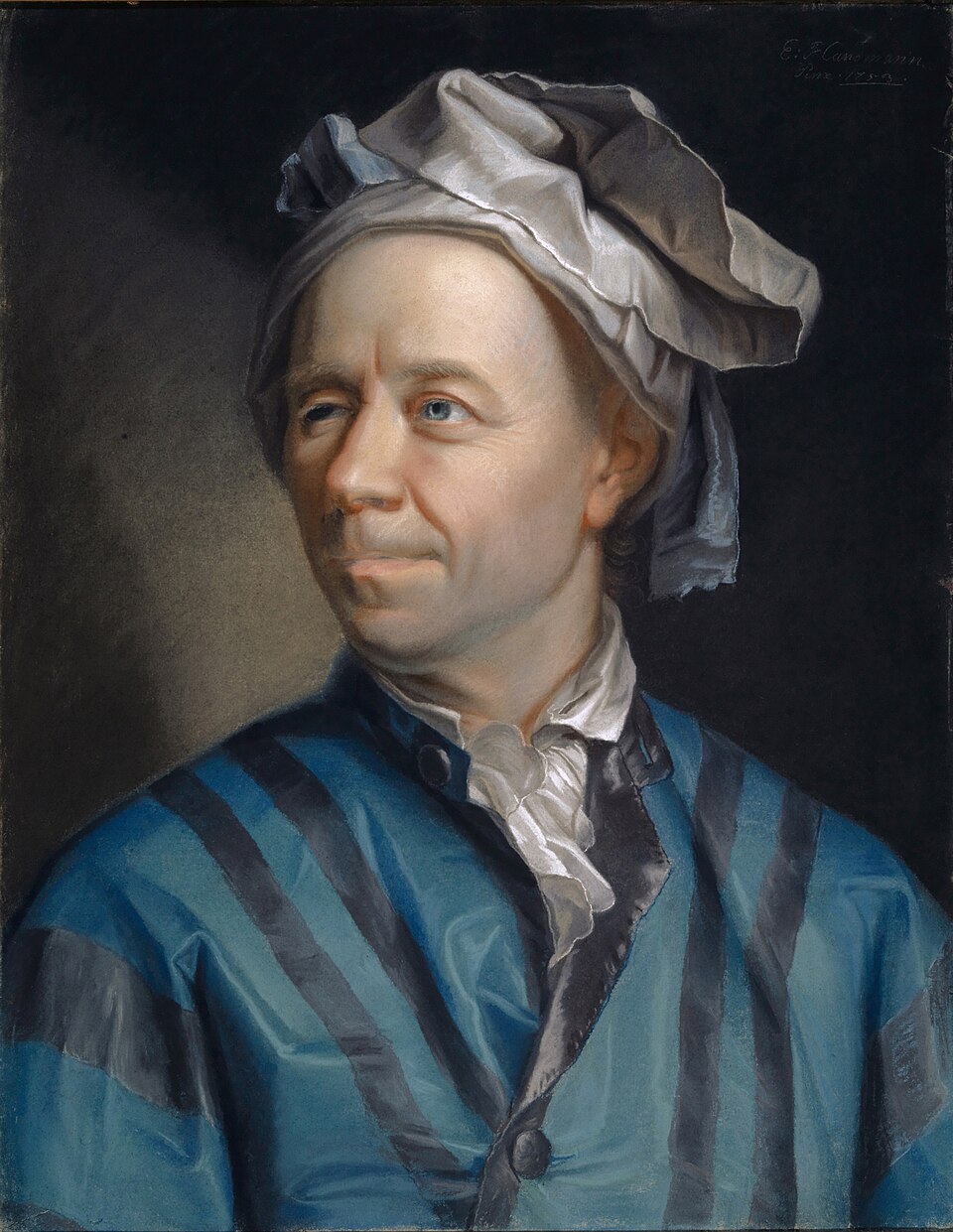
—It is said everywhere that you publish a paper every three days. How can one man produce so much?
The secret, my friend, is not in genius but in constancy. I work every day, without respite, and questions follow one another: as soon as I solve one, it gives rise to three. I have never known how to stop along the way. With my assistants, we move quickly, and papers accumulate faster than academies can print them. I wager that Saint Petersburg will take many years after my death to publish what already lies in my drawers! It is not that I think faster than another; it is that I never stop thinking, and no day passes without my having blackened, or had blackened, some sheet.
The secret is not in genius but in constancy.
—And all that with a house full of children! Thirteen, I am told. How do you balance family and calculation?
But they do not hinder each other, Daniel — on the contrary! I have always worked with a child on my lap, the rest of the brood playing at my feet. Noise has never bothered me; it soothes me, rather. Some of my best ideas came to me while rocking a little one or walking in the academy garden. A man does not need the silence of a cloister to think correctly; he only needs a tranquil mind. Family life, far from turning me away from numbers, has always brought me back with a light heart. You know that too, you who come from a house where theorems were argued over like others argue over bread.
—One last thing, my old friend: if you had to tell me what, in all your work, is dearest to your heart?
That is a friend's question, not an academician's! What I cherish is not so much the results as the certainty that runs through them all: the world is intelligible, and reason can untangle its threads. Whether it is the most economical curve, the path of light, or the connection of the seven bridges, everywhere I have found the same hidden order, waiting to be deciphered. That is what sustained me in the darkness of my eyes: knowing that the beauty of numbers depends on no gaze. If I leave anything, Daniel, I would like it to be this confidence — that nothing in nature is confused for those who will calculate patiently.
The world is intelligible, and reason can untangle its threads.
Read further
This imaginary interview was generated by artificial intelligence from sources documented in Leonhard Euler's profile. It dramatises what the figure might have said based on what we know about them, but does not constitute attested historical testimony. For primary sources and factual documentation, refer to the full profile.