Kids interview Liliuokalani
by Charactorium · Liliuokalani (1838 — 1917) · Politics · 5 min read
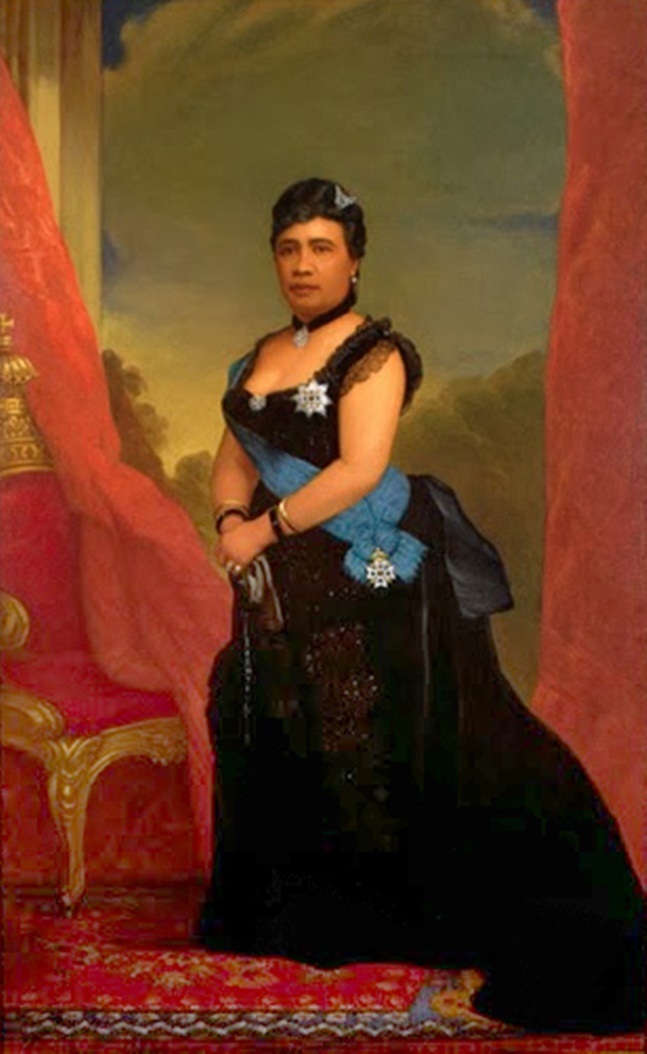
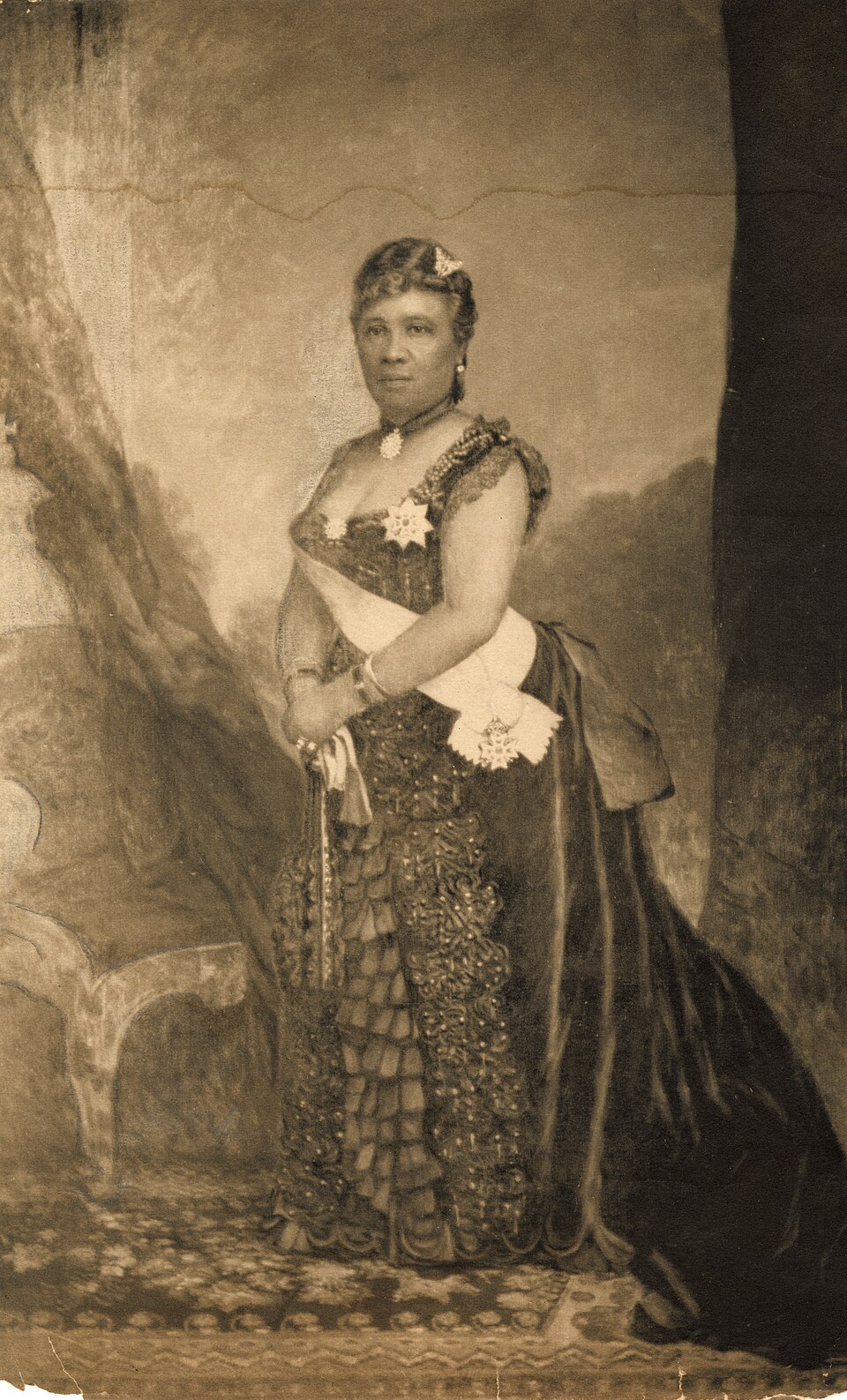
That morning, two students from a middle school class on a discovery trip pushed open the great doors of Iolani Palace in Honolulu. An elderly woman in a dark dress waited for them, a gentle smile on her lips. It was Liliuokalani, the last queen of Hawaii, and she had agreed to answer all their questions.
—Is it true you wrote a world-famous song?
Yes, my child, and it touches me that you know it. I composed it in 1878, it's called Aloha Oe, which means “farewell to you.” Picture this: I was riding home on horseback, through the green hills of the island of Oahu, and I saw two lovers saying goodbye. The melody came to me naturally, as if carried by the wind. I wrote to my sister that this feeling of love and parting was at the heart of our people. You know, a song travels farther than a queen. Even today, people sing it to say goodbye.
A song travels farther than a queen.
—What were your evenings like? What did you do at night?
Evening was my favorite time. Imagine a large room, windows open to the garden, the scent of plumeria flowers drifting in with the night. I would gather musicians and poets around me. I would pick up my ukulele, that small four-stringed instrument, or sit at the piano. We sang, we invented melodies together. I composed more than one hundred fifty in my lifetime! I would write down every inspiration on paper. For me, music was not just a game: it was a way to keep the soul of my people alive, its ancient chants, its language.
—Why were there so many Americans in your Hawaii?
Ah, it's a story about sugar, believe it or not. In 1875, my kingdom signed an agreement with the United States: our sugar could be sold there tax-free. American planters became very, very rich. Among us, they were called haole — that means foreigners, white men from elsewhere. Imagine people who came as guests, gradually buying the land, then wanting to rule in your place. The more money they had, the more power they wanted. And I watched my people, the Hawaiians, lose their lands little by little. It was like a slow poison.
—How did they take your lands? Was it allowed?
It all began long before my reign, in 1848. We enacted what is called the Mahele, the great land division. Before, the land belonged to everyone; you couldn't sell it. After, you could buy it — and the foreigners took advantage. Then, in 1887, armed men forced my brother the king to sign a new law. It was nicknamed the Bayonet Constitution, because it was imposed on him at gunpoint. It stripped the king of almost all his power. Imagine being forced to sign a punishment while someone holds your arm tightly. That is what it was.
—Is it true you were overthrown? How did it happen?
Yes, and I remember it every day. In January 1893, American businessmen wanted to drive me from the throne. Soldiers, Marines, landed from their ships with their rifles in the streets of Honolulu. I was at Iolani Palace, my palace. I could have called my loyal followers to fight. But imagine: blood in the streets, families, children like you in danger. I could not. So I yielded. But I made one thing clear: I was not yielding to those men. I was yielding to the force of the United States, hoping that one day justice would return my kingdom.
—Were you afraid that night?
Afraid? Yes and no, my child. Above all, my heart was heavy, like a stone. I signed a paper on January 17, 1893, where I wrote that I yielded “under protest, to the superior force of the United States.” Under protest means I was compelled, it was not my choice. Imagine being asked to give up your home with a smile while weapons hold your door. I trembled inside, but I wanted to remain dignified. A queen does not scream; she writes. I knew that one day, those words would tell the truth for me.
—Is it true you were imprisoned in your own palace?
Yes, and it is a strange thing to experience. In 1895, some of my loyal supporters tried to restore me to the throne. It failed. To punish me, I was locked up for eight months in a room of my own palace, Iolani Palace. The prisoner and the prison were mine! Imagine your home suddenly becoming your cell. No visitors, or almost none. But I did not sit and weep. I had my Bible in Hawaiian, paper, and a pencil. I composed religious hymns. You can imprison a body, my child. You cannot imprison a voice that sings.
You can imprison a body, not a voice that sings.
—What did you do, locked up all that time?
I set myself a great mission, to keep from dying of boredom. I translated the Kumulipo. That is our sacred poem, which tells how the world was born according to the ancient Hawaiians — two thousand lines, imagine! It existed only in our language, passed down by word of mouth for centuries. I feared it would disappear with us. So, in my prison-room, I wrote it in English, verse by verse, between 1895 and 1897. While they were taking away my kingdom, I was saving its memory. That was my way of resisting, without weapons, just with words and a lot of patience.
—So you just let them? Didn't you try anything?
Oh no, I never gave up! When the United States tried to truly swallow my country — they call it annexation — I fought, but with paper, not guns. In 1897, my people signed a huge petition against it. More than twenty-one thousand Hawaiians signed it, out of barely forty thousand! Almost everyone. I crossed the ocean to Washington to present it before their leaders. Imagine a letter so heavy with names that it weighs the weight of an entire people. Thanks to it, we blocked their treaty for a while. Words too are an army.
Words too are an army.
—What would you like people to remember about you?
My child, I wrote a book in 1898, Hawaii's Story by Hawaii's Queen, so that the truth would never die. I wanted them to know how my kingdom was taken from me. I died in 1917, without seeing it free again. That is my great sorrow. But I also left something sweet: everything I owned, I gave to Hawaiian children who were orphans or poor. A home still exists for them today. So, if you remember only one thing about me, remember this: they can take everything from you except your dignity and your love for your own. The rest is just guns.
This imaginary interview was generated by artificial intelligence from sources documented in Liliuokalani's profile. It dramatises what the figure might have said based on what we know about them, but does not constitute attested historical testimony. For primary sources and factual documentation, refer to the full profile.