Imaginary dialogue between André Breton and Louis Aragon
by Charactorium · Louis Aragon (1897 — 1982) · Literature · 5 min read
It is in a smoke-filled café in the Montparnasse district, under the winter light of late 1934, that André Breton meets Louis Aragon over black coffee. Cigarette smoke floats above stacked saucers, and the two men have not spoken freely since the Kharkov Congress. They have known each other for seventeen years, since the Val-de-Grâce hospital; and Breton comes tonight to press his former surrealist accomplice to explain the path that is taking him away. Between them, friendship and hurt share the same chair.
—Louis, do you remember Val-de-Grâce, in 1917, when we both wore the orderly's smock among the wounded? What remains for you of that beginning?
How could I forget it, André? We were twenty years old and we dressed men torn by shrapnel, and it was there, between two beds, that we recognized each other. You made me read things that no one read, and I recited verses to you in the hallways. The war had disgusted us with the world as it was: we had to invent another. From that shared revolt were born the review Littérature, then everything else. When I wrote Le Paysan de Paris, those covered passages where I saw the marvelous spring from the sidewalk, it was still that gaze I carried—the one you taught me to sharpen near the dying.
The war had disgusted us with the world as it was: we had to invent another.
—Those famous hypnotic sleeps we induced together, those trances where we wrote with our eyes closed—do you still believe in them today, or was it just a youthful game?
It was no game, André, you know that better than I—you watched us sink into that half-sleep and you were almost afraid of it. Something spoke through us that we no longer controlled. I sincerely believed that automatic writing would open the doors of the unconscious to us, that the poem could spring forth without the police of reason. But with the years, I felt I wanted something else: no longer just to free the inner man, but man himself, the one who is hungry, the one who is exploited. The dream was no longer enough for my anger.
—It is whispered that you met a Russian woman, Elsa Triolet, a few years ago. What did she bring you that we, your friends, could not give you?
Elsa... You have crossed paths with her, you know the gaze she casts on people. I met her in 1928, one evening, and since that evening I no longer walk alone. You, my friends, gave me the fraternity of struggle; she gave me a reason to get up in the morning and a new language to speak of love. Near her, the lyricism that surrealism despised returned to me without shame. I am no longer afraid to write the word love in full. She has become the center of everything I trace, the secret measure of my verses, and I believe she will remain so as long as my hand lasts.
You gave me the fraternity of struggle; she gave me a reason to get up in the morning.
—Let us come to what separates us. In 1927 you joined the Communist Party. How could the poet of surrealism accept a party discipline?
I knew you would ask the question like that, André, and that it has been burning your lips for a long time. You see it as submission; I see it as loyalty. We wanted to change life—Rimbaud—and transform the world—Marx. You wanted to keep both at a distance, in purity. I thought we had to choose a real camp, real men, strikes and factories, and no longer just salon scandals. Yes, it costs; yes, sometimes you have to bow your head. But I do not believe you liberate a people by sitting on the margins cultivating your insolence.
You see it as submission; I see it as loyalty.
—You have returned from Moscow and now advocate socialist realism. Is that not betraying everything we defended, the absolute freedom of the image?
You use the word betray, and it wounds me as much as it relieves you to say it. I saw there a people building, learning to read, tearing themselves away from centuries of misery—and that, no automatic image can replace. With Les Cloches de Bâle, I wanted to paint the working condition, the woman who emancipates herself, the real world in its thickness. That is not renouncing beauty, it is seeking it elsewhere than in the dream closed upon itself. Perhaps I am wrong. But I prefer to be wrong with those who are hungry than to be right alone in an armchair.
I prefer to be wrong with those who are hungry than to be right alone in an armchair.
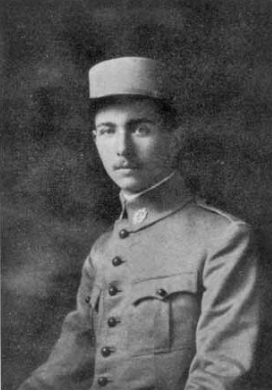
—You are said to be absorbed by a great novel about the interwar period, about those men broken by the Great War. Why this obsession with wounded geniuses?
Because we are some of them, André, you and I. We are of that generation, the one that breathed gas and counted its dead at twenty. When I look around me, I see men who never really left the trenches, who drag their troubles into salons and impossible loves. I want to write this sacrificed generation, these beings incapable of loving because they were damaged too early. The novel allows me to do that better than the poem: it has the long time, the thickness of lives. To paint the interwar period is still to settle accounts with what made us.
We are of that generation that breathed gas and counted its dead at twenty.
—Do you remember our break, after Kharkov, in 1930? Do you regret having signed there what separated us?
I remember it every day, André, and I will not lie to you: there was pain, and pride too, on both sides. You saw in my alignment a capitulation; I saw in your refusal a fear of getting your hands dirty. We were both right and both wrong. What remains is that I did not choose against you—I chose for something. I know what I lose in losing you: a brother-in-arms, the only one who understood me with half a word. But you do not stop a road once begun because a friend stays at the crossroads.
We were both right and both wrong.
—If tomorrow your voice were to be silenced, as so many others, by what detour would you still make poetry pass?
That is a surrealist question, André—you always think about the forbidden. If I were gagged, I think I would return to the old forms, to rhyme, to the alexandrine we so mocked together. For a song is remembered, passed from mouth to mouth, crosses walls and censorships. Free verse is a luxury of peacetime; when night falls on a country, you need poems that can be hidden in memory like a leaflet in a pocket. Classical lyricism is not a retreat: it is a weapon that slips under the coat. I keep that idea in reserve, just in case.
When night falls on a country, you need poems that can be hidden in memory.
—In your recent verses, Elsa becomes almost your only horizon. Do you not fear that a woman might end up eclipsing the revolutionary you claim to be?
You oppose love and struggle, and that is where you are still mistaken. For me, Elsa and the revolution are one and the same impulse toward tomorrow. To love a woman freely, to want a more just world, it is the same refusal of the narrow present. You know that line that haunts me, that woman is the future of man—I put no gallantry in it, but a faith. She who inspires me is also she who keeps me standing in political doubt. The day I stop singing Elsa is the day I will have stopped believing in anything. My lyricism and my commitment drink from the same source.
Elsa and the revolution are one and the same impulse toward tomorrow.
—To finish, my old accomplice: if surrealism was our shared youth, what have you taken from it on the road you now follow without me?
I took everything, André, even what I pretend to have left behind. Surrealism taught me to see the marvelous in a shop window, in a street name, in the face of a passerby. That, no party will take from me. When I describe a strike or a factory, it is still with the eyes you opened for me at Val-de-Grâce. One does not deny the childhood of a thought; one prolongs it differently. You will remain for me the one who showed me the door; I simply chose to cross it toward the street and not toward the dream. But we were looking, I believe, at the same horizon—and that is what I will miss the most.
One does not deny the childhood of a thought; one prolongs it differently.
This imaginary interview was generated by artificial intelligence from sources documented in Louis Aragon's profile. It dramatises what the figure might have said based on what we know about them, but does not constitute attested historical testimony. For primary sources and factual documentation, refer to the full profile.