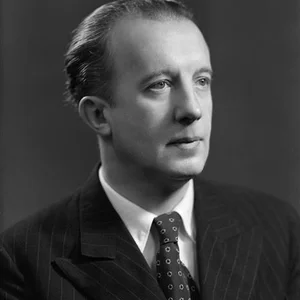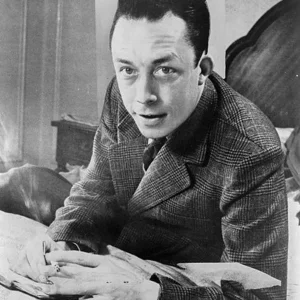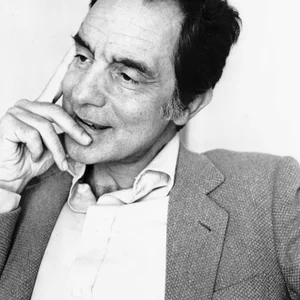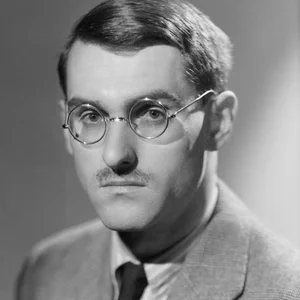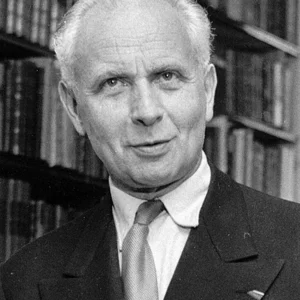

French poet and novelist (1897-1982), Louis Aragon is a major figure of committed poetry in the 20th century. A founding member of Surrealism alongside André Breton, he became one of the greatest poets of the French Resistance during the Second World War, blending lyricism with political engagement.
Louis Aragon(1897 — 1982)
Louis Aragon
France
9 min read
Frequently asked questions
Famous Quotes
« I salute you, my France with the eyes of Joan of Arc»
« Freedom is communism»
« O month of flowers, o queen of spring»
« Love is not a game, it is a matter of life and death»
Key Facts
- 1924: Joined the Surrealist movement and published his first Surrealist collections
- 1927: Joined the French Communist Party, a decisive turning point in his political commitment
- 1941-1944: Actively participated in the Resistance and composed clandestine poems fighting the Nazi occupation
- 1942: Published the poem 'L'Affiche rouge' celebrating fighters of the Resistance
- 1944: Liberation; recognized as one of the great poetic voices of the French Resistance
Works & Achievements
Surrealist novel-poem exploring the covered passages of Paris as dreamlike and wondrous spaces. A founding work of French Surrealism, it would profoundly influence Walter Benjamin and the entire literature of the urban flâneur.
First novel of the cycle Le Monde réel, a vast novelistic fresco in the manner of socialist realism. Aragon explores the working-class and feminist condition through characters embodying the contradictions of the Belle Époque.
A major poetry collection of the Resistance, published clandestinely. Aragon combines amorous lyricism with a patriotic call to arms, reviving classical metrical forms to better circumvent Nazi censorship.
An emblematic poem of the Resistance paying tribute to both Catholic and Communist martyrs executed by firing squad. Having become a hymn of national unity in the struggle against the occupier, it is still recited today at commemorative ceremonies.
A novel considered Aragon's masterpiece of fiction, portraying the interwar period through an impossible love story between a traumatized war veteran and a free-spirited woman. A psychological portrait of a wounded generation.
A collection of autobiographical poems forming a kind of lyrical confession. Aragon revisits his youth, his commitments, and his doubts following the Khrushchev Report, in a form blending free verse and fixed poetic forms.
A historical novel retracing the flight of Louis XVIII and the painter Géricault during Napoleon's Hundred Days. A work of remarkable erudition, it examines the relationship between art, history, and political commitment.
A long epic poem set in Granada during the Reconquista, weaving a meditation on love, Arab-Andalusian civilization, and poetry. Considered one of Aragon's most ambitious and most personal works.
Anecdotes
In 1917, Louis Aragon met André Breton at the Val-de-Grâce military hospital, where both were serving as nurses. This encounter was the starting point of an intense friendship and a literary adventure that would give birth to the Surrealist movement a few years later.
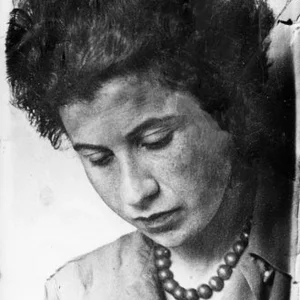
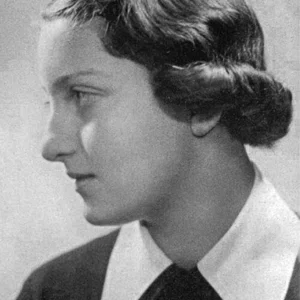
In 1928, Aragon met Russian writer Elsa Triolet at a party in Paris. This meeting turned his life upside down: he fell desperately in love with her, and she became his muse, his companion, and his wife until her death in 1970. He dedicated many collections to her, including the famous line 'Woman is the future of man'.
During the Nazi Occupation, Aragon published resistance poems concealed beneath lyrical and patriotic appearances. His poem 'La Rose et le Réséda' (1943), published clandestinely, paid tribute to Catholic and Communist resistance fighters who had been shot, uniting in death men whom faith had separated.
In 1924, upon the publication of Breton's 'Manifesto of Surrealism', Aragon was one of the founding members of the group. He took part in the famous 'hypnotic sleeps' organised by the movement, during which participants attempted to write in a trance state in order to liberate the unconscious.
After the death of Elsa Triolet in 1970, Aragon, deeply wounded, publicly revealed his homosexuality and began a relationship with the writer Jean Ristat. This belated confession, in a France still largely unreceptive to such matters, provoked as much admiration as incomprehension among his contemporaries.
Primary Sources
I have never learned to write or the incipits. There are forests in books as there are in dreams, and certain nights I could not cross either one or the other without losing my footing.
Your eyes are so deep that leaning down to drink / I saw all the suns come to mirror themselves there / All the desperate ones hurling themselves to die there / Your eyes are so deep that I lose my memory in them.
He who believed in heaven / He who did not believe in it / Both adored the beautiful one / Prisoner of the soldiers.
A novel always begins before the first word. Before the first line. In life. In an encounter, in a memory, in a wound.
My homeland is like a boat / Abandoned by the haulers / And I resemble that monarch / More unfortunate than misfortune itself.
Key Places
Aragon frequented the literary cafés of Montparnasse and the studios of Montmartre throughout the 1920s, vibrant hotbeds of Surrealism. The Café de Flore and La Coupole were his favourite haunts.
Having retreated to the unoccupied zone after the defeat of 1940, Aragon settled in the Dordogne and the Lyon region, where he organised intellectual resistance and published clandestinely. These landscapes of southern France inspired his wartime poetry.
Aragon and Elsa Triolet lived in this bourgeois apartment in the 7th arrondissement until Elsa's death. It was here that Aragon wrote a large part of his post-war novels and poetry.
Aragon made several visits to the USSR in the 1930s, full of admiration for the Soviet model. These trips strengthened his commitment to socialist realism and the Communist Party, before the revelations of 1956 began to shake his convictions.
Aragon and Elsa Triolet owned a country house in this village in the Yvelines, where they regularly retreated to write away from the bustle of Paris. Aragon spent the end of his life there after Elsa's death.
Typical Objects

Aragon wrote his manuscripts and correspondence on a typewriter, a symbol of the committed writer of the 20th century. His hand-corrected typescripts bear witness to an intensive writing process.

During the Occupation, Aragon published his poems in secretly printed journals such as Les Cahiers du Rhône and Les Lettres françaises. These pamphlets, distributed under the counter, represented a concrete act of resistance.

Aragon was decorated for his bravery during the First and Second World Wars. This medal symbolises the paradox of a man who was at once poet, soldier, and revolutionary.

Aragon kept portraits of his companion Elsa carefully stored in his study on the rue de Varenne. Her face haunted his poetic work as a continuous and foundational presence.

A committed communist militant, Aragon edited the newspaper Ce Soir and contributed to L'Humanité throughout his life. The party press was for him both a political tool and a space for literary expression.

This autobiographical collection was developed over many years through notebooks and handwritten sheets. The crossings-out and variants bear witness to the meticulous care Aragon brought to poetic form, even amid political urgency.
School Curriculum
Vocabulary & Tags
Key Vocabulary
Tags
Mouvement
Daily Life
Morning
Aragon rose early, around seven o'clock, and devoted the first hours of the morning to reading the press — L'Humanité above all — before responding to his voluminous correspondence from readers and intellectuals. He would have a strong black coffee before settling at his writing desk, where he worked in silence for several hours at a stretch.
Afternoon
The afternoon was often devoted to political meetings at the Communist Party headquarters or to the editorial committees of Les Lettres françaises. Aragon loved walking through Paris to feed on images and impressions, wandering through galleries, the bookshops of the Quartier Latin, and the banks of the Seine.
Evening
Aragon's evenings were often spent in the company of Elsa and friends — writers or artists — at dinners animated by literary and political discussions. He took part in numerous public readings and debates, then dedicated part of the night to writing poetry, sometimes working until very late by the light of a desk lamp.
Food
Aragon had the tastes of a cultivated Parisian of his generation: he appreciated traditional French cuisine, the bistros of his neighbourhood, and a glass of red wine in good company. During the Occupation, like all French people, he had to make do with food rationing and ration coupons.
Clothing
Aragon took care of his appearance with bourgeois elegance: dark suit, raincoat or wool overcoat in winter, often a scarf. Photographed in his later years with his white hair and well-cut suits, he cultivated the image of the committed yet refined intellectual, halfway between the Surrealist dandy of his youth and the recognised sage.
Housing
Aragon and Elsa Triolet lived in a vast apartment on rue de Varenne in the 7th arrondissement of Paris, a bourgeois neighbourhood close to the ministries. The walls were covered with paintings given by artist friends such as Matisse, the bookshelves overflowed with books in several languages, and a desk cluttered with manuscripts and correspondence occupied the central room.
Historical Timeline
Period Vocabulary
Visual Style
Le style visuel d'Aragon mêle l'esthétique onirique et collage du surréalisme des années 1920 à la gravité sombre et clandestine de la France résistante des années 1940.
Sound Ambience
L'univers sonore d'Aragon oscille entre le murmure des cafés littéraires parisiens des années folles et le silence tendu de la France occupée, ponctué par le bruit clandestin des presses résistantes.
Liens externes & ressources
Références
Œuvres
Le Paysan de Paris
1926
Les Cloches de Bâle
1934
Les Yeux d'Elsa
1942
La Rose et le Réséda
1943
Aurélien
1944
Le Roman inachevé
1956
La Semaine sainte
1958