Imaginary interview with Louis Aragon
by Charactorium · Louis Aragon (1897 — 1982) · Literature · 6 min read
Saint-Arnoult-en-Yvelines, an autumn afternoon. In the country house where Elsa is no more, the libraries still overflow with books in several languages and a Matisse keeps watch over the desk cluttered with typescripts. White hair, knotted scarf, Louis Aragon receives us as one welcomes a final witness — with the weary elegance of a man who has traversed an entire century.
—How did you become a writer, you who first wore the white coats of a military hospital?
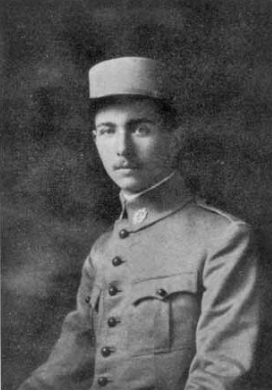
It was in 1917, at the Val-de-Grâce. The war had made me an auxiliary nurse, and they had placed in the same ward a boy with a face like a Roman statue named André Breton. We dressed wounds by day, and at night we recited Rimbaud and Lautréamont to each other in low voices, like exchanging passwords. From this hospital friendship was born a review, Littérature, in 1919, and then everything else. People always think a literary movement begins with a manifesto or in a café; ours began between two iron beds, in the smell of ether, because two young men refused to let death have the last word. Poetry, for me, has always smelled of war.
Our Surrealism was not born in a café, but between two iron beds, in the smell of ether.
—What were you looking for, as a young Surrealist, in the covered passages of Paris?
The marvelous. We hunted it where no one thought to look: in a cane shop, a barber's window, the greenish light falling from the glass roof of a covered passage. I wrote Le Paysan de Paris in 1926 to capture those galleries doomed to demolition, those territories I considered waking dreams. We also practiced hypnotic sleeps — we fell asleep under the table, spoke, wrote without the slightest censorship of reason, to let the unconscious emerge raw. It was exhilarating and a little dangerous; some did not come back unscathed. But we wanted to snatch poetry from poets and return it to the street, to chance, to the woman met under a clock.
We wanted to snatch poetry from poets and return it to the street.
—Do you remember your first meeting with Elsa Triolet?
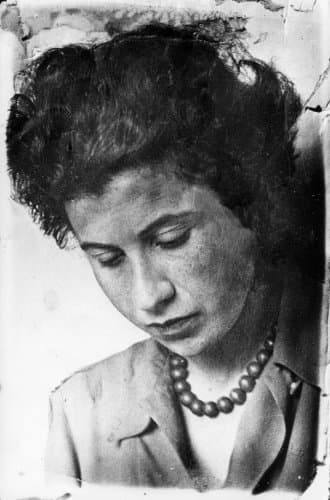
It was an evening in 1928, in Paris. A woman with immense eyes, come from Russia, who spoke French with an accent that made every word sing. I was then a man unhappy enough to have brushed the worst; Elsa pulled me from the abyss as one pulls a drowning man by the hair. She became my companion, my translator of myself, and the sole recipient of everything I wrote thereafter. When I later wrote that the woman is the future of man, I was not doing philosophy: I was describing my own life. For more than forty years, I did not write a single verse that was not, secretly, addressed to her. Her portrait never left my desk on the rue de Varenne.
Elsa pulled me from the abyss as one pulls a drowning man by the hair.
—How could Resistance poetry be published under the nose of Nazi censorship?
By cunning, and by love. In 1942, I published Les Yeux d'Elsa — a collection that speaks of a woman, her eyes, despair. The censors saw a sentimental poet rehashing his grief. But beneath the amorous lyricism, every French reader heard the other thing: occupied France, hope, the call. I had deliberately revived the alexandrines, rhymes, fixed forms that the avant-garde had thrown to the nettles — precisely because those rhymed verses stuck in the memory, were whispered, copied in the clandestine reviews printed in secret. "Tes yeux sont si profonds qu'en me penchant pour boire / J'ai vu tous les soleils y venir se mirer": they thought they were reading a declaration; they were transmitting a password. Rhyme was our contraband.
They thought they were reading a declaration; they were transmitting a password. Rhyme was our contraband.
—Why did you bring together, in the same poem, a Catholic and a Communist who were executed?
Because death, for its part, did not ask for their papers. In 1943, under the Occupation, men whom everything separated — faith, party, heaven — fell together under the same bullets. La Rose et le Réséda was born of that magnificent scandal: "Celui qui croyait au ciel / Celui qui n'y croyait pas." I wanted a priest and a worker militant to recognize themselves in the same song, that no chapel should confiscate the Resistance. That poem was recited in the maquis, and is still recited on graves. It is perhaps the most useful thing I ever wrote: not a beautiful line, but a hand extended across the trenches that the living dig between themselves.
I wanted no chapel to confiscate the Resistance.
—What led you to leave Surrealism for Communism?
A hunger for the real. I had joined the Communist Party as early as 1927, and soon the game of dreams and automatic writing was no longer enough: there were workers, strikes, history on the march. The break was consummated around 1930, after the Kharkov Congress; Breton never forgave me, and I think we both bled from that broken friendship. I turned to socialist realism, undertook the great cycle of Le Monde réel — Les Cloches de Bâle, and the rest — to paint society as a whole, the factory and the salon, the condition of workers and women. Dreams had taught me to see; now I wanted poetry to serve.
—How did you experience the year 1956 and the revelations about Stalin?
Like an inner earthquake. I had believed, I had sung, I had defended — and then in 1956 the Khrushchev Report tore the veil from the crimes I had not wanted to see. One does not emerge unscathed from such a night. I did not return my party card, but something in me cracked forever, and from that crack came Le Roman inachevé, that confession in verse where I look back on my youth, my mistakes, my doubts. "Ma patrie est comme une barque / Qu'abandonnèrent les haleurs": those are my lines from that time, the admission of a man who feels adrift. I put my loyalty and my disenchantment into the same book, because the truth of a life always lies in that contradiction.
I did not return my party card, but something in me cracked forever.
—You, the poet of the Resistance, what were you seeking in a novel about the Restoration and the painter Géricault?
History does not repeat itself, but it rhymes. In writing La Semaine sainte in 1958, I followed the flight of Louis XVIII during the Hundred Days, and in the midst of that debacle I placed a young painter, Géricault, torn between his art and the tumult of the world. Deep down, I was talking about myself, about all artists caught in the cogs of events: should one paint, or march in step? I needed that distance of costume and horses of 1815 to question what had always tormented me — the relationship of art to History, the price of commitment. They expected propaganda from me; I came with a fresco of Benedictine erudition. The historical novel is the safest of oblique mirrors.
History does not repeat itself, but it rhymes.
—What does Le Fou d'Elsa, that plunge into Arab Granada, represent for you?
My most secret book, and perhaps the most beloved. For Le Fou d'Elsa, in 1963, I transported myself to the Granada of the Reconquista, at the moment when Arab-Andalusian civilization, refined to the point of dizziness, is about to collapse under the Catholic Monarchs. A poet goes mad for a woman who does not yet exist, a certain Elsa — you understand the detour. I mingled love, the fall of civilizations, and my old fascination with that literate Orient that Europe has so well forgotten. It is an epic poem, immense, where I say that a culture is worth more by what it loves than by what it conquers. Elsa runs through everything, as always: she is the name I give to what does not die.
A culture is worth more by what it loves than by what it conquers.
—After Elsa's death in 1970, what remained of a man whose entire work was addressed to a woman?
A widower, and a man finally free to say himself entirely. The death of Elsa, in 1970, left me alone in this house in Saint-Arnoult where her face is everywhere. I thought I would never write again. And then, in that great mourning, I chose to hide nothing more: I lived openly my part of shadow, my attachment to a young writer, Jean Ristat, and too bad for those it scandalized. At seventy-three, one no longer has time for comedies. I always knew that a book, like a life, begins before the first word — "in a meeting, in a memory, in a wound." My life will have been all that: a meeting named Elsa, and a wound I never wanted to heal.
At seventy-three, one no longer has time for comedies.
This imaginary interview was generated by artificial intelligence from sources documented in Louis Aragon's profile. It dramatises what the figure might have said based on what we know about them, but does not constitute attested historical testimony. For primary sources and factual documentation, refer to the full profile.